Static Activation Temperature Testing Machine for Fire Sprinklers: A Practical Testing Solution for Manufacturers and Laboratories
In a fire protection system, an automatic sprinkler must respond to heat in a predictable way. It should not activate simply because the surrounding environment becomes slightly warmer than usual, but it must also respond when a fire creates the temperature conditions for which the sprinkler was designed. Getting this balance right is an important part of sprinkler product development, manufacturing quality control, and safety evaluation.
At Guangzhou Chuangge Automation Equipment Co., Ltd., we understand that fire sprinkler manufacturers need more than a heating device. They need a practical testing system that helps them examine how a sprinkler's heat-responsive element behaves under controlled conditions, record meaningful test results, and compare those results with the requirements applicable to their products.
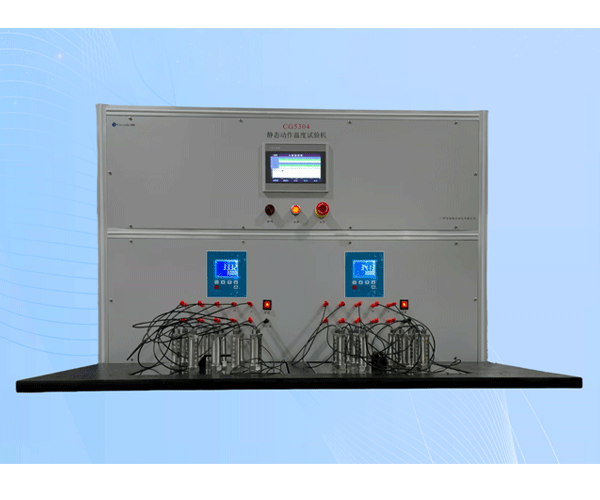
Our Static Activation Temperature Testing Machine for Fire Sprinklers is intended for this type of testing work. Depending on the required test method and customer specifications, a testing system can be configured to control the heating process, monitor temperature changes, support specimen positioning, and help operators record the temperature at which a sprinkler activates or its thermal element operates. The final equipment configuration should be determined from the sprinkler design, the intended test procedure, and the applicable standard.
The word “static” is important when describing the intended testing approach. It generally points to a controlled test arrangement in which the specimen is exposed to a defined heating environment rather than being evaluated in a complete real-world fire scenario. The exact meaning must still be confirmed for each project, because static temperature testing, liquid-bath operating-temperature testing, and heated-air response testing are not interchangeable methods.
For example, a glass-bulb sprinkler uses a heat-responsive glass bulb, while another sprinkler design may use a fusible element or a different activation mechanism. A test method suitable for one design may not be appropriate for another. Before we configure a machine, we therefore discuss the customer's specimen type, target temperature range, required measurement points, test procedure, and reporting needs.
Our company specializes in customized testing equipment for industrial applications. Our products serve sectors such as construction materials, wires and cables, plastics and textiles, electrical accessories, electronic products, and household appliances. We have obtained ISO 9001 quality management, ISO 14001 environmental management, and ISO 45001 occupational health and safety management certifications. Our intellectual property portfolio includes more than 20 patents across invention, utility model, and software categories.
These capabilities support our approach to developing test equipment around actual laboratory and production requirements. We aim to provide a workable solution, communicate its functions clearly, and help customers understand what the equipment can measure and what additional procedures may be needed to establish product conformity.
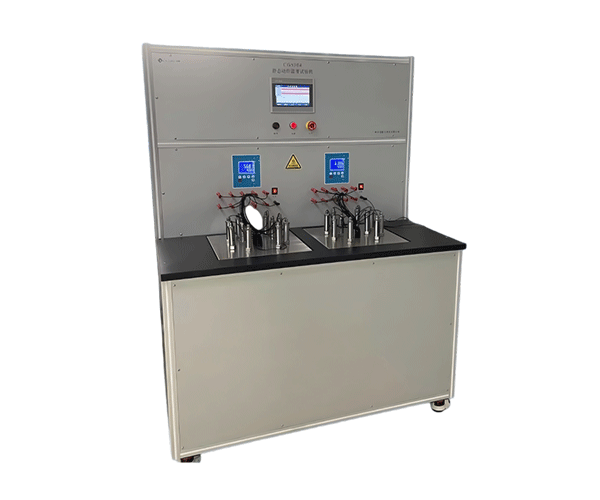
2. How a Static Activation Temperature Testing Machine Works
2.1 The basic principle of temperature activation testing
An automatic fire sprinkler contains a heat-responsive component designed to operate under specified thermal conditions. When the surrounding heat reaches the relevant activation conditions, the element releases or changes state, allowing the sprinkler mechanism to operate. The exact mechanism depends on the sprinkler's construction.
A static activation temperature test examines the behavior of this heat-responsive component under a controlled heating procedure. The operator places a specimen in the designated fixture, confirms that the temperature-measuring system is ready, and follows the selected test sequence. During heating, the system monitors the relevant temperature. When the specified event occurs, the operator or the configured acquisition system records the corresponding result.
The key point is that the measured value depends on the method. The temperature of a heating medium, the temperature close to the sprinkler's operating element, and the temperature at which the element activates may not be identical. A reliable test plan must identify which temperature is being measured and where the sensor is located.
For this reason, we do not treat the machine as a simple heater with a thermometer. The heating arrangement, sensor placement, specimen fixture, control logic, and recording method all need to work together. If a customer requires comparison against a recognized standard, the machine's configuration and operating procedure must be checked against the relevant test clauses before testing begins.
2.2 Typical testing workflow
The exact workflow will vary according to the selected test method. A general sequence may include specimen identification, equipment preparation, temperature stabilization, controlled heating, observation of activation, and result recording. The following table summarizes the main steps and the reason for each one.
| Testing step | What the operator does | Why it matters |
|---|
| Specimen preparation | Identify the sprinkler model, nominal temperature rating, specimen condition, and test quantity. | Ensures that results can be traced to the correct product and test group. |
| Equipment inspection | Check the heating unit, sensors, fixture, control system, and safety arrangements. | Helps identify setup problems before a test is started. |
| Temperature setup | Enter or confirm the target settings required by the selected procedure. | Reduces the risk of using an incorrect test profile. |
| Controlled heating | Expose the specimen to the specified thermal conditions. | Provides a repeatable environment for observing thermal behavior. |
| Activation observation | Observe the defined activation event or other endpoint required by the method. | Connects the recorded temperature to a clearly identified event. |
| Result recording | Record specimen identification, measured temperature, observations, and any relevant test conditions. | Supports traceability, comparison, and later review. |
This workflow is a general illustration rather than a substitute for a standard's test procedure. The number of specimens, heating rate, stabilization time, pressure conditions, sensor location, acceptance criteria, and any required follow-up tests must be confirmed for the selected sprinkler and applicable method.
2.3 Temperature measurement and the importance of sensor placement
Temperature measurement is one of the most important parts of activation testing. If a sensor is installed too far from the relevant heating zone, its reading may not accurately represent the temperature experienced by the sprinkler's heat-responsive element. If the sensor arrangement changes between tests, the results may become difficult to compare.
We therefore recommend confirming the measurement location during the equipment design stage. Customers should identify whether the procedure calls for monitoring the bath temperature, the air temperature, the temperature close to the operating element, or another specified point. Where a standard defines the measuring arrangement, that requirement should take priority over a general-purpose setup.
Temperature sensors also need suitable measurement ranges and documented calibration status. A machine's display resolution alone does not establish measurement accuracy. The full measurement chain—including the sensor, acquisition module, controller, installation position, and any required calibration—should be considered when the customer defines the required uncertainty and reporting format.
2.4 Static activation temperature testing is not the same as response-time testing
One common source of confusion is the difference between activation temperature and thermal response speed. Activation temperature relates to the temperature associated with the operating event under a specified test method. Thermal response evaluates how quickly the sprinkler responds when exposed to a defined heating environment.
These are related but different questions. A sprinkler might have a particular nominal temperature rating while its response time is assessed separately under controlled airflow conditions. The response time index, or RTI, is associated with thermal sensitivity and is commonly evaluated through a prescribed heated-air plunge test. It should not be inferred from a static activation-temperature result alone.
For a manufacturer developing a new sprinkler, both types of information may be useful. A static activation temperature testing machine can support the testing task it has been configured for, while a separate test arrangement may be needed for response-time evaluation. We discuss this distinction with customers before finalizing the machine's functions, so the selected equipment matches the actual testing objective.
3. Main Features and Practical Benefits
3.1 Controlled heating for repeatable testing
Controlled heating is central to useful activation-temperature testing. If the heating process changes unpredictably, it becomes harder to decide whether differences between specimens come from the product itself or from the test conditions. A suitable machine should therefore be designed around the required heating profile and the expected specimen characteristics.
Depending on the customer's specification, the system may incorporate a controlled heating unit, temperature sensors, a control interface, specimen supports, and temperature display or recording functions. The available features should be confirmed in the technical proposal. We do not assume that every project requires the same heater type, sensor layout, temperature range, or software configuration.
For example, a laboratory testing one family of sprinkler products may prioritize repeatable temperature control and straightforward operation. A manufacturer comparing several product variants may place more emphasis on specimen identification, data export, and consistent recording. The machine configuration should reflect those differences rather than adding functions that the customer does not need.
3.2 Clear operating procedures
Even a well-designed test machine can produce poor data if operators follow inconsistent procedures. A clear operating sequence helps users prepare the specimen, check the equipment, select the correct test settings, and record results in a consistent format.
When developing a customized system, we can discuss the desired interface, operator prompts, parameter entry, alarms, and record fields. The specific functions depend on the agreed scope. If a customer requires automatic detection of the activation event, we first need to define what counts as the event for the particular sprinkler design and how it can be detected reliably.
A simple and understandable interface is especially valuable in production environments, where the operator may need to perform repeated checks while maintaining accurate records. Good interface design should reduce avoidable mistakes without hiding important test settings or making the process difficult to review.
3.3 Specimen fixtures designed around the product
Fire sprinklers are available in different forms, sizes, mounting arrangements, and operating mechanisms. A fixture designed for one specimen may not hold another specimen in the correct position. The fixture must also avoid interfering with the thermal element or changing the intended heat exposure.
We recommend providing drawings, photographs, dimensions, connection details, and the intended mounting orientation during the quotation stage. If the customer tests more than one sprinkler family, we can discuss whether interchangeable fixtures or multiple mounting arrangements are appropriate. The final decision depends on specimen geometry, test method, and how often each product type will be tested.
A properly matched fixture helps improve repeatability and makes routine testing easier. It also reduces the chance that operators will improvise a mounting arrangement that differs from the approved procedure.
3.4 Temperature display and test records
Useful test records should do more than show a single number. Depending on the testing purpose, records may include the specimen model, batch or serial number, nominal temperature rating, test date, selected method, relevant settings, observed activation temperature, and any unusual behavior.
Where required and included in the agreed configuration, electronic data acquisition can help users save temperature readings or export test records for further analysis. Some customers may prefer a basic display and manual record sheet, while others may need digital data storage or integration with their internal quality system.
We confirm these requirements before manufacturing. Automated recording, report generation, network communication, and database integration should be treated as specific configuration items rather than assumed standard features. Clear agreement at the beginning helps avoid gaps between what the customer expects and what the delivered equipment provides.
3.5 Safety and maintainability
Heating equipment needs appropriate safeguards for its intended operating environment. Depending on the design, relevant considerations may include insulated or guarded hot surfaces, stable specimen supports, over-temperature protection, emergency stopping arrangements, electrical protection, and clear warnings for hot components.
The required safeguards depend on the heating method and risk assessment. We discuss the working environment, operator access, power supply, installation space, and maintenance requirements as part of equipment planning. Customers should also establish suitable local procedures for handling hot specimens and servicing the machine.
Routine maintenance may include inspecting cables and connectors, checking sensor condition, cleaning the test area, confirming the fixture remains secure, and reviewing temperature measurement performance. The actual maintenance schedule should follow the supplied instructions and the conditions in which the equipment is used.
3.6 Summary of key configuration areas
| Configuration area | Questions to confirm | Practical benefit |
|---|
| Heating system | Which heating medium and heating profile does the test method require? | Helps establish suitable and repeatable thermal conditions. |
| Temperature measurement | Where must temperature be measured, and what range and uncertainty are needed? | Improves the relevance and traceability of readings. |
| Specimen fixture | What are the specimen dimensions, mounting position, and operating mechanism? | Supports consistent placement and reduces setup variation. |
| Control interface | Which parameters, alarms, and operating prompts are necessary? | Makes the process easier to follow. |
| Data handling | Are manual records sufficient, or is electronic storage or export required? | Matches records to the laboratory's quality workflow. |
| Safety features | What hazards arise from heat, electrical power, specimen handling, and maintenance? | Supports safer operation in the intended environment. |
The features above are design considerations for a customized testing machine, not a claim that every item is included in every model. We define the final scope with the customer and document the agreed configuration in the technical proposal.
4. Standards, Temperature Ratings, and Test Method Selection
4.1 Start with the applicable sprinkler standard
Choosing a testing machine begins with the product and the standard that applies to it. Different markets may require different editions of a standard, and different sprinkler types may be subject to different test sequences. A machine intended for research or internal quality checks may have a different scope from equipment intended to support a formal conformity assessment.
One relevant international reference is ISO 6182-1:2021, Fire protection — Automatic sprinkler systems — Part 1: Requirements and test methods for sprinklers. The published scope covers performance and marking requirements and test methods for several sprinkler types, including conventional, spray, sidewall, extended-coverage, domestic, storage, and certain other designs. The official ISO page describes the scope and publication status: ISO 6182-1:2021.
In North America, ANSI/UL 199, Automatic Sprinklers for Fire-Protection Service is another important reference. UL's standard information identifies its coverage of automatic sprinklers used in fire-protection service. See the official listing at UL 199.
These standards are not simply lists of target temperatures. They may address specimen quantities, test conditions, measuring arrangements, operating behavior, markings, and acceptance criteria. The correct edition and relevant clauses must be checked for the intended product and market. We encourage customers to provide their test requirements before equipment design so that the machine can be configured around the correct method.
4.2 Why a temperature rating is not the whole test
A sprinkler's nominal temperature rating indicates its intended operating-temperature category. It does not, by itself, describe every aspect of the sprinkler's thermal response or prove that a product complies with all relevant requirements.
NFPA's explanation of sprinkler thermal characteristics distinguishes temperature rating from thermal sensitivity. It also explains that RTI is commonly used to assess how quickly a sprinkler operates under specified conditions. This is useful background when deciding whether a project needs an activation-temperature test, a thermal-response test, or both. See NFPA: Basics of Sprinkler Thermal Characteristics.
For the same reason, a test machine should not be selected only by looking at its maximum temperature. The method may require a particular heating rate, a defined stabilization period, a particular medium, pressure conditions, or a specific sensor position. Those requirements can be just as important as the nominal temperature range.
4.3 Example: liquid-bath testing and heated-air testing
Different test arrangements answer different questions. A liquid-bath operating-temperature test examines the sprinkler's operation while the relevant components are exposed to a controlled heated liquid. A heated-air test exposes the specimen to a defined air environment and may be used for a different purpose, including a prescribed follow-up procedure for certain glass-bulb sprinkler specimens.
The publicly available text of UL 199 includes separate sections for an operating-temperature bath test and an air-bath test for glass-bulb sprinklers. The test conditions and purpose differ. This illustrates why the machine name alone is not enough to determine whether a particular setup is suitable. Customers should consult the current official standard and confirm the relevant clauses before specifying the equipment.
| Test arrangement | Typical purpose | Important setup considerations | What not to assume |
|---|
| Static activation-temperature test configured for a defined procedure | Observe the activation event and associated temperature under the specified conditions. | Heating method, sensor location, specimen mounting, endpoint definition, and data recording. | That every static test follows the same standard or uses the same acceptance limits. |
| Liquid-bath operating-temperature test | Assess operating temperature using the prescribed liquid-bath method where applicable. | Suitable liquid, heating rate, sensor position, specimen orientation, pressure conditions, and safety controls. | That a general-purpose heater automatically meets the requirements of a standardized bath test. |
| Heated-air test | Evaluate specimen behavior under a defined air-temperature profile where required. | Air circulation, temperature uniformity, ramp rate, holding time, specimen spacing, and endpoint. | That a liquid-bath result can replace an air-test result. |
| Thermal-response or sensitivity test | Assess how quickly a sprinkler responds under specified heating conditions. | Air velocity, air temperature, operating time, specimen type, and calculation method. | That activation temperature alone establishes RTI or response classification. |
Source notes for Table 3: The distinctions are summarized from the official ISO 6182-1:2021 scope, the UL 199 standard listing and available standard information, and NFPA's overview of sprinkler thermal characteristics. Refer to the applicable current standard for full procedures and acceptance criteria. Sources: ISO 6182-1:2021, UL 199, and NFPA thermal characteristics.
4.4 Temperature classifications: useful background, not universal acceptance limits
Fire sprinklers are produced with different temperature ratings because buildings and equipment areas experience different ambient conditions. A sprinkler installed near a heat source may require a different rating from one installed in a typical conditioned room. The selection depends on the installation design and applicable rules, not simply on a manufacturer's preference.
NFPA's educational material gives examples of sprinkler temperature classifications and explains that the rating must be considered alongside the expected ceiling temperature and occupancy conditions. The following table presents selected values as background information only. It is not a test acceptance table and should not be used to approve a product.
| Temperature classification example | Published temperature range or rating example | How to use the information |
|---|
| Ordinary classification | Approximately 57–77°C (135–170°F) in NFPA's overview | Use as general background when identifying the product's marked rating. |
| Intermediate classification | Approximately 79–107°C (175–225°F) in NFPA's overview | Confirm the exact marked rating and applicable product requirements. |
| Higher-temperature classifications | Additional ratings exist above the ordinary and intermediate ranges. | Confirm the specific rating and test procedure in the applicable standard. |
Source note for Table 4: Values are paraphrased from NFPA's educational article, “The Basics of Sprinkler Thermal Characteristics.” Classifications and exact values must be verified against the relevant standard, product marking, and market requirements. The table is illustrative and does not define pass/fail limits.
4.5 What we need before configuring a machine for a standard
When a customer wants a machine to support testing against ISO 6182-1, UL 199, or another applicable document, we recommend preparing a short technical checklist. It should identify the exact standard edition, the relevant test clause, the sprinkler type, the required specimen quantity, the heating medium, the temperature profile, the measurement points, and the required output records.
If the project is connected with third-party product certification, the customer should also confirm the requirements of the certification body or testing laboratory. Purchasing a testing machine does not itself certify a sprinkler. Product certification depends on the applicable scheme, the required tests, the evaluation process, and the decision of the authorized organization.
5. Applications Across Manufacturing, Quality Control, and Research
5.1 Fire sprinkler manufacturers
Manufacturers may need activation-temperature testing during product development, process validation, incoming component evaluation, or routine quality checks. A configured testing machine can help them examine samples from different production batches and record whether observed behavior is consistent with the defined test procedure.
During product development, engineers may compare different heat-responsive elements, materials, assemblies, or design revisions. A structured testing process makes it easier to document what changed and whether the observed behavior also changed. Test results should be interpreted alongside design drawings, component specifications, production records, and any other relevant verification results.
For production quality control, repeatable specimen handling and consistent records are particularly useful. A manufacturer may use an internal test plan to monitor process stability, investigate unusual results, or decide when additional inspection is needed. The plan should define sample selection, frequency, acceptance criteria, and escalation procedures rather than relying on informal judgment alone.
5.2 Independent laboratories and inspection organizations
Testing laboratories need to manage specimen identification, method control, measurement equipment, environmental conditions, records, and reporting. A well-configured test machine can form one part of this process, but the laboratory must also establish the procedures and quality controls required for its scope of work.
For laboratories handling multiple sprinkler designs, adaptable fixtures and clearly separated test profiles may help reduce setup errors. Each method should be documented, and the operator should be able to confirm which profile was used for a particular specimen. Where results are reported to customers, the record should clearly identify the test method and any deviations.
If a laboratory operates under an accreditation or certification framework, it must evaluate the complete measurement process against the requirements of that framework. Equipment suitability, calibration, traceability, method validation, staff competence, and record control may all be relevant. The presence of a testing machine alone does not establish laboratory accreditation.
5.3 Research and development teams
Research teams may use controlled temperature testing to understand how different materials and sprinkler assemblies behave as heat increases. The goal may be to compare prototypes, investigate unusual activation behavior, or collect preliminary information before more extensive testing.
In this context, flexibility can be more important than high throughput. A research group may want adjustable test parameters, additional measurement channels, or data export for analysis. Such functions need to be discussed in advance because they may affect the machine's control architecture, sensors, fixtures, and software.
Exploratory testing should be clearly distinguished from a formal standardized test. A research profile that is useful for comparing prototypes may not reproduce every condition required by a product standard. Keeping these purposes separate helps prevent preliminary findings from being mistaken for conformity evidence.
5.4 Fire protection equipment suppliers and component developers
Suppliers working with sprinkler components may use temperature testing to evaluate incoming parts or investigate a reported issue. A test result can help identify whether a component behaves differently from the expected pattern, but the result needs to be interpreted carefully. A single specimen cannot necessarily represent an entire production batch.
For failure analysis, useful records include the product identification, batch number, storage and handling history if available, test conditions, observed behavior, and any visible damage. If the test produces an unexpected result, the investigation may need to include repeat tests, component inspection, process records, and review by qualified technical staff.
5.5 Related fire-safety testing sectors
Although this product is focused on sprinkler activation-temperature testing, fire-safety laboratories often evaluate other products and materials as well. These may include building materials, cables, electrical accessories, plastics, textiles, and components used in electronic or household products. Each category has its own test methods and performance questions.
Our wider experience in customized industrial testing equipment helps us understand the practical challenges that arise when a laboratory needs equipment tailored to a specific specimen or procedure. However, a sprinkler activation-temperature machine should be configured for its intended purpose. It should not be assumed to replace flame-spread, smoke-density, heat-release, cable-fire, or other fire-performance test equipment.
6. Custom Manufacturing, Quality Checks, and Delivery
6.1 How we approach customization
We begin by discussing the customer's actual testing task rather than choosing a machine configuration from its name alone. A product called a static activation temperature testing machine may be used for different purposes by different customers, so we need to clarify the intended method and required outputs.
At the start of a project, we normally discuss the following information:
Sprinkler type, model, nominal temperature rating, and activation mechanism.
The standard, test method, or internal procedure the customer plans to follow.
Required heating medium, temperature range, heating profile, and stabilization conditions.
Specimen mounting orientation, fixture dimensions, and sample quantity.
Temperature measurement points, required measurement performance, and calibration expectations.
Whether the result is recorded manually or through an electronic data acquisition system.
Available installation space, power supply, working environment, and operator safety needs.
Documentation, training, acceptance checks, and any special delivery requirements.
Drawings, photographs, sample parts, and copies of relevant test clauses can help us understand the application. If the customer has not yet selected a standard, we can discuss the intended testing objective and identify the technical questions that need to be resolved before equipment specifications are finalized.
6.2 Design and manufacturing considerations
Once the requirements are clear, the design work can cover the heating arrangement, fixture, temperature sensing, control interface, electrical layout, protective structure, and record functions. The design should account for both the test method and the way the equipment will be used in daily work.
For example, the fixture must hold the specimen in the required position without interfering with the intended heat exposure. The sensor installation must correspond to the defined measurement point. The control system must allow the operator to set or confirm the required test parameters. Safety arrangements must suit the temperature and other hazards involved.
Manufacturing and assembly then follow the agreed design. Before delivery, we carry out functional inspection and performance verification according to the agreed scope. The specific checks depend on the equipment configuration and customer requirements. Where the project requires a particular calibration procedure or formal measurement uncertainty evaluation, those requirements must be identified and agreed separately.
6.3 Pre-delivery inspection and documentation
Before shipment, we check that the equipment has been assembled according to the agreed configuration and that its specified functions operate as intended. Depending on the project, the inspection may cover the control interface, heating operation, temperature display, sensor connections, fixture installation, alarms, and other configured functions.
We also prepare the technical documents agreed for the order. These may include operating instructions, equipment information, maintenance guidance, electrical documentation, or test records from the pre-delivery inspection, depending on the project scope. Customers should confirm any special documentation requirements before manufacturing begins, especially if their internal quality system requires a defined format.
Functional inspection is not the same as third-party certification. If a customer requires certification, accredited calibration, or a test report issued by an authorized laboratory, the relevant requirements and responsibilities must be agreed separately. We aim to describe the delivered equipment and its verification status accurately so that customers can plan their own quality and compliance activities.
6.4 Production lead time, payment, and transport
The typical production cycle for our customized testing equipment is approximately 30 to 60 days. The actual lead time depends on the equipment specifications, the degree of customization, component availability, design confirmation, and any special testing or documentation requirements.
Payment terms are negotiable and can be discussed according to the project and order conditions. We recommend confirming the payment schedule, technical scope, delivery schedule, and acceptance requirements in the quotation or contract before production starts.
We can arrange transportation by sea, air, or land, depending on the destination, delivery schedule, and shipment requirements. Protective packaging is selected to help prevent movement, impact damage, moisture exposure, and damage to sensitive components during transit. Sturdy wooden cases may be used where appropriate for the equipment size and shipping conditions.
Before the order is confirmed, customers should provide the destination, unloading arrangements, site access conditions, and any shipping or customs documentation requirements. Early communication makes it easier to plan the packaging and delivery method correctly.
7. Why Work with Guangzhou Chuangge Automation Equipment Co., Ltd.?
7.1 We focus on the test requirement, not just the equipment name
Testing equipment is useful only when it is suitable for the question the customer needs to answer. We therefore put time into understanding the specimen, the target measurement, the intended method, and the customer's workflow. This helps reduce the risk of ordering a machine that has an impressive specification sheet but does not fit the actual test procedure.
For a static activation temperature testing machine for fire sprinklers, this means clarifying whether the customer needs to observe operating temperature, evaluate a defined activation event, or perform another test described in a standard. These distinctions affect the heating method, measurement layout, fixture, control functions, and acceptance checks.
7.2 Experience across industrial testing applications
Our company develops customized testing equipment for several industrial sectors, including construction materials and components, wires and cables, plastics and textiles, electrical accessories, electronic products, and home appliances. Different sectors have different sample geometries, test conditions, measurement requirements, and reporting needs.
This range of applications has made requirement clarification an important part of our project process. We do not assume that a single equipment layout suits every customer. Instead, we work to identify the functions that matter for the intended application and document the agreed scope before manufacturing.
7.3 Quality and management systems
Guangzhou Chuangge Automation Equipment Co., Ltd. has obtained ISO 9001 quality management, ISO 14001 environmental management, and ISO 45001 occupational health and safety management certifications. These systems relate to the company's management practices in their respective areas. They should not be confused with product certification for a specific sprinkler or a declaration that every customized machine meets every possible testing standard.
Our company philosophy is to ensure survival through high technology and drive development through high quality. We also hold more than 20 patents, including invention, utility model, and software patents. This intellectual property background supports our broader work in equipment development and customization.
7.4 Communication throughout the project
A customized testing machine often requires decisions that cannot be made from a product name alone. Questions about the heating medium, sensor location, sample fixture, temperature control, data storage, and acceptance checks should be settled before production wherever possible.
We encourage customers to raise these questions early. If the project is tied to a particular standard or certification scheme, providing the relevant test clauses helps us assess the required functions more accurately. If a requirement is unclear or depends on an external laboratory's interpretation, it is better to resolve that point before finalizing the design.
Our goal is to deliver equipment that fits the customer's stated testing needs, accompanied by agreed technical documentation and clear information about its functions. That practical approach is more useful than making broad claims that cannot be verified against the actual configuration.
8. Frequently Asked Questions About Static Activation Temperature Testing Machines for Fire Sprinklers
Q1. What is a Static Activation Temperature Testing Machine for Fire Sprinklers used for?
It is used to evaluate a sprinkler's thermal activation behavior under a defined test arrangement. Depending on the configured method, the equipment may control heating, monitor relevant temperature readings, support specimen positioning, and help record the activation event. The exact purpose and functions must be confirmed against the customer's test procedure.
Q2. Can the machine test every type of fire sprinkler?
Not automatically. Sprinklers can use different heat-responsive elements and have different shapes, mounting arrangements, temperature ratings, and test requirements. The machine configuration and fixture must be suitable for the intended specimen and method. Customers should provide product details before ordering so that compatibility can be reviewed.
Q3. Which standards should I consider?
Relevant references may include ISO 6182-1 for automatic sprinkler requirements and test methods, and ANSI/UL 199 for automatic sprinklers used in fire-protection service. The appropriate document depends on the product, target market, and purpose of testing. Always confirm the current edition and the specific test clauses that apply.
Q4. Does a static activation-temperature test measure RTI?
Not by itself. RTI is associated with sprinkler thermal sensitivity and is determined using a prescribed response-time test method. A static activation-temperature result should not be treated as an RTI value or used alone to classify a sprinkler's response speed.
Q5. Can this equipment certify my fire sprinklers?
The machine can support the testing tasks for which it is configured, but purchasing or operating the machine does not automatically certify a sprinkler. Product certification depends on the relevant certification scheme, applicable standard, required tests, technical documentation, and assessment by the authorized organization. Confirm these requirements with the intended certification body or laboratory.
Q6. Can I customize the heating range and test procedure?
Customization can be discussed according to the intended application. We need to understand the required temperature range, heating method, ramp profile, measurement point, specimen fixture, safety arrangements, and recording functions. Any configuration must remain suitable for the chosen test method, and specific capabilities should be confirmed in the technical proposal.
Q7. Can the machine automatically record test results?
Electronic recording or data export may be included when required and agreed as part of the equipment configuration. The necessary functions depend on the test workflow, desired record format, and whether the customer needs temperature histories, activation-event records, or other information. We recommend defining these requirements before manufacturing.
Q8. How do I know whether the temperature reading is reliable?
Reliability depends on the sensor, measurement range, sensor location, acquisition system, installation, and calibration status. A high-resolution display alone does not prove accuracy. The customer should define the required measurement performance and confirm whether calibration documentation or additional verification is needed for the intended use.
Q9. How long does production take?
Our typical production cycle is approximately 30–60 days, depending on the specification, customization requirements, and component availability. The confirmed lead time should be stated in the quotation or order documents after the technical scope is agreed.
Q10. What is included before delivery?
Each unit undergoes functional inspection and performance verification according to the agreed project scope. Relevant technical documentation is provided as agreed. If the customer requires special acceptance tests, calibration documentation, or a defined report format, these requirements should be discussed before the order is finalized.
Q11. How is the machine packaged and shipped?
Shipping can be arranged by sea, air, or land, depending on the destination and delivery requirements. Protective packaging is used to help safeguard the equipment during transportation, and sturdy wooden cases may be selected where appropriate. The final packing method depends on the machine's size, configuration, and shipping conditions.
Q12. What information should I provide to request a quotation?
Useful information includes the sprinkler model and drawings, nominal temperature rating, test standard and edition, relevant test clause, heating method, temperature range, required measurement points, specimen quantity, fixture requirements, data-recording needs, destination, and preferred delivery schedule. If you have a test procedure or reference equipment layout, sharing it can help us assess the project more efficiently.
Q13. Can this machine replace other fire-performance testing equipment?
No. Activation-temperature testing addresses a specific aspect of sprinkler behavior. Other fire-performance tests, such as smoke-density, heat-release, flame-spread, or cable-fire testing, measure different properties and require their own suitable equipment and methods. A complete product evaluation may require multiple tests depending on the applicable standard.
Q14. Can you develop a solution for an unusual sprinkler design?
We can review customized requirements for non-standard specimens or special test workflows. To evaluate feasibility, we need drawings, photographs, the operating principle, the intended test method, measurement requirements, and any relevant safety constraints. After reviewing the information, we can discuss a suitable configuration and identify any points that need further technical confirmation.
Q15. How should we start a project?
Start by sharing the sprinkler details and explaining what the test needs to establish. If a standard applies, identify the edition and the relevant clause. We can then discuss the required heating arrangement, fixture, sensors, controls, data handling, inspection scope, documentation, production schedule, and delivery requirements. Once the technical requirements are agreed, they can be reflected in the project quotation and manufacturing plan.
Conclusion: Choose a Testing Machine Around the Actual Test Method
A Static Activation Temperature Testing Machine for Fire Sprinklers can be a useful part of sprinkler development and quality control when its configuration matches the required test procedure. Controlled heating, appropriate temperature measurement, a suitable specimen fixture, clear operating steps, and traceable records all contribute to a more useful testing process.
The most important purchasing decision is not simply how high the machine can heat. It is whether the machine can create the required test conditions, measure the right temperature, support the correct specimen arrangement, and produce records that meet the customer's needs. The applicable standard, its current edition, and the intended use of the results should guide those decisions from the beginning.
At Guangzhou Chuangge Automation Equipment Co., Ltd., we work with customers to clarify these requirements and develop customized testing equipment around their applications. With our industrial testing equipment experience, management-system certifications, and portfolio of more than 20 patents, we aim to provide practical equipment solutions with clearly defined functions and agreed technical documentation.
If you are looking for a static activation temperature testing machine for fire sprinklers, please share your sprinkler model, test method, required temperature range, measurement needs, and any relevant standard or test procedure. We can use that information to discuss a suitable configuration, estimated production cycle, inspection scope, and delivery plan.
Important technical note: All references to standards and test methods in this article are provided for general information. The applicable current standard, its full test procedure, acceptance criteria, and any certification-body requirements should be confirmed before equipment specification or formal product evaluation. Actual machine functions, measurement performance, calibration arrangements, and documentation are subject to the agreed technical specification.


