Smoke Density Tester for Building Materials During Combustion or Decomposition
When building materials are exposed to high temperatures, the smoke they produce can become an important part of their fire performance. Smoke may reduce visibility, affect evacuation conditions, and create additional challenges for fire safety assessment. For manufacturers, testing laboratories, and research institutions, understanding how much smoke a material produces under controlled conditions is therefore an important step in product evaluation.
At Guangzhou Chuangge Automation Equipment Co., Ltd., we specialize in customized testing equipment for industrial and laboratory applications. Our Smoke Density Tester for Building Materials During Combustion or Decomposition is intended to support the evaluation of smoke generation from material specimens exposed to defined heating or combustion conditions. By measuring the reduction in light transmission caused by accumulated smoke, a suitable testing system can help users obtain useful data for material comparison, product development, and fire-related research.
We understand that customers do not simply need a machine that produces a number on a screen. They need equipment that fits their testing method, sample dimensions, laboratory workflow, and reporting requirements. That is why we discuss the intended application before confirming a configuration. Whether you are evaluating building boards, polymer-based construction products, composite materials, insulation-related components, or other suitable specimens, our team can work with you to identify the functions required for your project.
Our approach combines equipment customization, technical communication, manufacturing coordination, and delivery inspection. We aim to make the purchasing process clear from the first discussion to the final handover, so customers can understand what the equipment is designed to measure and what additional arrangements may be needed for their particular testing standard.
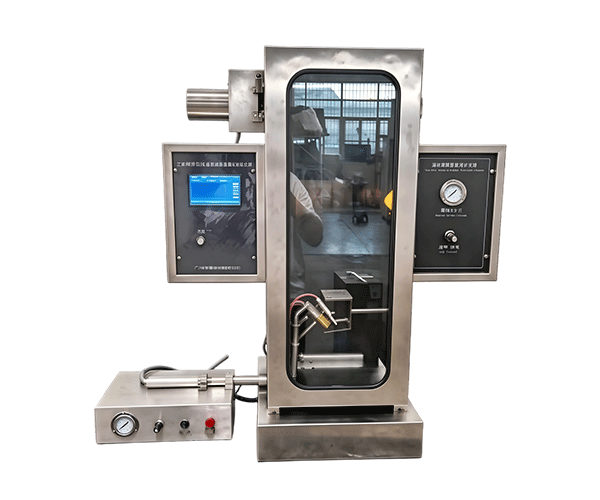
1. What Is a Smoke Density Tester for Building Materials?
A Smoke Density Tester for Building Materials is a laboratory instrument used to evaluate the optical effect of smoke generated when a specimen is exposed to specified test conditions. In a typical optical measurement arrangement, a light source sends a beam through a test chamber. As smoke accumulates inside the chamber, some of the light is absorbed or scattered by suspended particles. A detector measures the light that reaches it, and the system uses the change in light intensity to calculate an optical measurement.
Put simply, the more strongly smoke reduces the light passing through the chamber, the greater the measured optical attenuation. This gives researchers a way to compare smoke-related behavior between specimens tested under the same conditions. The actual result depends on the selected test method, the specimen, its dimensions, the heating conditions, and the test setup.
Our smoke density testing equipment is intended for customers who need controlled laboratory evaluation rather than an informal visual judgment. Looking at smoke and describing it as light, medium, or heavy is not enough for a technical comparison. A measurement system provides numerical data that can be recorded, reviewed, and used alongside other material test results.
Why measure smoke during combustion or decomposition?
Building materials can respond differently when heated. Some specimens may soften, melt, char, or release volatile products before visible flames appear. Others may ignite and burn, producing smoke as combustion continues. The smoke characteristics can also change over the duration of a test. Measuring optical changes during a defined exposure helps laboratories understand these differences more systematically.
For example, a manufacturer developing a new wall panel may want to compare two formulations. A laboratory may need to assess whether a change in resin, filler, coating, or surface treatment affects smoke production. A research team may be studying the behavior of composite building products at different heating levels. In these situations, a smoke density tester can provide supporting data for product development and material assessment.
It is important to distinguish smoke optical density from other fire-related measurements. Optical density describes the reduction in light transmission through smoke under a defined test arrangement. It does not directly measure the toxicity of smoke, the concentration of every chemical compound, the total heat released by a specimen, or the time a person could safely remain in a fire environment. Those questions require additional methods and, in some cases, separate instruments.
Typical materials and sample types
Depending on the selected test method and the final equipment configuration, smoke density testing may be relevant to solid construction materials and suitable material assemblies. Examples include polymer-based panels, composite boards, coated materials, insulation-related products, construction plastics, and other specimens for which an appropriate smoke test method has been identified.
Not every material can be tested in the same way. A rigid board, a flexible sheet, a layered composite, and a coated substrate may require different sample preparation or mounting arrangements. Thickness, surface condition, density, and specimen orientation can all influence the result. Before we confirm a configuration, we encourage customers to provide sample information and the standard or procedure they intend to follow.
This initial discussion helps prevent a common purchasing problem: selecting a tester based only on its product name, then discovering that its chamber dimensions, heating arrangement, specimen holder, or measurement method does not match the laboratory's actual requirements.
2. Working Principle: How Does the Smoke Density Tester Measure Smoke?
The central idea behind an optical smoke density measurement is straightforward: the system measures how much a smoke-filled environment reduces the intensity of a light beam. The detailed equipment structure depends on the selected method, but a suitable system may include a test chamber, specimen holder, controlled heating arrangement, optical light source, light detector, data acquisition system, control interface, and associated safety features.
Step 1: Prepare and identify the specimen
Before a test begins, the operator prepares the specimen according to the applicable procedure. This may involve cutting it to a specified size, recording its thickness, conditioning it under defined environmental conditions, and confirming its orientation. Where multiple samples are compared, using consistent preparation methods is essential.
We recommend recording the specimen identification, material composition where known, thickness, conditioning history, and any relevant surface treatment. These details make test records easier to interpret later. If the material is changed during product development, the records can also help explain why the results may differ.
Step 2: Apply controlled exposure conditions
The specimen is exposed to the heating conditions required by the selected test procedure. Depending on the method, the procedure may use a specified heat flux, a particular specimen orientation, and a defined approach to ignition. Some methods examine smoke produced under non-flaming thermal decomposition, while others include flaming combustion conditions.
These conditions matter because the same material may behave differently under different levels of heating. A specimen that produces one smoke response at a lower exposure may behave differently at a higher exposure. For this reason, a test result should always be read together with the conditions under which it was obtained.
Our equipment configuration discussions therefore focus on the test method rather than assuming that one universal heating arrangement is suitable for every application. Where a customer needs to follow a particular standard, the standard's current scope and detailed requirements should be checked before the equipment specification is finalized.
Step 3: Measure light transmission through smoke
As smoke enters or accumulates within the measurement path, it reduces the intensity of the transmitted light. The detector converts the received light into a measurable signal. The system compares that signal with a reference intensity to determine optical attenuation.
A simplified expression for optical density is:
D = log10(I0 / I)
In this expression, D is optical density, I0 is the reference light intensity without the smoke-related attenuation being measured, and I is the transmitted light intensity. The exact reported quantity for a particular test method may include additional calculations or a geometric correction. The expression above is a basic explanation of the optical principle, not a replacement for the calculation procedure specified by a standard.
For a simple illustration, if the transmitted light falls to one tenth of the reference intensity, the logarithmic optical density is 1. If it falls to one hundredth, the value is 2. These examples explain the mathematics only; they are not product specifications or expected test results for any particular material.
Step 4: Record the test response
Depending on the configuration and test procedure, the system may record changes in the optical signal over time and calculate the required smoke-related results. The resulting data can help a laboratory compare samples, examine how the smoke response changes during exposure, or evaluate the effects of a material modification.
We encourage users to retain the original measurement records, the specimen details, the selected exposure conditions, and the calculation method. If results are exported to a computer or included in a laboratory report, the report should identify the test method and relevant deviations. This makes the results easier for engineers, quality teams, customers, and auditors to understand.
Step 5: Review the result in its proper context
A numerical result is useful only when its meaning is clear. Optical smoke density is not a direct measurement of smoke mass, and it does not independently establish whether a product is safe for every building application. The result applies to the specimen and conditions covered by the test method.
For this reason, we encourage customers to consider smoke density data alongside other relevant information, such as ignition behavior, heat release, flame spread, material composition, and the requirements that apply to the intended end use. The correct combination of tests depends on the product and the market in which it will be used.
3. Main Features and Practical Benefits
When choosing a Smoke Density Tester for Building Materials During Combustion or Decomposition, we suggest looking beyond the machine's headline function. The useful question is whether the equipment can support the actual test procedure, provide suitable measurement records, and fit the laboratory's daily workflow. The following features describe the areas we consider when discussing a customized configuration. They should not be interpreted as a claim that every function is included in every model.
Optical measurement for quantitative comparison
The optical measurement system is the foundation of smoke density testing. Instead of relying only on visual observation, it allows smoke-related light attenuation to be recorded numerically. This can support comparisons between specimens, batches, or material formulations when the same method and test conditions are maintained.
When discussing a project, we review the required optical arrangement, measurement path, reference procedure, data recording needs, and applicable calculation method. The purpose is to establish a configuration appropriate to the customer's intended test rather than to promise a universal measurement capability without knowing the application.
Controlled testing conditions
Repeatable testing depends on more than the optical detector. The exposure conditions, specimen mounting, chamber arrangement, and operator procedure all influence the result. A suitable tester should be planned around the controls required by the selected method.
We therefore recommend confirming the required heating conditions, specimen orientation, chamber features, and test sequence before production. If the customer's laboratory already uses a documented procedure, sharing it at the quotation stage can help our team understand the required operating steps and identify any configuration questions early.
Data recording and result management
In product development and quality inspection, a result that cannot be traced back to the specimen and test conditions is difficult to use. Depending on the agreed system configuration, data handling requirements may include live readings, time-based recording, calculated results, report preparation, or data export.
We discuss these requirements before finalizing the equipment. For example, a research laboratory that frequently compares multiple material formulations may need a different reporting workflow from a manufacturer that performs periodic incoming-material checks. A clear understanding of the users and reporting process helps avoid unnecessary functions while keeping important requirements in view.
Configuration based on the application
Different customers have different priorities. One laboratory may need a tester for routine material comparison. Another may need to work toward a specified national or international test method. A university may use the equipment for research and teaching, while a manufacturer may need to evaluate changes in product formulation.
Our customization process begins with these practical differences. We discuss the intended materials, sample dimensions, target method, control requirements, installation environment, and documentation needs. Once these details are understood, the technical configuration can be reviewed with the customer before manufacturing begins.
Safety and laboratory operation
Testing materials under heat or combustion conditions can produce hot surfaces, smoke, and potentially hazardous decomposition products. A laboratory should consider chamber access, electrical safety, ventilation, exhaust handling, operator training, and the safe removal of specimens after a test.
These matters should be addressed as part of the laboratory's complete test arrangement. The smoke density tester should not be assumed to replace suitable room ventilation, exhaust treatment, fire protection, or workplace safety procedures. The required provisions depend on the materials, the test method, local regulations, and the laboratory environment.
Feature summary
| Area | Purpose | What we confirm before production |
|---|
| Optical measurement | Measure light attenuation associated with smoke | Required measurement method, optical arrangement, and calculation procedure |
| Heating arrangement | Expose specimens under defined test conditions | Target standard, heating conditions, specimen orientation, and ignition requirements |
| Specimen handling | Position and support the test sample | Sample dimensions, thickness, mounting method, and material form |
| Data management | Record and review test results | Required outputs, reporting workflow, and data export needs |
| Safety provisions | Support safe operation in the intended laboratory | Ventilation, exhaust, access, electrical supply, and site conditions |
| Technical documentation | Support installation, operation, and maintenance | Required manuals, test records, drawings, and delivery documents |
Source note: This table is a practical equipment-selection checklist prepared by Guangzhou Chuangge Automation Equipment Co., Ltd. It is not a published performance specification or a declaration that all listed functions are included in a standard configuration. Final functions should be confirmed in the technical agreement.
4. Applicable Standards and How to Choose the Right Test Method
Standards are a critical part of smoke density testing, but their scopes are not interchangeable. We recommend identifying the exact standard, edition, specimen type, and intended use before choosing a tester. A product description that mentions a familiar standard is not enough to demonstrate that a particular configuration can perform every procedure required by that document.
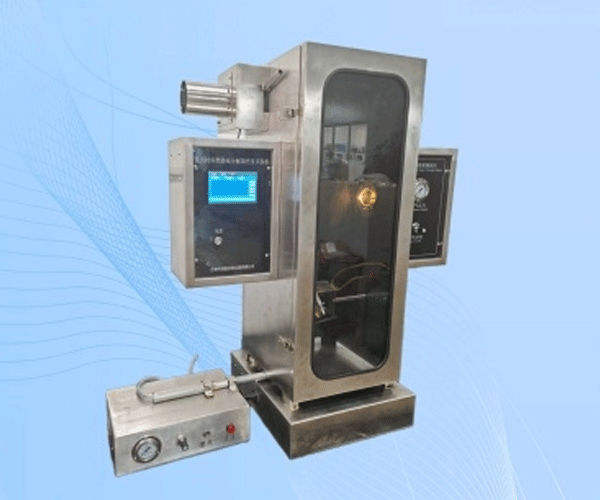
ASTM E662: Specific optical density of smoke from solid materials
ASTM E662 is titled Standard Test Method for Specific Optical Density of Smoke Generated by Solid Materials. The ASTM description explains that the method evaluates the specific optical density of smoke generated by specimens of materials and assemblies under specified exposure conditions. Its measurement is based on the attenuation of a light beam by smoke accumulating in a closed chamber.
The method's scope and limitations are important for equipment buyers. ASTM states that results are specific to the specimen or assembly in the form and thickness tested, and that the method does not incorporate all the factors required for a complete assessment of fire hazard or fire risk under actual conditions. In other words, an ASTM E662 result should not be treated as a universal property of a material in every possible fire scenario.
For the current document information and official description, see ASTM E662-21 on the ASTM website. Before purchasing equipment for a compliance-related project, confirm the applicable edition and the full test requirements with the responsible laboratory or certification body.
ISO 5659: Optical density measurement using a single-chamber test
ISO 5659 addresses smoke generation and the determination of optical density using a single-chamber test. The ISO 5659:2026 publication information describes testing of essentially flat specimens or composites, up to 25 mm thick, in a horizontal orientation under specified thermal irradiance in a closed cabinet, with or without a pilot flame. Its stated scope is applicable to plastics.
The standard also makes clear that optical-density results relate to the specimen or assembly in the form and thickness tested. The specified exposure levels matter, so results obtained under different conditions should not automatically be treated as directly comparable.
For customers evaluating plastics or plastic-containing construction products, we recommend checking whether ISO 5659:2026 is the required document and whether the intended specimen falls within its scope. The publication can be reviewed through the ISO 5659:2026 standard page.
ISO 5660-1: Smoke production rate as part of Cone Calorimeter testing
ISO 5660-1 is related to reaction-to-fire testing using the cone calorimeter method. According to the International Organization for Standardization, it specifies a method for assessing Heat Release Rate and dynamic smoke production rate for specimens exposed horizontally to controlled levels of irradiance with an external igniter. The smoke production rate is determined from the attenuation of a laser light beam by the combustion product stream.
Although both ISO 5660-1 and chamber-based smoke density methods involve optical measurement, they are not simply different names for the same test. Their test arrangements, measured outputs, and purposes differ. If a laboratory needs heat release rate and dynamic smoke production rate data from a cone calorimeter test, it should specify that requirement clearly instead of assuming that a general smoke density chamber will provide the same results.
The official standard description is available at ISO 5660-1:2015. ISO records that this edition was reviewed and confirmed in 2026 and has one amendment. Users should verify the applicable edition and amendment status when preparing a procurement specification.
Comparison of related standards
| Standard | Main measurement focus | Scope information to check | Equipment-selection implication |
|---|
| ASTM E662-21 | Specific optical density of smoke from solid materials and assemblies | Specified chamber exposure conditions, specimen form and thickness, and the prescribed procedure | Confirm that the chamber, exposure arrangement, and optical measurement meet the selected edition |
| ISO 5659:2026 | Optical density of smoke using a single-chamber test | Plastics; essentially flat specimens or composites up to 25 mm thick, horizontal orientation, and specified irradiance | Confirm specimen requirements, thermal exposure settings, and any pilot-flame requirements |
| ISO 5660-1:2015 | Heat release rate and dynamic smoke production rate using a cone calorimeter | Horizontal specimens under controlled irradiance with an external igniter | Determine whether a cone calorimeter system and its additional measurement components are required |
Sources: ASTM International, ASTM E662-21; International Organization for Standardization, ISO 5659:2026 and ISO 5660-1:2015. The table summarizes the published scope descriptions for equipment-planning purposes; it does not replace the full standards.
What should customers provide when requesting a quotation?
We recommend sending us the standard number and edition, the intended material, the specimen dimensions, the required exposure conditions, and the expected measurement outputs. If the project is part of an external certification or customer approval process, please also share the relevant test clause or laboratory requirement where permitted.
This information helps us review whether the requested system is suitable for the intended test. It also gives both sides a clearer basis for confirming the configuration, functions, accessories, technical documentation, and acceptance requirements. We would rather identify a scope mismatch before production than leave the customer to discover it after delivery.
5. Industries and Applications of Smoke Density Testing
Smoke density testing can support material research and quality evaluation in a range of industries. The exact suitability depends on the specimen and test method, but the following applications illustrate why manufacturers and laboratories may request a smoke density testing system.
Building materials manufacturing
Manufacturers of construction boards, panels, polymer-based products, coatings, and composite materials may use smoke testing during product development. When a formulation changes, the manufacturer may want to know whether the change affects smoke-related performance under a defined laboratory procedure.
For example, changing a polymer resin, adding a filler, modifying a coating, or changing the thickness of a composite may alter the way the specimen responds to heat. A controlled smoke density test can provide one useful data point for comparison. It should be combined with other relevant testing where the product specification requires a broader assessment of fire performance.
Construction and engineering laboratories
Engineering laboratories often need documented test methods, traceable sample identification, and consistent data recording. A smoke density tester can be part of a wider laboratory program used to compare materials, investigate product behavior, or support research into fire-related performance.
Laboratories should establish written operating procedures, define the responsibilities of operators, and maintain records of equipment checks and any relevant calibration activities. They should also review sample preparation and conditioning requirements so that test results can be interpreted consistently across different operators and test dates.
Quality inspection and third-party testing
Quality inspection organizations may use smoke-related testing as one part of a material evaluation process. Depending on their responsibilities, they may compare samples against customer requirements, examine product variations, or provide technical data for a broader assessment.
It is important to distinguish internal quality testing from accredited testing or formal product certification. Purchasing a smoke density tester does not automatically make a laboratory accredited, and it does not make every test report a certification document. Accreditation, scope, personnel competence, procedures, and applicable regulatory requirements must be addressed separately.
Research and education
Universities and research institutions may study the effects of material composition, surface treatment, specimen thickness, or heating conditions on smoke production. In these applications, data recording and consistent sample preparation are particularly useful because researchers may need to compare multiple groups of specimens.
Educational laboratories can also use smoke density testing to demonstrate the relationship between optical attenuation and smoke accumulation. Because the equipment operates under controlled heating conditions, laboratory safety procedures and appropriate supervision remain essential.
Electronics, electrical products, and related materials
Some electrical and electronic products contain polymer housings, insulating parts, cable-related materials, and other components that may be evaluated under relevant fire or smoke test procedures. A smoke density tester may support suitable material-level studies, but it should not be assumed to cover all tests required for a finished electrical product.
Depending on the product, additional tests may be needed to assess ignition, flame propagation, electrical insulation, heat release, or other safety characteristics. We recommend confirming the applicable product standard and the required scope before deciding which instruments are necessary.
Application overview
| Industry or user | Typical objective | Important planning point |
|---|
| Building materials manufacturer | Compare smoke response between formulations or product versions | Keep specimen preparation and exposure conditions consistent |
| Engineering laboratory | Generate documented material test data | Confirm the applicable method, recordkeeping process, and operator procedure |
| Quality inspection organization | Support material assessment and customer requirements | Verify whether the test falls within the laboratory's authorized scope |
| Research institution | Investigate smoke-related material behavior | Define variables and preserve original test data |
| Electrical and electronic product developer | Study suitable polymer and component materials | Determine whether separate product-level fire tests are also required |
Source note: This application table is an illustrative guide prepared from the general uses of smoke-related material testing described in ASTM E662 and ISO 5659. It is not a statement that every listed product or industry is covered by one universal test method. Refer to the standards' official scope descriptions: ASTM E662 and ISO 5659:2026.
6. Our Manufacturing Process, Customization, and Delivery
At Guangzhou Chuangge Automation Equipment Co., Ltd., we believe a testing instrument should be planned around its intended work. A customer may have a defined standard, a particular specimen, an existing laboratory layout, or a specific data management requirement. These details influence the equipment design and should be discussed before manufacturing begins.
Step 1: Understand the testing requirement
We begin by discussing the intended application. We ask what material will be tested, which standard or procedure applies, what sample dimensions are expected, and what outputs the customer needs. We also review installation conditions, available utilities, ventilation arrangements, and the laboratory's operating workflow where relevant.
If the customer is unsure which test method is appropriate, we can discuss the differences between the intended measurement and the available equipment approaches. The final selection of a mandatory standard should still be confirmed by the customer, responsible technical authority, or certification body.
Step 2: Confirm the technical configuration
After reviewing the application, we prepare a configuration for discussion. This may cover the chamber arrangement, heating system, specimen holder, optical measurement system, controls, data recording, accessories, and documentation. The actual list depends on the agreed requirements.
We encourage customers to review the proposed functions carefully. For standards-based work, the technical agreement should identify the relevant standard and edition wherever possible. It should also clarify any agreed exclusions or deviations, so there is no confusion about the intended test capability.
Step 3: Manufacturing and assembly
Once the configuration is confirmed, production and assembly are arranged according to the agreed specification. Our company focuses on customized testing equipment, so the manufacturing plan is tied to the equipment's required functions and the availability of suitable components.
During this stage, coordination matters. Mechanical construction, electrical installation, instrument integration, and control functions must fit together as a working system. If a customer requests a special fixture, a particular interface, or additional documentation, those requirements should be settled early to reduce avoidable changes later in the process.
Step 4: Inspection and functional checks
Before delivery, we arrange equipment inspection and functional testing according to the agreed scope. These activities are intended to check the equipment's condition and the operation of the functions included in the order. Relevant technical documents are prepared for handover.
We also recommend that customers define acceptance requirements before the order is confirmed. Depending on the project, these may cover visible condition, completeness of accessories, basic operation, control functions, documentation, or an agreed demonstration. If a formal calibration certificate, accredited calibration, or witnessed performance test is required, this should be discussed separately and explicitly included in the agreement where available.
Functional testing at the factory should not be confused with formal calibration or certification. A machine can pass basic operating checks without automatically proving that every measurement meets every clause of a particular standard. The acceptance process must reflect the customer's actual requirements.
Step 5: Packaging and transportation
Testing equipment may include precision components, electrical assemblies, optical parts, and accessories that need protection during transport. We arrange suitable protective packaging according to the equipment structure, shipment route, and delivery requirements. Sturdy wooden cases may be used where appropriate, together with protective materials and secure internal positioning.
Transportation can be arranged by sea, air, or land depending on the destination, schedule, and shipment requirements. Before dispatch, the customer and supplier should confirm the delivery address, unloading arrangements, access restrictions, and any special handling instructions. For international orders, the shipping documents and responsibilities should also be agreed in advance.
Production lead time and order terms
For our construction-material and component testing equipment projects, the typical production period is approximately 30–60 days, depending on the specification and degree of customization. This is a planning estimate rather than a guaranteed lead time for every order. The final schedule should be confirmed after the technical configuration, component requirements, and order details have been reviewed.
Payment terms can be negotiated according to the order requirements. Shipping arrangements are selected according to the destination and urgency, and the packaging method is matched to the equipment and transport conditions. We aim to keep the customer informed about the confirmed production schedule, inspection arrangements, and dispatch plan.
Company background and quality management
Guangzhou Chuangge Automation Equipment Co., Ltd. specializes in customized testing equipment and serves applications involving construction materials and components, wires and cables, plastics and textiles, electrical plugs, sockets and switches, electronics, and home appliances.
Our stated corporate philosophy is to ensure survival through high technology and drive development through high quality. The company holds ISO 9001 quality management, ISO 14001 environmental management, and ISO 45001 occupational health and safety management system certifications. Our intellectual property portfolio includes more than 20 patents across invention, utility model, and software-related categories.
These systems and technical resources support our broader approach to equipment development and manufacturing. For a specific project, however, we still believe the most useful proof is a clear technical specification, a transparent agreement on functions, suitable inspection records, and documentation that matches the equipment delivered.
7. Why Work with Guangzhou Chuangge Automation Equipment Co., Ltd.?
Choosing a smoke density tester is not only a matter of comparing equipment prices. The more important question is whether the supplier understands the intended test, can communicate the technical requirements clearly, and can deliver a configuration that fits the customer's laboratory. We focus on these practical points throughout the project.
Customization based on real testing needs
We do not assume that every customer needs exactly the same setup. Some customers are primarily interested in material research; others need a defined test procedure, a particular specimen fixture, or a specific data workflow. We review these differences before confirming the configuration.
This approach helps customers make informed decisions about required functions and avoid paying for features that do not support their work. It also provides an opportunity to identify essential requirements that might otherwise be overlooked, such as sample mounting, exhaust arrangements, or the format of technical documents.
Experience with industrial testing applications
Our business covers testing equipment for several industrial sectors, including construction materials, wires and cables, plastics and textiles, electrical accessories, and electronic products. These sectors have different testing needs, and their instruments may be subject to different standards and acceptance requirements.
When discussing a smoke density testing project, we focus on the specific material and procedure instead of treating all industrial tests as interchangeable. This is particularly important when the requested test supports product development, customer approval, or a formal evaluation process.
Clear communication before manufacturing
We believe a good quotation should be based on a shared understanding of the project. Customers should know which functions are included, what documents will be supplied, what the expected production period is, and which acceptance checks will be performed. We encourage technical questions to be raised before the order is finalized.
If the customer has a detailed specification, we can use it as the basis for a technical review. If the requirement is still being developed, we can discuss the intended application and identify the details that need confirmation before a final configuration can be agreed.
Inspection and documentation
Our delivery process includes equipment inspection, functional testing, and relevant technical documentation within the agreed scope. This helps the customer prepare for receipt, installation, and operation. We also recommend confirming in advance whether any additional documents or specific acceptance procedures are required for the intended laboratory.
Support for the complete purchasing process
From technical discussion and configuration confirmation to manufacturing, inspection, packaging, and shipping coordination, we aim to keep the project organized. The production period, payment terms, and transport arrangements are discussed according to the order requirements. For international customers, clear communication about delivery conditions is especially important because installation access, customs procedures, and local handling facilities may differ from one destination to another.
Our goal is straightforward: to supply testing equipment that matches the agreed requirements and gives the customer a clear basis for operating and maintaining the system. We believe practical technical communication is just as important as the instrument itself.
8. Frequently Asked Questions About Smoke Density Testers
Q1. What does a Smoke Density Tester for Building Materials measure?
It measures the optical effect of smoke produced by a specimen under defined test conditions. In a typical optical system, the instrument measures the reduction in light transmitted through smoke and uses the measurement to calculate the required optical-density result. The exact reported quantity depends on the selected test method and its calculation procedure.
Q2. Can the tester measure smoke from both combustion and decomposition?
Some established smoke test methods cover smoke generated during non-flaming thermal decomposition and flaming combustion, but the applicable conditions depend on the standard and equipment configuration. Before ordering, customers should confirm whether the required procedure includes a pilot flame, non-flaming exposure, or more than one test condition.
Q3. Which materials can be tested?
Potential applications include suitable solid building materials, plastic-based construction products, composite panels, coatings, and other specimens within the scope of the selected method. Material thickness, surface form, specimen orientation, and mounting requirements can affect suitability. We recommend sending the material description and sample dimensions for review before finalizing the equipment configuration.
Q4. Does the tester directly measure smoke toxicity?
No. Optical smoke density measures light attenuation caused by smoke. It does not identify every chemical compound in the smoke or directly quantify toxic effects. If a project requires chemical analysis or toxicity assessment, suitable additional methods and instruments may be needed.
Q5. Is optical density the same as smoke mass concentration?
No. Optical density is based on the attenuation of light under a defined optical arrangement. It is not a direct measurement of smoke mass per unit volume. Different particles, materials, and exposure conditions can produce different optical responses, so the results should not be converted into mass concentration without an appropriate validated method.
Q6. Can one tester meet ASTM E662 and ISO 5659 requirements?
That depends on the equipment design and the detailed requirements of each standard. The standards have related objectives but may differ in specimen preparation, orientation, exposure conditions, chamber arrangements, and calculations. We recommend reviewing the requested editions and their test procedures before confirming a dual-standard configuration. Compliance should not be assumed from the product name alone.
Q7. Can this tester replace a cone calorimeter?
Not automatically. ISO 5660-1 describes Cone Calorimeter Testing that measures heat release rate and dynamic smoke production rate under controlled irradiance. A smoke density chamber and a cone calorimeter serve different testing arrangements and may produce different types of results. If the laboratory needs heat release rate, mass loss, or other cone calorimeter outputs, the required system should be specified separately.
Q8. How long does manufacturing usually take?
Our typical production period for construction-material and component testing equipment is approximately 30–60 days. The actual schedule depends on the agreed configuration, customization requirements, component availability, and order details. We confirm the project schedule after reviewing the technical specification.
Q9. What is included with delivery?
Delivery includes equipment inspection, functional testing, and relevant technical documentation according to the agreed order scope. The exact list of accessories, manuals, drawings, and other documents should be confirmed in the quotation or technical agreement. If formal calibration, third-party witnessing, or specific acceptance testing is required, please identify it before the order is placed.
Q10. How is the equipment packaged and shipped?
We select protective packaging according to the equipment structure and transport conditions. Protective materials and sturdy wooden cases may be used where appropriate. Sea, air, or land transportation can be arranged according to the destination, urgency, and agreed delivery conditions.
Q11. Can the equipment be customized for our laboratory?
We specialize in customized testing equipment and can discuss configuration requirements based on the intended material, standard, specimen dimensions, data needs, and laboratory environment. The available options and technical feasibility should be confirmed during the pre-sales review. Providing a test specification or the relevant standard clause usually makes this process more efficient.
Q12. What information should we provide when requesting a quotation?
To help us prepare a useful quotation, please provide the material type, specimen dimensions and thickness, target standard and edition, required test conditions, desired measurement outputs, installation location, and any special reporting or documentation requirements. If you have an existing laboratory procedure or equipment specification, sharing it can help us review the request more accurately.
Discuss Your Smoke Density Testing Requirements with Us
A Smoke Density Tester for Building Materials During Combustion or Decomposition can provide useful optical measurement data for material research, product development, and laboratory evaluation. However, the value of the results depends on choosing the right test method, preparing specimens consistently, controlling the exposure conditions, and interpreting the data within the method's scope.
At Guangzhou Chuangge Automation Equipment Co., Ltd., we work with customers to understand these practical requirements before confirming a testing equipment configuration. Our team can discuss the intended material, applicable standard, specimen dimensions, operating conditions, data requirements, and delivery expectations to help establish a suitable technical plan.
If you are sourcing a smoke density tester for a construction materials laboratory, building product manufacturer, quality inspection organization, or research institution, please send us your testing requirements. We will review the application and discuss the equipment functions, customization options, production schedule, inspection arrangements, and shipping method needed for your project.
Contact Guangzhou Chuangge Automation Equipment Co., Ltd. to discuss a Smoke Density Tester for Building Materials During Combustion or Decomposition configured around your laboratory's testing needs.
Technical References
Note: Standards may be revised or amended. Customers should verify the current applicable edition and the full test requirements before purchasing equipment for standards-based testing or formal product evaluation.


