Test System for Airborne Sound Insulation Performance of Building Doors And Windows
Noise is part of everyday life, but unwanted noise inside homes, offices, hotels, hospitals, and other buildings can affect comfort, concentration, and the overall indoor environment. Doors and windows are important parts of a building's sound insulation system. Even when a wall has good acoustic performance, poorly designed window frames, weak seals, gaps around door leaves, or unsuitable glazing may allow sound to pass through more easily than expected.
At Guangzhou Chuangge Automation Equipment Co., Ltd., we specialize in customized testing equipment for industrial and laboratory applications. Our Test System for Airborne Sound Insulation Performance of Building Doors and Windows is designed to support the laboratory evaluation of how effectively doors and windows reduce the transmission of airborne sound under defined test conditions.
We understand that manufacturers need more than a general statement that a door or window is soundproof. They need test data that can be used to compare product designs, investigate weak points, support research and development, and document acoustic performance. A suitable airborne sound insulation test system helps laboratories collect and analyze measurement data in a controlled environment, giving engineers a clearer understanding of how a specimen performs.
Our approach starts with the customer's actual testing requirements. We discuss the specimen type, dimensions, target standard, measurement range, laboratory layout, data processing needs, and installation conditions before confirming the equipment configuration. The aim is to provide a practical testing solution that fits the customer's work rather than simply supplying a machine with a general acoustic testing label.
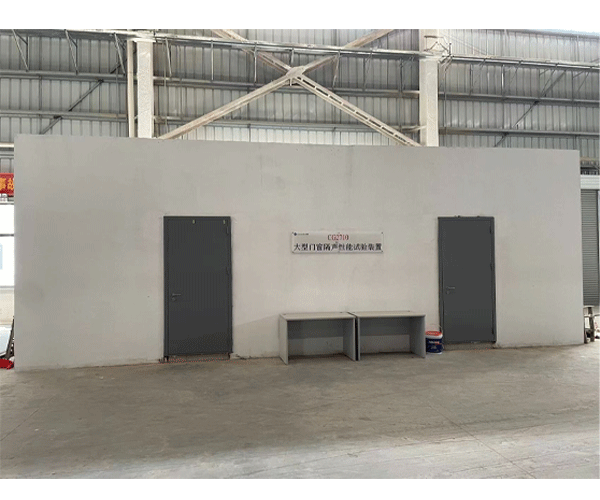
1. What Is an Airborne Sound Insulation Test System for Doors and Windows?
An airborne sound insulation test system is used to evaluate how much sound is reduced when it travels through a building element. In this application, the specimen may be a complete door, window, glazing assembly, or another suitable building component. The system creates a controlled sound field on one side of the specimen and measures the sound response on both sides according to the selected test procedure.
In simple terms, the equipment helps answer a practical question: when sound reaches a closed door or window, how much of that sound passes through the specimen under the defined laboratory conditions?
The result is not determined by the glass or door panel alone. The entire assembly can influence acoustic performance, including the frame, seals, joints, locking mechanism, mounting details, and the way the specimen is installed in the test opening. A small gap may create a path for sound that bypasses the main panel. That is why testing a complete assembly can be more useful than evaluating only one material in isolation.
Why do manufacturers need this testing system?
Door and window manufacturers often need to compare different product designs. For example, a company may want to evaluate whether a change in glazing construction improves sound insulation, whether a different seal reduces leakage, or whether a revised frame design affects the performance of the complete assembly.
Without controlled testing, these questions can be difficult to answer accurately. Listening to sound on either side of a window may reveal an obvious difference, but human hearing is not a reliable substitute for a documented acoustic measurement. The result can be affected by the source sound, room acoustics, background noise, the listener's position, and other factors.
A laboratory test system provides a more systematic way to measure and compare performance. When specimens are tested using the same method and comparable conditions, the results can support product development, quality evaluation, technical reporting, and communication with customers.
What does airborne sound insulation mean?
Airborne sound is sound that travels through the air, such as speech, traffic noise, music, or sound from machinery. When this sound reaches a door or window, part of the acoustic energy may be reflected, part may cause the structure to vibrate, and part may pass through to the other side.
Airborne sound insulation describes the ability of a building element to reduce sound transmission from one side to the other. A common laboratory measurement is sound reduction index or sound transmission loss, expressed in decibels (dB) across different frequencies. The exact quantity and reporting method depend on the selected standard.
A single-number rating can make product comparisons easier, but the rating should be interpreted together with the measurement method. Two products with similar overall ratings may behave differently at particular frequencies. For some applications, such as buildings exposed to road traffic or low-frequency equipment noise, the frequency-dependent results may provide useful additional information.
Doors and windows must be evaluated as complete assemblies
It is tempting to assume that thicker glass or a heavier door leaf will always provide better sound insulation. In practice, acoustic performance is influenced by several interacting factors. These may include panel mass, stiffness, the use of multiple layers, cavity design, frame construction, airtightness, sealing materials, and installation quality.
For example, a window with a well-designed glazing unit may still perform poorly if the frame seals are incomplete or the specimen is mounted with unintended gaps. Similarly, a door leaf with good material properties may not deliver the expected result if the perimeter seals or threshold arrangement allow sound to pass around it.
Our Test System for Airborne Sound Insulation Performance of Building Doors and Windows is intended to support the evaluation of suitable complete specimens under defined conditions. The specimen size, mounting frame, room arrangement, and measurement procedure should be confirmed during project planning to ensure that the proposed system matches the intended application.
2. Working Principle: How Does the Door and Window Sound Insulation Test System Work?
The measurement principle is based on comparing sound conditions on the source side and receiving side of a test specimen. A laboratory arrangement generally includes a sound source, a source room, a receiving room, a specimen opening and mounting structure, acoustic measurement instruments, and a data processing system. The final design depends on the required standard and the laboratory's existing facilities.
Step 1: Install and prepare the specimen
The door or window specimen is installed in the designated test opening according to the applicable procedure. Its dimensions, orientation, construction, sealing condition, and mounting details should be recorded. If the test concerns the performance of a complete product, the installation must represent the specimen configuration that the customer intends to evaluate.
This step deserves careful attention. If a specimen is mounted differently from the way it is intended to be used, the result may not represent the product's normal configuration. For example, gaps around the test opening can create unintended sound transmission paths. The mounting method should therefore follow the requirements of the selected standard and the agreed test plan.
Step 2: Generate sound in the source room
A loudspeaker or another suitable sound source produces the acoustic signal required by the test method. The sound energy travels through the source room and reaches the test specimen. Depending on the procedure, the system may use measurements across a defined range of frequencies rather than relying on a single tone.
Frequency matters because different parts of the sound spectrum may interact with the specimen differently. A door or window may reduce some frequencies more effectively than others. For this reason, laboratory testing commonly records results in octave bands or one-third-octave bands, depending on the standard and measurement requirements.
Step 3: Measure the sound on both sides
Sound level meters or suitable microphone and analyzer systems measure the sound field in the source and receiving rooms. The receiving-side measurements show the sound level that reaches the other side of the specimen, while the source-side measurements help establish the sound conditions applied during the test.
The calculation cannot normally be based on a simple subtraction of two readings without considering the test method. Receiving-room absorption, background noise, room characteristics, microphone positions, and other factors may need to be taken into account. The applicable standard specifies the required measurement and correction procedures.
Step 4: Account for receiving-room absorption
When sound enters a room, some energy is absorbed by surfaces, furnishings, and other materials, while the rest is reflected. This affects the sound level measured in the receiving room. In laboratory sound insulation measurements, the receiving-room acoustic absorption must be considered according to the selected method.
This is one reason why the test system is more than a loudspeaker and a sound meter. A proper measurement arrangement requires suitable rooms, appropriate measurement equipment, controlled procedures, and a calculation method that accounts for the relevant acoustic conditions.
Step 5: Calculate the sound insulation result
Depending on the standard, the measurement process may determine a sound reduction index or sound transmission loss across multiple frequency bands. The resulting frequency-dependent data can then be used for product comparison and, where required, converted into a single-number rating using a specified rating procedure.
A simplified explanation is that the system evaluates the sound level difference between the source and receiving sides while applying the necessary corrections. The actual calculation is more detailed than a simple difference because room absorption, background noise, and other factors can affect the measured values.
We recommend that customers specify the required output quantities before ordering the equipment. A laboratory may need frequency-band data, a weighted rating, report templates, or data export functions. These requirements should be identified in advance so that the proposed measurement and software configuration can be reviewed properly.
Step 6: Review the results and compare products
After testing, the operator reviews the frequency-dependent results, the calculated rating where applicable, and the recorded test conditions. The data can be used to compare product versions, investigate design changes, or support a technical report.
For a meaningful comparison, the specimens should be tested using comparable methods and mounting conditions. A result from one standard should not automatically be compared with a result obtained using a different standard or a substantially different test arrangement. When the method changes, the report should explain the difference clearly.
A simplified sound insulation relationship
The following expression illustrates the general idea behind a sound level difference:
Sound level difference = source-side sound level − receiving-side sound level
This simplified relationship helps explain why measurements are taken on both sides of a specimen. It is not, by itself, the full calculation of a standardized sound reduction index or sound transmission loss. The exact calculation depends on the applicable test method and may include corrections for room absorption and other measurement conditions.
For our customers, the practical point is straightforward: reliable results depend on the complete measurement arrangement, not simply on obtaining two sound level readings. Before confirming a system, we discuss the standard, specimen, required acoustic measurements, and laboratory conditions that determine how the final results will be calculated.
3. Main Features and Technical Considerations
When choosing a Test System for Airborne Sound Insulation Performance of Building Doors and Windows, we suggest focusing on the requirements that affect the test result and the laboratory's daily work. A system that looks suitable in a catalogue may still be unsuitable if the specimen opening is too small, the acoustic measurement range does not meet the test plan, or the laboratory cannot provide the required room conditions.
Acoustic source and measurement equipment
The sound source must be suitable for the test procedure, while the measurement chain must support the required frequency analysis and measurement accuracy. Depending on the configuration, the system may include loudspeakers, power amplification, microphones, sound level meters, an analyzer, and data acquisition software.
The exact instruments and specifications should be selected according to the target standard and the intended test range. We do not assume that every customer needs the same measurement hardware. Instead, we review the requested frequency bands, the measurement procedure, and any existing laboratory equipment that may be reused where technically appropriate.
Source room and receiving room arrangement
Laboratory sound insulation testing normally relies on two acoustic spaces separated by a test opening. The arrangement is designed to make sound transmission through the specimen the principal path between the rooms, while reducing the influence of unwanted flanking transmission.
Flanking transmission occurs when sound reaches the receiving side through paths other than the intended specimen. These paths may involve surrounding structures, joints, or other parts of the building. If flanking sound is not adequately controlled, it can affect the result and make it harder to determine the performance of the door or window itself.
For this reason, laboratory design and installation conditions are central to the project. We recommend confirming whether the customer already has suitable acoustic test rooms or needs a broader facility solution. The equipment specification should clearly identify which room structures, test openings, and installation works are included and which are the customer's responsibility.
Specimen mounting and sealing
Doors and windows come in many sizes and configurations. A system intended for small window specimens may not be suitable for large sliding doors or façade elements. The opening dimensions, specimen weight, frame structure, and installation method should therefore be confirmed before manufacturing.
Mounting details also affect the result. The specimen should be installed according to the relevant standard and documented procedure. If the purpose is to evaluate a complete door or window, the mounting arrangement should avoid unintended leakage paths that are not part of the product being assessed.
Frequency-band analysis and data processing
Sound insulation varies with frequency. A measurement system may therefore need to record acoustic data in octave bands or one-third-octave bands and process the results according to the selected standard. Software requirements may include data acquisition, calculation, curve display, report generation, and export to common file formats.
We encourage customers to explain how they intend to use the results. A research laboratory may need detailed frequency-band data for analysis, while a manufacturer may prioritize repeatable product comparisons and standardized reports. The software configuration should reflect these needs without making unsupported promises about automatic compliance or certification.
Background noise and measurement quality
Background noise is sound present in the receiving room that does not come through the test specimen. If background noise is too high, it can interfere with the measurement of the transmitted sound, particularly when the specimen provides strong sound insulation.
A suitable test procedure includes requirements for evaluating and handling background noise. The laboratory should also consider the condition of its measurement instruments, the measurement environment, and the consistency of the test procedure. Routine equipment checks and appropriate calibration arrangements are important parts of maintaining confidence in measurement results.
Practical system-selection checklist
| System area | Purpose | Information to confirm before ordering |
|---|
| Sound source | Generate the acoustic signal required by the test method | Required frequency range, source arrangement, and applicable procedure |
| Microphones and analyzer | Measure sound levels and frequency-dependent data | Measurement channels, frequency analysis, instrument specifications, and calibration needs |
| Source and receiving rooms | Provide controlled acoustic measurement spaces | Existing room conditions, room isolation, flanking paths, and site layout |
| Specimen opening | Support installation of doors or windows | Maximum specimen dimensions, weight, mounting details, and sealing requirements |
| Data processing | Calculate and report the required acoustic results | Output quantities, frequency bands, rating method, report format, and export requirements |
| Safety and installation | Support reliable equipment operation | Electrical supply, room access, installation works, and operator requirements |
Source note: This is a practical equipment-selection checklist prepared by Guangzhou Chuangge Automation Equipment Co., Ltd., not a published performance specification. The measurement and facility requirements should be confirmed against the applicable standard, including ISO 10140-2 and ISO 10140-5, where relevant. See the official ISO 10140-2:2021 standard page for the laboratory measurement method and its scope.
4. Applicable Standards for Airborne Sound Insulation Testing
Standards are essential when a test result will be used for product comparison, customer approval, research, or formal reporting. However, different standards may define different specimen requirements, measurement arrangements, calculation methods, and rating procedures. We recommend confirming the exact standard and edition before finalizing the equipment configuration.
ISO 10140-2:2021 — Laboratory measurement of airborne sound insulation
ISO 10140-2:2021 specifies a laboratory method for measuring airborne sound insulation of building products, including doors, windows, walls, floors, shutters, façade elements, glazing, and certain technical elements. Its purpose is to provide a controlled way to measure and compare the sound insulation properties of building elements.
The standard explains that laboratory measurements are performed in facilities designed to suppress sound transmission through flanking paths. It also cautions that laboratory results cannot be applied directly to actual building conditions without considering other factors, such as flanking transmission, boundary conditions, and total loss factor.
For customers evaluating a laboratory test system for building doors and windows, ISO 10140-2 is an important reference to review. It should be considered together with other relevant parts of the ISO 10140 series, including application rules for particular products and requirements for measurement techniques and laboratory facilities.
The official ISO page states that ISO 10140-2:2021 was reviewed and confirmed in 2026, so this edition remains current at the time of writing. See ISO 10140-2:2021 — Acoustics: Laboratory measurement of sound insulation of building elements, Part 2.
ISO 717-1:2020 — Rating of airborne sound insulation
ISO 717-1:2020 defines single-number quantities for rating airborne sound insulation in buildings and building elements, including doors and windows. It also provides rules for determining these ratings from measurement results obtained in octave bands or one-third-octave bands under relevant measurement standards.
Why is this important? Frequency-band data can be detailed and useful for technical analysis, but product catalogues and building specifications often need a simpler rating for comparison. A standardized rating method provides a common basis for summarizing the results, provided the underlying measurements and calculations meet the applicable requirements.
However, a single-number rating should not be treated as a complete description of performance in every noise environment. Two products with similar ratings may have different frequency-dependent characteristics. Where low-frequency traffic noise, aircraft noise, or other specific sources are important, the relevant rating approach and supporting frequency data should be reviewed carefully.
The official standard page is available at ISO 717-1:2020 — Acoustics: Rating of sound insulation in buildings and of building elements, Part 1. The ISO page states that this edition was reviewed and confirmed in 2026.
ASTM E90-23 — Laboratory measurement of airborne sound transmission loss
ASTM E90-23 covers laboratory measurement of airborne sound transmission loss for building partitions and elements, including doors, windows, walls, floor-ceiling assemblies, roofs, and panels. The laboratory arrangement is designed so that the test specimen is the primary sound transmission path between the two rooms and approximately diffuse sound fields exist in the rooms.
The standard also explains that laboratory sound ratings do not directly represent sound isolation in buildings, where sound may travel through additional paths. It identifies ASTM E336 as a method for field testing rather than treating ASTM E90 as a field measurement procedure.
For customers working with North American specifications, ASTM E90-23 may be relevant. The target standard should be confirmed by the customer or the organization responsible for the test requirements, especially where the results will support contractual acceptance or product claims.
Review the official description at ASTM E90-23 — Standard Test Method for Laboratory Measurement of Airborne Sound Transmission Loss of Building Partitions and Elements.
ISO 16283-3 — Field measurement of façade sound insulation
Laboratory testing and on-site testing answer related but different questions. ISO 16283-3 addresses field measurement of façade sound insulation. It includes procedures for evaluating façade elements and whole façades using sound pressure measurements under field conditions.
This distinction matters when a customer wants to know not only how a door or window performs in a controlled laboratory, but also how the installed façade performs in a completed building. On-site results may be influenced by installation joints, surrounding structures, room conditions, background noise, and other sound transmission paths that are not represented in the same way in a laboratory test.
The ISO website currently lists a committee draft for a revised ISO 16283-3 that is under development and intended to replace the 2016 edition. Customers planning field-testing work should verify the applicable published edition and any relevant national adoption rather than assuming that a draft has already replaced the current standard.
For current status information, see the ISO committee page for ISO 16283-3.
Comparison of the main standards
| Standard | Primary purpose | Typical application | Important consideration |
|---|
| ISO 10140-2:2021 | Laboratory measurement of airborne sound insulation | Doors, windows, glazing, walls, and other building elements | Requires suitable laboratory conditions and control of flanking transmission |
| ISO 717-1:2020 | Rating airborne sound insulation using standardized single-number quantities | Rating results obtained through relevant acoustic measurements | Rating depends on the applicable frequency-band data and calculation procedure |
| ASTM E90-23 | Laboratory measurement of airborne sound transmission loss | Doors, windows, walls, roofs, panels, and other building partitions | Laboratory ratings do not directly equal in-situ sound isolation |
| ISO 16283-3:2016, subject to current status verification | Field measurement of façade sound insulation | Installed façade elements and whole façades | Measures performance under field conditions rather than the same laboratory setup |
Sources: International Organization for Standardization, ISO 10140-2:2021, ISO 717-1:2020, and ISO 16283-3 status information; ASTM International, ASTM E90-23. This table summarizes the standards' general purposes. It is not a substitute for reading the complete standards or confirming the required edition.
How we use standards information during customization
When a customer contacts us about an airborne sound insulation test system, we first ask which standard or measurement procedure the laboratory intends to use. We then review the specimen type, required frequency analysis, measurement instruments, room arrangement, calculation and reporting requirements, and installation conditions.
If the customer needs to comply with a particular standard, the exact edition and relevant clauses should be identified in the technical specification. We recommend confirming any required accreditation, calibration, or third-party witnessing separately. A testing machine's purchase does not automatically establish laboratory accreditation or guarantee that every future test report will be accepted by an external organization.
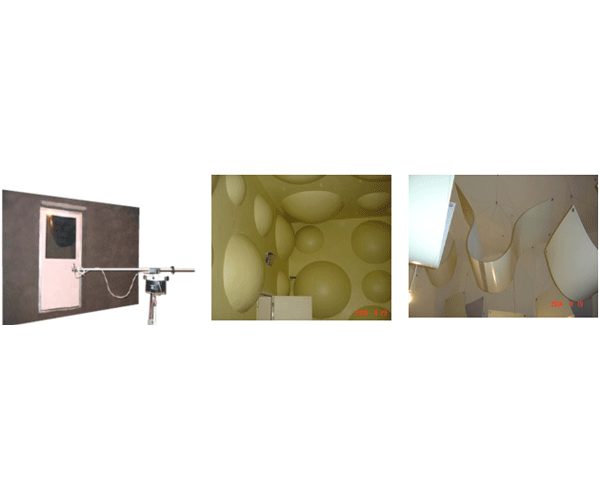
5. Applications Across the Door, Window, and Building Materials Industries
The Test System for Airborne Sound Insulation Performance of Building Doors and Windows can support a variety of laboratory applications. The exact use depends on the system configuration, specimen size, and selected measurement method. The following examples show where airborne sound insulation data may be useful.
Door and window manufacturers
Manufacturers can use laboratory acoustic testing to compare different product constructions and assess the effects of design changes. Examples include evaluating different glazing combinations, frame profiles, perimeter seals, door leaf constructions, and locking or closing arrangements.
When a product is modified, testing can help determine whether the change affects its sound insulation performance. It can also support internal quality programs when manufacturers need to compare samples from different production batches or confirm that a design revision has been evaluated using the intended method.
Glass and glazing manufacturers
Glazing products may contain different glass thicknesses, laminated layers, cavities, and interlayer materials. These design features can affect how sound passes through the assembly, and their effects may vary across frequencies.
A laboratory sound insulation test system can support comparative studies of suitable glazing assemblies. However, the result should be associated with the actual specimen construction and mounting conditions. A rating for one glazing configuration should not automatically be applied to every window that uses a similar glass type, because the frame, seals, dimensions, and installation may also influence performance.
Building materials research and development
Research teams may use sound insulation testing to investigate how different materials, structures, and assembly methods affect acoustic performance. A research project may compare the effects of panel thickness, internal cavities, composite layers, frame geometry, or sealing materials.
For these applications, frequency-dependent data can be especially helpful. It allows engineers to see whether a design change affects the whole measured frequency range or mainly changes the response in a particular region. The results can guide further design work, but they should be interpreted within the limits of the test method.
Construction engineering and acoustic consultants
Construction professionals and acoustic consultants may need reliable product data when selecting doors and windows for buildings near roads, railways, airports, industrial facilities, or other noise sources. Laboratory results can support product comparison and help inform design decisions.
At the same time, the laboratory rating is only one part of the decision. The final indoor noise environment also depends on the building layout, external sound conditions, wall and roof performance, ventilation openings, installation quality, and sound leakage through other paths. For a project-specific prediction, the full building design should be considered.
Quality inspection and third-party laboratories
Testing laboratories may use airborne sound insulation measurement as part of a broader evaluation program for building products. A well-defined procedure helps maintain consistency across specimens and supports clear technical reporting.
Where the results will be used for formal testing, certification, or contractual acceptance, the laboratory should verify that the selected method is within its authorized scope and that its procedures and instruments meet the applicable requirements. Accreditation, where required, is a separate matter from the purchase of the testing system.
Doors and windows for residential and commercial buildings
Different building types can have different acoustic priorities. Apartments may need to reduce speech and everyday noise between spaces or from outside. Hotels may focus on guest comfort. Offices may need to limit noise entering meeting rooms or quiet work areas. Hospitals and educational buildings may have particular expectations for privacy and concentration.
A sound insulation test system helps manufacturers and laboratories measure product performance under controlled conditions. It does not, by itself, guarantee a particular indoor noise level in every building. The result should be combined with the relevant project requirements and the characteristics of the complete building envelope.
Application overview
| Industry or user | Testing objective | Practical benefit |
|---|
| Door manufacturers | Compare door leaf, frame, seal, and closing designs | Support design improvements and product evaluation |
| Window and glazing manufacturers | Compare window assemblies and glazing configurations | Understand frequency-dependent performance differences |
| Building materials R&D | Investigate material and structural changes | Generate data for product development and research |
| Acoustic consultants | Review product data for project design | Support informed material and assembly selection |
| Quality inspection laboratories | Conduct documented tests under defined procedures | Support quality evaluation and technical reporting |
| Construction and building product suppliers | Compare products for different building requirements | Provide more consistent technical information to project teams |
Source note: The application categories above are illustrative industry uses, not a claim that one equipment configuration covers every product. The general scope of laboratory testing for doors, windows, glazing, and other building elements is described in ISO 10140-2:2021 and ASTM E90-23.
6. Custom Manufacturing, Quality Checks, and Delivery
At Guangzhou Chuangge Automation Equipment Co., Ltd., we understand that customized testing equipment requires careful coordination between the customer's testing plan and the system's technical configuration. A laboratory may already have acoustic rooms and need measurement instruments, while another customer may be planning a new facility and need to discuss a broader system arrangement.
For this reason, we do not treat every inquiry as an identical project. We begin by understanding the application, then discuss the configuration, manufacturing schedule, inspection requirements, and delivery arrangements.
Step 1: Review the customer's test requirements
We first discuss the type of door or window to be tested, specimen dimensions, target standard, required frequency range, measurement outputs, and intended use of the results. We also ask about the laboratory environment, existing acoustic facilities, available utilities, and any relevant reporting or data export needs.
If the customer has a detailed test specification, we can use it as a basis for technical discussion. If the requirements are still being developed, we can help identify which information needs to be confirmed before a final configuration is agreed. The customer or responsible technical authority should determine the mandatory standard and any regulatory or certification requirements.
Step 2: Confirm the equipment configuration
After the initial review, we discuss the proposed system arrangement. Depending on the project, this may include sound source equipment, microphones, acoustic analyzers, data acquisition software, specimen mounting structures, and related accessories.
Room design and sound isolation requirements are particularly important. A laboratory sound insulation system depends on the relationship between the test rooms, specimen opening, surrounding structures, and measurement arrangement. Before manufacturing begins, we recommend documenting which elements are included in the order and which must be provided by the customer or a separate facility contractor.
The final specification should identify the agreed functions, measurement requirements, applicable standard, accessories, documentation, and acceptance checks. Clear agreement at this stage helps prevent confusion later in the project.
Step 3: Manufacturing and system integration
Once the technical configuration is confirmed, manufacturing and assembly are arranged according to the agreed requirements. Customized testing equipment may involve mechanical structures, electrical components, measurement instruments, control functions, and software integration. These parts must work together as a system rather than as unrelated components.
During project coordination, we pay attention to the intended operating process, installation conditions, and required interfaces. If a customer needs a special specimen fixture, a particular data output, or additional technical documentation, these requirements should be discussed before production is finalized.
Step 4: Equipment inspection and functional testing
Before delivery, our process includes equipment inspection and functional testing within the agreed scope. The purpose is to check the equipment's condition and verify the operation of the included functions. Relevant technical documents are prepared according to the order requirements.
We encourage customers to define acceptance requirements before placing the order. These may cover equipment completeness, visible condition, basic operation, measurement system functions, software operation, accessories, and required documents. If the project calls for specific acoustic performance verification, witnessed testing, formal calibration, or third-party assessment, these requirements should be discussed and agreed separately.
It is important to distinguish functional testing from formal calibration and standards compliance. Basic operating checks do not automatically prove that every part of a measurement system satisfies every clause of a particular standard. The acceptance process should be matched to the customer's actual requirements and the agreed test scope.
Step 5: Packaging and shipment
Acoustic testing equipment can include sensitive measurement instruments, electronic components, structural parts, and accessories. We select suitable protective packaging according to the equipment structure and transport conditions. Protective materials and sturdy wooden cases may be used where appropriate to reduce the risk of damage during handling and shipment.
Products can generally be shipped by sea, air, or land, depending on the destination, urgency, and order requirements. Before dispatch, we recommend confirming the delivery address, unloading arrangements, site access, and any special handling needs. For international shipments, the customer and supplier should also agree on the shipping documents and responsibilities in advance.
Production lead time and commercial arrangements
For our testing equipment projects involving construction materials and components, the typical production period is approximately 30–60 days, depending on the equipment specification and customization requirements. This is a general planning estimate, not a guaranteed delivery period for every project. The confirmed schedule depends on the final configuration, component availability, and order details.
Payment terms can be negotiated according to the order requirements. We discuss the production schedule, delivery method, packaging, and documentation with the customer before finalizing the order. Our aim is to provide a clear purchasing process and keep expectations aligned throughout manufacturing and delivery.
Our company and quality management approach
Guangzhou Chuangge Automation Equipment Co., Ltd. specializes in customized testing equipment for industrial and laboratory applications. Our products serve sectors including construction materials and components, wires and cables, plastics and textiles, electrical plugs, sockets and switches, electronics, and home appliances.
We follow the corporate philosophy of ensuring survival through high technology and driving development through high quality. The company holds ISO 9001 quality management, ISO 14001 environmental management, and ISO 45001 occupational health and safety management system certifications. Our intellectual property portfolio contains more than 20 patents, including invention patents, utility model patents, and software-related patents.
These systems and technical resources form part of our manufacturing approach. For each individual project, however, we believe the most useful basis for trust is a clear technical agreement, appropriate inspection records, relevant documentation, and transparent communication about what the delivered equipment is designed to do.
7. Why Choose Guangzhou Chuangge Automation Equipment Co., Ltd.?
Buying a Test System for Airborne Sound Insulation Performance of Building Doors and Windows is a technical decision. The right system must fit the specimen, measurement method, laboratory arrangement, and reporting needs. A low initial price is not enough if the equipment cannot support the intended procedure or if important requirements have not been included in the specification.
Customized solutions based on the test method
We focus on understanding the customer's application before confirming a configuration. The required system may differ depending on whether the laboratory tests residential windows, commercial doors, glazing assemblies, or other building elements. Specimen size, frequency analysis, acoustic room conditions, and reporting requirements can all affect the final arrangement.
By discussing these details early, we can work toward a configuration that reflects the actual test plan. This also gives customers an opportunity to identify essential requirements before manufacturing begins.
Experience across industrial testing sectors
Our company serves several industrial testing sectors, including construction materials, wires and cables, plastics and textiles, electrical accessories, and electronic products. These applications involve different products, test procedures, and documentation needs.
For airborne sound insulation testing, we focus on the requirements specific to acoustic measurement. We do not assume that experience with one type of test automatically makes every other test arrangement interchangeable. The standard, specimen, measurement instruments, and laboratory facilities must be reviewed for the particular application.
Clear technical communication
We believe the quotation and technical specification should explain what the customer is purchasing. The agreed documents should identify the main functions, required accessories, applicable measurement method, expected delivery scope, and acceptance arrangements.
Where a project involves existing laboratory rooms or equipment, we recommend discussing those conditions before confirming the order. This can help clarify whether additional acoustic facility work, instrument integration, or installation arrangements are needed.
Inspection and delivery documentation
Our delivery process includes equipment inspection, functional testing, and relevant technical documentation according to the agreed scope. We encourage customers to specify any special document formats, acceptance checks, or additional verification requirements before the order is finalized.
Clear documentation supports installation and operation and gives the customer a reference for the functions included in the delivered system. If formal calibration or third-party assessment is required, it should be addressed explicitly rather than assumed to be included in ordinary functional testing.
Support throughout the purchasing process
We work with customers through technical discussion, configuration confirmation, manufacturing coordination, inspection, packaging, and shipping arrangements. Our typical production period for this equipment category is 30–60 days, depending on the agreed specification and customization level. Payment terms and transport arrangements can be discussed according to the order.
Our goal is to provide equipment that matches the agreed testing requirements and to make the project easier to manage. We understand that a laboratory instrument is part of a larger testing process, and we aim to make the technical and commercial scope clear before the system is delivered.
8. Frequently Asked Questions About Airborne Sound Insulation Test Systems
Q1. What does a Test System for Airborne Sound Insulation Performance of Building Doors and Windows measure?
It measures the reduction of airborne sound transmission through a door or window specimen under defined test conditions. Depending on the selected standard, the system may determine sound reduction index or sound transmission loss across specified frequency bands and calculate a relevant rating.
Q2. Can the system test both doors and windows?
The suitability depends on the specimen dimensions, mounting structure, and agreed system configuration. Doors and windows vary in size, weight, frame construction, and sealing details. Please provide the expected specimen dimensions and the target test method so that the required opening and mounting arrangement can be reviewed.
Q3. Which standards can the system support?
Relevant standards may include ISO 10140-2 for laboratory measurement of airborne sound insulation, ISO 717-1 for rating the results, and ASTM E90 for laboratory measurement of airborne sound transmission loss. The appropriate standard depends on the customer's market and testing requirements. The final configuration must be reviewed against the full standard and its applicable edition.
Q4. Is laboratory testing the same as on-site sound insulation testing?
No. Laboratory testing is performed under controlled conditions intended to limit unwanted sound transmission paths. On-site measurements reflect the installed building element and may be affected by flanking transmission, joints, surrounding structures, and room conditions. ISO 16283-3 addresses field measurement of façade sound insulation, while ISO 10140-2 addresses laboratory measurement.
Q5. Why are measurements taken at different frequencies?
Doors and windows do not reduce every frequency by the same amount. Frequency-band measurements show how the specimen performs across the measured range and can help engineers identify differences between product designs. The required bands and rating procedure depend on the selected standard.
Q6. Does a higher sound insulation rating guarantee a quiet room?
No. A laboratory rating describes the performance measured under a specified test method. The indoor sound environment also depends on external noise, wall and roof performance, ventilation openings, installation quality, and other sound transmission paths. Laboratory data are valuable for product comparison, but they cannot guarantee a particular noise level in every completed building.
Q7. Can the system automatically provide a single-number rating?
Data processing and rating functions depend on the agreed software configuration and test method. If the customer requires a rating according to ISO 717-1 or another applicable procedure, that requirement should be included in the technical specification. The calculation method and report output should be confirmed before manufacturing.
Q8. What laboratory conditions are required?
Laboratory airborne sound insulation testing normally requires suitable source and receiving spaces, an appropriate specimen opening, controlled measurement procedures, and a means of reducing unwanted flanking transmission. The detailed requirements depend on the selected standard and specimen. Before ordering, customers should confirm whether their existing laboratory meets the required conditions.
Q9. How long does production take?
The typical production period for our construction-material and component testing equipment is approximately 30–60 days. The actual lead time depends on the equipment configuration, customization requirements, component availability, and order details. We confirm the project schedule after the technical scope has been reviewed.
Q10. What is included with delivery?
Delivery includes equipment inspection, functional testing, and relevant technical documentation according to the agreed order scope. The exact list of instruments, accessories, manuals, software functions, and other documents should be confirmed in the quotation or technical agreement. Additional calibration or third-party verification should be discussed separately if required.
Q11. Can the system be customized for our laboratory?
We specialize in customized testing equipment and can discuss configuration requirements based on specimen dimensions, target standards, frequency analysis, data processing, and laboratory conditions. Technical feasibility and the final configuration should be confirmed during the pre-sales review. Providing a detailed test specification makes the discussion more efficient.
Q12. What information should we provide when requesting a quotation?
Please provide the specimen type, maximum dimensions and weight, applicable standard and edition, required frequency range, desired result format, laboratory layout, and any special reporting or acceptance requirements. If you already have acoustic test rooms or measurement instruments, please include those details as well. This information helps us review the project more accurately.
Discuss Your Airborne Sound Insulation Testing Requirements with Us
Testing the airborne sound insulation performance of building doors and windows is an important part of understanding how a product behaves under controlled acoustic conditions. A suitable test system can help manufacturers compare designs, investigate the effects of frame and sealing details, support research and development, and generate data for technical evaluation.
At Guangzhou Chuangge Automation Equipment Co., Ltd., we focus on customized testing equipment and practical communication about the customer's intended application. We can discuss the required standard, specimen dimensions, acoustic measurement arrangement, data processing needs, laboratory conditions, manufacturing schedule, and delivery scope before confirming a system configuration.
If you are sourcing a Test System for Airborne Sound Insulation Performance of Building Doors and Windows for a manufacturer, engineering laboratory, quality inspection organization, or research institution, we invite you to share your test requirements with us. We will review the application and discuss a suitable equipment plan based on the agreed technical scope.
Contact Guangzhou Chuangge Automation Equipment Co., Ltd. to discuss a customized airborne sound insulation test system for your building doors and windows.
Technical References
Note: Standards can be revised, amended, or adopted differently by national standards bodies. Before ordering equipment for standards-based testing, customers should confirm the current applicable edition, full test procedure, and any requirements imposed by the relevant laboratory, certification body, or regulatory authority.


