Pressure Resistance And Sealing Test Device For Water Heater Heating Tanks
1. Product Overview: Reliable Pressure Resistance and Sealing Testing for Water Heater Tanks
When manufacturing a water heater, the heating tank is one of the components that deserves close attention. It holds water during daily operation and may experience repeated changes in temperature and internal pressure. If a weld is incomplete, a connection is poorly sealed, or a tank wall has a manufacturing defect, water may leak during use. In more serious cases, the tank may deform or fail to withstand its intended operating conditions. That is why pressure resistance and sealing inspection play an important role in water heater manufacturing.
At Guangzhou Chuangge Automation Equipment Co., Ltd., we develop customized testing equipment for manufacturers, laboratories, and quality inspection organizations. Our Pressure Resistance And Sealing Test Device For Water Heater Heating Tanks is intended to support controlled pressure testing and leakage inspection of water heater tanks. We configure the equipment according to the customer's tank design, required test procedure, production workflow, and acceptance criteria.
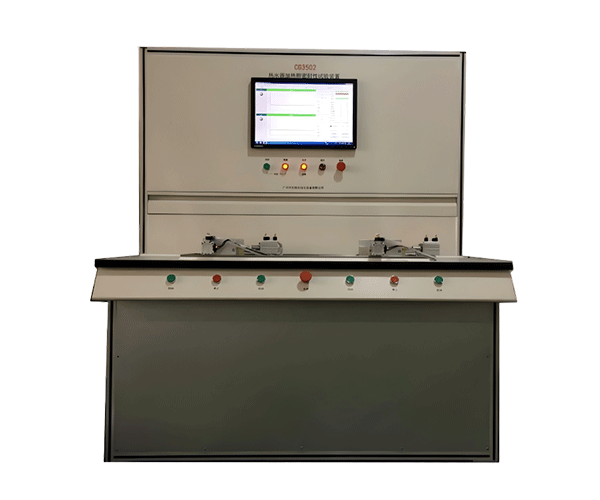
The purpose of this device is straightforward: apply a defined test condition to the water heater heating tank, monitor the relevant pressure or other specified signals, and help the operator determine whether the sample meets the agreed requirements. Depending on the application, the system may include a pressure source, pressure regulation components, pressure sensors, sealing fixtures, connecting pipes, a control unit, and data recording functions. The final arrangement depends on the customer's testing needs and is confirmed during the technical review.
We do not treat every water heater tank as the same product. A small domestic storage tank, a larger commercial tank, and a tank with a different connection structure may need different fixtures, pressure ranges, and handling arrangements. The design also depends on whether the customer needs a pressure resistance test, a leakage test, or a combined test sequence. Before recommending a configuration, we review the sample dimensions, tank material, connection points, rated working pressure, and applicable test method.
For manufacturers, a well-planned pressure resistance and sealing test can help identify problems before a finished water heater reaches the market. It can also help production teams compare results between samples, investigate recurring defects, and improve manufacturing consistency. However, the equipment itself is only one part of a reliable testing process. Correct fixtures, suitable instruments, a clearly defined procedure, trained operators, and appropriate acceptance criteria are equally important.
Our company focuses on customized testing equipment and has experience serving a range of industrial testing applications, including electronic products and household appliances. We hold ISO 9001, ISO 14001, and ISO 45001 management system certifications, and our intellectual property portfolio includes more than 20 patents across invention, utility model, and software categories. For each project, we use the customer's actual testing requirements as the basis for equipment design rather than relying on assumptions about a standard configuration.
If you are looking for a water heater tank pressure resistance testing machine, water heater tank leak testing equipment, or an automated pressure and sealing inspection system, we can discuss the required functions and determine a suitable technical solution. Pressure ranges, test duration, measurement performance, automation level, and supported tank sizes must be confirmed in the approved specification before production.
2. How the Pressure Resistance And Sealing Test Device Works
The working principle depends on the test method selected for the tank. In a common hydrostatic test, the tank is filled with a suitable liquid, air is removed where required by the procedure, and the internal pressure is raised to a defined test level. The system then monitors the pressure and allows the operator to inspect the tank and its connections for leakage, deformation, or other specified signs of failure.
In a separate or additional sealing test, the focus may be on whether water escapes from a weld, threaded connection, flange, valve interface, or other sealing point. Some applications use a pressure-holding method, while others require a different leak detection arrangement. We determine the appropriate approach from the customer's test procedure instead of assuming that one method is suitable for every tank structure.
For a typical customized hydrostatic test arrangement, the operator places the water heater tank in a suitable fixture and connects the required inlet and outlet ports. The connection points are sealed using fixtures or adapters designed for the sample. The tank is filled according to the defined procedure, and the pressure source gradually increases the internal pressure. A pressure sensor or suitable gauge monitors the pressure while the control system displays the relevant readings.
When the required test pressure is reached, the system follows the agreed test sequence. This may involve holding pressure for a specified period, monitoring pressure changes, and checking the tank surface and connection points for visible leakage. If the project includes automatic control, the equipment may regulate pressurization, record pressure over time, and provide status prompts or alarms according to the approved design.
Once the test is complete, the pressure must be released in a controlled manner before the tank is disconnected or removed. The operator then records the result and checks the sample against the defined acceptance criteria. If the system includes data storage, test records can be associated with a product model, sample number, production batch, or time stamp.
It is important to distinguish pressure resistance testing from sealing testing. Pressure resistance testing focuses on whether the tank can withstand the specified pressure condition without unacceptable damage or deformation. Sealing testing focuses on whether the tank and its relevant joints prevent leakage under the defined conditions. A single machine may be configured to support both tasks, but the procedure and acceptance criteria for each must be clearly established.
Typical Test Sequence
| Step | Operation | Purpose |
|---|
| 1. Sample preparation | Check the tank, identify the sample, and prepare the specified connection points. | Confirm that the sample is suitable for the planned test and can be connected correctly. |
| 2. Fixture installation | Secure the tank and fit suitable sealing adapters or connectors. | Reduce the risk of fixture leakage or incorrect connection during testing. |
| 3. Filling and preparation | Fill the tank and prepare the test medium according to the procedure. | Establish the required initial condition before pressurization. |
| 4. Pressure increase | Raise internal pressure using the specified control method. | Reach the required test condition in a controlled manner. |
| 5. Pressure holding and inspection | Maintain or monitor the specified condition and inspect relevant areas. | Identify leakage, abnormal pressure behavior, or other defined defects. |
| 6. Pressure release | Release pressure according to the prescribed sequence. | Allow the sample to be handled safely after the test. |
| 7. Result recording | Record readings and compare the sample with acceptance criteria. | Support traceability, quality review, and follow-up action. |
This table describes a general testing workflow. The exact sequence, test medium, pressure level, holding time, inspection method, and result criteria must follow the applicable standard or approved customer procedure. We confirm these details before defining the final machine configuration.
Hydrostatic Testing and Other Leak Detection Methods
Hydrostatic testing uses a liquid, commonly water where the procedure permits, to apply internal pressure. It is widely used for components intended to retain liquids. ASTM E1003-13(2022), titled Standard Practice for Hydrostatic Leak Testing, describes methods for testing components for leaks by pressurizing them internally with a liquid. Its stated scope includes pipes, valves, and containers designed for internal pressure. Whether this practice is suitable for a particular water heater tank must still be checked against the tank's intended use and governing requirements.
Other applications may require a different method, such as a pressure decay test or a specified gas-based leak detection procedure. These methods do not produce interchangeable results automatically. The sensitivity, equipment arrangement, safety controls, and acceptance limits can differ. We therefore ask the customer to identify the required method before selecting the pressure source, sensor range, fixtures, and control logic.
For tanks that are intended to hold water, a hydrostatic test may be appropriate when required by the relevant specification. It is not correct to select a test pressure simply because another tank uses that value. The test condition must be based on the tank design, applicable standard, rated working pressure, and approved procedure. This is especially important when testing equipment is used for product safety or formal compliance work.
3. Main Features and Technical Advantages
A useful Pressure Resistance And Sealing Test Device For Water Heater Heating Tanks should do more than generate pressure. It should hold the sample securely, measure the relevant condition, make the test process understandable to the operator, and provide results that can be reviewed. We focus on these practical points when discussing a customized machine with a customer.
Controlled Pressure Application
Controlled pressurization helps the operator reach the specified test condition in a repeatable way. Depending on the project, the machine may use a suitable pump or other pressure source, pressure regulation components, sensors, and control logic. The selected arrangement depends on the required pressure range, test medium, tank capacity, and expected production cycle.
The pressure should not rise in an uncontrolled manner. The equipment design must consider the tank's specified test condition, the characteristics of the pressure source, the response of the measurement system, and the method used to stop or release pressure. Where automatic pressure control is required, the control sequence and relevant protection functions should be included in the approved design.
We do not publish a universal maximum pressure for every configuration because the correct range depends on the application. Before production, we confirm the required operating and test pressure, pressure sensor range, resolution, control method, and acceptance requirements with the customer.
Reliable Sealing Fixtures
Fixtures are often one of the most important parts of a tank pressure testing machine. If an adapter is poorly matched to the tank port, the test may show leakage at the fixture rather than at the product. That wastes time and can lead to incorrect conclusions about product quality.
We consider tank dimensions, port locations, thread types, flange structures, sealing surfaces, and sample loading requirements when planning the fixture. Depending on the tank design, the machine may need interchangeable adapters or dedicated fixtures for different models. The fixture must hold the sample securely without creating an unintended load that could damage the tank or distort the result.
When a customer plans to test multiple tank sizes, we review whether a shared fixture platform is practical. Interchangeable components may improve flexibility, but they also need to be installed correctly and checked before use. A dedicated fixture may be preferable when the product range is narrow or the production cycle demands quick, repeatable changeovers.
Pressure Monitoring and Data Recording
Pressure monitoring allows the operator to see whether the system has reached the required condition and how pressure behaves during the test. Depending on the selected configuration, the system may display live pressure, elapsed time, test status, and recorded data. Automatic recording can be useful when a manufacturer needs to trace results to individual samples or production batches.
For example, a quality team may want to compare pressure records from several tanks to investigate why some samples pass while others show leakage. If the data is stored consistently, the team can review the test conditions and determine whether the difference is related to the product, fixture, setup, or procedure. Data alone does not prove the cause of a defect, but it can make an investigation more organized.
We confirm data requirements before manufacturing. These may include the pressure range, recording interval, test duration, file format, sample identification, result display, and report fields. If the machine must connect with an existing production or laboratory system, the communication requirements should be reviewed at the design stage.
Configurable Manual, Semi-Automatic, or Automatic Operation
Different factories have different testing needs. A small production workshop may prefer a straightforward machine with operator-controlled steps. A larger production line may need automatic pressurization, timed holding, status monitoring, and automatic result recording. We can evaluate the appropriate automation level according to the agreed requirements and the feasibility of the application.
Automation can reduce repetitive work and help standardize the test sequence, but it does not replace correct fixture installation, regular inspection, or operator training. The machine must still be used according to its operating instructions and the relevant test procedure. We also discuss which operations should require operator confirmation and which can be performed automatically.
Safety-Oriented Design
Pressure testing involves stored energy, and a tank or connection can fail if the test conditions exceed its safe limits. The machine layout and operating procedure must therefore account for the potential hazards of the test. Depending on the risk assessment and project requirements, the design may include suitable pressure limiting, controlled depressurization, protective barriers, interlocks, emergency stop functions, or other safety measures.
The precise safety provisions depend on the machine design, test pressure, sample type, test medium, and installation environment. They must be agreed and verified as part of the project rather than assumed from a general product description. Operators should also receive appropriate instructions and follow the site's pressure testing safety procedures.
Adaptability to Different Tank Designs
Water heater tanks vary in capacity, height, diameter, port arrangement, material, and construction method. Some are made from formed metal sections with welded joints, while others have different connection and sealing structures. These differences influence how the sample is held, where the pressure is introduced, and which areas need to be inspected.
Our customization process takes these differences into account. We can review drawings and sample information to determine whether the equipment needs adjustable supports, dedicated adapters, different connection hoses, or a model-specific fixture. The supported size range and changeover method are confirmed during the technical review, so the customer knows what the proposed system is designed to handle.
4. Test Standards, Reference Data, and Acceptance Criteria
When selecting a Pressure Resistance And Sealing Test Device For Water Heater Heating Tanks, buyers should start with the applicable standard or test procedure. The required test pressure, duration, preparation method, inspection approach, and acceptance criteria can vary with the product category, intended market, and governing rules. A machine should be configured to meet the actual requirement rather than an assumed industry average.
For household electric storage water heaters, UL 174 is a relevant North American safety standard. UL Standards & Engagement identifies its scope as covering household electric storage tank and small-capacity storage tank water heaters within specified electrical and capacity limits. The published scope also makes clear that some other types of water heaters fall outside its coverage. Buyers should therefore verify that the standard applies to their exact product category and check the current edition and relevant clauses.
In the international market, IEC 60335-2-21 addresses particular requirements for storage water heaters when used together with the general requirements of IEC 60335-1. IEC 60379:2023 covers methods for measuring the performance of household electric storage water heaters, but the IEC description explicitly states that it does not specify safety requirements. These standards serve different purposes, so a performance measurement standard should not be treated as a complete substitute for a product safety standard.
For hydrostatic leak testing, ASTM E1003-13(2022) provides a general reference for pressurizing suitable components with liquid and checking for leaks. It is a method reference, not a universal water heater tank acceptance specification. The test pressure and other conditions must come from the requirements that apply to the specific product.
Reference Table 1: Standards and Their Relevance
| Reference | Published scope or purpose | How it may inform a tank testing project |
|---|
| UL 174 | Safety requirements for specified household electric storage tank and small-capacity storage tank water heaters. | Useful as a product safety reference where the water heater falls within its scope; the applicable test clauses must be checked. |
| IEC 60335-2-21, used with IEC 60335-1 | Particular safety requirements for storage water heaters, together with general appliance safety requirements. | May help define applicable safety testing requirements for relevant storage water heater products. |
| IEC 60379:2023 | Methods for measuring performance of household electric storage water heaters; it does not specify safety requirements. | Relevant to performance evaluation, but it should not be used alone to define all pressure safety or sealing acceptance criteria. |
| ASTM E1003-13(2022) | Standard practice for hydrostatic leak testing of suitable components pressurized internally with liquid. | Provides a general method reference for liquid-based leak testing where appropriate to the product and project. |
Sources: UL Standards & Engagement, UL 174; International Electrotechnical Commission, IEC 60379:2023; ASTM International, ASTM E1003-13(2022). The table summarizes the published scope of each reference. It does not mean that every listed document applies to every water heater tank or that the equipment automatically meets all requirements of these standards.
One common mistake is to select a pressure value based only on the tank's rated working pressure. Working pressure and test pressure are related, but they are not necessarily the same. A governing standard or approved procedure may specify a particular test pressure, duration, preparation method, or other condition. The correct value must be verified for the exact tank design and intended application.
Reference Table 2: Key Test Parameters to Confirm Before Ordering
| Parameter | What needs to be specified | Why it matters |
|---|
| Rated working pressure | The tank's declared operating pressure and relevant design information. | Provides essential context for reviewing the proposed test conditions. |
| Required test pressure | The pressure specified by the applicable standard, customer procedure, or approved technical requirement. | Determines the required pressure source, sensor range, regulation, and safety measures. |
| Pressure holding time | The required duration at the defined test condition. | Affects the test sequence, cycle time, monitoring, and data recording. |
| Leak acceptance criteria | Permitted leakage, visible leak rules, or other specified pass/fail conditions. | Ensures operators judge samples using an agreed and consistent method. |
| Tank size and connection layout | Dimensions, port positions, thread or flange details, and sample weight. | Determines fixture design, adapters, support structure, and changeover requirements. |
| Data and traceability | Required readings, recording interval, sample identification, and report format. | Supports quality review, batch tracking, and investigation of test failures. |
Source: This is a project planning table prepared from common pressure-testing equipment design considerations. It is not a table of mandatory values from one standard. The applicable pressure, time, and pass/fail requirements must be taken from the customer's approved test procedure or the relevant governing document.
We recommend confirming the following before ordering: the water heater tank category, the destination market, the applicable standard and edition, the tank's rated working pressure, the required test pressure, the intended test medium, the inspection method, and the acceptance criteria. If the results will be used for third-party certification, the responsible laboratory or certification organization should confirm that the planned procedure and equipment arrangement are acceptable.
5. Applications in Water Heater Manufacturing and Quality Inspection
Pressure resistance and sealing testing can support several stages of the water heater manufacturing process. The correct test arrangement depends on whether the customer wants to inspect individual tanks, verify a new design, investigate a quality problem, or conduct defined checks as part of production. We work with the customer to identify the task and configure the equipment accordingly.
Domestic Storage Water Heater Production
Domestic storage water heaters contain a tank designed to store hot water for everyday use. The tank, welded seams, threaded ports, and other connection points need to perform as intended under the specified operating conditions. Pressure resistance and sealing checks can help identify leakage or structural problems before the tank moves to the next manufacturing stage.
A factory may use the equipment to inspect samples from a production batch or to perform a specified test on each tank, depending on its quality plan and applicable requirements. The test sequence should be consistent, and the acceptance criteria should be clearly documented. If a sample fails, the result can be used as a starting point for further investigation of the tank, fixture, assembly, or manufacturing process.
Commercial Water Heater Tank Manufacturing
Commercial tanks may have larger dimensions, different connection arrangements, or different rated operating conditions from domestic products. These differences can affect the machine's support structure, connection fixtures, pressure source, and handling method. Before designing equipment for a commercial tank, we need the sample drawings, weight, port layout, and required test procedure.
For large tanks, handling and access deserve particular attention. The operator must be able to connect the sample, observe the relevant areas, and complete the test without creating unnecessary risks. Depending on the project, the system may need a dedicated support frame, lifting assistance, or a layout that provides suitable access to the test connections.
Tank Welding and Assembly Quality Control
Welded seams and assembled connections are common areas of interest during tank inspection. If leakage appears, the manufacturing team may need to determine whether it comes from a weld, a threaded connection, a gasket interface, a fixture, or another source. A repeatable test procedure helps make the inspection more systematic.
The test result should not be used to assign blame to a specific process without further evidence. Instead, the quality team can review the test conditions, inspect the failed area, and compare results from other samples. This information can help guide corrective action, such as reviewing welding parameters, cleaning and preparation, connection assembly, or sealing component selection.
Product Development and Design Verification
During product development, engineers may need to compare tank designs, materials, joining methods, or connection structures. A controlled pressure test can provide useful evidence about how a sample behaves under the specified condition. If the test is repeated across several samples, the resulting records can help identify consistent patterns and differences.
Design verification should follow a documented procedure that reflects the intended product requirements. If the tank design changes, the engineering team should assess whether the existing test method remains appropriate. A machine can support repeated tests, but it cannot independently determine whether a design change is acceptable without defined criteria and technical review.
Third-Party Laboratories and Inspection Organizations
Laboratories may need equipment that supports a specified method, repeatable measurements, and traceable test records. In these applications, instrument selection, calibration status, operating procedures, and documentation can be just as important as the mechanical layout of the machine.
We recommend that laboratory customers provide their technical requirements before the equipment design is finalized. If the system will be used within an accredited laboratory or a formal certification process, the laboratory should confirm the applicable requirements for calibration, uncertainty, installation, verification, and reporting. The final acceptance of a test setup remains subject to the relevant laboratory and governing requirements.
Export-Oriented Water Heater Manufacturers
Manufacturers selling products into different markets may need to work with different standards, customer specifications, and inspection plans. A pressure testing machine should therefore be developed around the target product and the actual test method, not around a general claim that it suits all markets.
When a customer supplies the destination market, standard reference, and test procedure, we can review the requirements and discuss the appropriate system configuration. This is particularly useful when the factory needs to keep its testing process consistent while producing several models or supplying different customers.
6. Customization, Manufacturing, and Delivery
Our approach to a customized Pressure Resistance And Sealing Test Device For Water Heater Heating Tanks starts with understanding the customer's testing task. The product name alone does not tell us enough to define the pressure source, fixture, sensor range, control functions, or acceptance method. A practical design begins with a clear technical discussion and a written specification.
Step 1: Collect Product and Test Information
We first review the water heater tank design and the purpose of the test. Useful information includes tank dimensions, material, rated working pressure, connection types, sample weight, production volume, test medium, required test pressure, pressure holding time, and leak acceptance criteria. Drawings, photographs, product manuals, and existing test procedures help us understand the application.
We also ask whether the equipment is intended for product development, routine quality inspection, production-line testing, or laboratory use. These applications may require different levels of automation and data handling. A machine for occasional engineering tests may not need the same cycle time or fixture arrangement as a system used repeatedly in a production environment.
Step 2: Confirm the Technical Specification
After reviewing the information, we discuss the machine's main functions and limitations with the customer. This includes the supported tank range, connection fixtures, pressure control method, sensor requirements, control interface, data recording, and relevant safety provisions. If several tank models need to be tested, we assess whether a shared platform and interchangeable fixtures are feasible.
The specification should clearly state the required pressure range, the applicable test condition, the test medium, the measurement requirements, the operating sequence, and the acceptance criteria. If special calibration documents or third-party verification are needed, they should be included in the agreed project scope.
Step 3: Design the Fixture and Pressure System
The fixture is developed around the tank dimensions and connection points. The pressure system is then selected according to the required test medium and pressure condition. The design also considers how the tank will be loaded, connected, inspected, depressurized, and removed after the test.
Where the application requires automatic control, the control system is planned around the approved test sequence. The interface may display pressure, elapsed time, test status, and other agreed parameters. The final functions depend on the project specification, and we confirm them before manufacturing.
Step 4: Assembly and System Integration
During assembly, the mechanical structure, fixtures, pressure components, sensors, control unit, and other specified parts are installed and connected. The team checks the fit of the sample connections, the arrangement of the measurement components, and the basic operation of the system.
Where data recording or automatic operation is included, the corresponding functions are checked against the agreed design. Units, signal mapping, display values, and operating steps should be consistent with the test procedure. The aim is to deliver a machine that can be used according to its intended workflow, rather than a collection of components that have not been integrated into a clear testing process.
Step 5: Functional Inspection and Performance Verification
Before delivery, each unit undergoes functional inspection and performance verification according to the agreed project scope. The specific checks depend on the equipment configuration and the acceptance criteria defined for the project. Customers should confirm any required verification records, calibration certificates, pressure checks, software functions, or acceptance tests before production begins.
We distinguish routine factory inspection from formal third-party calibration or laboratory qualification. If a customer requires traceable calibration or a specific independent verification procedure, that requirement must be discussed and confirmed in advance. This helps avoid misunderstandings about which documents and services are included in the delivery.
Step 6: Documentation, Packaging, and Shipment
Operating instructions and technical documentation are provided as agreed. The document package can be defined according to the customer's requirements and may cover operating procedures, system functions, maintenance guidance, and agreed inspection records. Any special document format or language requirement should be confirmed during the quotation stage.
Our typical production cycle is approximately 30 to 60 days, depending on the equipment specifications, customization requirements, component availability, and project complexity. The actual lead time is confirmed after the technical configuration and delivery scope are agreed.
Payment terms are negotiable. We can arrange shipment by sea, air, or land according to the destination, equipment dimensions, delivery schedule, and customer preference. Protective materials and sturdy wooden cases are used as appropriate to help reduce the risk of damage during transportation. Packaging and shipping details are confirmed according to the equipment structure and the agreed delivery conditions.
7. Why Choose Guangzhou Chuangge Automation Equipment Co., Ltd.?
Choosing a pressure resistance and sealing testing machine is not only a matter of comparing prices. The equipment needs to fit the actual tank, follow the correct test procedure, and provide results that the quality team can understand and review. We focus on the technical details that determine whether the proposed machine is suitable for the customer's application.
Customized Equipment Based on the Actual Test
We specialize in customized testing equipment for a range of industrial applications. For water heater tank testing, we begin with the sample structure, test method, pressure requirement, connection layout, and acceptance criteria. This approach helps us identify the functions that are essential to the project and avoid making unsupported assumptions about the equipment's capability.
Customers may require a simple pressure resistance test setup, a dedicated sealing inspection machine, or a system that combines pressure control with data recording. We discuss the intended use before confirming the design so that the proposed configuration reflects the customer's workflow.
Attention to Standards and Test Procedures
Testing equipment is useful only when its configuration matches the required method. We encourage customers to identify the applicable standard, edition, test clauses, and acceptance criteria early in the project. This information affects the pressure range, fixture design, monitoring method, control sequence, and required documentation.
Where the equipment will support formal compliance work, we recommend confirming the proposed test arrangement with the responsible laboratory or compliance organization. This avoids relying on general product descriptions when specific regulatory requirements apply.
Quality Management and Technical Development
Guangzhou Chuangge Automation Equipment Co., Ltd. has obtained ISO 9001 quality management, ISO 14001 environmental management, and ISO 45001 occupational health and safety management system certifications. Our company also holds more than 20 patents, including invention patents, utility model patents, and software patents.
These credentials form part of our broader technical and operational background. For each individual machine, we still define quality through the approved specification, inspection process, verification requirements, and delivery documents. Customers can review these items before ordering to understand exactly what the proposed equipment includes.
Practical Communication and Project Planning
Customized equipment projects involve several decisions that can affect cost and delivery time. Clear information about the sample, test procedure, automation level, and acceptance criteria helps us evaluate the project more accurately. If some requirements remain uncertain, we discuss them before the design is finalized.
Our typical production cycle is 30 to 60 days, depending on the configuration and customization level. We confirm the schedule after reviewing the technical requirements. Before shipment, the machine undergoes functional inspection and performance verification according to the agreed scope, and operating instructions and technical documentation are supplied as agreed.
8. Frequently Asked Questions
Q1: What is a Pressure Resistance And Sealing Test Device For Water Heater Heating Tanks used for?
It is used to test whether a water heater tank can withstand a specified pressure condition and whether the tank or its relevant connections show leakage under the defined test method. Depending on the configuration, the equipment may include a pressure source, pressure sensors, sealing fixtures, control functions, and data recording. The exact test functions depend on the product and the customer's requirements.
Q2: What is the difference between pressure resistance testing and sealing testing?
Pressure resistance testing focuses on whether the tank can withstand the specified pressure without unacceptable damage or deformation. Sealing testing focuses on whether water or another specified test medium escapes from the tank or its connections. The two tests may be performed on the same machine, but they can require different test sequences and acceptance criteria. The final procedure should be defined before the equipment is configured.
Q3: Can one machine test different tank models?
It may be possible to test several models on one machine if their pressure requirements, connection arrangements, dimensions, and test methods are compatible with the proposed design. Different models may require interchangeable fixtures or dedicated adapters. Please provide the tank drawings, connection details, and test requirements so we can evaluate the supported range. We do not assume that a single fixture can accommodate every tank design.
Q4: What test pressure can the equipment reach?
The available pressure range depends on the final system configuration and the customer's application. We confirm the required test pressure, rated working pressure, pressure source, sensor range, and safety requirements during the technical review. We do not recommend choosing a test pressure based on a general industry value without checking the applicable standard and the tank specification.
Q5: How long should pressure be maintained during a test?
The required holding time depends on the applicable standard, customer procedure, and tank design. There is no single duration that should be applied to all water heater tanks. The test time should be included in the approved technical specification because it affects the control sequence, cycle time, pressure monitoring, and result criteria.
Q6: Does the system detect leakage automatically?
Automatic leak detection can be considered if the required method and detection criteria are clearly defined. Depending on the project, leakage may be assessed through a specified inspection method, pressure behavior, or another suitable measurement approach. The equipment must be configured for the selected method, and the customer should confirm the required detection sensitivity and acceptance criteria before production.
Q7: Can the system record pressure data and generate reports?
Data recording and report functions can be included according to the project requirements. The system may be configured to save pressure readings, test duration, sample identification, and the final result, where these functions are included in the specification. Please confirm the required data fields, sampling interval, file format, and report structure before ordering.
Q8: What information do you need to provide a quotation?
Useful information includes the tank type, dimensions, material, connection layout, rated working pressure, required test pressure, test medium, holding time, leak acceptance criteria, and applicable standard. Drawings, photographs, product manuals, and test procedures can help us understand the application. Please also explain whether the machine will be used for laboratory testing, product development, or production quality control.
Q9: How long does manufacturing take?
The typical production cycle is around 30 to 60 days, depending on the equipment specifications, customization level, component availability, and project complexity. We confirm the expected lead time after the technical requirements and delivery scope have been reviewed. Special fixtures, additional control functions, or specific verification requirements may affect the schedule.
Q10: What payment and shipping options are available?
Payment terms are negotiable and are confirmed during the commercial process. Shipment can be arranged by sea, air, or land according to the destination, equipment size, and delivery schedule. Protective materials and sturdy wooden cases can be used as appropriate to help protect the machine during transportation.
Q11: What documents are supplied with the machine?
Operating instructions and technical documentation are provided as agreed. The final document package depends on the project specification. If you need particular calibration certificates, verification records, acceptance reports, or documentation in a specified language, please identify these requirements during the quotation stage so they can be reviewed and confirmed.
Q12: Can the equipment be designed around our internal test procedure?
Yes, customization can be considered when the procedure and technical requirements are clear and feasible. We review the test sequence, pressure conditions, sample connections, measurement requirements, safety considerations, and acceptance criteria before confirming the design. If the procedure is based on an external standard, please provide the exact standard and relevant edition. For an internal procedure, a written document with clear steps and pass/fail criteria is helpful.
Request a Customized Water Heater Tank Pressure Testing Solution
A reliable Pressure Resistance And Sealing Test Device For Water Heater Heating Tanks should match the tank design, the required test method, and the way your factory or laboratory works. The right configuration can help standardize pressure application, make leakage inspection more consistent, and organize test results for quality review. To achieve this, the pressure range, fixture design, control functions, and acceptance criteria need to be established before manufacturing.
At Guangzhou Chuangge Automation Equipment Co., Ltd., we develop customized testing equipment according to customer requirements. We review the sample structure, applicable standard, pressure conditions, test sequence, and data needs before confirming the proposed solution. Our typical production cycle is 30 to 60 days, depending on the project. Each unit undergoes functional inspection and performance verification before delivery, with operating instructions and technical documentation provided as agreed.
To help us assess your project, please share the water heater tank model, tank drawings or dimensions, rated working pressure, required test pressure, test medium, pressure holding time, leak acceptance criteria, and applicable standard. If you need to test multiple models or connect the machine to an existing production line, please include those details as well.
Contact Guangzhou Chuangge Automation Equipment Co., Ltd. to discuss your requirements and request a customized pressure resistance and sealing test device for water heater heating tanks.
Technical References
Important note: The references above have different scopes and should not be treated as interchangeable requirements. Confirm the applicable standard, current edition, product category, and test clauses before specifying the equipment. Test pressure, holding time, measurement performance, safety functions, and acceptance criteria must be established according to the approved project specification.


