Water Heater Energy Efficiency Testing System for Accurate Performance Evaluation
When a manufacturer develops a new water heater, one question matters just as much as whether the unit can heat water: how much energy does it consume to deliver that hot water? A heater may reach its target temperature quickly, but that does not automatically mean it uses energy efficiently. Standby heat loss, control settings, heating recovery, water flow, and the surrounding environment can all influence the final result. This is why a reliable Water Heater Energy Efficiency Testing System is an important part of product development and quality control.
At Guangzhou Chuangge Automation Equipment Co., Ltd., we specialize in customized testing equipment for manufacturers, laboratories, and quality inspection organizations. We understand that different products require different test arrangements. A compact electric instantaneous water heater does not behave in the same way as a large storage water heater, and a heat pump water heater introduces additional factors that must be considered during testing. Instead of assuming that one standard configuration suits every application, we work with customers to define the required functions, measurement points, operating conditions, and test procedures before developing the equipment.
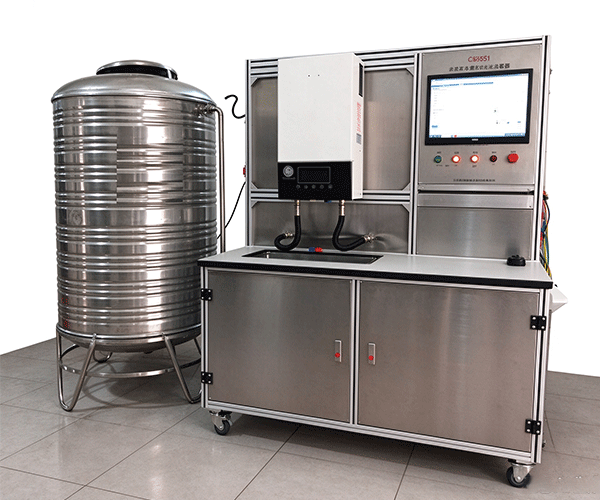
Our Water Heater Energy Efficiency Testing System is designed as a configurable testing solution for evaluating water-heating performance and energy consumption under controlled conditions. Depending on the project requirements, the system can integrate water temperature measurement, water flow or volume measurement, electrical energy monitoring, operating status recording, data acquisition, and test management functions. The final configuration depends on the water heater type, the applicable test method, and the customer's intended use.
For example, a manufacturer may need to compare the energy consumption of two product models, examine temperature stability during continuous water use, or collect performance data during a defined heating and standby period. A research laboratory may need a more flexible test platform that supports different samples and experimental conditions. We discuss these needs with the customer before confirming the equipment design.
The purpose of an energy efficiency testing system is not simply to display a number on a screen. It should help the user understand how a water heater behaves under specified conditions, record the measurements needed for analysis, and produce results that can be reviewed and traced back to the test process. When the equipment is designed around the correct procedure, manufacturers can make better decisions about product design, control strategies, insulation, and production quality.
We provide customized testing equipment rather than treating every project as an identical standard product. Our company has obtained ISO 9001 quality management, ISO 14001 environmental management, and ISO 45001 occupational health and safety management certifications. We also maintain a portfolio of more than 20 patents covering invention patents, utility model patents, and software patents. These capabilities support our approach to equipment development, but the exact functions and performance of each Water Heater Energy Efficiency Testing System are confirmed against the individual project requirements.
2. How the Water Heater Energy Efficiency Testing System Works
The basic principle is straightforward: operate the water heater under defined conditions, measure the energy supplied and the hot water delivered, record the relevant temperatures and operating states, and analyze the results using the required test method. The details, however, can vary considerably. A recognized energy efficiency test may require specific water inlet temperatures, outlet temperature settings, water draw patterns, ambient conditions, standby periods, or recovery measurements. These requirements must be checked against the applicable standard rather than selected casually.
We normally begin by reviewing the sample and the test objective. Is the unit a storage water heater, an instantaneous water heater, or a heat pump water heater? Does it use electricity, gas, or another energy source? Does the customer want to evaluate energy consumption, hot water delivery capacity, temperature stability, or several performance indicators together? These questions determine the required measurement range, test sequence, water supply arrangement, and control functions.
In a typical configurable arrangement, the water heater is connected to the required power supply, water supply, drainage, and measurement instruments. Sensors monitor selected temperatures, while suitable instruments record water flow, volume, electrical power, energy consumption, or other required variables. A data acquisition and control unit collects the signals and presents them to the operator. Where automatic operation is required, the system can be configured to execute defined steps and record data at specified intervals.
The test sequence may begin with installation checks and preparation of the sample. The unit is then operated according to the agreed procedure. During testing, the system records relevant readings and operating states. After the prescribed period or sequence is complete, the data can be organized for review, calculation, comparison, and report preparation. Any automatic calculation or report function must follow the agreed formula, units, rounding rules, and reporting format.
For a storage water heater, the test may include heating a tank, measuring the temperature of stored water, delivering hot water according to a defined draw pattern, and observing energy use during recovery and standby periods. These measurements help explain both the amount of hot water available and the energy needed to maintain or restore the required temperature.
For an instantaneous water heater, the evaluation may focus more heavily on inlet and outlet temperatures, water flow, temperature rise, and energy input while water is flowing. The measurement system needs to capture the relationship between flow and temperature rather than treating the test as a simple tank-heating process.
Heat pump water heaters can require additional attention to ambient temperature, humidity, operating mode, compressor behavior, and any electric resistance backup heating. These factors can affect measured energy use. If the applicable procedure specifies particular environmental conditions or operating modes, the test system and its supporting facilities must be designed to maintain or verify them.
We do not assume that all water heater tests follow the same sequence. Before finalizing a project, we confirm the target standard and version, sample category, test conditions, required measurements, and data output. This avoids a common problem: purchasing equipment that can measure several basic parameters but cannot complete the actual procedure required by the customer's quality team or certification program.
Typical Measurement Items and Their Purpose
| Measurement item | Why it matters | Configuration considerations |
|---|
| Water inlet temperature | Establishes the temperature of incoming water and helps interpret the required heating effort. | Sensor range, installation location, response time, and calibration requirements. |
| Water outlet temperature | Shows the temperature delivered by the water heater during heating or water draw. | Measurement interval, sensor placement, temperature range, and stability requirements. |
| Water flow or delivered volume | Helps quantify the amount of water passing through the unit or delivered during a test. | Flow range, meter type, installation conditions, and required measurement uncertainty. |
| Electrical power and energy | Records electricity use for electrically powered heating and associated components, as required by the procedure. | Voltage, current, power, energy range, phase configuration, and applicable safety requirements. |
| Ambient temperature and humidity | Helps verify the surrounding conditions when the test method specifies environmental limits. | Sensor placement, chamber or room conditions, recording interval, and allowable deviation. |
| Operating status and time | Helps identify heating cycles, recovery periods, standby behavior, and the timing of water draws. | Signal interface, event recording, test duration, and synchronization of measurements. |
The table shows common measurement categories, not a statement that every supplied system includes every instrument. We select the required items after reviewing the test procedure. For gas-fired water heaters, for example, the energy measurement arrangement may need to account for fuel consumption rather than relying only on electrical energy data. For heat pump units, environmental and operating-state measurements may be important. The final equipment specification should reflect the actual test objective.
3. Main Features and Practical Advantages
A useful Water Heater Energy Efficiency Testing System should make testing repeatable, measurement results understandable, and routine operation manageable. The most appropriate design is not necessarily the one with the most instruments or the largest control cabinet. It is the one that measures the right parameters, follows the correct procedure, and fits the way the customer works.
Configurable Test Functions
We develop the system around the customer's water heater and test plan. Depending on the project, functions may include temperature monitoring, water flow or volume measurement, energy consumption recording, time-based test control, operating-state monitoring, and data storage. A customer testing several product families may need adjustable fixtures and flexible test sequences. A customer performing one specific standardized test may prefer a more dedicated arrangement.
Before confirming the design, we discuss the sample dimensions, rated power, water connection, operating modes, expected test duration, measurement points, and reporting needs. If the customer already has a test procedure or laboratory specification, we use it as a key reference for defining the equipment functions.
Controlled and Repeatable Test Conditions
Energy efficiency results are meaningful only when the relevant conditions are known and controlled or documented. A different inlet water temperature, an unstable ambient environment, or a changed operating mode can affect the measured result. The system may therefore need suitable water supply control, environmental monitoring, timed operation, and a clear method for recording test conditions.
We pay attention to the relationship between the equipment and the test procedure. A sensor must be installed where it measures the intended variable. A flow meter must be suitable for the expected operating range. The electrical measurement equipment must match the power supply and load characteristics. If environmental conditions must remain within a specified range, the customer may also need a suitable laboratory room or environmental chamber. These requirements are reviewed before the system configuration is confirmed.
Data Collection and Review
Manual readings can be useful for simple checks, but they become difficult to manage when a test runs for many hours or includes repeated water draws. A configured data acquisition system can collect readings at planned intervals, organize the measurements, and help the operator identify unusual changes. Depending on the agreed software functions, the system may display curves, save records, export data, and generate test summaries.
Automatic data collection can reduce repetitive manual work, but it does not remove the need for proper sensor calibration, correct setup, or review of unusual results. We recommend confirming the required data format, sampling interval, file structure, user access, and calculation logic before production. This makes the system more practical for daily use and helps prevent misunderstandings after installation.
Support for Different Water Heater Types
Water heaters vary in structure, energy source, capacity, and control logic. Our customization approach allows the test arrangement to be developed around the intended sample type. Storage water heaters, instantaneous units, and heat pump water heaters may require different fixtures, measurement channels, environmental conditions, and test procedures. The system's adaptability depends on the scope agreed for the project.
When a customer wants to test multiple models, we evaluate whether a shared platform is practical. In some cases, common instruments and a flexible control system can support several samples. In other cases, separate fixtures or dedicated measurement modules are more suitable. We explain these trade-offs during the design stage instead of promising that one configuration will cover every possible test.
Operator-Friendly Workflow
Testing equipment is used by people, often repeatedly during a normal working day. Clear connection points, readable status information, sensible operating steps, and accessible maintenance areas all make a difference. The interface should help an operator understand what the system is doing, which step comes next, and whether an abnormal condition needs attention.
Where required, the design can include defined operating procedures, alarm prompts, and protection functions appropriate to the equipment. Electrical and water-related risks must be considered in the overall layout. The specific safety features depend on the final design and the intended installation environment. We review these requirements as part of the project rather than treating them as optional details to be considered only at delivery.
4. Standards, Reference Data, and Test Method Selection
For water heater performance testing, selecting the correct method is just as important as selecting the instruments. Different standards and regulations may define different sample categories, operating modes, water draw patterns, environmental conditions, calculation methods, and reporting requirements. A test system designed for one method should not automatically be described as compliant with every method.
For projects targeting the United States residential water heater market, one important reference is Appendix E to Subpart B of Part 430 of Title 10 of the Code of Federal Regulations. This appendix defines a uniform test method for measuring water heater energy consumption. The method includes test conditions, installation requirements, water temperature settings, delivery capacity testing, simulated-use testing, and calculations. The current text should be reviewed for the product category and compliance date relevant to the project.
ENERGY STAR also publishes product criteria for eligible water heater categories. These criteria include Uniform Energy Factor (UEF) thresholds and, for some categories, delivery-capacity and other requirements. The criteria vary by product type and category, so they should not be treated as one universal target for all water heaters. ENERGY STAR qualification is a separate matter from simply owning an energy efficiency testing system; the product must be evaluated under the applicable program requirements.
For that reason, we ask customers to identify the destination market and the intended use of the test results. A test used for internal product development may have different reporting needs from a test intended to support a formal certification or regulatory submission. If the customer is unsure which method applies, the project should begin with a standards review involving the responsible engineering, compliance, or laboratory team.
Reference Table 1: Examples of Test Conditions in the U.S. DOE Method
| Parameter | Example specified condition | Practical meaning for equipment design |
|---|
| Supply water temperature | 58°F ± 2°F (14.4°C ± 1.1°C) | The water supply arrangement and temperature measurement need to support the specified inlet condition. |
| Outlet temperature for relevant settings | 125°F ± 5°F (51.7°C ± 2.8°C) | Temperature monitoring and adjustment must suit the relevant procedure and water heater category. |
| Ambient temperature for non-heat-pump water heaters | Average 67.5°F ± 2.5°F (19.7°C ± 1.4°C), subject to the method's stated provisions | The laboratory environment and ambient temperature monitoring must be considered. |
| Maximum GPM test for flow-activated water heaters | A 10-minute test, with water temperature readings beginning 15 seconds after the start and then at 5-second intervals | The data acquisition arrangement must support the specified time sequence and flow measurement. |
Source: U.S. Department of Energy test procedure, 10 CFR Part 430, Subpart B, Appendix E. See the Electronic Code of Federal Regulations, Part 430 Subpart B, and the published Appendix E test method. These values are examples from a specific U.S. method, not universal settings for every water heater test or every system we supply. The applicable category and current revision must be verified before the equipment specification is finalized.
Notice that the test method defines not only target temperatures but also how and when readings are taken. That is an important point when selecting an energy efficiency testing system. A device may have a temperature display and a flow meter, yet still be unsuitable for a particular procedure if its recording interval, control arrangement, or measurement capability does not match the method.
Reference Table 2: Examples of ENERGY STAR Water Heater Criteria
| Water heater category | Example published criterion | What buyers should understand |
|---|
| Integrated electric heat pump water heaters | UEF ≥ 3.30 under the listed ENERGY STAR criteria | This threshold applies to the specified category, not to every electric water heater. |
| Integrated heat pump water heaters using a 120 V / 15 A circuit | UEF ≥ 2.20 under the listed criteria | Electrical configuration and product category matter when comparing criteria. |
| Gas-fired instantaneous water heaters | UEF ≥ 0.95 under the listed criteria | The value belongs to the relevant gas-fired instantaneous category. |
| Gas-fired storage water heaters above 20 gallons and up to 55 gallons | Medium draw pattern: UEF ≥ 0.81; high draw pattern: UEF ≥ 0.86 | The applicable draw pattern can affect which threshold is relevant. |
Source: ENERGY STAR, Water Heater Key Product Criteria. Criteria can change and apply only to the categories defined by the program. The values above are reference examples for explaining test planning; customers should check the current ENERGY STAR criteria for the exact product class and certification objective.
Uniform Energy Factor, commonly abbreviated as UEF, is a standardized measure used to compare the energy performance of water heaters under a defined test method. It should not be confused with a simple instantaneous power reading or a result obtained under an unrelated test sequence. The test procedure defines how energy input and hot water delivery are measured and how the result is calculated.
For other markets, customers may need to consider local energy labeling rules, national standards, or laboratory procedures. We can develop the equipment according to the agreed technical requirements, but the exact standard, revision, and acceptance criteria must be confirmed by the customer or the responsible compliance organization. Where the results will be used for certification, the laboratory should verify that the equipment arrangement and method are acceptable for that purpose before testing begins.
5. Applications Across Manufacturing, Laboratories, and Quality Control
A Water Heater Energy Efficiency Testing System can support several stages of a water heater's life cycle, from early engineering development to routine production inspection. The required functions differ according to the task, so we first identify the user's main purpose rather than assuming that every application needs the same degree of automation.
Water Heater Manufacturers
Manufacturers can use testing equipment during product development to compare design changes and investigate performance differences. For example, a team may want to understand whether a change in tank insulation, heating element control, heat pump operation, or standby settings affects energy consumption. By testing samples under consistent conditions, engineers can compare results more reliably than by relying on casual observations from everyday use.
Testing also supports engineering verification before a product enters mass production. If a new model is introduced, the company may need to confirm that it performs as expected under the defined test procedure. A configurable system can help organize repeated measurements, retain data, and make differences between samples easier to review. The value lies in having a documented process, not merely in collecting a large quantity of numbers.
Quality Control and Production Inspection
In manufacturing, quality teams may need to check selected performance indicators at defined points in the production process. The exact inspection plan depends on the product, production volume, risk assessment, and company requirements. Some checks may be relatively short, while a complete energy consumption evaluation can require a much longer test sequence.
It is important to distinguish a production-line functional check from a full standardized energy efficiency test. A quick check may confirm that a unit heats water and that its controls respond as expected, but it does not necessarily establish a formal UEF value or demonstrate compliance with a complete regulatory procedure. We help customers define the intended scope so that the system's functions match the actual inspection task.
Research and Development Laboratories
Research laboratories may need more flexible control over temperature, flow, operating duration, measurement intervals, and sample configuration. Engineers can use the recorded data to study heating response, standby behavior, water delivery, or the effects of selected operating conditions. A system designed for research may also need exportable data and clear identification of the test sample and procedure.
When a laboratory expects to test different product types in the future, we discuss the potential range of samples at the beginning of the project. Planning for reasonable flexibility can be more cost-effective than rebuilding the entire system whenever a new sample is introduced. However, flexibility has limits: the measurement instruments, water handling capacity, electrical arrangement, and test fixtures still need to suit each intended application.
Third-Party Inspection and Certification Support
Quality inspection organizations and laboratories may use Water Heater Testing Systems to collect evidence for technical evaluation. In this setting, data traceability and method control are especially important. The equipment should support the required test procedure, measurement records, and reporting workflow, while the laboratory remains responsible for its own competence, calibration arrangements, procedures, and acceptance of the test setup.
We encourage customers to share the relevant laboratory requirements before ordering. If the equipment is intended for use in an accredited laboratory or a certification process, the laboratory should confirm its specific requirements for instruments, calibration, uncertainty, installation, and documentation. A manufacturer's equipment description alone cannot guarantee that a particular laboratory or certification body will accept the setup.
Electrical Appliance and Energy Technology Companies
Water heaters are part of a wider electrical appliance market that includes heating systems, controls, sensors, and energy management products. An energy efficiency test system may support collaboration between product engineers, electrical engineers, quality teams, and compliance staff. When data is collected in a consistent format, these teams can discuss product behavior using the same set of records.
For companies that manufacture several types of appliances, the equipment may form part of a broader testing laboratory. We can discuss whether the project should focus on a dedicated water heater test system or be designed to work alongside other testing equipment. The decision depends on the required functions, available space, future testing plans, and the degree of separation needed between different test procedures.
6. Custom Design, Manufacturing, and Delivery Process
A customized Water Heater Energy Efficiency Testing System begins with technical communication. In our experience, many project delays can be avoided when the customer defines the test objective clearly before manufacturing starts. A product name alone is not enough to determine the complete system configuration. We need to understand the sample, its operating principle, the required measurements, the test standard, and how the final data will be used.
Step 1: Review the Sample and Test Requirements
We ask the customer to provide the water heater type, sample dimensions, rated voltage and power where relevant, energy source, expected water flow, temperature range, and intended test procedure. Drawings, product manuals, wiring information, laboratory procedures, and existing test reports can be useful references. If a standard is specified, we need the relevant version and product category rather than only the standard's general name.
At this stage, we also discuss practical matters such as available water supply, drainage, electrical capacity, installation space, environmental conditions, operator access, and whether the system will be used for development or formal testing. These details help us identify the main design constraints early.
Step 2: Confirm the Technical Configuration
After reviewing the requirements, we define the main functions and the expected test workflow. This may include the number and type of measurement channels, sensor locations, water supply arrangements, electrical measurement instruments, data acquisition hardware, control software, fixture design, and safety-related features. The configuration is documented for customer review before production proceeds.
We pay particular attention to measurement ranges and data handling. A sensor should not be selected only because its nominal range looks suitable. Its accuracy, response time, installation method, calibration needs, and compatibility with the acquisition system also matter. Similarly, the electrical measurement arrangement must be appropriate for the intended power supply and load.
Step 3: Mechanical and Electrical Design
Once the requirements are agreed, the project moves into mechanical layout, electrical design, component selection, and control planning. The mechanical arrangement should provide suitable access to the sample and routine connection points. Water pipes, drainage, cables, sensors, and instrument locations need to be organized so that the operator can work safely and maintain the system efficiently.
The electrical and control design should reflect the agreed test sequence. Where automation is required, the control logic needs to handle the defined operating steps, recording intervals, and relevant status signals. If the customer requires alarms, interlocks, or special protection functions, these should be listed in the technical specification and verified during acceptance testing.
Step 4: Assembly and System Integration
During assembly, the selected components are installed and connected according to the approved design. The team checks the mechanical fit, wiring, instrument connections, communication interfaces, and basic control functions. Depending on the scope, the system may need to be integrated with a water supply unit, power measurement instruments, temperature sensors, flow measurement devices, or environmental monitoring equipment.
Integration is not simply a matter of connecting everything and switching on the power. Measurement channels must be mapped correctly, units must be consistent, and recorded values should correspond to the intended sensors. Where automated sequences are included, the system's responses should be checked against the agreed operating logic.
Step 5: Functional Inspection and Performance Verification
Before delivery, each unit undergoes functional inspection and performance verification appropriate to the agreed scope. This helps us confirm that the equipment operates as intended and that the specified functions have been checked. The actual acceptance items depend on the project specification, so customers should define any required test records, calibration documents, verification procedures, or acceptance limits before manufacturing.
We do not treat a general factory function check as a substitute for every possible third-party calibration or laboratory qualification. If a customer requires traceable calibration certificates or a particular verification method, that requirement should be included in the quotation and technical agreement. Clear acceptance criteria make the delivery process easier for both sides.
Step 6: Documentation, Packing, and Shipment
Operating instructions and technical documentation are provided as agreed. These documents help the customer understand the equipment's intended use, routine operating steps, maintenance considerations, and relevant system functions. The exact document package depends on the project scope and the customer's requirements.
The typical production cycle is approximately 30 to 60 days, depending on the equipment specifications, customization level, component availability, and project complexity. We confirm the estimated schedule after the technical requirements are reviewed. Projects that require special instruments, extensive integration, or additional verification may need a different timeline.
Payment terms are negotiable and are confirmed during commercial discussions. Shipment can be arranged by sea, air, or land according to destination, size, delivery schedule, and customer preference. We use protective materials and sturdy wooden cases where appropriate to help reduce the risk of damage during transportation. Packaging details are planned according to the equipment structure and shipping conditions.
7. Why Work with Guangzhou Chuangge Automation Equipment Co., Ltd.?
Choosing a testing equipment supplier is not only about comparing the initial quotation. The equipment needs to fit the test method, the operators need to understand how to use it, and the project requirements need to be clear enough to support delivery and acceptance. We approach each customized project by discussing the actual testing problem first and then developing the equipment configuration around it.
Experience with Customized Testing Equipment
Our company focuses on testing equipment for a range of industries, including construction materials and components, wires and cables, plastics and textiles, electrical plugs, sockets and switches, electronic products, and household appliances. Different industries have different test objectives and technical requirements. This broad exposure supports our understanding of how measurement, control, fixtures, and operating procedures work together in a testing system.
For a water heater energy efficiency testing project, we concentrate on the requirements specific to water heating: the type of sample, energy input, water delivery, temperature conditions, test timing, and required result format. We do not assume that experience with one test product automatically answers every question for another. Instead, we review the relevant procedure and develop the configuration for the actual application.
Attention to Standards and Technical Details
A testing system should be designed with the relevant standard or test procedure in mind from the beginning. Our technical discussions focus on the measurements and operating steps required by the customer. This includes checking the appropriate ranges, installation requirements, data recording needs, and acceptance criteria. When the project concerns a formal certification or regulatory submission, we encourage the customer to confirm the final requirements with the responsible laboratory or compliance team.
This approach helps avoid unnecessary functions while ensuring that essential requirements are not overlooked. It also provides a clear basis for reviewing the technical proposal, manufacturing schedule, and final acceptance.
Quality and Management Systems
Guangzhou Chuangge Automation Equipment Co., Ltd. has obtained ISO 9001, ISO 14001, and ISO 45001 certifications covering quality management, environmental management, and occupational health and safety management systems. The company also has more than 20 patents, including invention patents, utility model patents, and software patents. These credentials form part of our company's broader approach to technical development and operational management.
For individual equipment projects, the most important practical step is still to define what will be delivered and how it will be checked. We encourage customers to review the proposed functions, measurement requirements, documentation, schedule, and acceptance items before placing an order. A clear specification helps both parties understand the project in concrete terms.
Customization Based on Real Requirements
Not every customer needs a fully automated test line. Some need a dedicated system for a particular test procedure; others need a flexible platform for engineering research or several product models. Our customization process allows the project to be developed according to the required sample range, test conditions, measurement channels, and software functions.
We discuss where automation can save time, which operations should remain under operator control, and what data needs to be stored. We also consider future maintenance and expansion. A well-planned system should be practical for the people who will use it, not just technically impressive on a specification sheet.
Communication from Design to Delivery
Customized equipment requires cooperation between the supplier and the customer. Drawings, sample details, technical documents, and timely confirmation of requirements all help the project move forward. We work to clarify open technical questions before manufacturing and to confirm the delivery scope so that expectations remain aligned.
Our standard production cycle is generally 30 to 60 days, depending on customization and equipment specifications. Before shipment, the system receives functional inspection and performance verification according to the agreed scope. We provide operating instructions and technical documentation as agreed, and we discuss suitable packaging and transportation arrangements according to the destination and delivery requirements.
8. Frequently Asked Questions About Water Heater Energy Efficiency Testing Systems
Q1: What is a Water Heater Energy Efficiency Testing System used for?
It is used to evaluate water heater performance and energy consumption under defined test conditions. Depending on its configuration, it can measure water temperatures, water flow or delivered volume, electrical energy, operating time, and other relevant parameters. The collected data can help manufacturers compare models, investigate design changes, support quality control, and prepare records for the intended test procedure.
The exact functions depend on the type of water heater and the applicable method. A system designed for a storage water heater may need different measurement arrangements from one used for an instantaneous or heat pump water heater.
Q2: Can the system test different types of water heaters?
It may be possible to configure a system for more than one water heater type, but this needs to be assessed during the design stage. Storage, instantaneous, and heat pump water heaters can require different water handling arrangements, environmental conditions, electrical measurements, and test sequences.
If you plan to test several product families, provide their specifications and intended test methods. We can then assess which functions can be shared and which fixtures, instruments, or test modules need to be different. We do not recommend assuming that one fixed setup will cover every category without a technical review.
Q3: Does the system automatically calculate UEF?
Automatic UEF calculation can be considered when it is included in the project requirements and the relevant test method is clearly defined. UEF is calculated according to a specified procedure; it is not simply the ratio of two readings selected at random. The test sequence, energy measurements, water delivery data, and calculation rules must all match the applicable method.
When requesting this function, please identify the target standard or regulation, the water heater category, and the required reporting format. The calculation logic should be reviewed against the current method before it is used for formal reporting. A system's ability to calculate a value does not by itself mean that the resulting test is accepted for certification.
Q4: Can it be used for certification testing?
The equipment can be designed around a specified certification-related test procedure, but acceptance depends on the applicable standard, the test laboratory's requirements, the instruments used, and the way the equipment is installed and verified. A supplier cannot guarantee acceptance by every certification body simply by describing the product as an energy efficiency testing system.
If the results will support certification or regulatory compliance, please involve the responsible laboratory or compliance team before finalizing the design. They should confirm the required method, instrument specifications, calibration evidence, environmental conditions, uncertainty requirements, and documentation.
Q5: How accurate are the measurements?
Measurement performance depends on the selected instruments, sensor specifications, installation method, operating range, calibration status, data acquisition system, and test environment. There is no single accuracy value that can responsibly be applied to every customized system without knowing its configuration.
We recommend listing the required measurement ranges and uncertainty or accuracy requirements in the technical specification. If the project requires traceable calibration, particular certificates, or a defined verification procedure, those items should also be agreed before production. Proper sensor placement and regular maintenance are important for maintaining reliable results.
Q6: Can the system record test data automatically?
Automatic data collection can be included according to the project requirements. Depending on the configuration, the software may display measurement values, record data at specified intervals, store test records, show trends, export files, and prepare selected reports. The supported functions should be listed in the technical proposal rather than assumed from the product name alone.
Before ordering, confirm the required sampling interval, data fields, units, file format, naming method, and report structure. If data must be integrated into an existing laboratory or factory system, provide the relevant communication and software requirements for review.
Q7: What information should I provide to receive a quotation?
To prepare a useful proposal, please provide the water heater type, product specifications, rated power or energy source, sample dimensions, required temperature and flow ranges, test standard, measurement items, automation expectations, and desired data output. A test procedure, product manual, electrical drawing, or sample photograph can help clarify the application.
It is also useful to explain whether the system is intended for research and development, production quality control, internal performance comparison, or formal laboratory testing. This allows us to discuss the necessary functions and avoid quoting an unsuitable configuration.
Q8: How long is the production lead time?
The typical production cycle is approximately 30 to 60 days. The actual schedule depends on the final specification, system complexity, customization requirements, component availability, and the time needed for verification. We confirm the expected lead time after the technical details and delivery scope have been reviewed.
Projects with special instruments, additional software functions, or complex integration may require a different schedule. Timely confirmation of drawings and technical requirements helps reduce avoidable delays.
Q9: What are the payment and shipping options?
Payment terms are negotiable and are confirmed during the commercial process. Shipping can be arranged by sea, air, or land depending on the destination, equipment size, urgency, and customer preference. Protective materials and sturdy wooden cases can be used as appropriate to help protect the equipment during transportation.
For international shipments, we recommend confirming the delivery address, packaging requirements, shipping method, and any destination-specific documentation before the equipment is ready to leave the factory.
Q10: What documents are provided with the equipment?
Operating instructions and technical documentation are provided as agreed in the project scope. Depending on the customer's requirements, the documentation package can be defined to cover system operation, key functions, maintenance considerations, and agreed verification records. If particular document formats or calibration records are needed, please specify them during the quotation stage so that their availability and scope can be confirmed.
Q11: Can the system be customized for our own test procedure?
Yes, customization can be considered when the customer provides a clear procedure and the technical requirements are feasible. We review the sequence, operating conditions, required measurements, timing, data processing, and safety considerations before confirming the design. If the procedure is based on a published standard, please identify the exact version and relevant sections. If it is an internal company procedure, a written document with the required steps and acceptance criteria is helpful.
Q12: What should we check before accepting the equipment?
We recommend comparing the delivered system with the approved technical specification. Check the included instruments, measurement channels, fixtures, control functions, software features, operating instructions, and agreed verification documents. If the project includes specific acceptance tests, confirm that the results and records meet the agreed criteria.
For a system intended for formal laboratory work, acceptance should also consider the laboratory's own requirements for calibration, measurement traceability, installation, and method validation. Defining these items before manufacturing is much easier than trying to add them after delivery.
Get a Customized Water Heater Energy Efficiency Testing Solution
Choosing the right Water Heater Energy Efficiency Testing System starts with a clear understanding of what you need to measure and which test method you need to follow. Whether your goal is to compare water heater models, investigate energy consumption, evaluate temperature performance, support production quality control, or prepare for a defined laboratory procedure, the equipment should be built around the actual application.
At Guangzhou Chuangge Automation Equipment Co., Ltd., we focus on customized testing equipment and practical technical communication. We review the sample, the relevant standard, the measurement requirements, and the expected workflow before confirming the proposed configuration. Our production cycle is typically 30 to 60 days, depending on the project. Each unit undergoes functional inspection and performance verification before delivery, with operating instructions and technical documents supplied as agreed.
To discuss your project, please share the water heater model or product category, applicable test standard, required measurement parameters, expected automation level, and data reporting requirements. If available, include the product manual, technical drawings, or test procedure. These details will help us evaluate the application and propose a Water Heater Energy Efficiency Testing System suited to your testing needs.
Contact us to discuss your water heater testing requirements and request a customized equipment proposal.
Technical References
Note: The references above provide examples of public U.S. test methods and product criteria. Applicable standards, product categories, revision dates, and certification requirements should be confirmed for each project. The final system configuration, measurement performance, and supported functions are subject to the approved technical specification.


