


Dust can be a bigger problem for electrical and electronic products than many manufacturers expect. A small amount of dust entering an enclosure may affect a connector, cover a sensitive component, interfere with heat dissipation, or create maintenance problems after the product has been installed. For equipment used in factories, outdoor installations, transport systems, and dusty working environments, checking dust protection before mass production is a practical step toward reducing product risks.
At Guangzhou Chuangge Automation Equipment Co., Ltd., we focus on customized testing equipment that helps manufacturers check product performance under defined test conditions. Our IP5X/IP6X Dust Test Chamber is intended for dust ingress protection testing of enclosures and related products. It provides a controlled test environment in which dust exposure can be arranged according to the selected test requirements, helping users evaluate whether dust can enter a product and whether that ingress affects its intended use.
When customers ask us about an IP5X or IP6X dust test chamber, we first look at the product they need to test, the applicable standard, and the result they want to verify. A chamber for a small electrical enclosure may need a different working space and fixture arrangement from equipment designed for a large control cabinet. Likewise, a test intended for product development may have different workflow requirements from one used for routine quality inspection. We discuss these details before confirming the equipment configuration.
Our goal is to provide more than a chamber that simply circulates dust. We want the equipment configuration, operating method, safety arrangements, and documentation to fit the customer's actual testing work. Because our company specializes in customized testing equipment, we can discuss the working dimensions, sample placement, control functions, and other practical requirements according to the project scope. The final technical specification is confirmed with the customer rather than assumed from a general product name.
1. What Is an IP5X/IP6X Dust Test Chamber?
An IP5X/IP6X Dust Test Chamber is laboratory equipment used to expose a test sample to dust under controlled conditions. It helps assess the dust protection of an enclosure, such as the housing of an electrical product, electronic device, control component, or other equipment intended for use where dust may be present.
The terms IP5X and IP6X refer to dust protection classifications under the IP Code framework associated with IEC 60529, titled Degrees of protection provided by enclosures (IP Code). In these classifications, the first characteristic numeral relates to protection against solid objects and dust. The letter X in the second position means that a water-protection rating is not specified by that particular code. It does not mean that the product has passed a water test.
The distinction between IP5X and IP6X matters when selecting a test chamber and planning a test. IP5X concerns dust-protected enclosures. Some dust may enter, but it must not enter in a quantity or manner that compromises the protection requirements defined by the applicable standard. IP6X concerns dust-tight enclosures, where dust ingress is not permitted under the relevant test criteria. The actual assessment must follow the applicable standard and product-specific requirements.
| Item | IP5X dust protection | IP6X dust protection |
|---|---|---|
| General purpose | Evaluate protection against harmful dust ingress | Evaluate dust-tight enclosure performance |
| Dust entry | Limited ingress may be acceptable if the defined criteria are met | Dust must not enter under the applicable test criteria |
| Typical evaluation focus | Amount and effect of dust entering the enclosure | Whether dust has entered the enclosure |
| Test planning | Confirm the applicable procedure and sample conditions | Confirm the applicable procedure and sample conditions |
| Typical users | Electrical and electronic product manufacturers, laboratories, quality teams | Enclosure manufacturers, electrical equipment producers, testing laboratories |
Source: IEC 60529, Degrees of protection provided by enclosures (IP Code), International Electrotechnical Commission (IEC). The table is a practical summary, not a replacement for the full standard or a formal test report. View IEC 60529 publication information.
It is also important to understand that a dust test chamber does not automatically certify the product placed inside it. The chamber creates the conditions for testing. The test sample must still be prepared, installed, operated, and inspected in accordance with the relevant procedure. The result depends on the test equipment, sample condition, test setup, evaluation method, and the applicable acceptance criteria.
For this reason, we encourage customers to identify the required IP rating before purchasing equipment. If the target is IP5X, IP6X, or both, that requirement should be stated clearly during technical communication. If the customer also needs water ingress testing, that is a separate test requirement and should be discussed as an additional configuration or separate piece of equipment.
2. How Does Dust Ingress Protection Testing Work?
The basic idea is straightforward: the test sample is placed in a dust test chamber, and dust exposure is created under specified conditions. After the prescribed test period, the sample is inspected to determine whether dust has entered the enclosure and whether the observed condition meets the relevant acceptance criteria.
However, reliable dust testing involves more than filling a chamber with powder and switching on a fan. The test conditions need to match the selected procedure. Factors such as dust type, dust concentration, circulation, exposure duration, sample orientation, enclosure openings, and any required pressure difference can affect the test. These conditions should therefore be established from the applicable standard and the intended test scope.
Step 1: Confirm the test requirement
Before starting, the operator confirms whether the sample is being assessed for IP5X or IP6X protection and identifies the applicable edition of the standard or product-specific test procedure. This step matters because different products may be subject to additional requirements. The test plan should identify the sample, the relevant enclosure configuration, and any operating conditions required during testing.
Step 2: Prepare the test sample
The sample should represent the configuration being evaluated. Covers, seals, cable entries, connectors, fasteners, and other enclosure features should be installed as required by the test procedure. If the product has different installation orientations or removable parts, the customer and testing team should agree on which configuration is to be tested. An incorrectly assembled sample may produce a result that does not reflect the intended product design.
Step 3: Set up the chamber
The operator checks the chamber, sample fixtures, dust handling arrangement, and control settings. The test chamber should be configured according to the specified method rather than using one set of conditions for every product. Where a test procedure requires a pressure difference or vacuum connection, the relevant arrangement must be included and verified. Where it does not, the test should follow the correct procedure for that sample category.
Step 4: Run the dust exposure cycle
During the test, the chamber creates the required dust environment. The dust is circulated or otherwise distributed according to the equipment design and test method. If the procedure calls for a vacuum system, the sample's enclosure may be connected to the appropriate arrangement so that the specified pressure conditions can be applied. Not every sample uses the same method, so the operator must follow the applicable instructions.
For a customized IP5X/IP6X dust test chamber, we discuss these operating requirements during the design stage. We also consider how the operator will load the sample, secure it in position, observe the test process, and carry out routine cleaning. These details can make a meaningful difference to day-to-day usability, especially in laboratories that test multiple products.
Step 5: Inspect and evaluate the sample
When the exposure cycle is complete, the operator follows the prescribed procedure for removing and inspecting the sample. The inspection should establish whether dust has entered and, where relevant, whether any ingress affects the product's operation or safety. The acceptance criteria depend on the selected IP classification and applicable test requirements. The operator should record observations and any required measurements instead of relying only on a quick visual check.
Step 6: Record the result
A useful test record identifies the sample, test method, equipment used, relevant settings, exposure conditions, inspection findings, and final evaluation. If the test does not meet the acceptance criteria, the findings can help the product engineering team investigate possible causes, such as a sealing problem, an opening around a cable entry, or an assembly issue. The test report should distinguish observed facts from possible explanations.
Our approach is to discuss the customer's testing workflow early, so the chamber can support the full process from sample loading to post-test inspection. Equipment details and optional functions are confirmed according to the actual project. This helps avoid the common problem of purchasing a chamber that can create a dust environment but does not fit the user's sample size, test procedure, or laboratory workflow.
3. Main Features and Practical Technical Advantages
Every dust test chamber should be evaluated according to what the user needs to test. For us, the most important design questions are not simply how many functions can be listed in a catalogue, but whether the chamber can provide the required test conditions, accommodate the sample, and support repeatable daily operation.
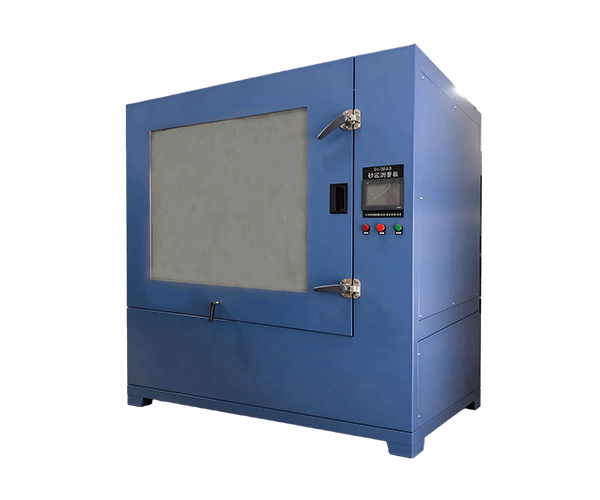
Controlled dust exposure
The main function of an IP5X/IP6X dust test chamber is to create a controlled environment for dust ingress protection testing. The chamber's dust circulation and handling arrangement should be suitable for the intended test procedure. Dust distribution, loading method, and operating settings need to be considered together. We confirm the applicable test requirements before defining the equipment configuration.
Configuration based on sample dimensions
Test samples can vary considerably in size. A small connector enclosure, a wall-mounted control box, and a larger electrical cabinet do not necessarily require the same working chamber. We discuss the external dimensions of the sample, the space needed for mounting, and the clearance required for loading and inspection. The final working dimensions should be confirmed from the largest representative sample and the planned test arrangement.
Practical sample fixtures
Sample fixtures should hold the product securely and allow the operator to position it as required by the test method. Poor fixture design can make loading difficult or cause unnecessary delays between tests. Depending on the sample and project requirements, we can discuss suitable support structures and mounting arrangements as part of the customization process.
Operator-friendly controls
A clear operating interface helps users set up and monitor a test without unnecessary confusion. The required control functions depend on the chamber configuration. During project discussions, we confirm which parameters need to be entered, which operating states need to be displayed, and what information the customer wants to record. Any specific automation, data recording, or communication requirement should be agreed upon before manufacturing.
Consideration of dust handling and cleaning
Dust testing naturally creates a housekeeping challenge. Fine powder can accumulate on chamber surfaces, fixtures, and access areas if cleaning arrangements are not considered. Routine maintenance helps keep the equipment in suitable working condition and reduces the chance that dust from an earlier test will affect a later setup. The exact cleaning procedure should follow the equipment instructions and the dust material's safety requirements.
Optional vacuum arrangement where required
Some dust ingress test procedures require a pressure difference or a vacuum arrangement, depending on the enclosure category and applicable method. This should not be treated as a universal feature that is automatically required for every test. We confirm whether the customer's test scope requires vacuum-related functions and then determine the appropriate configuration. The required vacuum performance and connection details must be specified and verified for the project.
Customization for actual testing work
Our company specializes in customized testing equipment. We can discuss non-standard working dimensions, sample supports, operating requirements, and other project-specific needs. Customization does not mean every option is automatically included; it means that the technical scope is developed around the customer's stated requirements. Before an order is confirmed, both sides should agree on the functions included, the acceptance method, the documents to be supplied, and the delivery schedule.
Because specific equipment values have not been defined in this general product description, we do not publish unsupported figures for chamber volume, dust concentration control accuracy, vacuum pressure, test duration, or controller resolution. These values must be confirmed in the technical proposal for the selected configuration. This approach gives buyers a clearer basis for comparing quotations and reduces the risk of misunderstanding during acceptance.
4. IP5X vs. IP6X: How to Choose the Right Test Chamber
When comparing an IP5X Dust Test Chamber with an IP6X dust test chamber, buyers should start with the product's required protection level. IP6X is not simply another name for a more powerful dust fan. It represents a different dust protection requirement, and the test must follow the relevant method and acceptance criteria.
| Selection factor | Questions to ask | Why it matters |
|---|---|---|
| Required IP rating | Is the target IP5X, IP6X, or both? | Defines the intended test and evaluation criteria |
| Product dimensions | What are the largest sample's width, height, and depth? | Helps determine the chamber's working space |
| Sample configuration | Will the product be tested assembled, mounted, or operating? | Affects fixtures and test preparation |
| Applicable standard | Which standard edition and product-specific method apply? | Helps establish the correct test procedure |
| Pressure requirements | Does the procedure require a vacuum or pressure difference? | Determines whether additional equipment is needed |
| Test frequency | Is testing occasional, daily, or part of production quality control? | Influences workflow, maintenance, and automation needs |
| Documentation | Which operating manuals, records, and technical documents are required? | Supports training, traceability, and internal review |
This checklist is a purchasing aid prepared by Guangzhou Chuangge Automation Equipment Co., Ltd.; it is not a table of mandatory values from IEC 60529. The specific test requirements should be confirmed using the applicable standard and the customer's product specification.
We also recommend checking the intended use of the equipment. A research laboratory may need flexible fixtures and frequent changes between different samples. A production quality department may place more emphasis on straightforward operation, routine inspection, and clear records. A third-party laboratory may need to support a wider range of sample sizes and customer procedures. These differences can influence the most appropriate chamber configuration.
Another point worth checking is whether the product needs dust testing only or a wider environmental testing programme. Dust protection and water protection are different aspects of an IP rating. A product marked IP65, for example, has a dust protection designation and a separate water protection designation. A dust chamber alone cannot complete the water-related part of that assessment. If water testing is also required, it should be included in the equipment plan separately.
Buyers should also confirm how the test result will be used. Internal design verification, supplier quality control, customer acceptance, and formal third-party certification are not necessarily the same process. A chamber can support internal testing, but a formal certification claim may require testing by an appropriately qualified or accredited organization and compliance with the relevant certification scheme. The required evidence should be clarified before the project begins.
5. Applications Across Electrical, Electronics, and Industrial Manufacturing
Dust ingress protection testing is useful wherever a product enclosure needs to limit dust entry. Dust may come from a manufacturing floor, a warehouse, a roadside installation, a dry outdoor environment, or the normal handling of industrial materials. The risk varies by application, so the test requirement should be based on the actual operating environment and the product's intended use.
Electrical enclosures and control cabinets
Electrical enclosures protect internal wiring, terminals, control components, and other parts from the surrounding environment. Gaps around doors, cable glands, joints, and access panels can become potential dust entry points. An IP5X/IP6X dust test chamber can help manufacturers evaluate enclosure designs and check whether changes to seals or assembly methods improve dust protection.
Electronic devices and components
Electronic products often contain circuit boards, connectors, sensors, and other components that need suitable protection from environmental contamination. Depending on the design, dust may interfere with contacts, collect around moving parts, or complicate maintenance. Testing can help identify weaknesses before a product is released for wider use. The test method should match the enclosure and the applicable product requirements.
Home appliances
Home appliances may be used in kitchens, utility rooms, garages, workshops, or other environments where dust and particles are present. Not every appliance requires IP5X or IP6X testing, and the appropriate protection level depends on the product design and relevant requirements. For appliances where dust ingress is an identified concern, a controlled test can help the manufacturer evaluate enclosure performance and support product improvement.
Lighting and electrical accessories
Lighting housings, junction boxes, switches, connectors, and electrical accessories may need testing to verify their resistance to dust ingress. The relevant standard and product requirements determine the test conditions and acceptance criteria. For products that are also exposed to rain, splashing, or water jets, separate water ingress testing may be required to assess the complete IP designation.
Automotive and transport-related components
Vehicle-related electrical components and transport equipment may be exposed to road dust, workshop contamination, and other particles. However, automotive-specific standards may introduce requirements that differ from the general IEC 60529 method. Before selecting a chamber, the buyer should identify whether the product is tested under IEC 60529, a vehicle-specific standard, or a customer-defined procedure. A generic IP rating should not be assumed to cover every automotive test requirement.
Research laboratories and quality inspection departments
Testing laboratories and quality inspection teams may use dust chambers for design verification, incoming inspection, sample comparison, and failure analysis. In these settings, consistent test preparation and clear records are particularly important. A well-planned chamber configuration can make it easier to load samples, follow the required procedure, clean the equipment, and document the findings.
At Guangzhou Chuangge Automation Equipment Co., Ltd., our broader testing equipment business serves applications involving electronic products, home appliances, wires and cables, plastics and textiles, electrical accessories, and construction materials and components. The appropriate equipment and test method depend on the product category. We discuss the scope of each project individually instead of assuming that one test configuration is suitable for every industry.
6. Manufacturing, Inspection, Delivery, and Technical Support
A customized dust test chamber should be planned around a confirmed technical scope. Our usual production cycle for customized testing equipment is approximately 30 to 60 days, depending on the equipment specifications, customization requirements, component availability, and project complexity. This is a general planning range rather than a guaranteed delivery date for every configuration. The actual schedule is confirmed when the technical details and order requirements are agreed.
Technical review before manufacturing
We begin by reviewing the customer's application, target IP rating, sample dimensions, test procedure, and expected workflow. If the customer has a standard, test specification, drawing, or existing equipment reference, these materials help us understand the requirements more accurately. We also clarify the desired control functions, fixtures, utilities, and documentation so that the scope is not left open to interpretation.
Configuration and assembly
After the technical requirements are confirmed, the chamber configuration can be planned around the agreed working space, structural arrangement, dust handling method, and control requirements. Assembly quality is important because the chamber must support the intended test conditions while remaining practical to operate and maintain. The design and manufacturing scope should be consistent with the final technical agreement.
Functional inspection before delivery
Before delivery, each unit undergoes functional inspection and performance verification according to the agreed scope. The purpose is to check that the equipment's included functions operate as intended and that the required verification activities have been completed. Where the project calls for particular acceptance checks, those checks should be identified before production so that the delivery process can follow a clear plan.
It is useful to distinguish equipment inspection from product certification. A factory inspection of the chamber confirms aspects of the equipment's function and agreed performance. It does not, by itself, certify every product later tested inside the chamber. Similarly, the fact that a chamber is designed for IP5X/IP6X testing does not mean that every sample placed inside it automatically receives an IP rating. The sample must be tested and evaluated according to the applicable procedure.
Operating instructions and technical documentation
Operating instructions and technical documentation are provided as agreed for the project. These materials help operators understand the equipment's intended use, operating sequence, and routine care requirements. If the customer needs particular document formats, language arrangements, or additional records, these items should be discussed during the quotation stage.
Packaging and transportation
We can arrange transportation by sea, air, or land according to the destination, delivery schedule, and shipment requirements. Protective materials and sturdy wooden cases can be used to help reduce the risk of damage during handling and transportation. The packaging arrangement should take account of the equipment's size, weight, sensitive components, and shipping route. International shipments may also require confirmation of packaging and import documentation requirements.
| Project stage | Typical activity | Information to confirm |
|---|---|---|
| Requirement review | Discuss application, IP rating, sample, and standard | Product drawings, dimensions, test method |
| Technical proposal | Define chamber configuration and included functions | Working space, fixtures, control requirements |
| Manufacturing | Build and assemble according to the agreed scope | Approved specifications and schedule |
| Inspection | Complete functional inspection and agreed verification | Acceptance checklist and required records |
| Delivery | Prepare documents, protective packaging, and shipment | Destination, transport method, delivery terms |
Source: This table describes our general project workflow based on the supplied company information. It is not a sequence or timetable prescribed by IEC 60529. Project-specific activities and delivery requirements are confirmed in the quotation and technical agreement.
Payment terms are negotiable and should be confirmed before the order is placed. For overseas projects, we recommend agreeing on the equipment scope, inspection arrangements, shipping method, packaging, delivery terms, and document requirements in writing. Clear communication at the start makes it easier for both sides to manage the project and reduces the chance of unexpected changes later.
7. Why Work with Guangzhou Chuangge Automation Equipment Co., Ltd.?
Choosing testing equipment is not only about comparing the purchase price. The equipment must suit the test method, fit the sample, and work with the customer's existing process. When the configuration is wrong, the buyer may need extra fixtures, changes to the laboratory layout, or additional equipment after delivery. We therefore place considerable emphasis on understanding the application before confirming a solution.
Guangzhou Chuangge Automation Equipment Co., Ltd. specializes in customized testing equipment and has experience working with standards-related requirements across multiple industries. Our product scope includes testing equipment for construction materials and components, wires and cables, plastics and textiles, electrical plugs, sockets and switches, electronic products, and home appliances. This range gives us a practical understanding that different products require different test setups, operating procedures, and acceptance criteria.
Our company follows the business philosophy of ensuring survival through high technology and driving development through high quality. We have obtained ISO 9001 quality management system, ISO 14001 environmental management system, and ISO 45001 occupational health and safety management system certifications. These certifications relate to the company's management systems; they should not be interpreted as product-specific certifications for every dust test chamber or as automatic proof that a customer's sample meets a particular IP rating.
We also have a portfolio of more than 20 patents, including invention patents, utility model patents, and software patents. This intellectual property portfolio reflects our ongoing work in testing equipment and related technical development. The exact functions and configuration of an individual IP5X/IP6X dust test chamber are still determined by the technical agreement for that product.
Customization is particularly valuable when the standard equipment layout does not fit a customer's sample or workflow. For example, the buyer may need a specific working dimension, a special fixture, a different loading arrangement, or additional operating information. We review these needs with the customer and confirm what can be included in the project. If a requested function requires further engineering or is outside the agreed scope, it should be discussed before the order is finalized.
We aim to make technical communication clear and useful. Rather than promising results without knowing the sample and test method, we ask for the details needed to evaluate the request. This includes the target IP rating, relevant standard, sample size, required test conditions, expected daily workload, and any documentation requirements. These details help us prepare a more relevant proposal and allow the customer to compare equipment offers on a like-for-like basis.
For buyers comparing IP5X/IP6X dust test chamber suppliers, we suggest checking the following points:
Does the supplier understand the difference between IP5X and IP6X test requirements?
Can the proposed working space accommodate the actual sample and fixture arrangement?
Are any required vacuum or pressure-related functions included in the technical scope?
Are the control functions and operating sequence clearly described?
Is the equipment inspection and acceptance process agreed before manufacturing?
Are operating instructions and technical documents included as specified?
Are the production lead time, packaging, shipping method, and payment terms clearly stated?
Can the supplier explain which functions are standard and which require customization?
These questions are useful because a low initial quotation does not always represent the lowest total project cost. If important functions, fixtures, documentation, or acceptance checks are missing, the buyer may need to resolve them later. A clear technical agreement helps both the supplier and the customer understand exactly what will be delivered.
8. Frequently Asked Questions About IP5X/IP6X Dust Test Chambers
Q1: What is the difference between IP5X and IP6X?
IP5X indicates dust protection under the applicable test criteria, where limited dust ingress may be acceptable if it does not compromise the specified protection requirements. IP6X indicates a dust-tight enclosure under the relevant criteria, meaning dust ingress is not permitted. The precise procedure and assessment must follow the applicable edition of IEC 60529 and any relevant product-specific requirements.
Q2: Can one dust test chamber be used for both IP5X and IP6X testing?
One chamber may be configured to support both types of test, provided that its functions, working space, accessories, and operating arrangements meet the requirements of the relevant procedures. Buyers should not assume that every chamber advertised as an IP5X/IP6X dust test chamber automatically supports every possible test setup. We recommend confirming the intended test scope and the required configuration before ordering.
Q3: Does an IP6X dust test also prove water resistance?
No. The X in IP6X indicates that the water-protection characteristic is not specified by that code. Dust testing evaluates the relevant protection against dust ingress. Water resistance requires a separate test under the appropriate water-related IP classification and test procedure. If both dust and water protection are required, the equipment and testing plan should cover both requirements.
Q4: Which standard should be used for IP5X and IP6X dust testing?
IEC 60529 is the international standard titled Degrees of protection provided by enclosures (IP Code). However, some products may also be subject to product-specific or industry-specific requirements. The buyer should identify the applicable standard, edition, and test procedure before equipment configuration is finalized. The standard's full text should be consulted for exact test conditions and acceptance criteria.
Q5: What information do you need to quote a dust test chamber?
We usually need the target IP rating, the applicable standard or test specification, the dimensions and weight of the largest sample, the intended sample mounting arrangement, and any required vacuum or pressure-related functions. It is also useful to know how often the equipment will be used, whether different products will be tested, and which operating documents or records are required. Drawings and photographs can help clarify the application.
Q6: Can the chamber be customized for a large enclosure?
Customization can be discussed based on the size, weight, and mounting requirements of the sample. We review the required working space, loading access, fixtures, and test method before confirming the design. A larger chamber may affect the structure, dust handling arrangement, transportation, and installation requirements, so the final configuration and lead time must be confirmed for the project.
Q7: How long does manufacturing take?
Our typical production cycle for customized testing equipment is approximately 30 to 60 days. The actual lead time depends on the selected configuration, engineering requirements, component availability, and project complexity. We confirm the estimated delivery schedule after the technical scope and order requirements have been agreed.
Q8: What inspection is completed before shipment?
Each unit undergoes functional inspection and performance verification according to the agreed scope before delivery. If the customer requires specific acceptance checks or records, those requirements should be discussed before manufacturing. The final inspection scope should be stated clearly so both parties understand what will be checked and documented.
Q9: What documents are supplied with the equipment?
Operating instructions and technical documentation are provided as agreed. The exact document package may depend on the equipment configuration and customer requirements. If documents are required in a particular language or format, this should be included in the technical discussion before the order is confirmed.
Q10: How is the chamber packaged and shipped?
Shipping can be arranged by sea, air, or land according to the destination and delivery requirements. Protective materials and sturdy wooden cases can be used to help protect the equipment during handling and transportation. Packaging details, shipping terms, and required documents should be confirmed for each order.
Q11: Can this chamber be used for formal product certification?
The chamber provides a test environment; it does not automatically issue a certification or guarantee that a product meets an IP rating. Whether the results can be used for a particular certification or regulatory purpose depends on the applicable scheme, testing procedure, laboratory competence, and required documentation. Customers should confirm these requirements with the relevant certification body or testing organization.
Q12: How can I request a quotation?
Contact Guangzhou Chuangge Automation Equipment Co., Ltd. with your product drawings or sample dimensions, target IP rating, applicable standard, and expected testing requirements. If you already have a test procedure or a specification from your customer, include it with your enquiry. We can then review the application and discuss a suitable IP5X/IP6X dust test chamber configuration, the production schedule, inspection requirements, and delivery arrangements.
Request a Customized IP5X/IP6X Dust Test Chamber
If you are looking for an IP5X/IP6X Dust Test Chamber for reliable dust ingress protection testing, we welcome the opportunity to discuss your application. Whether you are developing a new enclosure, checking an existing product design, or establishing a routine quality inspection process, the first step is to define the test requirement clearly.
Please share the product type, sample dimensions, target IP rating, applicable test standard, and any special operating or documentation requirements. Our team at Guangzhou Chuangge Automation Equipment Co., Ltd. can review these details and discuss the equipment configuration with you. We will confirm the available functions, customization scope, expected production cycle, inspection arrangements, and shipping method according to the project requirements.
With a clear technical specification and a well-planned testing process, manufacturers can evaluate enclosure dust protection more systematically, identify potential design weaknesses, and make better-informed decisions before products reach the market. Contact us to discuss your IP5X/IP6X dust testing requirements and request a project-specific quotation.
Technical Reference
International Electrotechnical Commission (IEC), IEC 60529, Degrees of protection provided by enclosures (IP Code): Official IEC publication information.
TÜV SÜD, Ingress Protection (IP) Testing: Overview of IP testing and enclosure protection.
Intertek, IP Testing | Ingress Protection per IEC 60529: Overview of IP code testing.
Note: This page is intended as general product and application information. The final chamber configuration and test procedure should be confirmed against the applicable standard, its current edition, and the customer's product-specific requirements.
