Fire Hose Pressure And Burst Testing Machine for Reliable Hose Strength and Pressure Evaluation
When a fire breaks out, a fire hose needs to deliver water when it matters most. It must withstand internal water pressure, maintain its structure, and work reliably with the correct fittings and connections. A hose that leaks, expands abnormally, or bursts under pressure can create serious problems during firefighting. For manufacturers, therefore, pressure testing is not just another production step. It is an important way to check product quality before the hose reaches the market.
At Guangzhou Chuangge Automation Equipment Co., Ltd., we specialize in customized testing equipment for industrial applications. Our Fire Hose Pressure And Burst Testing Machine is designed around the practical needs of hose manufacturers, quality control departments, testing laboratories, and other organizations that need to evaluate hose pressure performance. Depending on the required test method, the system can be configured to support pressure resistance checks, leakage observation, pressure holding, and burst pressure testing.
We understand that different Fire Hoses do not all have the same structure or pressure requirements. A layflat hose for a fixed fire protection system, a hose used by a fire department, and a hose assembly supplied with particular fittings may follow different product specifications and testing procedures. That is why we discuss the intended application, sample dimensions, required pressure range, test duration, and applicable standards before confirming the equipment configuration.
Our goal is straightforward: to help customers build a practical and repeatable testing process. A suitable Fire Hose Pressure And Burst Testing Machine can help operators identify potential weaknesses, record pressure behavior, compare samples, and make more informed quality decisions. The final configuration depends on the customer's test requirements, rather than on a one-size-fits-all equipment design.
1. What Is a Fire Hose Pressure And Burst Testing Machine?
A Fire Hose Pressure And Burst Testing Machine is a testing system used to evaluate how a fire hose or hose assembly behaves when internal pressure is applied. In simple terms, the machine supplies pressure to a test sample so that the operator can observe whether the hose withstands the specified conditions, shows signs of leakage, changes shape excessively, or eventually ruptures during a burst test.
These checks answer several practical questions. Can the hose withstand its specified proof pressure? Does it remain stable during a defined pressure-holding period? Are there visible leaks around the hose wall or connection points? If the test requires a burst measurement, at what pressure does the sample fail? The answers help quality teams assess the sample against the relevant product requirements.
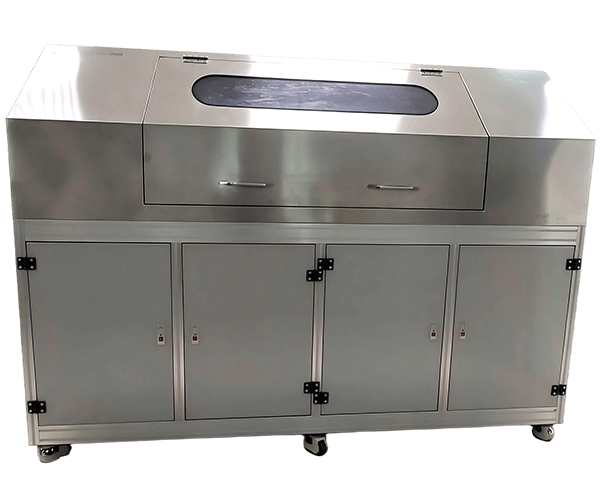
Our equipment is intended to support controlled testing. The system may include a pressure supply unit, pressure measurement instruments, a sample connection assembly, valves, a control system, and a protective enclosure or safety arrangement appropriate to the application. Depending on the customer's requirements, additional functions may be considered, such as digital pressure display, test parameter setting, automatic pressure control, data recording, and test result export.
These features are not identical on every machine. For example, a system intended mainly for proof pressure testing may have different control requirements from one designed to carry a sample through a controlled pressure ramp until it bursts. We confirm the required functions during technical discussions so the final equipment matches the intended test procedure.
It is also important to distinguish pressure testing from other forms of fire hose evaluation. Pressure and burst testing focus on how a hose behaves under internal pressure. They do not, by themselves, establish its fire resistance, Abrasion Resistance, aging performance, flexibility, or suitability for every operating environment. If a customer needs to evaluate several properties, those tests should be planned separately according to the relevant standards or product specification.
Why do manufacturers need pressure and burst testing?
Fire hoses are made from materials and components that must work together. Depending on the hose design, these may include an inner lining, a reinforcing textile layer, an outer cover, and end connections. The inner lining needs to contain the test liquid, while the reinforcement helps the hose withstand internal pressure. The outer layer may provide additional protection against the surrounding environment.
A weakness in any of these areas can affect the test result. A connection may leak even when the hose wall is sound. Reinforcement may be uneven. A sample may expand beyond the permitted limit, or the lining may develop a defect. Pressure testing helps manufacturers identify these issues under defined conditions rather than relying only on visual inspection.
For production teams, the value is not limited to deciding whether one sample passes or fails. Test records can also support comparisons between batches, help investigate recurring defects, and provide useful feedback to production engineers. When a problem appears repeatedly, the team can examine material selection, manufacturing consistency, assembly methods, or storage and handling conditions.
Common test objectives
Proof pressure testing: Check whether the sample withstands a specified pressure for a defined period without unacceptable leakage or visible damage.
Pressure holding: Observe pressure behavior over a set time, following the applicable test procedure and accounting for the system's measurement limitations.
Leakage inspection: Check the hose body and relevant connection areas for signs of water leakage.
Burst pressure testing: Increase pressure according to the specified procedure until the sample ruptures or the defined test endpoint is reached.
Comparative quality evaluation: Compare pressure behavior or burst results among samples, production batches, or design variations.
Not every customer needs all five functions in one machine. We help determine which functions are necessary based on the test standard, the type of hose, the production process, and the intended use of the results.
2. Working Principle: How the Fire Hose Pressure Test Is Performed
The basic principle is easy to understand. The test sample is connected to the equipment, filled with the required test liquid, and pressurized under controlled conditions. The operator or control system monitors pressure while the sample is examined for the response required by the test method.
For hydrostatic testing, water or another permitted liquid is commonly used as the pressure medium. The sample must be connected correctly, and trapped air must be removed in accordance with the applicable procedure. This point is particularly important during burst testing because compressed gas stores energy and can make a failure more dangerous. ISO 1402, which covers hydrostatic testing of rubber and plastics hoses and hose assemblies, specifically addresses controlled liquid pressurization and the hazards associated with trapped air.
The exact sequence depends on whether the task is a proof pressure test, a pressure-holding test, or a burst test. The following workflow describes a general approach. It is not a replacement for the specific procedure required by the customer's standard.
Step 1: Confirm the sample and test requirements
Before testing, the operator identifies the hose type, nominal internal diameter, sample length, end connections, and applicable product specification. The required working pressure, proof pressure, minimum burst pressure, pressure increase rate, holding time, and acceptance criteria should be taken from the relevant standard or approved test plan.
These details matter because there is no single pressure value suitable for every fire hose. A test pressure chosen for one hose category could be inappropriate for another. We therefore recommend confirming the required parameters before selecting the pressure range and measurement components for the machine.
Step 2: Install and connect the sample
The hose is installed using compatible fixtures or connectors. The connection must be suitable for the hose dimensions and the pressure required by the test. Incorrect installation can cause leakage, damage the sample, or affect the reliability of the result.
Sample support and movement also need attention. A hose can change shape as pressure increases, and the arrangement must allow the movement required by the test method while keeping the operator protected. The design of the fixture should reflect the sample's length, diameter, flexibility, and connection type.
Step 3: Fill the hose and remove trapped air
For a hydrostatic test, the sample is filled with the specified liquid. The operator follows the approved procedure to remove air from the hose before applying high pressure. This is not a minor housekeeping step. It is part of safe test preparation and helps reduce the risk associated with sudden energy release if the sample fails.
The liquid and its temperature should also be appropriate for the method. If the relevant standard specifies water temperature or sample conditioning requirements, those instructions should be followed. The equipment configuration must support the actual test procedure rather than relying on assumptions from a different hose category.
Step 4: Increase pressure in a controlled manner
Once the system is ready, pressure is increased at the rate specified by the test method. A pressure sensor or pressure transducer measures the pressure, and the control system can display the reading for the operator. Depending on the configuration, the machine may allow manual control, programmed pressure stages, or automated pressure regulation.
During proof pressure testing, the system reaches the specified pressure and holds it for the required period. The operator observes the hose and its connections for unacceptable leakage, cracking, abrupt deformation, or other signs identified in the acceptance criteria. The machine may record the measured pressure and test duration, but the evaluation of physical damage must follow the defined inspection method.
Step 5: Conduct the burst test when required
A burst test follows a different objective from a proof pressure test. Pressure is increased according to the specified procedure until the hose ruptures or the defined endpoint is reached. The measured burst pressure is then compared with the minimum requirement for that product.
Because the sample may fail suddenly, burst testing requires appropriate guarding, remote operation where specified, safe drainage, and a controlled test area. Operators should not approach a pressurized sample or attempt to adjust a connection while the system is under pressure. The safety arrangement should be designed around the maximum intended test conditions and the consequences of a hose failure.
Step 6: Record the result and release the system safely
After the test, the system is depressurized using the prescribed procedure. The operator records the relevant readings and observations, including whether the sample leaked, deformed, or burst, as well as the test parameters required by the inspection plan. If the equipment supports electronic data recording, results may be stored for later comparison or reporting.
We recommend that customers define a consistent record format before routine testing begins. A useful record can include sample identification, test date, operator, test method, pressure settings, holding time, observed condition, final result, and any unusual event. This makes it easier to trace a result back to the correct sample and understand how the test was performed.
Table 1. Typical stages in a fire hose pressure test
| Stage | Main purpose | Information to control or record |
|---|
| Sample preparation | Confirm that the correct hose and fittings are used | Hose type, dimensions, sample identification, conditioning |
| Filling and air removal | Prepare the sample for hydrostatic testing | Test liquid, filling procedure, removal of trapped air |
| Pressure increase | Apply pressure under defined conditions | Pressure range, increase rate, measured pressure |
| Proof pressure hold | Check resistance at a specified test pressure | Hold duration, leakage, deformation, visible damage |
| Burst testing | Determine the pressure at sample failure when required | Pressure at rupture, failure observations, test endpoint |
| Post-test review | Document the result and prepare for the next test | Final result, observations, sample status, test record |
Source note: This table summarizes a general hydrostatic testing workflow. For method-specific requirements, consult ISO 1402, “Rubber and plastics hoses and hose assemblies — Hydrostatic testing,” and the applicable product standard. ISO standard information: International Organization for Standardization. The workflow above is explanatory and does not reproduce a complete standard procedure.
3. Main Features and Configuration Options
When customers compare a Fire Hose Pressure And Burst Testing Machine with other systems, we suggest looking beyond the maximum pressure shown on a specification sheet. The useful question is whether the machine can perform the required test safely, with suitable measurement capability and a practical workflow for the samples being tested.
We configure our testing equipment according to the agreed requirements. The following are common design considerations. The final list of functions, control options, and measurement specifications should be confirmed in the technical proposal.
Controlled pressure generation
The pressure supply system must be suitable for the required pressure range and test medium. Its design affects how smoothly pressure can be increased and how reliably the test condition can be maintained. For a burst test, the pressure supply and control arrangement should support the increase rate specified in the relevant method. For a proof pressure test, the system should be able to reach and maintain the required pressure within its operating limits.
It is worth checking the full working range rather than focusing only on the highest pressure. A machine intended for different hose types may need to perform lower-pressure tests as well as higher-pressure tests. The proposed configuration should therefore be reviewed against the full set of customer test requirements.
Pressure measurement and display
Pressure measurement is central to this type of equipment. The selected sensor, pressure transducer, or gauge should be suitable for the intended range and measurement needs. Resolution, accuracy, response, installation position, and maintenance arrangements all influence how useful the reading will be.
We discuss the required pressure range and measurement performance with the customer before confirming the instrumentation. If test results will be used for formal quality decisions, the laboratory should also define how the measuring instruments will be checked, calibrated where required, and maintained in accordance with its quality procedures.
A digital display makes readings easier to observe, while a data acquisition function can help preserve the pressure history during a test. However, a digital screen alone does not prove that a result is accurate. Measurement performance depends on the instrument, its condition, the installation, and the verification or calibration process applied to it.
Fixtures and hose connections
Fire hoses come in different diameters, lengths, and connection arrangements. A fixture that works well for one hose may not suit another. The clamping and sealing method must be compatible with the sample and the expected pressure, and it should not introduce unnecessary damage or leakage at the connection.
When planning a customized system, we ask customers to provide drawings, sample photographs, hose specifications, and details of the end fittings wherever possible. This information helps us evaluate whether standard connectors are suitable or whether dedicated fixtures are needed.
Safety enclosure and operator protection
Burst testing is a destructive test. The sample can rupture suddenly, release water at high speed, and move unexpectedly. A suitable safety arrangement is therefore essential. Depending on the application, the system may require a protective enclosure, secure sample restraint, remote controls, pressure relief arrangements, and a defined method for safe depressurization.
The exact safety design must be assessed against the intended pressure, sample dimensions, stored energy, and test environment. Operators should receive appropriate training and follow documented procedures. Safety devices should never be bypassed to speed up testing, and the system should not be used beyond its approved operating limits.
Control and data management
Some customers need a simple manual system for routine inspection. Others need programmable pressure stages, automatic pressure holding, electronic recording, or reports that can be linked to sample identification. These requirements affect the control architecture and the user interface.
For production environments, a clear and repeatable procedure can be just as valuable as automation. Operators should be able to identify the correct test program, enter or verify the relevant parameters, recognize an abnormal condition, and save the test record without unnecessary steps.
Table 2. Configuration options and their practical value
| Configuration item | What it does | What we confirm before design |
|---|
| Pressure supply unit | Generates the pressure needed for testing | Required pressure range, test medium, pressure increase rate |
| Pressure sensor or transducer | Measures system pressure | Measurement range, accuracy requirement, resolution, verification plan |
| Sample fixture and connectors | Connects and supports the hose | Hose diameter, sample length, fitting type, movement during testing |
| Control panel | Allows the operator to manage the test | Manual or automatic control, parameter settings, operator workflow |
| Data recording | Stores readings and test observations | Required data fields, file format, traceability, reporting needs |
| Protective arrangement | Reduces operator exposure to test hazards | Maximum test condition, sample failure behavior, guarding requirements |
Source note: This is an engineering configuration checklist prepared for equipment planning, not a table of mandatory features from a standard. The final design should be reviewed against the applicable hose test method, site risk assessment, and the customer's documented requirements.
4. Standards, Test Parameters, and Result Interpretation
Standards are important because they define how a test should be performed and what counts as an acceptable result. However, the name “fire hose” covers several product types. A standard written for one category should not automatically be applied to another. Before selecting the equipment, we recommend identifying the exact hose product, intended market, and applicable test specification.
ISO 1402: Hydrostatic testing of hoses
ISO 1402 addresses hydrostatic testing of rubber and plastics hoses and hose assemblies. It provides a useful reference for the general approach to pressure testing, including the application of liquid pressure and the measurement of pressure during the test. It also highlights safety concerns related to pressurized samples and trapped air.
For a customer developing a Fire Hose Pressure Testing system, ISO 1402 may be relevant where the product specification or test plan calls for this method. It should not be assumed to cover every fire hose requirement on its own. The product-specific standard may set the required pressure, hold time, sample dimensions, conditioning, and acceptance criteria.
ISO 7751: Relationship between working, proof, and burst pressure
ISO 7751:2016 addresses the ratios of proof pressure and minimum burst pressure to maximum working pressure for different categories of hose service. The important practical point is that these pressure levels have different meanings. Working pressure relates to the intended service condition, proof pressure is used for a defined resistance check, and burst pressure relates to failure under the prescribed test conditions.
These values must not be treated as interchangeable. A proof pressure result does not tell the operator the actual burst pressure of the sample. Likewise, the fact that a hose survives a particular pressure does not automatically demonstrate compliance with every requirement in its product specification.
EN 14540: Non-percolating layflat hoses for fixed systems
EN 14540 is a product standard for non-percolating layflat fire-fighting hoses intended for fixed systems. The published scope describes hoses with internal diameters from 25 mm to 52 mm and a maximum working pressure of 1.5 MPa. It also specifies performance requirements and test methods for this defined category of hose.
This scope is a good example of why product identification matters. Its requirements should not be used as universal values for all hoses used by fire departments, industrial facilities, ships, or other applications. If a customer is testing a hose covered by a different standard, the corresponding test requirements must be checked separately.
Table 3. Standards and their relevance to equipment planning
| Reference | General scope | How it may inform equipment planning | Important limitation |
|---|
| ISO 1402 | Hydrostatic testing of rubber and plastics hoses and hose assemblies | Helps define test setup, liquid pressurization, pressure measurement, and safe preparation | Does not replace product-specific acceptance requirements |
| ISO 7751:2016 | Ratios of proof and minimum burst pressure to maximum working pressure for hose service categories | Helps clarify the relationship between different pressure levels | Applicable ratios depend on the hose service category and specification |
| EN 14540:2014 | Non-percolating layflat fire hoses for fixed systems within its stated scope | Provides product-specific requirements and test methods for covered hoses | Not a universal standard for every fire hose type |
| NFPA fire hose standards | Requirements vary by the relevant NFPA standard and edition | Can inform testing plans for products or service applications covered by the selected standard | Confirm the applicable current consolidated document and exact scope |
Sources: ISO 7751:2016, official ISO catalogue: https://www.iso.org/standard/68054.html; EN 14540 scope information from the Institute for Standardization of Serbia: https://iss.rs/en/project/show/iss%3Aproj%3A50560; NFPA 1962 standard development information: https://www.nfpa.org/codes-and-standards/nfpa-1962-standard-development/1962. Always verify the current applicable edition and the full standard text before defining acceptance criteria.
How should customers select the pressure range?
We recommend starting with the required test method, not with a guessed pressure value. First, identify the hose category and the standard or approved specification. Then confirm the working pressure, proof pressure, minimum burst pressure, pressure increase rate, hold duration, and any sample conditioning requirements that apply to the test.
After those values are confirmed, the equipment designer can select an appropriate pressure supply, sensor range, fixtures, safety arrangements, and control method. It is also important to consider the full range of samples that the laboratory expects to test in the future. If several hose types are involved, the customer should provide the requirements for each type so that the equipment is not designed around only one sample.
For example, the EN 14540 scope described above refers to a defined group of non-percolating layflat hoses for fixed systems. Its pressure requirements should not be copied into a test plan for a different hose category without confirming that the same standard applies. This is a simple step, but it helps prevent an expensive mismatch between the machine and the test task.
What makes a test result useful?
A useful result is more than a pressure number on a display. It needs to be connected to a clearly identified sample and a documented test procedure. The pressure measuring instrument must be suitable for the range, the sample must be installed correctly, and the test conditions must be controlled as required by the selected method.
Where results are used for formal quality decisions, customers should also establish their own instrument calibration or verification procedures, sample handling rules, acceptance criteria, and record retention practices. Our equipment can be configured to support the agreed workflow, but the laboratory remains responsible for applying the correct standard and interpreting the results within its quality system.
5. Applications Across Manufacturing, Inspection, and Research
The Fire Hose Pressure And Burst Testing Machine can be useful wherever organizations need to evaluate the pressure performance of fire hoses or related hose assemblies. The exact test setup depends on the sample and the purpose of the test.
Fire hose manufacturers
Manufacturers may use pressure testing during product development, process validation, incoming material evaluation, and production quality control. A test system can help compare hose samples and identify issues before products are shipped. For example, if one batch shows unusual leakage or lower burst pressure than expected, engineers can investigate the construction, materials, reinforcement, or assembly process.
Pressure testing is especially useful when a manufacturer is introducing a new hose design or changing a production parameter. The test does not replace all other quality checks, but it gives the team measurable information about resistance to internal pressure.
Fire protection equipment suppliers
Companies supplying fire protection equipment may need to verify hose products received from different manufacturers or suppliers. A defined testing process helps them check samples against the agreed product specification and maintain consistent purchasing records.
Before testing, the supplier should confirm whether the intended test is a factory quality check, an incoming inspection, a service test, or a formal conformity assessment. These activities may have different procedures and documentation requirements. The machine should be configured for the actual task rather than assumed to satisfy every purpose.
Third-party testing laboratories
Testing laboratories may require repeatable pressure application, suitable measurement instruments, safe test enclosures, and clear data records. Their needs can vary depending on the customers and standards they serve. Some laboratories test only a narrow range of hose types, while others handle a broader selection of samples and test methods.
For laboratory applications, we recommend discussing sample throughput, test repeatability, instrument requirements, data output, and safety controls at the quotation stage. If the laboratory operates under an accreditation or formal quality system, the proposed machine should be reviewed against the laboratory's own equipment and measurement requirements. Purchasing a machine alone does not provide laboratory accreditation.
Quality inspection departments
Quality teams often need a straightforward way to compare results over time. A stable test procedure and a consistent record format can help identify trends that might otherwise be missed. If several samples show similar defects, the team can investigate whether the cause is related to raw materials, manufacturing settings, handling, or storage.
Where the production plan permits, customers may use results from selected samples as part of a wider inspection program. The sampling frequency and acceptance rules should be established by the responsible quality team in accordance with the product specification, contractual requirements, and relevant standards.
Research and product development
During product development, engineers may want to compare reinforcement designs, lining materials, construction methods, or connection arrangements. A pressure and burst testing system can provide useful evidence about how different samples perform under the selected test conditions.
For this work, it is helpful to keep the test conditions consistent between samples. If several variables change at once, it can be difficult to determine why the results differ. A planned comparison, supported by accurate sample identification and recorded test parameters, makes the data easier to interpret.
Related industrial hose applications
Although this product page focuses on fire hoses, some pressure testing principles also appear in other hose testing applications. However, the equipment should not be assumed to be suitable for every rubber or plastic hose. Different media, fittings, pressure ranges, temperatures, and failure behaviors can require different fixtures and safety arrangements.
If customers intend to test other hose products on the same machine, we ask them to provide those requirements in advance. We can then assess whether the proposed configuration is suitable or whether additional components or a separate system would be more appropriate.
6. How We Customize and Manufacture the Testing Equipment
At Guangzhou Chuangge Automation Equipment Co., Ltd., we understand that industrial testing equipment must fit the customer's actual process. A machine may have a well-designed control panel and a high-pressure supply, but it will not be a good fit if the sample connectors are wrong, the pressure range is unsuitable, or the safety arrangement does not match the test conditions.
Our approach begins with understanding the test, then translating the requirements into an equipment configuration. We specialize in customized testing equipment for sectors including construction materials and components, wires and cables, plastics and textiles, electrical accessories, electronic products, and household appliances. Our broader experience in testing equipment helps us approach projects with attention to the test method, sample handling, measurement, and practical operation.
Step 1: Technical discussion and requirement confirmation
We first discuss what the customer wants to measure and how the test will be performed. Important details include the hose type, sample dimensions, end fittings, working pressure, proof pressure, minimum burst pressure, test duration, pressure increase rate, test medium, and applicable standard or specification.
If the customer has a test procedure, sample drawing, product datasheet, or photograph of the hose and fittings, these materials are useful. They reduce guesswork and help us identify configuration questions early. When some requirements are not yet confirmed, we can list them for review before the design is finalized.
Step 2: Equipment configuration and design review
After the requirements are understood, we develop the proposed configuration. This may include the pressure supply system, pressure measurement components, control method, fixtures, protective enclosure, and data recording functions where required.
At this stage, we pay particular attention to the relationship between the test pressure and the equipment's operating limits. The pressure range, sensor range, fixture strength, connections, and safety provisions need to be considered as a complete system. Selecting a single high-pressure component is not enough to establish that the whole machine is suitable for a given test.
Step 3: Component preparation and assembly
Once the design and commercial requirements are confirmed, the project moves into manufacturing and assembly. Components are prepared according to the agreed equipment configuration. The control system, pressure circuit, measuring instruments, fixtures, and safety-related parts are integrated into the machine.
For a customized machine, clear assembly records and component identification are helpful because they make later maintenance and troubleshooting easier. The exact manufacturing process depends on the design, the selected components, and the level of customization.
Step 4: Functional inspection and performance verification
Before delivery, we carry out functional inspection and performance verification according to the agreed scope. This helps us check that the assembled equipment operates as intended and that its key functions can be demonstrated under the defined verification conditions.
The scope of this pre-delivery work should be agreed in advance. Functional inspection is not automatically the same as formal instrument calibration, third-party certification, or a complete conformity assessment to a customer's product standard. If the customer requires specific verification records, calibration documents, or witnessed acceptance testing, those requirements should be stated during the quotation and design stages.
Step 5: Documentation, packing, and shipment
We provide technical documentation as agreed with the customer. Depending on the contract, this may include operating instructions, equipment information, maintenance guidance, and relevant inspection or verification records. Customers should confirm the required language, document format, and quantity before shipment.
After inspection, the machine is prepared for transport using protective packaging and sturdy wooden cases where appropriate. We can arrange sea, air, or land transportation according to the destination, delivery schedule, equipment size, and customer preference. The packing plan is selected to help protect the equipment during handling and transit.
Production cycle and delivery planning
The typical production cycle for our customized testing equipment is approximately 30 to 60 days. This is a planning estimate rather than a fixed promise for every project. The actual schedule depends on equipment specifications, the degree of customization, component availability, design confirmation, and any additional verification or documentation requirements.
For customers working to a project deadline, we recommend confirming the required delivery date early and finalizing technical details before production begins. Late changes to pressure range, sample fixtures, control functions, or documentation may affect the schedule. Clear communication at the beginning usually makes the entire process easier to manage.
Why work with Guangzhou Chuangge Automation Equipment Co., Ltd.?
We focus on customized industrial testing equipment and place importance on understanding the test requirements behind the machine. Our company follows the philosophy of ensuring survival through high technology and driving development through high quality. We have obtained ISO 9001 quality management, ISO 14001 environmental management, and ISO 45001 occupational health and safety management system certifications.
We also have a portfolio of more than 20 patents, including invention patents, utility model patents, and software patents. These credentials form part of our company's technical background, but we do not treat them as a substitute for project-specific engineering review. For a Fire Hose Pressure And Burst Testing Machine, the key questions remain practical: what hose will be tested, which standard applies, what measurements are needed, and how will operators use the system safely?
We work with customers to clarify those questions before finalizing the configuration. Payment terms are negotiable and confirmed in the commercial agreement. The delivery method, packing, documentation, and pre-shipment inspection scope are also agreed according to the project. Our aim is to provide equipment that matches the customer's defined testing needs and can be integrated into their day-to-day quality workflow.
7. Frequently Asked Questions About Fire Hose Pressure And Burst Testing Machines
Q1. What is the difference between a pressure test and a burst test?
A pressure test usually checks whether a hose can withstand a specified pressure for a defined period without unacceptable leakage or damage. A burst test is designed to determine the pressure at which the sample ruptures under the prescribed test conditions. The required pressure, duration, and acceptance criteria depend on the hose type and applicable test method. A proof pressure test should not be treated as a substitute for a burst test.
Q2. Can one machine test every type of fire hose?
Not automatically. Fire hoses can differ in diameter, length, construction, connection type, working pressure, and applicable standard. A machine can be configured for multiple sample types if its pressure range, fixtures, control functions, and safety arrangements are suitable for all the required tests. We recommend providing a list of hose types and test requirements so the configuration can be reviewed before ordering.
Q3. How do I choose the correct pressure range?
Start with the applicable product standard or approved test specification. Confirm the working pressure, proof pressure, minimum burst pressure, pressure increase rate, holding time, and any required conditioning. Then select the equipment range and measuring instruments based on those requirements. Do not select a test pressure simply because it is common for another hose type.
Q4. Does the machine automatically determine whether a hose meets the standard?
The machine can provide pressure readings and support the agreed test workflow. Whether the hose passes or fails depends on the applicable standard, its acceptance criteria, the test conditions, and the observed sample condition. Some criteria may be evaluated automatically if the system is designed for them, while others require operator inspection or additional measurements. The test procedure and pass/fail logic should be confirmed before manufacture.
Q5. Can the machine record test data?
Electronic data recording can be included when required by the project. The details depend on the selected control system and reporting needs. Customers should tell us which information they need to save, such as sample identification, pressure readings, test duration, burst pressure, date, or operator information. If data must be exported in a particular file format or linked to an existing quality system, that requirement should be discussed before the design is finalized.
Q6. Is the equipment suitable for laboratory use?
It can be configured for laboratory testing when the pressure range, measurement capability, fixtures, safety provisions, and documentation meet the laboratory's requirements. However, laboratory suitability depends on the specific application. If the equipment will be used within an accredited laboratory or formal quality system, the laboratory should review the proposed configuration against its own procedures, calibration requirements, and applicable standards. Buying the machine alone does not establish accreditation.
Q7. Does the machine come with calibration certificates?
The pre-delivery scope includes functional inspection and performance verification as agreed. Formal calibration documentation is a separate requirement and should not be assumed unless it is explicitly included in the quotation or contract. If calibration certificates, traceability information, or third-party calibration are required, please tell us before ordering so the scope can be reviewed.
Q8. How long does manufacturing take?
Our typical production cycle is around 30 to 60 days, depending on specifications and customization requirements. Projects with special fixtures, additional control functions, particular documentation needs, or more complex verification requirements may require a different schedule. We confirm the expected production and delivery arrangements after the technical scope is agreed.
Q9. What information should I send when requesting a quotation?
To help us prepare a suitable proposal, please provide as much of the following information as possible:
Type and intended application of the fire hose.
Hose internal diameter, sample length, and end connection details.
Working pressure, proof pressure, and minimum burst pressure, where applicable.
Applicable test standard, product specification, or customer test procedure.
Required pressure increase rate and pressure-holding duration.
Whether proof pressure testing, burst testing, or both are required.
Required measurement accuracy, data recording, and report format.
Safety enclosure, operating environment, power supply, and installation requirements.
Expected sample quantity and daily testing workload.
If some details are not available yet, send us the product datasheet, drawing, or photographs first. We can use them as a starting point for the technical discussion and identify which specifications need to be confirmed.
Q10. How is the machine packed and shipped?
We arrange protective packaging suitable for the equipment and the agreed transport method. Sturdy wooden cases may be used where appropriate to protect the machine during handling and shipping. Sea, air, and land transportation options can be discussed according to the destination, delivery time, and logistics requirements. The final packing and shipping arrangements are confirmed with the customer before dispatch.
Q11. Can the equipment be customized for a particular standard?
Customization is possible after the relevant test requirements have been reviewed. The customer should identify the exact standard and edition, the hose category covered, and the required test parameters. We can then assess the required pressure range, fixtures, control functions, and safety arrangements. The machine configuration can support the agreed test method, but formal product certification or compliance conclusions must be handled through the applicable evaluation process.
Q12. What payment terms are available?
Payment terms are negotiable and confirmed in the commercial agreement. The agreed terms may depend on the equipment configuration, project scope, delivery arrangements, and customer requirements. We recommend confirming the payment schedule, production lead time, inspection scope, documentation, and shipping responsibilities together so both parties have a clear understanding before production begins.
Conclusion: A Practical Testing Solution for Fire Hose Pressure Evaluation
Fire hose pressure and burst testing provides important information about how a hose behaves under defined internal pressure conditions. For manufacturers and laboratories, a suitable testing system can support quality control, product development, defect investigation, and documented evaluation. The most important part of selecting the equipment is not simply choosing the highest pressure rating. It is matching the machine to the correct hose category, test method, measurement requirements, and safety conditions.
At Guangzhou Chuangge Automation Equipment Co., Ltd., we develop customized industrial testing equipment based on the requirements agreed with each customer. For a Fire Hose Pressure And Burst Testing Machine, we focus on the practical details that shape daily operation: pressure generation, measurement, sample fixtures, control functions, safety provisions, data recording, and delivery documentation.
Our typical production cycle is 30 to 60 days, depending on the specifications and degree of customization. Before delivery, the equipment undergoes functional inspection and performance verification within the agreed scope. Technical documentation, protective packaging, and shipping arrangements are confirmed as part of the project.
If you are looking for a Fire Hose Pressure And Burst Testing Machine for manufacturing quality control, laboratory testing, or product development, contact our team with your hose specifications and test requirements. We can discuss the applicable standard, clarify the required parameters, and prepare a configuration proposal suited to your testing application.
Contact Guangzhou Chuangge Automation Equipment Co., Ltd. to discuss your fire hose pressure testing requirements and request a customized equipment proposal.
Reference Sources
International Organization for Standardization (ISO), ISO 7751:2016 — Rubber and plastics hoses and hose assemblies: Ratios of proof and burst pressure to maximum working pressure. View standard information.
Institute for Standardization of Serbia, SRPS EN 14540:2015 — Fire-fighting hoses: Non-percolating layflat hoses for fixed systems. View scope and status.
National Fire Protection Association (NFPA), NFPA 1962 standard development page. The page explains that the stand-alone NFPA 1962 content has been consolidated into NFPA 1930; users should verify the current applicable document and edition. View NFPA information.
ISO 1402 — Rubber and plastics hoses and hose assemblies: Hydrostatic testing. Consult the current published edition and the product-specific standard for the exact test procedure and acceptance criteria.
Technical note: The standards references above are provided to help readers identify potentially relevant documents. Applicability depends on the exact hose type, market, and test purpose. Confirm the current edition and full requirements before setting pressure values, acceptance criteria, or compliance claims.


