Test Apparatus for the Thermal Response Performance of Fusible Alloy Elements Used in Fire Protection
In a fire protection system, a small component can play a very important role. A fusible alloy element may look simple, but its ability to respond to heat at the intended temperature can affect when a fire protection device activates. If the element responds too early, the system may operate when it is not needed. If it responds too late, the equipment may not perform as intended during a fire. For manufacturers, checking the thermal response performance of fusible alloy elements is therefore an important part of product development and quality control.
At Guangzhou Chuangge Automation Equipment Co., Ltd., we specialize in customized industrial testing equipment. Our Test Apparatus for the Thermal Response Performance of Fusible Alloy Elements Used in Fire Protection is designed around the practical needs of manufacturers, laboratories, and quality inspection departments that need to evaluate how fusible alloy components behave under controlled heating conditions.
We know that fusible alloy elements are used in different types of fire protection devices. Their shape, alloy composition, rated operating temperature, mounting method, and mechanical load can vary. A fusible link used in a fire suppression arrangement is not necessarily tested in the same way as a fusible element incorporated into a sprinkler. For this reason, we begin with the intended application and applicable test requirements before confirming the equipment configuration.
Depending on the agreed test method, a thermal response test apparatus may be designed to control the heating environment, monitor temperature, hold defined test conditions, and record the response of the specimen. Additional functions can be considered according to the test procedure, such as programmable heating, temperature measurement near the specimen, data acquisition, and automatic recording of the response event.
Our aim is to help customers establish a controlled, repeatable testing process. A properly configured fusible alloy thermal response testing apparatus can provide useful information about operating temperature, heating behavior, and consistency between samples. The actual functions and acceptance criteria must always match the specific product and standard being evaluated.
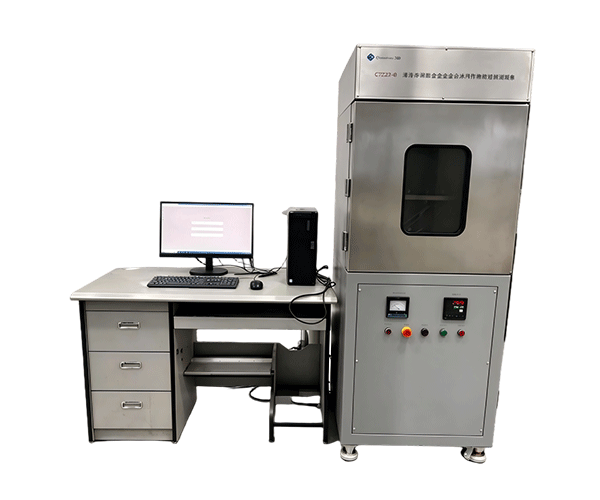
1. What Is a Fusible Alloy Thermal Response Test Apparatus?
A Test Apparatus for the Thermal Response Performance of Fusible Alloy Elements Used in Fire Protection is a testing system designed to evaluate the response of a fusible alloy component when it is exposed to a controlled temperature environment or a specified heating process.
A fusible alloy is a metal alloy selected for its melting behavior within a particular temperature range. In a fire protection device, the alloy may form part of a link, release mechanism, or other heat-responsive component. When the component reaches the conditions required by its design, the alloy may soften, melt, or lose the strength needed to hold a mechanism in place. This can allow the connected device to operate.
However, the behavior of the complete component depends on more than the alloy's melting point. Its dimensions, manufacturing consistency, mechanical loading, heat transfer, mounting arrangement, and surrounding structure can all influence its response. This is why a test of the raw alloy alone may not be sufficient when the product requirement concerns the performance of a finished fusible element.
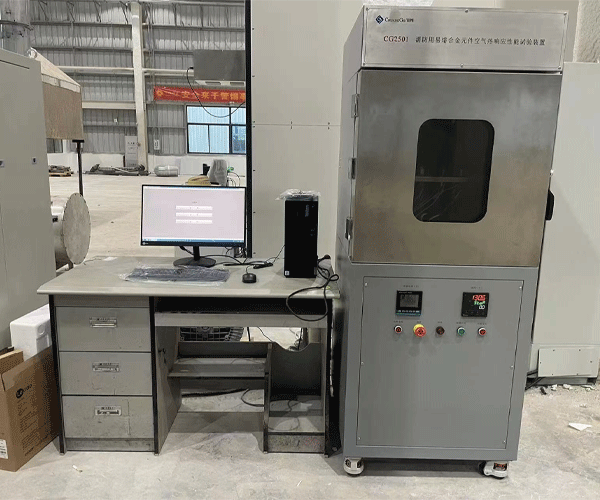
Our testing equipment is developed to support the test method defined for the customer's particular product. Depending on the application, the system may include a heating chamber or controlled heating unit, temperature sensors, a temperature controller, specimen fixtures, a data acquisition system, and a control interface. The final configuration is confirmed after reviewing the required test conditions.
What does thermal response performance mean?
Thermal response performance describes how a component behaves when its temperature changes. For a fusible alloy element, the test may focus on the temperature at which a specified event occurs, the time taken to respond under defined heating conditions, or whether the component operates correctly when exposed to the required temperature conditions.
These measurements are related, but they are not interchangeable. The temperature at which an alloy begins to melt is not necessarily the same as the operating temperature of the finished device. The time taken for a component to respond also depends on how heat reaches it, the surrounding temperature, airflow, its mounting arrangement, and any load acting on it.
For example, two components made from a similar alloy may not respond at exactly the same time if their thicknesses, shapes, or installation conditions differ. A thin component may heat up differently from a thicker one. A component exposed directly to heated air may behave differently from one that receives heat through a supporting structure.
When we discuss a thermal response testing project, we therefore ask what the customer needs to measure. Is the target the operating temperature of a finished fusible element? Is the purpose to compare samples from different production batches? Does the test require a defined heating rate, a specified mechanical load, or an observation of the actual release event? These details determine the equipment design.
Why is this equipment important for fire protection manufacturing?
Fire protection products are expected to work under conditions that may not occur during ordinary daily use. A heat-responsive element must remain stable during normal service while still performing its intended function when the required conditions arise. The manufacturer needs evidence that the component behaves consistently with the product specification.
Thermal response testing can help identify differences between samples, investigate unexpected activation, and provide information for process improvement. If test results begin to vary, the manufacturer can review alloy composition, component dimensions, casting or forming processes, assembly methods, storage conditions, and other factors that may affect the result.
For a quality control team, the equipment can also support routine sample checks and the creation of test records. These records are more useful when each result is connected to a clearly identified specimen and a documented test procedure.
It is important to remember that a thermal response test does not automatically establish the overall safety or compliance of a fire protection device. Depending on the product, other tests may be required for mechanical strength, corrosion resistance, leakage, long-term stability, or functional operation. We design the equipment around the specific test task rather than treating one measurement as proof of every product characteristic.
2. Working Principle and Typical Test Procedure
The basic idea behind thermal response testing is straightforward: expose the specimen to a controlled heating condition, measure the relevant temperature, observe the response, and compare the result with the required criteria.
In practice, the test needs careful control. A temperature displayed on the control panel does not necessarily represent the exact temperature of the fusible alloy itself. The chamber temperature, air temperature near the specimen, surface temperature, and internal temperature can differ. The correct measurement point depends on the test method and the purpose of the evaluation.
For this reason, the heating arrangement and temperature measurement system must be selected together. The apparatus should provide the conditions required by the relevant procedure, while the test record should make clear which temperature was measured and how the response was identified.
Step 1: Identify the specimen and applicable requirements
Before testing begins, the operator identifies the product type, specimen dimensions, rated operating temperature, mounting arrangement, and applicable test specification. The team should confirm whether the sample is a standalone fusible alloy element, a completed fusible link, or a heat-responsive component assembled into a fire protection device.
The distinction matters because different products may have different acceptance criteria. One test may evaluate the temperature at which a component releases. Another may examine whether an element can withstand a specified mechanical load. A third may evaluate the operation of a complete device under defined heating conditions.
We recommend that customers provide the applicable standard, test procedure, product drawings, and specimen photographs wherever possible. This information allows us to clarify the measurement requirements before finalizing the equipment design.
Step 2: Prepare and mount the specimen
The specimen is installed in the designated fixture according to the test method. The fixture should hold the component securely without introducing unintended stress or blocking the heat transfer required by the procedure.
For a completed fusible link, the way the component is mounted may influence how heat reaches the alloy and how the release event occurs. If the component is intended to carry a mechanical load, that load may also affect the test. The fixture and loading arrangement must therefore reflect the requirements of the relevant procedure rather than simply hold the sample in place.
Before heating begins, the operator should check the sample identification, installation position, sensor placement, and any required preconditioning. If a test calls for a particular initial temperature or conditioning period, that requirement should be followed consistently for each specimen.
Step 3: Set up temperature measurement
Temperature is the key measurement in a thermal response test, so sensor selection and placement deserve careful attention. A temperature sensor may measure the chamber environment, the air close to the specimen, or a defined point on the component, depending on the method.
These measurements answer different questions. Chamber temperature helps describe the overall heating environment, while a sensor positioned near the specimen may provide a better indication of the local conditions surrounding it. Direct measurement on a small fusible element may be difficult and can change the way heat is transferred, so the method must specify the appropriate approach.
The temperature range, measurement resolution, response time, and accuracy requirements should be confirmed during equipment planning. If test results will be used for formal quality decisions, the customer should also define the instrument verification or calibration arrangements required by the laboratory's quality system.
Step 4: Apply the specified heating conditions
Once the sample and sensors are ready, the apparatus applies the heating conditions defined by the test procedure. Depending on the design, this may involve a programmed temperature increase, a controlled heating environment, or one or more specified temperature stages.
Heating rate is an important consideration. If the temperature rises too quickly or too slowly compared with the prescribed method, the result may not be comparable with the specified acceptance criteria. The same applies to temperature stability, airflow, sample positioning, and the time allowed for the component to reach the test condition.
We do not assume one universal heating rate or temperature range for all fusible alloy elements. The correct values depend on the product standard, specimen design, and purpose of the test. We confirm these values with the customer before deciding which control functions the apparatus needs.
Step 5: Observe and record the response event
During heating, the operator or control system monitors the specimen for the response defined by the test method. This may be the release of a fusible link, the movement of a mechanism, the separation of a component, or another measurable event.
Where the equipment includes suitable data acquisition, it can record temperature against time and preserve the conditions around the response event. This information can help engineers review the test later, compare samples, and investigate differences between results.
Automatic event detection may be possible when the response can be identified reliably using an appropriate sensor or signal. If the event requires visual observation or a judgment based on the physical condition of the specimen, the procedure should state how that observation is recorded. Automation should support the test method, not replace a necessary inspection step.
Step 6: Review the result and prepare the record
After the test, the operator reviews the recorded temperature, elapsed time where applicable, specimen response, and any unusual observations. The result is then compared with the acceptance criteria defined for the product.
A useful test record should identify the specimen and test method. It may also include the test date, operator, heating program, sensor identification, relevant temperature readings, response event, and final result. If a specimen does not respond as expected, the record should describe what actually happened instead of simply marking the result as a failure.
For production quality control, consistent records help identify trends over time. If a particular batch produces different response temperatures from earlier batches, engineers can investigate the manufacturing process and determine whether further testing is needed.
Table 1. Typical stages in a thermal response test
| Test stage | Main objective | Information to record |
|---|
| Specimen identification | Ensure the correct component is tested | Product type, batch number, dimensions, sample ID |
| Mounting and preparation | Install the specimen according to the method | Fixture arrangement, orientation, conditioning |
| Temperature setup | Measure the correct test environment or specimen temperature | Sensor position, measurement range, initial conditions |
| Controlled heating | Apply the specified thermal conditions | Temperature profile, heating rate, elapsed time |
| Response observation | Identify the defined response event | Response temperature, response time if applicable, observations |
| Result review | Compare the result with the acceptance criteria | Pass/fail decision, deviations, follow-up actions |
Source note: This table is a general workflow for equipment planning, not a verbatim procedure from a single standard. The actual test sequence and required data should be taken from the applicable product standard or approved test method. For sprinkler-related fusible elements, ISO 6182-1:2021 is a relevant reference to review for the requirements within its scope.
3. Main Features and Customization Options
When customers choose a thermal response testing apparatus, we encourage them to look at the whole testing process rather than focusing on one specification. A heater with a wide temperature range may not be suitable if the temperature near the specimen cannot be measured as required. A precise sensor may not provide useful results if its position does not represent the intended test condition.
Our approach is to match the heating, measurement, fixture, control, and recording functions to the customer's test method. The following are common design considerations. The exact functions and performance specifications are confirmed in the technical proposal.
Controlled heating system
The heating system creates the thermal environment required for the test. Depending on the method, the equipment may use a heated chamber, a controlled heating unit, or another suitable arrangement. The selected design must provide the temperature range and control behavior required for the particular specimen.
Temperature stability and uniformity are important when the test depends on a defined environment. If different parts of the test area are at different temperatures, specimens positioned in different locations may experience different conditions. Where required by the test procedure, the heating area should therefore be evaluated for the relevant working zone.
The required heating rate should also be considered. Some tests may call for a gradual temperature increase, while others may define specific temperature stages or a controlled exposure period. The apparatus must be configured to support the actual procedure rather than an assumed general-purpose heating cycle.
Temperature measurement and monitoring
The measurement system should suit the temperature range, sensor position, and response time required by the test. Depending on the application, temperature sensors and a controller may work together to monitor the heating environment and keep it within the specified operating conditions.
We discuss measurement accuracy, resolution, sensor installation, display requirements, and data recording before confirming the configuration. Customers who need temperature-versus-time curves should specify how frequently readings need to be recorded and whether the data must be exported for later analysis.
It is worth remembering that measurement accuracy and control stability are different things. A system may maintain a stable chamber temperature but still need a suitable sensor arrangement to determine the temperature experienced by the specimen. Both aspects should be reviewed during equipment selection.
Specimen fixtures and loading arrangements
Fusible alloy elements can have very different shapes and installation requirements. Some may be small standalone components, while others form part of a complete mechanical release device. The fixture must keep the specimen in the correct position and allow the intended response to occur without unnecessary interference.
Where a test includes mechanical loading, the fixture may need to apply or support a defined load. This is particularly important when the test method evaluates whether a fusible element can retain its load-bearing function under specified conditions. In such cases, the heating arrangement alone is not enough; the mechanical and thermal conditions must be considered together.
Customers can provide drawings, dimensions, sample photographs, and details of the finished assembly. We use this information to determine whether adjustable fixtures are suitable or whether a dedicated holder is required.
Control interface and programmable test profiles
A control interface helps operators set the required test conditions and observe the equipment's status. Depending on the project, the system may support manual operation, programmable heating profiles, temperature holding, automatic data collection, or other control functions.
For a laboratory that tests different product models, programmable profiles can help reduce setup time and improve consistency between runs. The test program should clearly identify the required settings so the operator can select the correct procedure for the specimen.
Automation must be based on the actual test requirements. For example, a test that requires visual confirmation of a mechanical release may still need an operator to confirm the event, even if the temperature profile is fully automated. We design control functions around the process rather than adding features that do not improve the test.
Data recording and reporting
Good data management makes test results easier to review and compare. Depending on the configuration, the apparatus may record temperature readings, elapsed time, test profile information, and a signal associated with the response event.
Customers should define which fields are required in the test report. Some may need only a basic result record, while others may require a temperature-versus-time curve, sample identification, operator information, or data export for internal quality systems. The required output format should be confirmed before production begins.
Safety and maintenance considerations
Heating equipment needs suitable protection against hot surfaces, unintended contact, electrical hazards, and unexpected specimen movement or release. The specific safety provisions depend on the heating method, maximum operating temperature, specimen type, and test environment.
Operators should receive training and follow the equipment's operating instructions. The machine should be installed in a suitable location with the required power supply and ventilation. Maintenance procedures should include inspection of heating components, sensors, fixtures, electrical connections, and other parts identified in the equipment documentation.
For customized projects, we discuss the intended working environment and safety requirements during the design stage. This helps ensure that the equipment layout and control arrangement are suitable for the customer's daily operation.
Table 2. Configuration options and their practical value
| Equipment element | Function | Key selection question |
|---|
| Heating unit or chamber | Creates the required thermal environment | What temperature range, heating rate, and uniformity are required? |
| Temperature sensor | Measures the relevant temperature | Where must temperature be measured, and what accuracy is needed? |
| Specimen fixture | Positions and supports the component | What are the specimen dimensions, orientation, and mounting conditions? |
| Load mechanism, if required | Applies or supports the specified mechanical load | Does the test method require a defined load during heating? |
| Control system | Manages the heating process and equipment operation | Are manual controls or programmable profiles needed? |
| Data acquisition | Records measurements and response events | Which readings, time intervals, and report formats are required? |
| Safety features | Help protect the operator and equipment | What hazards arise from heating, specimen release, or the test environment? |
Source note: This table is an engineering selection guide prepared for this product page. It is not a mandatory equipment list taken from a published standard. The final configuration should be determined from the relevant test method and project-specific risk assessment.
4. Understanding Standards and Interpreting Test Results
Standards help manufacturers and laboratories perform tests in a consistent way. They define the products covered, the test conditions, the measurements required, and the criteria used to evaluate the results. For a fusible alloy thermal response testing apparatus, selecting the correct standard is one of the most important steps in planning the equipment.
The phrase “fusible alloy element used in fire protection” can describe components used in different products. A fusible element incorporated into an automatic sprinkler may be covered by a different set of requirements from a fusible link used in another fire protection system. Standards should therefore be selected according to the finished product and its intended application.
ISO 6182-1:2021 and fusible elements in automatic sprinklers
ISO 6182-1:2021 covers requirements and test methods for automatic sprinklers within its stated scope. The document includes provisions relating to the strength of heat-responsive elements, including fusible elements, and also addresses other aspects of sprinkler performance.
This is a relevant reference when the component being evaluated belongs to a sprinkler covered by the standard. However, it should not be treated as a universal standard for every fusible alloy component used in fire protection. The exact requirements must be checked against the product type, the applicable edition, and the relevant test clauses.
Another important distinction is that a test of the mechanical strength of a heat-responsive element is not necessarily the same as a test of its thermal response. A product standard may include several different test methods, each designed to evaluate a particular property. The apparatus should be configured for the specific test being performed.
ISO 6182-7 and related sprinkler requirements
ISO 6182-7:2020 addresses requirements and test methods for early suppression fast response sprinklers within its scope. The document includes provisions relating to operating temperature and the strength of heat-responsive elements.
This provides a useful example of why product classification matters. Even within the sprinkler category, different product types may have their own requirements. A test apparatus designed for one product should not be assumed to cover another product without reviewing the relevant clauses and test conditions.
Other fusible links and temperature-responsive devices
Fusible alloy links are also used in some fixed-temperature fire protection and suppression arrangements. In these applications, the component may release a tensioned mechanism or trigger another operation when the required temperature condition is reached. The intended function and the surrounding mechanism can affect which test method is appropriate.
NFPA documents include provisions and explanatory material concerning fixed-temperature sensing elements of the fusible metal alloy type in certain fire suppression applications. However, a reference to a fusible link in one NFPA document does not automatically establish the test procedure for every fusible alloy product. Customers should confirm the applicable standard, edition, and product-specific requirements before defining the equipment.
Table 3. Examples of standards and their relevance
| Reference | Relevant product area | Potential value during planning | Important limitation |
|---|
| ISO 6182-1:2021 | Automatic sprinklers within the standard's scope | Provides requirements and test methods for sprinkler components, including fusible heat-responsive elements | Does not automatically apply to unrelated fusible links or standalone alloy specimens |
| ISO 6182-7:2020 | Early suppression fast response sprinklers | Provides product-specific context for operating temperature and heat-responsive element requirements | Applicability depends on the exact sprinkler type and test clause |
| Relevant NFPA standards | Fire protection and suppression systems covered by the selected document | Can help define requirements for particular fusible-link applications | Confirm the applicable document, edition, and exact product scope |
| Customer-approved test procedure | Specific product or internal quality control application | Defines the agreed test conditions and reporting requirements for the project | Must be reviewed for technical suitability and any applicable regulatory requirements |
Sources: ISO 6182-1:2021, standard information and contents; ISO 6182-7:2020, standard information; NFPA, official standards website. Verify the current edition and full standard text before defining acceptance criteria.
Why operating temperature and response time should not be confused
Operating temperature is the temperature condition associated with the specified operation of a heat-responsive component. Response time describes how long the component takes to respond under defined thermal conditions. They are related, but they answer different questions.
A component may reach its operating temperature after being exposed to a changing thermal environment. The time needed to reach that condition depends on heat transfer, specimen dimensions, airflow, the mounting arrangement, and the heating profile. If the test method specifies response time, the heating environment and timing method must be controlled accordingly.
Similarly, the melting behavior of a raw alloy sample is not necessarily a complete measure of the performance of a finished component. The finished component may be affected by mechanical loading, geometry, contact with other materials, and how the alloy is incorporated into the assembly.
How do we define the correct test parameters?
We recommend working from the relevant standard or approved test procedure. First, identify the finished product and the function of the fusible alloy element. Then confirm the target measurement, temperature range, heating profile, sensor location, sample mounting method, and acceptance criteria.
If the test includes a mechanical load, the required load and how it is applied must also be defined. If the test requires recording the time of release, the method used to detect the event should be specified. These details influence the fixture design, sensor arrangement, controller, and data acquisition system.
When the test standard is not yet clear, we encourage the customer to confirm it with the responsible product engineer, laboratory, certification body, or standards specialist before ordering the apparatus. We can help translate the confirmed requirements into an equipment configuration, but we do not invent test limits or substitute a general temperature value for a product-specific requirement.
5. Applications in Fire Protection Manufacturing and Testing
Thermal response testing can be useful in several stages of product development and manufacturing. The exact role of the apparatus depends on the type of fusible alloy element, the finished product, and the applicable test procedure.
Fire sprinkler manufacturers
Manufacturers of sprinklers that use fusible heat-responsive elements may need to evaluate component performance as part of their development and quality control activities. Depending on the relevant standard, testing may address operating temperature, mechanical strength, or other performance characteristics.
A suitable test system can help engineers collect repeatable data and investigate differences between samples. If the test results vary, the team may review the alloy composition, element dimensions, manufacturing process, assembly conditions, or other factors that affect the finished component.
The apparatus must be configured for the specific sprinkler and test clause. A system designed to measure a temperature response may not automatically perform the mechanical strength or other tests required for full sprinkler evaluation.
Manufacturers of fusible links and heat-responsive components
Fusible links may be used in fixed-temperature release mechanisms and other fire protection arrangements. These components often have a defined operating function: retain a mechanism during normal conditions and release it when the specified thermal condition occurs.
For these products, manufacturers may need to evaluate the temperature at which release occurs, compare results between production batches, or investigate premature or delayed operation. Depending on the test method, the equipment may need to reproduce the installation orientation or apply a specified mechanical load during heating.
We recommend discussing the complete component and its intended function rather than specifying only the alloy material. This helps determine whether the test should evaluate the raw alloy, the finished fusible link, or the complete mechanism.
Fire suppression system suppliers
Companies supplying fire suppression systems may need to assess components received from different manufacturers or maintain records for incoming quality checks. A defined test process can help them compare samples against an approved specification and investigate unexpected differences.
Before testing, the supplier should confirm whether the activity is an internal quality check, a product qualification test, a maintenance-related assessment, or part of a formal conformity evaluation. These activities may require different procedures and documentation. The equipment should be selected for the actual task.
Third-party testing laboratories
Laboratories may need a controlled heating environment, suitable temperature measurement, secure specimen fixtures, and reliable data records. Their needs vary depending on the product categories and test methods they handle.
A laboratory testing several component designs may benefit from adjustable fixtures and programmable test profiles. A laboratory working with one narrow product category may prefer a more focused configuration. In either case, the apparatus should be reviewed against the laboratory's measurement, calibration, documentation, and safety requirements.
If the equipment will be used within an accredited laboratory, the laboratory remains responsible for ensuring that the equipment and method meet its quality system and accreditation requirements. The purchase of a testing machine alone does not establish accreditation or product certification.
Product development and process improvement
During product development, engineers may compare different alloy compositions, element shapes, manufacturing methods, or assembly designs. A controlled thermal test can help show whether a design change affects the observed response under the chosen conditions.
For meaningful comparisons, samples should be tested using the same procedure whenever possible. If the heating rate, fixture, initial temperature, or measurement point changes between tests, it may be difficult to determine whether a result difference comes from the product or from the test conditions.
Consistent records also help engineers connect test results with production information. If a group of samples shows a different response from previous batches, the team can investigate the manufacturing history and decide whether additional checks are needed.
6. How We Customize and Manufacture the Test Apparatus
At Guangzhou Chuangge Automation Equipment Co., Ltd., we understand that a customized testing machine should be designed around the test, not the other way around. A heating unit may reach the required temperature, but that alone does not guarantee that the apparatus measures the right point, holds the sample correctly, or records the response in the way the customer needs.
We specialize in customized testing equipment for industrial applications, including construction materials and components, wires and cables, plastics and textiles, electrical plugs, sockets and switches, electronic products, and household appliances. Our work is guided by a focus on technical suitability, quality, and practical operation.
Step 1: Understand the product and test method
We begin by discussing the customer's product and intended test. Important details include the type of fusible alloy element, specimen dimensions, rated operating temperature, heating conditions, sensor placement, mechanical loading requirements, and applicable standard or test procedure.
Product drawings, photographs, technical specifications, and sample information are useful at this stage. They help us understand the physical arrangement and identify questions that need to be resolved before equipment design begins.
If the customer needs to test more than one product model, we recommend providing the requirements for each model. This allows us to assess whether one fixture or test program can support the full range or whether separate configurations are needed.
Step 2: Confirm the equipment configuration
Once the test requirements are clear, we prepare the proposed equipment configuration. Depending on the project, this may include the heating system, temperature sensors, controller, specimen fixture, loading mechanism, safety features, and data recording functions.
We review how these parts work together. For example, the sensor location should reflect the specified measurement point, while the fixture should hold the specimen in the required orientation without obstructing the intended heating process. If the test includes a mechanical load, the load arrangement must be considered together with the thermal system.
We also confirm the user's operating environment, power supply, installation space, expected testing workload, and documentation needs. This helps ensure that the proposed system is practical for everyday use.
Step 3: Component preparation and assembly
After the technical scope and commercial terms are confirmed, the project moves into manufacturing and assembly. The required components are prepared according to the approved configuration, and the heating, measurement, control, and fixture systems are integrated.
For customized equipment, component identification and clear assembly documentation are useful for later maintenance. The precise manufacturing process depends on the equipment design and the selected components, so we confirm the final scope for each project rather than assuming that all machines follow an identical build process.
Step 4: Functional inspection and performance verification
Before delivery, each unit undergoes functional inspection and performance verification within the agreed scope. This work is intended to check that the assembled equipment operates as expected and that the relevant functions can be demonstrated under the defined verification conditions.
The exact verification items should be agreed during the quotation and design stages. For example, the project may specify checks of temperature control, sensor readings, controller operation, data recording, or fixture movement. The details depend on the configuration and the customer's requirements.
Functional inspection is not automatically the same as formal instrument calibration, third-party certification, or a complete conformity assessment to a product standard. If the customer requires calibration certificates, traceability records, witnessed testing, or other formal documentation, those requirements should be stated in advance so they can be reviewed and included where agreed.
Step 5: Documentation and operator preparation
We provide technical documentation as agreed with the customer. Depending on the project, this may include equipment information, operating instructions, maintenance guidance, and relevant inspection or verification records.
We recommend that the customer confirm the required language, document format, and record scope before production is complete. Clear documentation helps operators understand how to set up the specimen, select the correct test conditions, monitor the equipment, and respond to an abnormal situation.
Where several product models are tested on the same machine, it is also useful to establish a controlled list of approved test programs. This reduces the risk of selecting the wrong heating profile or applying the wrong acceptance criteria to a sample.
Step 6: Packing, shipment, and delivery
After the agreed inspection and documentation steps are completed, we prepare the equipment for shipment. Protective packaging and sturdy wooden cases are used where appropriate to help protect the apparatus during handling and transport.
Shipping can be arranged by sea, air, or land according to the destination, equipment size, delivery schedule, and customer's preference. The final packing and logistics arrangements are confirmed as part of the project so that the equipment can be prepared for the selected transport method.
Production cycle and commercial arrangements
Our typical production cycle for customized testing equipment is approximately 30 to 60 days. This is a general planning estimate rather than a guaranteed lead time for every project. The actual schedule depends on equipment specifications, customization requirements, component availability, design confirmation, and any additional verification or documentation requested by the customer.
For projects with a fixed delivery date, we recommend confirming the technical requirements as early as possible. Changes to the heating range, sensor arrangement, fixtures, control functions, or reporting requirements after production has started may affect the schedule.
Payment terms are negotiable and confirmed in the commercial agreement. We also agree on the inspection scope, technical documentation, packaging, and shipping arrangements with the customer before delivery.
Why choose Guangzhou Chuangge Automation Equipment Co., Ltd.?
We focus on customized industrial testing equipment and take the time to understand the requirements behind each project. Our company follows the philosophy of ensuring survival through high technology and driving development through high quality. We have obtained ISO 9001 quality management, ISO 14001 environmental management, and ISO 45001 occupational health and safety management system certifications.
Our intellectual property portfolio includes more than 20 patents, including invention patents, utility model patents, and software patents. These reflect part of our technical background, but we believe the most important question for each customer is whether the proposed machine can support the required test in a practical and controlled way.
For the Test Apparatus for the Thermal Response Performance of Fusible Alloy Elements Used in Fire Protection, we focus on the details that determine whether the equipment fits the application: specimen design, heating conditions, temperature measurement, fixtures, control functions, data recording, and the agreed verification scope.
We work with customers to clarify these requirements before confirming the design. Our aim is to supply customized equipment that supports the customer's testing workflow and provides a clear basis for evaluating the specified component characteristics.
7. Frequently Asked Questions
Q1. What is the purpose of a fusible alloy thermal response testing apparatus?
Its purpose is to evaluate how a fusible alloy element or finished heat-responsive component behaves under defined heating conditions. Depending on the test method, the result may include operating temperature, response time, or the occurrence of a release event. The exact measurement and acceptance criteria depend on the product specification and applicable standard.
Q2. Is the melting point of the alloy the same as the operating temperature of the finished component?
Not necessarily. The melting behavior of the raw alloy and the operating behavior of the finished component are related but different. Component geometry, mechanical loading, heat transfer, mounting conditions, and the surrounding structure can affect the observed response. If the product requirement concerns a finished component, the test should follow the method specified for that component.
Q3. Can the same apparatus test every type of fusible alloy element?
Not automatically. Different products may have different temperature ranges, shapes, mounting arrangements, loads, and response criteria. One apparatus may support several models if its heating system, measurement capability, fixtures, and control functions are suitable for all the required tests. We recommend providing the full list of specimens and test requirements before selecting the configuration.
Q4. Can the equipment measure response time as well as temperature?
Response time recording can be considered when the test method defines how time should be measured and how the response event should be identified. The system may record temperature against time and, where appropriate, capture a signal associated with the response event. If the event requires visual inspection or a manual confirmation, the test procedure should specify how that observation is recorded.
Q5. Which standards should I follow?
The applicable standard depends on the finished product and its intended application. ISO 6182-1:2021 is relevant to automatic sprinklers within its scope, including requirements related to fusible heat-responsive elements. Other products may be covered by different standards or approved test procedures. Confirm the exact product category and current standard edition before setting test parameters or acceptance criteria.
Q6. Can the apparatus test the raw alloy material?
A system may be configured for a raw alloy specimen if the test method defines a suitable procedure for that material. However, testing a raw alloy does not necessarily establish the thermal response performance of a finished fusible link or complete fire protection device. Please specify whether the sample is raw material, a finished element, or an assembled product so we can assess the correct configuration.
Q7. Can I request a customized heating range and fixture?
Yes. The heating range, specimen fixture, sensor arrangement, control functions, and data recording options can be discussed during customization. We will need the target temperature range, specimen dimensions, mounting requirements, applicable test procedure, and any mechanical loading conditions. The final configuration will depend on the technical review and the agreed project scope.
Q8. Does the machine automatically determine whether a product complies with a standard?
The apparatus can support the specified test and record the required measurements. A compliance decision depends on the applicable standard, acceptance criteria, test conditions, and any required inspection of the specimen. Some checks may be automated when the method allows it, while others require operator review or additional tests. Equipment purchase alone does not certify the finished product.
Q9. Does the equipment come with calibration certificates?
Functional inspection and performance verification are performed before delivery according to the agreed scope. Formal calibration certificates are a separate requirement and should not be assumed unless they are explicitly included in the quotation or contract. If calibration, traceability, or third-party verification is required, please tell us during the initial technical discussion.
Q10. How long does manufacturing take?
The typical production cycle is approximately 30 to 60 days, depending on equipment specifications and customization requirements. The actual lead time is confirmed after the technical configuration is agreed. Special fixtures, additional control functions, particular documentation needs, or extended verification requirements may affect the schedule.
Q11. What information should I provide for a quotation?
To help us assess the project, please provide the product type, specimen dimensions, intended application, rated operating temperature, applicable standard or test procedure, required heating profile, measurement point, response criteria, and any mechanical loading requirements. Drawings, photographs, product datasheets, and sample information are also useful.
If the test parameters have not yet been finalized, send us the information currently available. We can identify the missing technical details and discuss what needs to be confirmed before the equipment configuration is finalized.
Q12. How is the equipment packed and shipped?
We use protective packaging and sturdy wooden cases where appropriate to help protect the equipment during handling and transport. Shipping can be arranged by sea, air, or land, depending on the destination and project requirements. The packing method, shipping arrangements, and documentation are confirmed with the customer before dispatch.
Conclusion: A Customized Solution for Thermal Response Evaluation
The thermal response performance of fusible alloy elements is an important consideration in fire protection product development and quality control. A suitable test apparatus helps manufacturers and laboratories expose specimens to defined heating conditions, measure the relevant temperature, observe the response, and record results for later review.
At Guangzhou Chuangge Automation Equipment Co., Ltd., we develop customized industrial testing equipment based on the customer's product and test requirements. For the Test Apparatus for the Thermal Response Performance of Fusible Alloy Elements Used in Fire Protection, we focus on the complete testing process, including controlled heating, temperature measurement, specimen fixtures, control functions, data recording, and safety arrangements.
Our typical production cycle is 30 to 60 days, depending on the degree of customization and the agreed technical scope. Before delivery, each unit undergoes functional inspection and performance verification within the agreed scope. Technical documentation, protective packaging, and shipping arrangements are confirmed as part of the project.
If you are looking for a fusible alloy thermal response testing apparatus for fire sprinkler components, fusible links, or other heat-responsive fire protection products, contact our team with your product specifications and test procedure. We can discuss the intended application, clarify the measurement requirements, and prepare a customized equipment proposal to suit your testing needs.
Contact Guangzhou Chuangge Automation Equipment Co., Ltd. to discuss your fusible alloy thermal response testing requirements and request a customized solution.
Reference Sources
ISO 6182-1:2021, Fire protection — Automatic sprinkler systems — Part 1: Requirements and test methods for sprinklers. View standard information.
ISO 6182-7:2020, Fire protection — Automatic sprinkler systems — Part 7: Requirements and test methods for early suppression fast response sprinklers. View standard information.
National Fire Protection Association (NFPA), standards and codes information. Visit the official NFPA website.
Technical note: The references above are starting points for identifying potentially relevant standards. Applicability depends on the finished product, intended use, market, and test method. Confirm the current edition and full standard text before defining test conditions, acceptance criteria, or product compliance claims.


