Wire And Cable Combustion Tester: Working Principles, Testing Standards, Applications, and Customized Solutions
When a wire or cable is exposed to fire, its behavior can affect the safety of an entire electrical installation. The cable insulation may ignite, the outer sheath may continue burning after the flame is removed, or the fire may spread from one cable to nearby materials. These are practical problems that cable manufacturers and testing laboratories need to understand before a product enters the market.
At Guangzhou Chuangge Automation Equipment Co., Ltd., we provide customized testing equipment for industrial applications, including wire and cable testing. A Wire and Cable Combustion Tester is designed to evaluate the combustion behavior of cable materials or finished cable specimens under specified test conditions. Depending on the selected method, it may help assess flame propagation, continued burning, burning damage, or other defined characteristics of a specimen exposed to a controlled flame.
The exact purpose of the equipment depends on the test standard. There is no single combustion test that answers every question about a cable's fire performance. A vertical flame propagation test on one insulated wire, for example, is different from a test that evaluates flame spread through a group of cables mounted on a vertical ladder.
This distinction matters when choosing equipment. We do not recommend selecting a machine based only on its product name. Instead, we first look at the intended test, the cable construction, the applicable standard, and the information the customer needs to obtain.
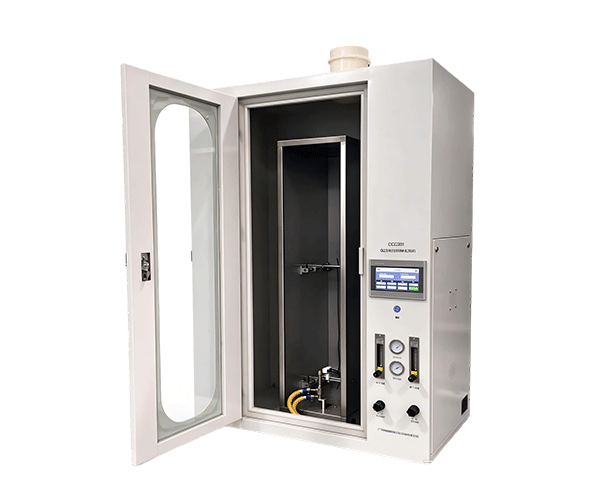
What can a cable combustion tester help evaluate?
Depending on its configuration, a Wire and Cable Combustion Tester can support the evaluation of several combustion-related characteristics:
How a cable specimen behaves when exposed to a specified flame.
Whether flame propagation along a vertically mounted specimen remains within the limits defined by the selected method.
Whether burning continues after the specified flame application ends, when this is part of the test procedure.
The extent of visible burning damage or charred material, where the method requires such an assessment.
Differences in combustion behavior between cable constructions or material formulations tested under comparable conditions.
The machine can support product development, quality control, material comparison, and laboratory testing. However, the test result must always be interpreted according to the method used. A result from one test cannot automatically establish performance under a different fire scenario.
Combustion testing is not the same as every other fire test
Cable buyers sometimes use terms such as flame retardancy, fire resistance, smoke density, and combustion performance as if they mean the same thing. They are related, but they describe different properties.
A combustion tester configured for a flame propagation method examines how burning develops under the specified conditions. A Fire Resistance Tester may instead assess whether a cable maintains circuit integrity during fire exposure. A Smoke Density Tester measures smoke-related optical characteristics, while a heat release test system evaluates heat released under a defined procedure.
For this reason, our equipment selection process starts with a simple question: what exactly does the customer need to measure or demonstrate?
If the objective is clear from the beginning, we can discuss the appropriate test method, specimen arrangement, control functions, and technical configuration much more efficiently.
Who uses a Wire and Cable Combustion Tester?
Our intended customer groups include wire and cable manufacturers, electrical engineering companies, power supply businesses, telecommunications suppliers, research laboratories, and quality inspection organizations.
Manufacturers may use combustion testing during product development or to investigate changes in cable materials. Laboratories may use the equipment to conduct specified tests and prepare records. Engineering companies may review test data when assessing whether a cable is appropriate for a particular application.
The equipment itself is only one part of the process. Reliable results also depend on specimen preparation, correct installation, controlled test conditions, suitable measurement arrangements, and trained operators.
At Guangzhou Chuangge Automation Equipment Co., Ltd., we take these factors into account when discussing a customized testing solution.
2. How Does a Wire and Cable Combustion Tester Work?
The basic principle is easy to understand. A prepared cable specimen is installed in a defined position, exposed to a specified flame for the required period, and evaluated according to the selected test method.
The actual procedure can be more detailed. The operator may need to control the flame, confirm the specimen position, record the test duration, observe continued burning, and measure the extent of damage. Some methods use a single cable specimen, while others require multiple cables mounted on a vertical test ladder.
A suitable Wire and Cable Combustion Tester should therefore provide the components and controls required by the intended procedure.
Step 1: Prepare the specimen
Before testing begins, the operator identifies the cable type and prepares the sample according to the applicable standard. Important information may include the conductor type, insulation material, outer sheath, overall diameter, sample length, and specimen conditioning requirements.
These details are not just paperwork. A cable with a thick outer sheath may behave differently from one with a thin insulation layer. A single insulated wire also presents a different test arrangement from a bundle of cables installed together.
The specimen must be prepared consistently. If the test method requires a particular length, conditioning period, or mounting arrangement, those requirements should be followed. Otherwise, the test results may be difficult to compare.
When a customer asks us to configure a cable combustion testing machine, we recommend sharing the relevant specimen dimensions and test procedure early in the project.
Step 2: Mount the cable in the test position
The specimen is fixed to the test support according to the selected method. For a vertical flame propagation test, the mounting arrangement helps establish the position of the cable relative to the flame and surrounding apparatus.
For a bundled cable test, the setup can be more involved. The cables may need to be arranged on a designated ladder with specific spacing and loading conditions. These details influence how the flame interacts with the specimen group.
The support structure should hold the sample securely and allow the operator to reproduce the intended arrangement. The mounting system must also suit the specimen dimensions specified for the project.
Step 3: Apply the specified flame
The tester uses a burner or another prescribed flame source to expose the specimen to the required conditions. The burner arrangement, fuel supply, flame power, application position, and exposure time depend on the selected test method.
For example, IEC 60332-1-2:2025 specifies a vertical flame propagation test for a single vertical insulated wire or cable, or optical fibre cable, using a 1 kW pre-mixed flame. The standard refers to IEC 60332-1-1 for the Test Apparatus.
This is a specific method, not a universal setting for every cable combustion test. A test involving a group of vertically mounted cables may use a different apparatus and procedure.
The machine configuration must reflect the required method rather than applying one burner arrangement to all specimens.
Step 4: Observe Burning Behavior and record relevant data
During flame exposure, the operator follows the specified procedure and records the observations required by the method. Depending on the test, these may include the flame application time, whether burning continues after flame removal, the extent of damaged material, or the distance over which flame propagation occurs.
Some results are determined by direct measurement, while others require observations made after the test. The acceptance criteria also vary between standards and product specifications.
The tester should make it practical to maintain consistent conditions and document the observations. Automatic timing, parameter displays, and other control functions may be useful, but their inclusion depends on the agreed equipment configuration.
Step 5: Evaluate the specimen against the applicable requirements
After the test, the operator evaluates the specimen according to the selected method. This may involve measuring the damaged length, checking the duration of continued burning, or comparing the observed behavior with defined criteria.
A clear test report should identify the specimen, test method, test conditions, observations, and conclusion. It should not make claims beyond what the method actually evaluates.
For example, passing a single-cable vertical flame propagation test does not automatically demonstrate that a group of cables will limit flame spread when installed together. The International Electrotechnical Commission explicitly distinguishes the scope of the IEC 60332-1-2 single-cable method from group-cable flame propagation testing under the IEC 60332-3 series.
Official reference: IEC 60332-1-2:2025
https://webstore.iec.ch/en/publication/80873
Typical combustion testing workflow
| Stage | Main activity | Information to record or control |
|---|
| Specimen preparation | Identify and prepare the cable sample | Cable type, dimensions, construction, and sample identification |
| Specimen mounting | Install the sample in the required position | Mounting arrangement, spacing, and specimen orientation |
| Flame setup | Configure the burner and relevant controls | Specified flame conditions and equipment settings |
| Flame application | Expose the sample for the required period | Exposure sequence and test duration |
| Observation | Monitor burning behavior during and after exposure | Continued burning, flame spread, or visible damage as required |
| Result evaluation | Compare observations with the test criteria | Measured values, findings, and test conclusion |
Source: This table is a practical summary based on the testing principles described in IEC 60332-1-2:2025 and IEC 60332-3-24:2018. It is an explanatory workflow, not a replacement for the complete procedures in those standards.
3. Main Features and Technical Considerations When Choosing a Combustion Tester
When customers compare Wire and Cable Combustion Tester models, they often begin with price, overall dimensions, or the number of control functions. Those points are worth reviewing, but they do not tell the whole story.
The more important question is whether the equipment can perform the required test under the correct conditions. A machine that looks suitable in a product photograph may not have the burner arrangement, specimen support, or measurement functions needed for a particular standard.
At Guangzhou Chuangge Automation Equipment Co., Ltd., we focus on matching the equipment configuration to the actual testing task.
Flame generation and control
The burner system creates the flame used during testing. Depending on the test method, the system may include a burner, fuel and air supply components, flow control devices, ignition components, and related monitoring arrangements.
The burner must be suitable for the intended method. Flame power, position, and application time cannot simply be copied from another test because different procedures may specify different conditions.
For a project based on IEC 60332-1-2:2025, the specified 1 kW pre-mixed flame is a central feature of the method. A machine intended for a different test may require a different arrangement.
We recommend confirming the exact standard and edition before selecting the burner and control system. This avoids unnecessary design changes after the equipment specification has been approved.
Specimen support and mounting system
The mounting structure determines how the cable is positioned during testing. It should be compatible with the specimen dimensions and arrangement specified by the selected method.
For single-cable tests, the support may need to hold an individual vertical specimen in a defined position. For bundled cable tests, the apparatus may need a ladder or another arrangement that supports multiple cables according to the standard.
A practical support structure should allow operators to install and remove samples without unnecessary difficulty. It should also help them reproduce the required setup from one test to the next.
Before equipment manufacture, we therefore review the intended specimen type, size, number of cables, and mounting requirements.
Timing, observation, and control functions
Testing may involve a prescribed flame application time, observation period, or sequence of operations. Depending on the machine design, these functions can be supported by a control panel, timer, status indicators, or other monitoring features.
The required control functions should be specified clearly. Buyers should ask which parameters are controlled automatically, which are displayed, which are recorded electronically, and which still require operator observation.
For example, an automatic timer can help the operator follow the required exposure period, but it does not independently determine whether a specimen meets the standard's acceptance criteria. That decision must follow the specified evaluation procedure.
Safety and maintenance considerations
Combustion testing involves open flame or other heat sources, hot specimens, and potentially hazardous combustion products. The equipment and laboratory installation should be planned with suitable safety provisions for the intended use.
Depending on the configuration, relevant considerations may include ventilation, protective barriers, fuel supply arrangements, ignition controls, emergency shutdown provisions, electrical protection, and safe access for specimen handling.
The appropriate design depends on the machine and the customer's facility. Site requirements should be reviewed before installation, and operators should follow the supplied instructions and the laboratory's safety procedures.
Routine maintenance is equally important. Burners, fuel connections, control devices, sensors where fitted, and specimen supports may require regular inspection. The maintenance schedule should reflect the actual equipment design and operating frequency.
Equipment selection checklist
| Selection factor | What the buyer should confirm | Why it matters |
|---|
| Test standard | Exact standard number, edition, and required method | Defines the test arrangement and evaluation procedure. |
| Specimen type | Single cable, insulated wire, optical fibre cable, or cable group | Different specimen types may require different apparatus. |
| Specimen dimensions | Overall diameter, length, and mounting requirements | Helps determine the support structure and usable test space. |
| Flame system | Required flame source, power, position, and control conditions | Ensures the heating arrangement matches the selected method. |
| Control functions | Timing, parameter display, alarms, and data recording needs | Helps define the operating interface and documentation workflow. |
| Laboratory conditions | Space, ventilation, utilities, and safety provisions | Supports proper installation and safe operation. |
| Documentation | Manuals, technical drawings, inspection records, and other agreed documents | Helps users operate and maintain the equipment correctly. |
Source: This buyer checklist is based on the general apparatus and test-method considerations in IEC 60332-1-2:2025, IEC 60332-3-24:2018, and UL 2556. It is a practical planning aid, not a list of requirements that applies identically to every combustion tester.
Why customization can be useful
Different customers may need very different testing arrangements. One cable manufacturer may only need a tester for a single-cable flame propagation method. Another laboratory may need equipment for group-cable testing, with a larger specimen support structure and a different burner configuration.
Trying to force both applications into the same generic setup can create unnecessary compromises. A better approach is to define the required methods first and then select the appropriate components.
We can discuss the specimen type, required standard, control functions, laboratory environment, and expected workflow before confirming a customized solution. This helps keep the design focused on real testing needs rather than adding functions that the customer may never use.
4. Relevant Testing Standards and the Differences Between Combustion Tests
A Wire and Cable Combustion Tester should be selected with reference to the relevant testing standard. Standards provide a common method for preparing specimens, applying test conditions, and evaluating results. They also define the scope of what a test can demonstrate.
However, different standards may focus on different cable constructions or combustion behaviors. The current edition must be checked before equipment is specified, particularly when a customer is working with an older test procedure or a purchasing specification that has not been updated.
IEC 60332-1-2:2025: Single-cable vertical flame propagation
IEC 60332-1-2:2025 is titled "Tests on electric and optical fibre cables under fire conditions — Part 1-2: Test for vertical flame propagation for a single insulated wire or cable — Procedure for 1 kW pre-mixed flame."
The standard specifies a method for assessing resistance to vertical flame propagation for a single vertical insulated conductor or cable, or an optical fibre cable, under the defined conditions. It uses a 1 kW pre-mixed flame, and the associated apparatus is described in IEC 60332-1-1.
One important limitation is that a test on a single cable does not establish compliance with group-cable flame propagation requirements. When cables are installed together, their behavior may differ from that of an individual specimen.
Official reference: https://webstore.iec.ch/en/publication/80873
IEC 60332-3-24:2018: Flame spread through vertically mounted cable groups
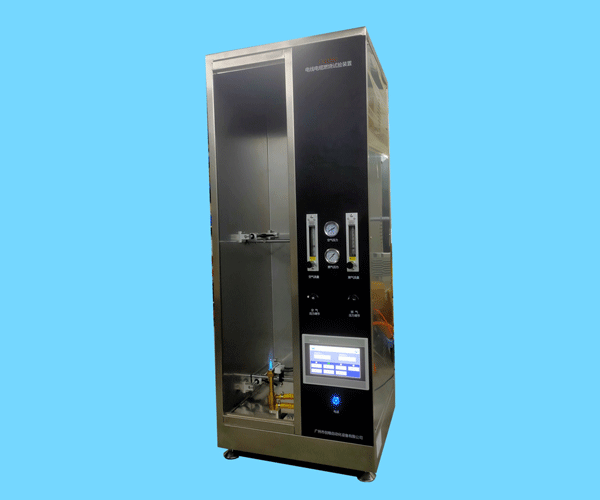
IEC 60332-3-24:2018 addresses vertical flame spread testing for vertically mounted groups of electrical or optical fibre cables under defined conditions, using Category C.
The official IEC description identifies a nominal total volume of non-metallic material of 1.5 litres per metre of test sample, a flame application time of 20 minutes, and a specified mounting arrangement using the front of the standard ladder. The method evaluates flame spread by measuring the extent of damage to the cable samples.
These details are specific to this method and should not be transferred automatically to another cable combustion test. Cable selection, mounting, flame exposure, and evaluation must follow the full applicable document.
Official reference:
https://webstore.iec.ch/en/publication/32826
UL 2556: Wire and cable test methods
UL 2556, titled "Wire and Cable Test Methods," describes apparatus, test methods, and formulas used for tests and calculations required by wire and cable standards. Its scope also makes an important distinction: specific acceptance requirements are established in the individual product standards.
In other words, a test method and a product acceptance requirement are not necessarily the same thing. The apparatus may be described in one document, while the relevant product specification determines the required outcome.
As of October 2026, the official UL Standards & Engagement page lists the fifth edition as active and records a reaffirmation dated January 28, 2026, with no technical changes associated with that reaffirmation.
Official reference:
https://www.shopulstandards.com/ProductDetail.aspx?UniqueKey=38913
Comparison of common cable combustion testing methods
| Standard or test category | Specimen arrangement | Main evaluation objective | Important selection consideration |
|---|
| IEC 60332-1-2:2025 | Single vertical insulated wire or cable, or optical fibre cable | Resistance to vertical flame propagation under a specified 1 kW pre-mixed flame procedure | Requires an apparatus and procedure suitable for the single-cable method. |
| IEC 60332-3-24:2018 | Vertically mounted group of cables on a specified ladder arrangement | Assessment of vertical flame spread and the extent of specimen damage | Requires the applicable group-cable arrangement and Category C conditions. |
| UL 2556 | Depends on the particular test method referenced | Provides apparatus, methods, and formulas for tests required by wire and cable standards | Consult the relevant test method and product standard for the applicable acceptance requirements. |
Source: Official standard descriptions published by the International Electrotechnical Commission and UL Standards & Engagement. See IEC 60332-1-2:2025, IEC 60332-3-24:2018, and UL 2556 at the links above. The comparison summarizes scope and should not be used as a substitute for the complete standards.
Combustion, flame propagation, and flame retardancy
The term "combustion testing" can cover several related test objectives. A particular method may examine whether flame travels along a specimen, how much material is damaged, or whether burning continues after the ignition source is removed.
Flame retardancy is a broader description of a material's ability to limit burning or flame spread under specified conditions. It should not be treated as a single universal measurement.
For cable products, the test method must match the question being asked. If the objective is to assess flame propagation through a group of installed cables, a single-cable test may not be sufficient. If the objective is to evaluate circuit integrity during fire exposure, a combustion tester designed for flame propagation may not provide the required electrical monitoring.
Combustion testing versus smoke density and fire resistance
A smoke density test measures smoke-related optical characteristics under specified conditions. It does not directly measure flame spread or determine whether a cable continues carrying current.
A fire resistance test may evaluate circuit integrity during defined fire exposure. It is also different from a combustion test that only observes the burning behavior of a specimen.
These distinctions help buyers avoid selecting equipment that cannot answer their intended testing question. If several fire performance characteristics must be evaluated, each test method should be identified and the required equipment functions reviewed separately.
What a test result can—and cannot—prove
A properly conducted test provides evidence about a specimen under the conditions defined by the method. It does not automatically establish how the cable will behave in every building, cable tray, installation configuration, or real fire.
The result should be interpreted alongside the applicable product requirements and the intended use. Where formal certification or conformity assessment is required, the customer should confirm the applicable process with the responsible laboratory or certification body.
We use the applicable standard as the basis for equipment planning, but we do not assume that purchasing a tester automatically certifies the customer's products.
5. Applications in Wire and Cable Manufacturing, Electrical Engineering, and Laboratories
The practical value of a Wire and Cable Combustion Tester depends on the testing task. It can help manufacturers investigate material performance, support laboratory testing, and provide structured information for quality decisions.
Wire and cable manufacturing
Cable manufacturers often need to evaluate changes in insulation, sheath materials, conductor arrangements, or other parts of a cable construction. A combustion tester can support comparisons between samples when they are prepared and tested using the same method.
For example, a development team may want to understand whether a revised outer sheath changes the extent of flame propagation. By controlling the specimen arrangement and test conditions, the team can compare the observed behavior and decide whether further development work is needed.
Combustion testing can also support investigations into unexpected results. If one sample shows more extensive damage than another, the manufacturer can review material composition, sample preparation, production records, and test conditions.
The test result should be treated as one part of the quality process. It does not replace appropriate material inspection, manufacturing controls, or the product's complete evaluation requirements.
Power cables and electrical engineering
Power supply and electrical engineering projects may require cable products that meet specified flame propagation or other fire performance requirements. The relevant criteria depend on the installation, product specification, and applicable regulations.
A combustion tester can help manufacturers and laboratories generate test data for the relevant cable type. Engineering teams can then use the data as part of their technical evaluation.
It is important to select the method based on the intended use. A cable installed individually may present a different test question from several cables installed together in a vertical shaft or cable tray. The selected test should reflect the relevant requirement rather than relying on a general assumption that all cable fire tests are equivalent.
Telecommunications and optical fibre cables
Telecommunications systems use various cable constructions, including metallic communication cables and optical fibre cables. The applicable fire test depends on the product type and the specification.
IEC 60332-1-2:2025 includes single insulated wires or cables and optical fibre cables within its stated scope. IEC 60332-3-24:2018 addresses vertically mounted groups of electrical or optical fibre cables under defined conditions.
For laboratories working with multiple cable categories, we recommend reviewing the intended sample range and relevant standards before deciding on the test apparatus. A single-cable configuration and a group-cable configuration can have different mounting, heating, and specimen-handling requirements.
Research and material development
Research laboratories may use combustion testing to study the behavior of insulation compounds, sheath materials, or cable constructions. Testing can help the research team compare alternatives and identify changes that deserve further investigation.
To make comparisons meaningful, the test conditions should be consistent. Differences in specimen dimensions, flame exposure, mounting, or conditioning can influence the observed result.
The team should also identify what the test actually measures. A flame propagation result is useful for studying flame behavior, but it should not be used as a substitute for smoke density, heat release, or circuit integrity testing.
Quality inspection and third-party laboratories
Testing organizations need a setup that supports repeatable specimen preparation, controlled operation, clear observations, and appropriate records.
When selecting a cable combustion testing machine for laboratory use, buyers should consider the required standard, the range of specimens, operator workflow, available installation space, ventilation, safety provisions, and maintenance access.
If the laboratory works under an accreditation system, it must also verify that its method, equipment, procedures, and quality records meet the applicable requirements. Buying equipment alone does not establish accreditation or authorize the laboratory to issue every type of conformity statement.
6. Our Customization, Manufacturing, Inspection, and Delivery Process
At Guangzhou Chuangge Automation Equipment Co., Ltd., we specialize in customized testing equipment. Our products serve industries that include construction materials and components, wires and cables, plastics and textiles, electrical plugs, sockets and switches, electronic products, and home appliances.
Our corporate philosophy is to ensure survival through high technology and drive development through high quality. We have obtained ISO 9001 quality management, ISO 14001 environmental management, and ISO 45001 occupational health and safety management system certifications. Our intellectual property portfolio includes more than 20 patents, covering invention patents, utility model patents, and software patents.
These company-level qualifications form part of our approach to technical development and management. They should not be interpreted as automatic certification of every individual machine or every cable tested using the equipment.
Step 1: Understand the customer's test objective
We begin by discussing the cable type, test purpose, applicable standard, and expected test result. If the customer has a complete standard reference, specimen drawing, or internal test procedure, we recommend sharing it at the start.
We also ask about sample dimensions, the number of specimens, required flame conditions, control functions, and the laboratory environment. These details help us identify the functions that the machine needs to provide.
If the customer is still deciding which method applies, we can review the available project information and identify the technical points that need further confirmation. The final test method should be verified against the relevant product requirements and complete standard.
Step 2: Confirm the equipment configuration
Once the requirements are understood, we work through the intended configuration. This may include the burner system, specimen support, control panel, timing functions, safety provisions, and any monitoring or recording features required by the selected method.
We also consider installation requirements. A combustion tester may need suitable ventilation, space for specimen handling, appropriate utilities, and safe arrangements for the heating source.
The purpose of this stage is to agree on the actual scope before manufacturing. If the customer needs a function that is not included in the proposed configuration, it should be discussed and confirmed rather than assumed.
Step 3: Manufacture and assemble the equipment
The manufacturing process depends on the approved design. A customized combustion tester may involve mechanical fabrication, assembly of the specimen support structure, installation of burner components, integration of control devices, and electrical connections.
Each component must suit its intended role. The support structure should accommodate the specified specimens, while the heating and control arrangements should reflect the agreed test method.
The assembly process also needs to consider accessibility for operation and maintenance. A machine should not only perform its intended test but also allow operators to prepare specimens, inspect the system, and follow the operating procedure in a practical way.
Step 4: Conduct functional inspection and performance verification
Before delivery, each unit undergoes functional inspection and performance verification according to the agreed scope. This helps confirm that the supplied equipment operates as intended and that the specified functions have been checked.
The exact inspection procedure depends on the machine configuration. It may involve reviewing component installation, checking control functions, and verifying relevant system operations.
Functional inspection should not automatically be described as formal calibration, accredited testing, or third-party certification. If a customer requires a particular calibration procedure, traceability documentation, or independent inspection, those requirements should be agreed and documented separately.
Step 5: Prepare documents and arrange delivery
We provide technical documents and operating instructions as agreed. The document package should reflect the supplied configuration and provide the information needed for installation, operation, and routine maintenance.
Our typical production cycle is approximately 30 to 60 days, depending on equipment specifications and customization requirements. This is a general planning range rather than a guaranteed lead time for every order. The actual schedule should be confirmed after the technical scope and order details are agreed.
Payment terms are negotiable based on order requirements. Depending on the destination, equipment can be shipped by sea, air, or land. We use suitable protective materials and sturdy wooden cases as appropriate to help protect the equipment during transportation.
Project workflow at a glance
| Project stage | Our focus | Customer input |
|---|
| Requirement review | Understand the testing objective and relevant method | Provide the standard, specimen details, and intended application |
| Configuration | Define the burner, support, controls, and agreed functions | Confirm test conditions, operating needs, and optional functions |
| Manufacturing | Build and assemble the equipment according to the agreed design | Resolve outstanding technical questions and site requirements |
| Inspection | Check the agreed functions and equipment operation | Confirm any additional inspection or documentation requirements |
| Packing and shipment | Prepare suitable protection and agreed documents | Confirm destination, transport arrangements, and receiving conditions |
Source: This table summarizes our general customized equipment project workflow. The actual manufacturing scope, inspection activities, delivery schedule, and documentation are subject to the technical agreement and order contract.
Why we ask questions before quoting
A customized machine can become more complicated if an important requirement is discovered after manufacturing begins. The customer may need to test a different cable diameter, use a newer standard edition, change the specimen arrangement, or add a control function.
Discussing these matters early helps us define a more appropriate configuration and gives the customer a clearer understanding of what is included in the quotation.
We encourage buyers to share as much relevant information as possible. Even if the test requirements are not fully finalized, an early technical discussion can help identify the decisions that need to be made before the project moves forward.
7. Why Choose Guangzhou Chuangge Automation Equipment Co., Ltd.?
Selecting a Wire and Cable Combustion Tester is not simply a matter of comparing product photographs or choosing the lowest quotation. The equipment needs to suit the intended test method, fit the specimen range, and provide the functions required by the laboratory.
We approach these projects with an emphasis on technical clarification, configuration planning, and practical delivery arrangements.
Customized testing equipment for industrial applications
Our company specializes in testing equipment across several industrial sectors. This experience informs our approach to project discussions: we start with the customer's testing objective and then work through the apparatus, control, and documentation requirements.
For cable combustion testing, this means distinguishing single-cable flame propagation from group-cable flame spread and identifying the required specimen arrangement before finalizing the design.
A standards-focused equipment specification
We encourage customers to identify the exact standard and edition required for their application. This provides a clear starting point for discussing the burner system, mounting arrangement, test conditions, and evaluation process.
A product name alone cannot establish whether a machine is suitable for a particular test. The technical specification and actual equipment functions need to be reviewed against the intended procedure.
Management systems and technical development
Our company has obtained ISO 9001, ISO 14001, and ISO 45001 management system certifications and has a portfolio of more than 20 patents. These credentials reflect our company-level management systems and intellectual property activities.
For an individual project, we also focus on making the agreed technical scope clear and checking the supplied functions before delivery. Customers should review the machine specification and documentation to confirm that they match their testing needs.
Clear production and shipping arrangements
Our typical production cycle is 30 to 60 days, depending on the equipment specifications and customization requirements. Payment terms can be negotiated according to the order. Sea, air, and land transportation options are available depending on the destination.
We use protective materials and sturdy wooden cases as appropriate to the equipment and shipping conditions. Technical documents and operating instructions are provided according to the agreed project scope.
Information to prepare for a quotation
To help us assess your project, please provide the following information where available:
The applicable test standard and edition.
The cable type, overall diameter, and specimen dimensions.
Whether the test involves a single cable or a group of cables.
The required flame source, exposure conditions, and test duration.
The expected evaluation criteria and data recording needs.
The required control functions and any special configuration requests.
The laboratory environment, installation space, and available utilities.
Your target delivery date and any additional inspection or documentation requirements.
If some information is not yet available, we can begin with the details you have and identify what needs to be confirmed. A clear discussion at the start helps both sides establish a practical scope for the project.
8. Frequently Asked Questions About Wire and Cable Combustion Testers
Q1. What is a Wire and Cable Combustion Tester used for?
A Wire and Cable Combustion Tester is used to evaluate the combustion behavior of wire or cable specimens under specified test conditions. Depending on the selected method, it may assess flame propagation, burning damage, or continued burning. The exact test objective and acceptance criteria depend on the applicable standard.
Q2. Which standards are relevant to cable combustion testing?
Relevant standards may include IEC 60332-1-2:2025 for vertical flame propagation testing of a single insulated wire or cable, IEC 60332-3-24:2018 for vertical flame spread testing of vertically mounted cable groups under Category C, and UL 2556 for wire and cable test methods. The correct standard depends on the cable and required evaluation.
Q3. Can one tester perform both single-cable and group-cable tests?
Not automatically. Single-cable and group-cable tests may require different specimen arrangements, burners, support structures, and operating procedures. If both tests are needed, the equipment specification should identify the relevant methods and confirm whether a combined configuration is technically suitable.
Q4. Does a combustion tester measure smoke density?
Not necessarily. A combustion tester configured for flame propagation does not automatically measure smoke density. Smoke density testing generally requires a separate measurement arrangement designed for the relevant method. If both properties must be evaluated, the required equipment functions should be reviewed separately.
Q5. What is the difference between combustion testing and Fire Resistance Testing?
Combustion testing may examine flame propagation, burning behavior, or specimen damage. Fire resistance testing for cables may evaluate whether a cable maintains circuit integrity during a defined fire exposure. These tests address different questions and should not be treated as interchangeable.
Q6. Can the equipment be customized for different cable sizes?
Customization may be possible, depending on the selected standard and the machine design. Cable diameter, specimen length, mounting requirements, and the number of specimens can affect the support structure and usable test space. We recommend providing these details before the equipment configuration is finalized.
Q7. How long does manufacturing take?
Our typical production cycle is approximately 30 to 60 days, depending on equipment specifications and customization requirements. The actual lead time should be confirmed after the technical configuration, order details, and delivery requirements have been agreed.
Q8. What inspection is performed before shipment?
Each unit undergoes functional inspection and performance verification according to the agreed scope. The purpose is to check the operation of the supplied system and the specified functions. Formal calibration, independent certification, or accredited testing should not be assumed unless separately agreed and documented.
Q9. What documents are supplied with the tester?
Technical documents and operating instructions are provided as agreed for the project. The exact package depends on the machine configuration and contract. Customers who require particular drawings, maintenance information, inspection records, or other documents should specify these requirements during the quotation stage.
Q10. Can the machine be shipped internationally?
Yes. Depending on the destination, the equipment can be shipped by sea, air, or land. Suitable protective materials and sturdy wooden cases are used as appropriate to help protect the machine during transport. Buyers should confirm the destination, receiving arrangements, installation conditions, and any import documentation requirements before shipment.
Q11. Does passing a cable combustion test mean the product is certified?
Not automatically. A test result demonstrates performance under the conditions of the specified method. Product certification or conformity assessment may require additional evidence, documentation, or evaluation by a responsible laboratory or certification body. Purchasing the tester itself does not certify the cable.
Q12. What should I provide when requesting a quotation?
Please share the applicable standard and edition, cable type, specimen dimensions, required flame conditions, test objective, control functions, and documentation needs. A specimen drawing or test procedure is also useful if available. We can review the information and discuss a configuration, production schedule, and delivery arrangement based on your requirements.
Discuss Your Wire and Cable Combustion Testing Requirements With Us
Choosing the right Wire and Cable Combustion Tester begins with a clear understanding of what needs to be evaluated. The standard, specimen construction, mounting arrangement, flame conditions, and result evaluation criteria all influence the equipment design.
At Guangzhou Chuangge Automation Equipment Co., Ltd., we provide customized testing equipment based on customer requirements and intended applications. We work to clarify the technical scope, confirm the agreed configuration, conduct functional inspection before delivery, and provide the documentation included in the project agreement.
If you are developing cable products, upgrading a laboratory, or planning a new combustion testing process, share your test requirements with us. We can review the available information and discuss a practical equipment solution for your application.


