


When electrical equipment develops a fault, even a small flame can create a serious safety concern. A loose connection, an overheated component, or a failure inside an electrical assembly may expose nearby materials to a small ignition source. The way those materials respond to the flame matters, especially when a product contains plastic housings, insulation parts, connectors, switches, or other combustible components.
At Guangzhou Chuangge Automation Equipment Co., Ltd., we develop and manufacture customized testing equipment for industrial quality inspection and product safety evaluation. Our Needle-Flame Test Apparatus is intended to help manufacturers and testing laboratories examine how a specimen behaves when exposed to a controlled needle-shaped flame. The test can provide useful information about ignition, continued burning, flame spread, and the possible effects of burning or glowing particles, depending on the applicable test method and product requirements.
We understand that customers are not simply looking for a machine that produces a flame. They need equipment that fits their sample, testing procedure, laboratory workflow, and documentation requirements. That is why we discuss the intended application before confirming the configuration. Whether you are evaluating electrical components, household appliance parts, insulating materials, or other combustible materials covered by the relevant test specification, we can discuss a suitable needle-flame testing solution based on your actual needs.
Our equipment customization work is supported by experience in testing equipment development, an understanding of relevant standards, and a practical approach to manufacturing. We hold ISO 9001, ISO 14001, and ISO 45001 management system certifications, and our intellectual property portfolio includes more than 20 patents across invention patents, utility model patents, and software patents. These capabilities support our work in developing testing equipment for different industrial applications.
1. What Is a Needle-Flame Test Apparatus?
Understanding the purpose of needle-flame testing
A Needle-Flame Test Apparatus is used to apply a small, controlled flame to a specified location on a test specimen. The purpose is to simulate a possible small-flame exposure that may occur under certain fault conditions or other situations defined by the relevant test procedure. Rather than relying on visual impressions alone, the test follows defined conditions so that the specimen's response can be observed and assessed in a consistent way.
One commonly referenced standard is IEC 60695-11-5, titled Fire hazard testing – Part 11-5: Test flames – Needle-flame test method – Apparatus, confirmatory test arrangement and guidance. This standard describes a needle-flame method for evaluating fire hazards associated with electrotechnical equipment, its subassemblies and components, solid electrical insulating materials, and other combustible materials within its scope. The required test conditions and acceptance criteria may also depend on the product-specific standard or specification.
For buyers searching for a needle-flame test apparatus for IEC 60695-11-5 testing, an important point is that the standard covers more than the burner itself. It also addresses the test arrangement, test specimens, flame application, test conditions, observations, evaluation, and reporting. Therefore, choosing the right equipment means considering the complete test process rather than checking only whether the apparatus can produce a small flame.
In practical use, an operator positions the specimen according to the applicable procedure, applies the test flame for the specified period, and observes what happens during and after exposure. Depending on the test requirements, the evaluation may include whether ignition occurs, how long burning continues, whether the flame spreads, and whether burning or glowing material falls from the specimen and affects surrounding materials.
These observations help product developers identify weaknesses in a design and help quality teams evaluate whether a material or component meets defined requirements. The results are useful evidence for a broader fire hazard assessment, but a single needle-flame test does not establish that a complete product is fireproof or safe under every possible condition.
Where the apparatus fits in product development
Needle-flame testing can be useful at several stages of a product's life cycle. During early design, engineers may use it to compare candidate materials or review a component's response to a simulated ignition source. During verification, a manufacturer may test samples against a specified requirement. In routine quality control, a laboratory may use an established procedure to check selected materials or components from production.
For example, a manufacturer developing an electrical control unit may need to assess a small plastic support near a heat-producing component. A household appliance producer may need to evaluate a particular insulating part. A laboratory may be asked to test an electronic assembly under a customer-defined specification. In each case, the exact sample location, flame application time, specimen conditioning, and acceptance criteria must come from the applicable test requirements rather than from a general assumption.
We recommend that buyers identify the product being tested, the relevant standard, the expected specimen dimensions, and the required observations before selecting a configuration. This simple step can prevent a common purchasing problem: receiving equipment that looks suitable on paper but does not fully support the laboratory's actual procedure.
2. Working Principle and Typical Test Procedure
How the needle-flame test works
The basic principle is straightforward. A small burner generates a defined flame, and that flame is applied to a selected point on the test specimen under controlled conditions. The operator then records the specimen's response according to the relevant procedure. The apparatus provides the means to establish the test arrangement and apply the flame; the test specification determines how the specimen must be prepared, how long the flame is applied, and how the results are judged.
IEC 60695-11-5:2016 specifies propane or butane fuel of at least 95% purity. It also describes a nominal flame height of 12 mm, with a permitted range of plus or minus 1 mm, under the conditions stated in the standard. These values are references from the published test method, not a substitute for checking the edition and product-specific requirements that apply to an individual project.
The standard also includes a confirmatory arrangement for checking the test flame. This matters because a flame that looks approximately correct to the eye may not necessarily meet the required test conditions. A suitable test arrangement and a documented confirmation process help the laboratory establish that the flame is appropriate for the intended test.
A typical testing workflow
Confirm the test requirement. Identify the applicable standard, product specification, sample type, test location, flame application duration, and acceptance criteria.
Prepare the specimen. Condition and position the sample as required by the test method. The mounting method should not change the specimen's response in a way that conflicts with the specified procedure.
Check the apparatus. Inspect the burner, gas supply, controls, protective enclosure, and other relevant components. Confirm that the test setup is suitable for the planned procedure.
Confirm the flame condition. Adjust and verify the flame according to the applicable standard and the apparatus instructions before starting the test.
Apply the flame. Position the burner and specimen as specified, then apply the flame for the required duration. The operator should follow the standard's instructions for burner angle, contact point, and specimen position.
Observe and record the response. Record ignition, afterflame or afterglow where required, possible flame spread, and any other observations specified by the procedure.
Evaluate the result. Compare the recorded observations with the acceptance criteria in the relevant product standard or specification. Do not assume that one universal pass/fail rule applies to every product.
This workflow is a general overview, not a replacement for the full standard or the apparatus operating instructions. Different products can require different sample arrangements and evaluation criteria. Before testing, operators should review the complete procedure and ensure that they have the necessary training and laboratory safety controls.
What the test results can tell you
Depending on the applicable procedure, needle-flame testing can help answer practical questions. Does the specimen ignite when exposed to the specified flame? If it ignites, does burning stop within the required period? Does the flame spread beyond the intended area? Do burning or glowing particles fall from the specimen? Does the specimen cause ignition of a specified indicator material beneath it?
These questions are particularly relevant when small components are installed close together. A component that appears harmless on its own may behave differently when installed next to another material or inside an assembly. The test therefore helps engineers understand a particular fire hazard scenario and decide whether a material, design, or component needs further investigation.
At the same time, we encourage customers to interpret results within their intended scope. Needle-flame testing is one method of evaluating fire-related behavior. It does not replace other required electrical safety tests, thermal tests, material assessments, or complete-product evaluations.
3. Main Features and Practical Equipment Considerations
Designed around the test procedure
When we discuss a Needle-Flame Test Apparatus with a customer, we begin with the test procedure rather than assuming that every laboratory needs exactly the same configuration. The applicable standard, specimen shape, test frequency, operator workflow, and reporting needs all affect equipment selection. A university research laboratory may focus on flexible test arrangements, while a manufacturer may place greater emphasis on routine testing and repeatable operation.
For customized testing equipment, we consider the functions required for the customer's application and clarify which items are included in the proposed configuration. Depending on the project, the discussion may cover the burner arrangement, specimen support, operating controls, observation area, timing functions, flame confirmation equipment, and protective enclosure. The exact supply scope should be confirmed in the technical proposal rather than inferred from the product name alone.
Key areas to assess before purchase
Burner and flame adjustment: The burner and its control arrangement must be appropriate for the applicable test method. Buyers should confirm the specified burner dimensions, fuel requirements, flame adjustment procedure, and method of confirming the flame.
Specimen positioning: The sample holder and positioning arrangement should support the test locations and orientations required by the intended procedure. If the customer needs to test different component shapes, the required adjustments should be discussed before the order is finalized.
Timing and observation: Flame application time and subsequent observations are important parts of the procedure. The buyer should determine whether the proposed configuration provides the timing and recording functions needed for the laboratory's workflow and reporting process.
Protective enclosure and ventilation: Flame testing involves heat, combustion products, and a fuel supply. The test environment should be designed and operated with suitable protective measures and ventilation arrangements. Customers should clarify their laboratory conditions and any applicable safety requirements during equipment planning.
Operating documentation: Clear operating instructions help operators understand equipment setup, routine checks, and safe operation. We provide operating instructions and technical documentation as agreed for the project. If the customer requires specific document formats or additional technical information, those requirements should be raised during the quotation stage.
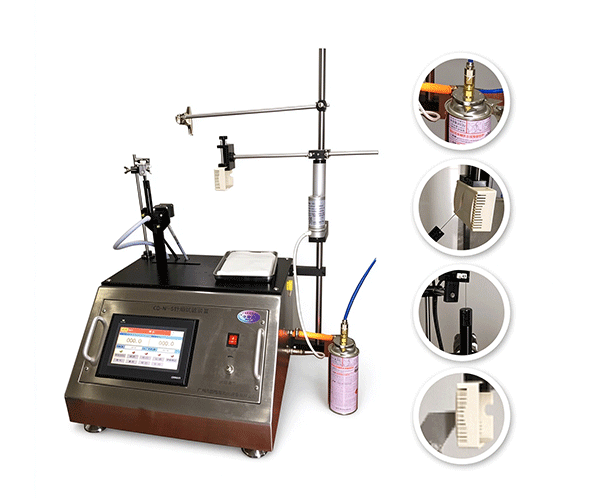
Reference comparison: standard requirements and equipment selection
The following table summarizes several important topics identified in IEC 60695-11-5:2016. It is intended as a purchasing and planning aid, not as a complete statement of every clause in the standard.
| Test topic | Reference information | What buyers should confirm |
|---|---|---|
| Fuel supply | The standard specifies propane or butane with a minimum purity of 95%. | Confirm fuel availability, supply arrangement, and compatibility with the intended test procedure. |
| Nominal flame height | The standard describes a 12 mm nominal flame height, with a tolerance of ±1 mm. | Confirm the adjustment and flame confirmation method required by the applicable edition. |
| Flame confirmation | The standard includes a confirmatory test arrangement. | Determine whether the required confirmation components and accessories are included or need to be supplied separately. |
| Specimen position | Position and application details follow the relevant test procedure and product specification. | Provide sample dimensions, likely test points, and required orientations before equipment configuration. |
| Evaluation and reporting | Observations and results are assessed against applicable requirements. | Confirm the required timing, observation, recordkeeping, and reporting workflow. |
Source: International Electrotechnical Commission (IEC), IEC 60695-11-5:2016, Fire hazard testing – Part 11-5: Test flames – Needle-flame test method – Apparatus, confirmatory test arrangement and guidance. Official standard information: IEC Webstore – IEC 60695-11-5:2016.
Why customization can make a difference
A standard test method defines the procedure, but laboratories do not all have identical samples, bench layouts, or operating routines. Customization can help bridge the gap between a published test method and the practical needs of a particular project. It may involve the specimen support, access for observation, control layout, or other project-specific details.
We do not assume that customization means changing the essential test conditions. The goal is to support the required procedure while making the equipment suitable for the customer's application. Any proposed adjustment that may affect the test method must be reviewed against the applicable standard and agreed requirements.
Before confirming a design, we encourage customers to share drawings, photographs, sample dimensions, test references, and details of their current laboratory process. The more clearly we understand the application, the easier it is to identify the practical requirements and avoid unnecessary features.
4. Technical Advantages and Choosing the Right Configuration
Focus on repeatable testing
For manufacturers and laboratories, the value of a Flammability Test Apparatus comes from its ability to support a controlled procedure. A test result is only useful when the setup, flame condition, specimen preparation, and observation process are handled consistently. Equipment selection should therefore focus on the complete testing workflow rather than on appearance or a long list of features.
We approach equipment customization with this practical point in mind. We review the customer's test method, discuss the required operating functions, and clarify the configuration before manufacturing. This helps establish a common understanding of what the equipment is expected to do and what will be checked before delivery.
Our work also benefits from our wider experience in testing equipment for materials, cables, electrical accessories, electronic products, and home appliances. Different testing applications have different requirements, but they share the need for clear specifications, suitable test arrangements, functional inspection, and usable documentation.
Reference comparison: choosing between testing approaches
Needle-flame testing is not interchangeable with every other fire-related test. The appropriate method depends on the material, component, possible ignition scenario, and the requirement being assessed. The table below provides a high-level comparison to help define the project scope. It is not a substitute for selecting a test method from the applicable product standard.
| Testing approach | Main purpose | Typical consideration | When it may be relevant |
|---|---|---|---|
| Needle-flame test | Assess a specimen's response to a specified small flame. | Flame application, specimen position, continued burning, and other defined observations. | Electrical components, electrotechnical assemblies, insulating parts, and other materials within the relevant method's scope. |
| Glow-wire testing | Assess material or component response to a heated wire under a defined test method. | Contact conditions, wire temperature, specimen behavior, and method-specific criteria. | Products and components where the relevant specification calls for a glow-wire method. |
| Horizontal or vertical burning tests | Evaluate Burning Behavior in a prescribed specimen orientation. | Specimen dimensions, orientation, flame exposure, and classification or acceptance rules. | Materials and products for which a relevant material or product standard specifies this approach. |
| Other fire hazard evaluations | Investigate different fire-related properties or scenarios. | The test method must match the hazard, product type, and intended evaluation. | Projects requiring evidence beyond the scope of a needle-flame test. |
Sources: IEC 60695-11-5:2016 for the needle-flame method, and the IEC 60695 series for fire hazard testing methods. The appropriate test standard should be selected according to the product specification and intended assessment. Reference: IEC 60695-11-5:2016.
How we assess a customization request
We normally begin by clarifying four points. First, what product or material will be tested? Second, which standard or customer specification defines the test? Third, what are the sample dimensions and required test positions? Fourth, what functions, documentation, and safety arrangements does the laboratory need?
Once these details are available, we can discuss the proposed configuration, any optional components, the manufacturing schedule, and the acceptance checks required before shipment. If the customer is still developing the test plan, we can discuss the available information and identify the points that need to be confirmed before equipment design is finalized.
For overseas buyers, this early technical discussion is especially useful. It helps reduce uncertainty around the supply scope, shipping preparation, documentation, and commissioning expectations. It also gives both parties a clearer basis for reviewing the final equipment against the agreed requirements.
5. Applications Across Electrical, Electronic, and Material Industries
Electrical component manufacturing
Electrical products often contain multiple small components made from metal, plastic, and insulating materials. Some parts are positioned near electrical connections or other components that may generate heat during abnormal operating conditions. Where the relevant product specification calls for needle-flame testing, the apparatus can help assess how a selected part responds to the defined flame exposure.
Potential applications include selected switches, connectors, insulating supports, terminal-related parts, and other electrical components. The exact applicability depends on the product standard and the material or component being assessed. We recommend that customers identify the relevant clauses before deciding which test configuration to purchase.
Household appliance production
Household appliances combine electrical systems, mechanical structures, control parts, wiring, and polymer components. Manufacturers may need to evaluate selected materials or components as part of design verification, supplier qualification, or product safety testing. A needle-flame test can form one part of this work when specified by the applicable requirement.
For an appliance producer, a practical test setup should fit the actual component geometry and support the required observation process. A small control component may need a different positioning arrangement from a larger housing part. Sharing sample drawings and the intended test method helps us understand these differences before equipment customization.
Electronics manufacturing and research laboratories
Electronic products often use printed circuit assemblies, connectors, plastic supports, insulating materials, and compact enclosures. During product development, engineers may need to compare materials or investigate a particular fire hazard scenario. Testing laboratories may also conduct assessments for customers working across different product categories.
For these applications, test documentation is important. Engineers need to know which specimen was tested, which method was followed, how the specimen was positioned, and what observations were recorded. The apparatus is part of the process, but sound test planning and clear records are equally important for interpreting the results.
Plastics, insulating materials, and other combustible materials
Material suppliers and product manufacturers may use fire-related tests to support material selection or investigate performance under specified conditions. Needle-flame testing may be relevant when the material and intended evaluation fall within the applicable method's scope. It should not be assumed that every plastic or textile product can be assessed using the same test procedure.
Before testing, confirm the material form, specimen preparation method, conditioning requirements, and applicable acceptance criteria. If the material is part of a larger assembly, the product specification may also define how the sample should be removed, supported, or oriented. These details help ensure that the test answers the intended question.
Third-party inspection and certification laboratories
Independent testing organizations often need equipment that supports defined procedures and documented results. They may handle multiple sample types, customer projects, and standards. For these laboratories, equipment selection should consider the range of required procedures, operator training, specimen handling, safety arrangements, and maintenance needs.
We work with customers to understand these operational requirements before finalizing a customized testing solution. If a laboratory needs a particular accessory, sample fixture, or documentation item, it is best to specify it during the quotation stage so that the proposed scope can be reviewed clearly.
6. Manufacturing, Quality Inspection, and Delivery
From technical discussion to equipment production
At Guangzhou Chuangge Automation Equipment Co., Ltd., we treat customized testing equipment as a project with several connected stages. The work begins with understanding the customer's application and defining the equipment requirements. We then review the proposed configuration, confirm the supply scope, and arrange manufacturing according to the agreed specifications.
Because customized equipment can differ in structure, accessories, control functions, and documentation needs, we do not use one fixed production schedule for every order. The typical production cycle for our testing equipment is approximately 30 to 60 days, depending on the equipment specifications and degree of customization. The confirmed lead time should be agreed after the technical requirements and order details have been reviewed.
During the manufacturing process, the agreed design and component requirements guide the work. Where the project includes customized fixtures, control arrangements, or additional functions, these items should be identified in the technical documents so that the finished equipment can be checked against a clear reference.
Functional inspection before delivery
Before shipment, each unit undergoes functional inspection and performance verification. The purpose is to check the equipment's operation against the agreed configuration and identify issues that should be addressed before delivery. The exact inspection items depend on the model, supplied functions, and technical requirements established for the project.
For a needle-flame testing system, the inspection scope should be aligned with the functions included in the order. Buyers should confirm in advance whether their project requires particular checks of the burner arrangement, controls, timing functions, accessories, or other supplied components. Any special acceptance requirements should be documented before production rather than introduced only after the equipment is complete.
We also provide operating instructions and technical documentation as agreed. These materials help the customer understand the supplied equipment and establish a basis for setup and routine operation. If additional documentation is required for internal procedures or project records, the customer should identify the requirement during technical confirmation.
Packaging and transportation
Testing equipment may contain mechanical parts, electrical components, and accessories that need protection during long-distance transport. We arrange protective materials and sturdy wooden cases as appropriate to the equipment and shipping plan. Packaging requirements are considered alongside the destination, transportation method, and the shape and weight of the shipment.
We can discuss sea, air, or land transportation according to the destination and delivery requirements. The suitable method depends on the shipment's size, schedule, cost considerations, and local import arrangements. Overseas buyers should also confirm the consignee information, delivery address, customs documentation, and any special handling requirements before shipment.
Commercial terms and project coordination
Payment terms are negotiable and should be confirmed in the quotation or sales agreement. For customized projects, clear communication at the beginning helps both parties understand the technical scope, expected delivery period, payment arrangement, inspection expectations, and shipping responsibilities.
We encourage buyers to review the final specification carefully before confirming an order. This should include the intended test method, included components, optional accessories, documentation, inspection requirements, packaging, delivery terms, and any agreed exclusions. A clear specification makes it easier to coordinate manufacturing and verify the delivered equipment.
7. Why Choose Guangzhou Chuangge Automation Equipment Co., Ltd.?
Experience in customized testing equipment
Our work focuses on testing equipment for a range of industrial applications. We understand that a laboratory's needs depend on the product being tested, the applicable standard, and the practical conditions under which the test will be performed. Rather than treating every inquiry as a request for an identical machine, we discuss the application and identify the functions that need to be included in the proposed solution.
This approach is useful for customers who have specific sample dimensions, an established testing procedure, or special requirements for laboratory workflow. It also helps customers who are comparing equipment options and need to understand which configuration is appropriate for their application.
Knowledge of relevant standards
Testing equipment must be considered in relation to the method it is intended to support. A machine may have the required general functions but still need a particular fixture, accessory, or confirmation arrangement to support the customer's procedure. We therefore encourage customers to provide the relevant standard and product-specific requirements at the start of the project.
For needle-flame testing, IEC 60695-11-5 is an important reference, but buyers should verify the edition and any additional requirements specified by their product standard or customer. We do not assume that mentioning one standard automatically confirms compliance for every product or test application. The final configuration and intended use should be reviewed against the actual requirements.
Management systems and intellectual property
Our company has obtained ISO 9001 quality management system certification, ISO 14001 environmental management system certification, and ISO 45001 occupational health and safety management system certification. These certifications reflect our established management systems in their respective areas. They should not be interpreted as automatic certification of every individual testing machine or as a substitute for project-specific equipment verification.
Our intellectual property portfolio includes more than 20 patents, covering invention patents, utility model patents, and software patents. This portfolio supports our ongoing work in testing equipment development and customization. When a project requires specific functions or a tailored configuration, we review the technical requirements and determine a practical solution based on the agreed scope.
Clear communication throughout the project
We believe that reliable cooperation begins with clear technical communication. Customers should be able to understand what the equipment is designed to do, which components are included, how the project will be checked before delivery, and what documents will be supplied. We aim to clarify these points before production so that expectations are aligned.
For international customers, we also consider the practical details that affect delivery: production lead time, payment terms, packaging, shipping method, and the documents needed for the order. Our aim is to make the equipment procurement process easier to manage while keeping the agreed technical requirements at the center of the project.
How to request a quotation
To help us prepare a useful proposal for a Needle-Flame Test Apparatus, please provide the following information where available:
The product or material you intend to test.
The applicable test standard, edition, or customer specification.
Sample dimensions, shape, and expected test positions.
Required test functions, accessories, and observation or recording needs.
Any special requirements for technical documents, inspection, or packaging.
The delivery destination and preferred shipping method.
If some information is not yet available, you can still contact us with the basic application details. We can discuss what needs to be clarified before confirming the technical configuration and commercial proposal.
8. Frequently Asked Questions About Needle-Flame Test Apparatus
Q1. What is a Needle-Flame Test Apparatus used for?
A Needle-Flame Test Apparatus applies a small, controlled flame to a specified test specimen to evaluate its response under defined conditions. Depending on the applicable method, observations may include ignition, continued burning, flame spread, and burning or glowing particles. It is commonly relevant to certain electrotechnical components, insulating materials, and other combustible materials within the scope of the selected standard.
Q2. Which standard is commonly associated with needle-flame testing?
IEC 60695-11-5 is a widely referenced standard for the needle-flame test method. It describes the apparatus, flame confirmation arrangement, and guidance for conducting the test. The required edition and any additional criteria depend on the product being assessed and the relevant product specification. Buyers should confirm the applicable requirements before ordering equipment.
Q3. Can the apparatus be customized for different samples?
Customization can be discussed according to the sample geometry, required test positions, laboratory workflow, and functions needed for the intended procedure. To evaluate the request, we recommend providing sample drawings or dimensions and identifying the relevant test standard. Any customization must remain consistent with the requirements of the test method being used.
Q4. Does a needle-flame test prove that a product is fireproof?
No. The test evaluates a specimen's response to a defined small-flame exposure. It does not prove that a material or complete product is fireproof under all conditions. The results should be interpreted within the scope of the applicable test method and used as one part of a broader product safety assessment where appropriate.
Q5. What information should I prepare before purchasing?
Prepare the product name, sample dimensions, applicable standard, required test positions, flame application requirements, and any special functions or accessories. It is also useful to identify your laboratory's safety arrangements, documentation needs, inspection requirements, and delivery destination. These details help us assess the appropriate configuration and provide a clearer quotation.
Q6. How long does manufacturing usually take?
Our typical production cycle for testing equipment is approximately 30 to 60 days. The actual schedule depends on the equipment specification, customization requirements, component availability, and order details. We confirm the expected lead time after reviewing the technical scope and commercial terms.
Q7. What inspections are completed before shipment?
Each unit undergoes functional inspection and performance verification before delivery. The specific inspection items depend on the supplied configuration and agreed technical requirements. If your project requires particular acceptance checks or supporting records, please identify them before production so they can be reviewed and agreed in advance.
Q8. What documentation is supplied with the equipment?
Operating instructions and technical documentation are provided as agreed for the project. If your laboratory needs additional documents or a particular format, please explain the requirement during the quotation stage. The final documentation scope should be confirmed in the technical agreement or order documents.
Q9. Can you ship the equipment internationally?
We can discuss sea, air, or land transportation according to the destination, delivery schedule, and shipment requirements. Protective materials and sturdy wooden cases are used as appropriate to help protect the equipment during transportation. Shipping arrangements, packaging details, and related commercial responsibilities should be confirmed before dispatch.
Q10. How can I get a quotation for a customized needle-flame testing machine?
Contact Guangzhou Chuangge Automation Equipment Co., Ltd. with your test standard, product information, sample dimensions, required functions, and delivery destination. If you have a technical drawing, test procedure, or reference photograph, sharing it can help us understand the application. We will review the available information and discuss the equipment configuration, production schedule, inspection requirements, payment terms, and shipping plan.
Conclusion: Choose a Needle-Flame Testing Solution That Fits Your Requirements
Reliable needle-flame testing starts with a clear understanding of the product, the test method, and the purpose of the evaluation. The apparatus needs to support the specified flame conditions, specimen arrangement, observation process, and documentation requirements. Just as importantly, the equipment configuration must be reviewed against the applicable standard rather than selected solely by its general product description.
At Guangzhou Chuangge Automation Equipment Co., Ltd., we provide customized testing equipment for manufacturers, laboratories, and quality inspection organizations. We combine application-focused technical discussions with manufacturing, pre-delivery functional inspection, and agreed technical documentation. Our typical production cycle is 30 to 60 days, depending on the level of customization, and we can discuss suitable packaging and international transportation arrangements.
If you are looking for a Needle-Flame Test Apparatus for IEC 60695-11-5 testing or a customized flammability testing application, send us your test requirements and sample details. We can review your needs and discuss a configuration that supports your intended procedure, laboratory workflow, and project requirements.
Technical Reference
International Electrotechnical Commission (IEC). IEC 60695-11-5:2016 – Fire hazard testing – Part 11-5: Test flames – Needle-flame test method – Apparatus, confirmatory test arrangement and guidance. The official IEC publication page provides the standard's scope and edition information: https://webstore.iec.ch/en/publication/27371.
Note: This product description provides general information about needle-flame testing and equipment selection. The applicable standard, its current status, the product-specific specification, and the agreed equipment configuration should be confirmed before testing or purchase. Actual equipment functions and supplied accessories depend on the final technical agreement.
