


At Guangzhou Chuangge Automation Equipment Co., Ltd., we understand that a power switch must do much more than turn a circuit on and off. It needs to operate consistently, withstand repeated use, and maintain its intended performance throughout its service life. For manufacturers, these requirements cannot be judged by appearance alone. A switch may look perfectly normal while internal contacts, springs, moving parts, or connection points gradually change after repeated operation.
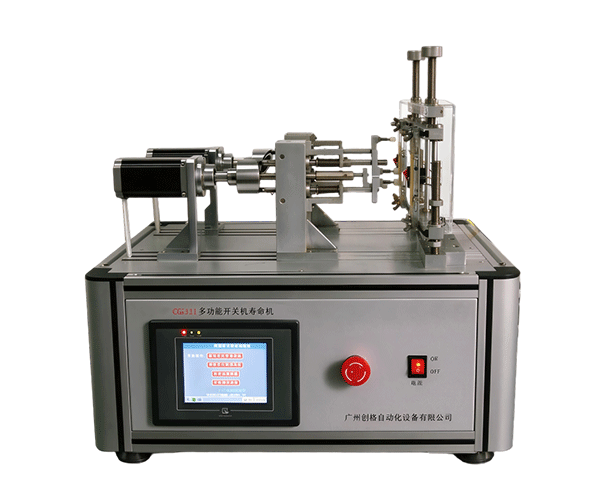
That is why we provide customized testing equipment for electrical products, including solutions designed around power switch durability testing and Electrical Safety Evaluation. Our Multifunctional Power Switch Durability Tester is intended to help manufacturers and laboratories simulate repeated switch operation under controlled conditions. By monitoring operating cycles and examining the specimen before and after testing, users can collect practical information about mechanical endurance and product consistency.
We specialize in customized testing equipment and understand that different products require different testing arrangements. A small appliance switch, a wall-mounted switch, and a power switch integrated into an electrical device may have different operating mechanisms, installation methods, and test requirements. We therefore discuss the product structure, applicable standards, expected test sequence, and customer workflow before confirming the equipment configuration.
Our goal is straightforward: to help customers build a practical, repeatable testing process that supports product development, production quality control, and laboratory evaluation. Whether you are searching for a Multifunctional Power Switch Durability Tester, a Power Switch Life Cycle Testing Machine, or customized Electrical Switch Testing Equipment, we can discuss a solution based on your actual application.
1. What Is a Multifunctional Power Switch Durability Tester?
A Multifunctional Power Switch Durability Tester is a testing machine designed to operate electrical switches repeatedly under defined conditions. Instead of asking an operator to press or toggle a switch manually hundreds or thousands of times, the equipment performs the required movement in a controlled and repeatable way.
The main purpose is to evaluate how a switch behaves after repeated operation. Depending on the switch design and the confirmed testing procedure, the equipment may operate a push-button mechanism, toggle mechanism, rocker switch, or another suitable switching structure. The actual movements and fixtures depend on the model being tested and the equipment configuration.
For example, a manufacturer developing a new power switch may want to compare two mechanical designs. Both samples might work correctly when new, but their performance after repeated operation could differ. A durability test gives engineers a structured way to examine those differences instead of relying only on a few manual checks.
Our customized power Switch Durability Testing Equipment can be planned around several common requirements:
Repeated mechanical operation of power switches.
Monitoring of completed operating cycles.
Customized fixtures for different switch shapes and mounting arrangements.
Defined movement sequences based on agreed test requirements.
Support for post-test visual and functional inspection.
Optional monitoring or recording functions where required by the project.
It is important to distinguish mechanical durability testing from a complete electrical safety assessment. Repeated operation can reveal certain mechanical problems, but it does not automatically verify insulation resistance, dielectric strength, temperature rise, or every other electrical safety characteristic. If a customer needs these additional tests, we can discuss whether separate instruments, additional modules, or a broader testing system are appropriate.
We make this distinction clear because the right equipment should match the real testing objective. Buying a machine with a broad product name does not guarantee that every test required by a particular standard is included in its configuration.
Why Repeated Operation Matters
During normal use, a power switch experiences repeated movement. Internal springs may compress and return, contact components may engage and separate, and moving parts may rub against one another. Over time, wear, looseness, deformation, or changes in contact behavior may affect product performance.
A Power Switch Durability Tester helps engineers investigate these changes under controlled conditions. It can support design comparisons, process improvement, incoming material evaluation, and routine quality checks. It also makes repeated testing easier to organize because the operating sequence and cycle count can be defined before the test begins.
However, accelerated testing is not the same as predicting the exact service life of every product in real use. Actual lifespan can also depend on electrical load, switching frequency, environment, installation quality, and user behavior. We recommend interpreting test results within the scope of the applicable standard and the agreed test conditions.
2. Working Principle and Main Testing Process
The working principle of our Multifunctional Power Switch Durability Tester is based on controlled mechanical actuation. A suitable drive mechanism moves the switch operating part through a defined sequence. A control system manages the operation, while a counting or monitoring function helps the operator follow the test progress.
The details vary with the switch type. A push-button switch may require a pressing movement, while a rocker switch may require a controlled rocking action. Other designs may need a different direction of movement or a dedicated fixture. We confirm these details during technical communication rather than assuming that one mechanism will suit every product.
Step 1: Confirm the Specimen and Test Requirements
Before production or testing, we recommend confirming the switch model, external dimensions, operating direction, mounting method, and intended test procedure. If the customer is working to a particular standard, the relevant edition and applicable clauses should also be identified.
This step may seem simple, but it prevents avoidable problems later. If the equipment is designed around the wrong movement direction or an unsuitable mounting arrangement, the test may not represent the intended operating conditions.
Step 2: Install and Position the Switch
The specimen is secured in a fixture designed for its shape and operating mechanism. The fixture should keep the switch stable while allowing the required movement to occur without unwanted interference.
For customized projects, we review the available installation space, the position of the operating button or lever, and any surrounding parts that could affect movement. When customers need to test different switch models, interchangeable fixtures may be considered if they are technically practical.
Step 3: Set the Test Parameters
The operator sets the parameters specified in the agreed testing procedure. These may include the operating sequence, movement settings, target cycle count, and pause intervals. If electrical loading or additional monitoring is required, those functions must be defined as part of the system configuration.
We do not recommend choosing operating speed or cycle count simply because a higher number appears more impressive. The settings must be suitable for the specimen and the applicable test method. Excessive speed or an incorrect movement pattern may introduce conditions that do not represent the intended test.
Step 4: Run the Durability Test
Once the specimen is installed and the settings have been checked, the machine performs repeated operations. The control system manages the programmed sequence, and the operator can monitor progress according to the equipment's available functions.
Automated operation reduces the variation that can occur when different people operate a switch manually. It also makes long-duration tests easier to manage. For laboratories handling multiple samples, repeatable operation is especially useful when comparing product designs or production batches.
Step 5: Inspect the Specimen After Testing
After the specified test sequence is completed, the specimen can be inspected according to the relevant procedure. Depending on the product and standard, the inspection may include checking for visible damage, loose components, abnormal operation, or changes in switching performance.
Where the test standard requires additional electrical checks, these should be carried out using the appropriate instruments and methods. A completed cycle count alone does not prove that a switch passes all safety requirements.
Typical Testing Workflow
| Stage | Main Activity | Purpose |
|---|---|---|
| Preparation | Confirm specimen and test procedure | Establish suitable test conditions |
| Installation | Secure the switch in the fixture | Maintain stable positioning |
| Parameter Setup | Configure the agreed operating sequence | Match the intended test method |
| Durability Run | Perform repeated switch operation | Evaluate performance over repeated cycles |
| Post-Test Inspection | Examine the specimen and perform required checks | Assess changes after testing |
Source: General equipment workflow based on common mechanical durability testing practices. The actual procedure must be confirmed against the selected product standard and the customer's test specification.
3. Main Features and Practical Advantages
When customers contact us about a Multifunctional Power Switch Durability Tester, they often ask about automation, fixture compatibility, operating consistency, and the possibility of adding functions. These are reasonable questions because testing equipment must fit into the customer's daily work, not merely perform a demonstration in a showroom.
Customized Fixtures for Different Switch Designs
Switch products vary in size, shape, mounting position, and operating mechanism. A fixture suitable for a compact rocker switch may not be suitable for a large industrial control switch. The contact point, pressing direction, and required movement can also differ.
We therefore review the specimen drawings, physical samples, or technical information before deciding on the fixture arrangement. Where multiple models need to be tested, we can discuss a design that supports different fixtures or changeover arrangements, subject to the actual mechanical requirements.
Correct positioning is important because an unsuitable fixture can introduce unwanted force or movement. This may influence the test result and make comparisons less meaningful. Our approach is to treat the fixture as a key part of the testing system rather than an accessory to be considered at the last minute.
Automated Repeated Operation
Manual operation is suitable for simple checks, but it becomes inefficient when a test requires a large number of repeated cycles. The operator may change speed, pressure, or movement timing without noticing. Fatigue can also affect consistency.
An automated Power Switch Life Cycle Testing Machine performs the defined sequence more consistently. This helps reduce dependence on manual operation and allows staff to focus on monitoring, specimen preparation, documentation, and post-test evaluation.
Cycle Counting and Progress Monitoring
Knowing how many operations have been completed is essential during a durability test. Depending on the selected configuration, cycle counting and status display can help operators monitor the test and determine when the target count has been reached.
For projects that require more detailed records, we can discuss additional monitoring or data-recording functions. The available functions should be confirmed before ordering so that the final equipment meets the customer's documentation needs.
Flexible Configuration
Not every customer needs the same testing system. Some require a straightforward mechanical durability tester, while others need additional electrical connections, more than one specimen fixture, or a broader testing arrangement.
We develop customized testing equipment for different industrial applications. During project planning, we separate essential functions from optional requirements so that the configuration is practical and aligned with the intended budget and testing workflow.
Designed Around Operator Use
A testing machine should be manageable during everyday laboratory work. Clear controls, accessible specimen installation, understandable operating procedures, and suitable protective arrangements all contribute to a better working process.
Depending on the project, safety-related features such as an emergency stop or protective enclosure can be discussed as part of the configuration. The final arrangement should be assessed against the machine's mechanical risks, electrical design, and the customer's workplace requirements.
Durability Testing Compared With Other Electrical Tests
Electrical switch evaluation may involve several different types of tests. Durability testing focuses on repeated operation, while insulation resistance testing examines electrical insulation properties. Temperature-rise testing investigates heating under defined conditions, and dielectric strength testing evaluates insulation performance under a specified test voltage.
These tests answer different questions. We help customers clarify which results they need before selecting equipment, so they do not mistake one type of test for a complete assessment of product safety.
| Test Type | Primary Purpose | Typical Equipment Direction |
|---|---|---|
| Mechanical Durability | Evaluate performance after repeated operation | Power switch durability tester |
| Insulation Resistance | Assess resistance of electrical insulation | Insulation resistance tester |
| Temperature Rise | Measure temperature changes under defined conditions | Temperature measurement system and suitable test setup |
| Dielectric Strength | Evaluate insulation under specified electrical stress | Dielectric strength or withstand-voltage tester |
Source: General descriptions of electrical testing methods. The exact test setup, acceptance criteria, and equipment requirements depend on the applicable product standard.
4. Standards and Equipment Selection: What Should Buyers Check?
For electrical testing equipment, selecting the correct standard is just as important as selecting the machine itself. A power switch intended for a household appliance may fall under a different standard from a manually operated switch used in a fixed electrical installation. Products designed for different markets may also have different requirements.
At Guangzhou Chuangge Automation Equipment Co., Ltd., we recommend confirming the intended product category and target market before finalizing a quotation. If the customer already has a test specification or standard clause, that document can help us understand the required operation, specimen mounting, cycle count, loading conditions, and post-test checks.
Common Standards to Review
| Standard | General Scope | Relevance to Equipment Planning |
|---|---|---|
| IEC 60669-1:2017 | General requirements for manually operated switches for household and similar fixed electrical installations | Relevant when assessing suitable test arrangements for covered installation switches |
| IEC 61058-1:2026 | General requirements for switches used in household and similar appliances | Relevant when planning tests for switches within its scope |
| UL 20, 15th Edition, 2025 | General-use snap switches within the standard's defined scope | Relevant for certain switches intended for North American markets |
Sources: IEC Webstore publications for IEC 60669-1 and IEC 61058-1:2026; UL Standards & Engagement listing for UL 20. Confirm the current applicable edition and product scope before use.
These standards are references for selecting the appropriate testing approach, not a statement that one machine automatically satisfies every clause in all three documents. The applicable requirements depend on the product type, the standard's scope, and the specific tests that must be performed.
Questions to Answer Before Ordering
What type of power switch will be tested?
Is the switch manually operated, integrated into an appliance, or used in a fixed electrical installation?
Which standard and edition apply to the product?
What operating movement does the switch require?
What cycle count and test sequence are specified?
Does the procedure require electrical loading during operation?
Are monitoring, data recording, or automatic stop functions needed?
How many different switch models must the equipment accommodate?
These details allow us to evaluate the fixture, drive mechanism, control functions, and any additional equipment more accurately. They also reduce the risk of purchasing a machine that performs repeated movement but cannot support the customer's actual test method.
How Configuration Changes With the Application
| Customer Requirement | Configuration Consideration | Information to Confirm |
|---|---|---|
| One switch model | Dedicated fixture and movement arrangement | Dimensions, mounting, operating direction |
| Several switch models | Interchangeable fixtures or adaptable setup | Model range and changeover frequency |
| Long-cycle testing | Cycle monitoring and operational stability | Target cycles and test duration |
| Electrical durability testing | Potential need for load circuits or additional monitoring | Load type and standard requirements |
| Laboratory documentation | Potential need for recording and reporting functions | Required data fields and output format |
Source: Equipment selection guidance based on common engineering considerations. These are planning recommendations, not fixed performance specifications or guaranteed standard-compliance claims.
5. Applications Across Manufacturing and Testing Industries
Our testing equipment serves customers working across electrical accessories, household appliances, electronic products, and quality inspection. A multifunctional approach can be useful when the laboratory or factory needs to evaluate several related product types, provided the fixture and test functions are suitable for each application.
Electrical Switch Manufacturers
Switch manufacturers can use durability testing during product development, process verification, and routine quality checks. For example, an engineering team may compare alternative spring structures or switching mechanisms. Repeated operation provides a consistent basis for observing changes and identifying areas that require further investigation.
For production teams, testing can also help investigate differences between samples or batches. When a change in material, supplier, or assembly process is introduced, a planned test can provide additional information before the change is adopted more widely.
Household Appliance Manufacturers
Many appliances contain switches used to start, stop, select, or control a function. Depending on the product design, these switches may be operated directly by a user or indirectly through another part of the appliance.
Manufacturers can use suitable switch durability testing to evaluate the repeated mechanical operation of relevant components. If the switch is tested outside the finished appliance, the fixture should represent the intended operating action as closely as the specified procedure requires.
Electrical Engineering Laboratories
Laboratories often need repeatable methods for comparing samples and documenting test progress. An automated switch durability tester can reduce repetitive manual work and help staff manage longer test sequences.
Where multiple standards or product categories are involved, clear test documentation becomes particularly important. The laboratory should record the specimen identity, test conditions, completed cycles, observations, and any additional checks required by the relevant procedure.
Product Certification and Quality Inspection Organizations
Certification agencies and quality inspection institutions need test equipment that supports their defined procedures. The machine's capabilities, fixtures, and monitoring functions should be matched to the intended test method before the equipment is accepted for use.
We discuss these requirements with customers during the customization stage. If a project requires a particular movement pattern, mounting arrangement, or auxiliary test function, those requirements should be identified early and reflected in the confirmed technical specification.
Research and Product Development Teams
Product developers may use durability testing to compare prototypes, investigate failure modes, and evaluate design changes. The test can reveal mechanical issues that are not obvious during a short functional check.
For meaningful comparisons, engineers should keep the relevant conditions consistent. A change in specimen mounting, operating speed, electrical loading, or inspection method can affect the interpretation of results. We recommend documenting such conditions rather than comparing cycle counts alone.
6. Our Customization, Manufacturing, and Quality Control Process
At Guangzhou Chuangge Automation Equipment Co., Ltd., we approach customized testing equipment as an engineering project. We begin by understanding the test rather than selecting a standard machine and asking the customer to adapt their work around it.
Technical Communication and Requirement Review
We first collect the information needed to define the application. This may include product drawings, physical samples, operating videos, applicable standards, test procedures, expected cycle counts, fixture requirements, and any requested monitoring functions.
If some requirements remain unclear, we discuss them before confirming the configuration. For instance, a customer may request a machine capable of testing several switch types, but each type may require a different movement mechanism. That difference needs to be addressed during the design stage.
Mechanical and Electrical Design
After the requirements are clarified, the equipment design can be planned around the specimen and the intended test sequence. The mechanical arrangement must support the required movement, while the control system must manage the agreed operating sequence and monitoring functions.
Fixture accessibility, adjustment convenience, operator protection, and maintenance requirements are also considered. These details may not be obvious in a product photograph, but they influence how easily the machine can be used over time.
Assembly and System Integration
During assembly, the mechanical structure, drive mechanism, controls, and other specified components are brought together into a working system. The aim is to ensure that the different parts operate as intended within the agreed configuration.
For customized machines, system integration is especially important because the equipment is designed around a particular application. A well-designed fixture must work with the drive mechanism, and the control sequence must match the intended movement.
Functional Inspection Before Delivery
Before delivery, each unit undergoes functional inspection and performance verification according to the agreed project scope. The inspection helps confirm that the equipment operates as specified and that the relevant functions are available.
We provide operating instructions and technical documentation as agreed. Customers should review the delivered documentation and verify that the equipment configuration matches the confirmed specification and intended testing procedure.
Production Cycle, Payment, Shipping, and Packing
Our typical production cycle is approximately 30–60 days. The actual lead time depends on the complexity of the equipment, fixture customization, component requirements, and the scope of the project. We recommend confirming the schedule after the technical configuration has been agreed.
Payment terms are negotiable according to the project arrangement. We can arrange sea, air, or land transportation based on the destination, delivery schedule, and customer preference.
For transportation, we use protective packaging and sturdy wooden cases as appropriate to help protect the equipment during handling and shipment. Packing requirements can be discussed in advance, particularly when the machine contains sensitive controls, precision components, or detachable fixtures.
| Item | Our General Arrangement | What the Customer Should Confirm |
|---|---|---|
| Production Lead Time | Typically 30–60 days | Final configuration and project schedule |
| Pre-Delivery Checks | Functional inspection and performance verification | Acceptance criteria and agreed test scope |
| Documentation | Operating instructions and technical documents as agreed | Required language and document list |
| Payment Terms | Negotiable | Payment schedule in the quotation or contract |
| Transportation | Sea, air, or land | Destination, shipping method, and delivery requirements |
| Packaging | Protective packaging and sturdy wooden cases as appropriate | Special handling or export packing requirements |
Source: Guangzhou Chuangge Automation Equipment Co., Ltd. company and product information supplied for this product page.
7. Why Work With Guangzhou Chuangge Automation Equipment Co., Ltd.?
Choosing a testing machine is not just about comparing prices or looking at product photographs. The more important question is whether the equipment can support the test you actually need to perform.
We specialize in customized testing equipment and serve industries including construction materials and components, wires and cables, plastics and textiles, electrical plugs, sockets and switches, electronic products, and household appliances. This range of applications gives us experience in discussing different specimen types, test objectives, and equipment configurations.
We Start With the Testing Requirement
We ask what the customer wants to evaluate, which standard applies, and how the specimen should be operated. This helps us identify the necessary functions before the project moves into detailed design.
It also helps avoid unnecessary features. A customer who needs straightforward mechanical cycle testing may not need every optional function available. Another customer who must manage several switch types may benefit from a more adaptable fixture arrangement. We aim to match the solution to the application.
We Understand the Importance of Standards
Electrical product standards define requirements and test methods for particular product categories. Our approach is to use the customer's applicable standard and technical requirements as the basis for equipment planning.
Where a requirement needs clarification, it should be resolved before the equipment specification is finalized. This is especially important when the product is intended for a particular export market or a formal laboratory evaluation.
We Maintain a Focus on Quality Management
Our company has obtained ISO 9001 Quality Management System, ISO 14001 Environmental Management System, and ISO 45001 Occupational Health and Safety Management System certifications. We also hold more than 20 patents, including invention patents, utility model patents, and software-related patents.
These credentials form part of our company background. For an individual project, customers should still review the agreed technical specification, equipment functions, inspection records, and supplied documentation to confirm that the machine meets their specific needs.
We Support Customized Projects Through Delivery
We discuss the project from initial requirements through design, assembly, functional inspection, documentation, and shipping arrangements. Our production cycle typically ranges from 30 to 60 days, depending on the final scope.
For customers who need a Multifunctional Power Switch Durability Tester, Power Switch Life Cycle Testing Machine, or customized Electrical Switch Durability Testing Equipment, we encourage early technical communication. Providing a product drawing, standard reference, or sample can make the discussion more accurate and help us prepare a suitable proposal.
8. Frequently Asked Questions About Power Switch Durability Testing
Q1: What does a Multifunctional Power Switch Durability Tester evaluate?
It is primarily used to perform repeated mechanical operation of power switches under defined conditions. The resulting observations can help evaluate mechanical endurance and changes in operation after repeated cycles. Additional electrical tests require the appropriate equipment and test procedure.
Q2: Can the machine test different types of power switches?
Potentially, yes, depending on the switch designs and the confirmed configuration. Different switch types may require different fixtures or movement arrangements. We recommend sharing the product drawings or samples so we can assess the required setup.
Q3: Can the operating cycle count be customized?
The target cycle count should be set according to the applicable standard or agreed test specification. The equipment configuration and control functions should be confirmed against that requirement before ordering. We do not recommend selecting a cycle count without considering the product and test method.
Q4: Does durability testing prove that a switch is electrically safe?
No. Durability testing evaluates performance under repeated operation, but electrical safety may involve other tests, such as insulation resistance, dielectric strength, or temperature rise. The required tests depend on the product standard and intended application.
Q5: Which standards should I provide when requesting a quotation?
Please provide the applicable standard number and edition, if known, along with the switch type and target market. IEC 60669-1 is relevant to certain switches for household and similar fixed electrical installations, while IEC 61058-1 covers switches for appliances within its defined scope. UL 20 covers certain general-use snap switches. The correct standard depends on the product, and the current edition should be verified before the test plan is finalized.
Q6: Can electrical loading be included during the durability test?
This depends on the required test method and the machine configuration. Some procedures may require switching under specified electrical conditions, while others may focus on mechanical operation. Please provide the load conditions and relevant standard clauses so we can determine whether additional circuits or equipment are needed.
Q7: Can the machine record test data?
Data recording and monitoring functions can be discussed during customization. The available functions depend on the selected configuration. If you need cycle records, operating status information, or a particular reporting format, please include those requirements in your initial inquiry.
Q8: How long does manufacturing take?
Our typical production cycle is 30–60 days, depending on the equipment specifications and customization requirements. The confirmed delivery schedule should be stated in the project quotation or contract after the technical details have been finalized.
Q9: What inspection is performed before delivery?
Each unit undergoes functional inspection and performance verification according to the agreed project scope. Operating instructions and technical documentation are provided as agreed. If the customer requires specific acceptance checks or records, these should be discussed before production.
Q10: How is the equipment packed and shipped?
We can arrange sea, air, or land transportation according to the destination and delivery requirements. Protective packaging and sturdy wooden cases are used as appropriate to help protect the equipment during transit. Special packing or handling requirements should be confirmed before shipment.
Q11: What information should I send to receive an accurate quotation?
We recommend providing the switch model, product drawings or sample, applicable standard, required cycle count, movement type, electrical loading requirements if applicable, fixture preferences, and any data-recording needs. Please also share your destination and preferred shipping method if known. The more clearly the test requirements are defined, the easier it is to prepare a suitable proposal.
Q12: Can this tester replace all other electrical safety testing equipment?
No. A durability tester is designed for its specified testing functions. Other safety evaluations may require separate instruments or dedicated test systems. We can discuss a broader customized solution if your laboratory needs to combine several test functions.
Discuss Your Power Switch Durability Testing Requirements With Us
At Guangzhou Chuangge Automation Equipment Co., Ltd., we believe useful testing equipment starts with a clear understanding of the product and the test objective. A reliable durability test requires suitable fixtures, controlled movement, appropriate operating parameters, and a post-test evaluation method that matches the relevant requirements.
Our Multifunctional Power Switch Durability Tester can be customized around your switch design, testing procedure, and laboratory workflow. Whether your priority is repeated mechanical operation, cycle monitoring, fixture flexibility, or a more comprehensive testing arrangement, we are ready to discuss the technical details with your team.
When contacting us, please share your product information, applicable standard, required test functions, and any drawings or reference documents available. We can then review the application and discuss a practical equipment configuration, production schedule, inspection arrangements, and delivery options.
Guangzhou Chuangge Automation Equipment Co., Ltd. provides customized testing equipment for industrial manufacturers, laboratories, and quality inspection organizations. Contact us to discuss your requirements for a Multifunctional Power Switch Durability Tester For Electrical Safety Testing.
