Low-Temperature Winding Testing Machine for Electric Wires And Cables
1. Product Overview: Evaluating Cable Flexibility and Insulation Performance at Low Temperatures
When electric wires and cables are used in cold environments, their performance can change in ways that are not always visible during a normal room-temperature inspection. Some insulation and sheath materials become stiffer as the temperature drops. A cable that bends easily in a warm workshop may become more difficult to handle in a cold warehouse, an outdoor electrical installation, or a low-temperature industrial environment. If the material cannot withstand the required bending conditions, cracks may appear on the insulation or outer sheath.
At Guangzhou Chuangge Automation Equipment Co., Ltd., we specialize in customized industrial testing equipment. We understand that manufacturers need more than a machine that simply performs a mechanical movement. They need a testing solution that helps them evaluate product behavior under defined conditions and supports their quality control process. Our Low-Temperature Winding Testing Machine is intended for low-temperature winding tests in which wire or cable specimens are bent around a specified mandrel after being conditioned at a required temperature.
The purpose of a low-temperature winding test is straightforward: determine whether the selected specimen can withstand the specified winding operation without showing unacceptable damage. Depending on the applicable test method, the laboratory may inspect the insulation or sheath for visible cracks, splits, or other signs of failure. The result can help engineers assess whether a cable construction or material formulation meets the requirements of the relevant product specification.
Low-temperature winding testing is particularly relevant to insulated wires, flexible cables, and cable products whose performance depends on the mechanical properties of polymer-based insulation or sheathing materials. These materials may include PVC and other extruded compounds, although the suitability of a particular test depends on the cable construction and the applicable standard.
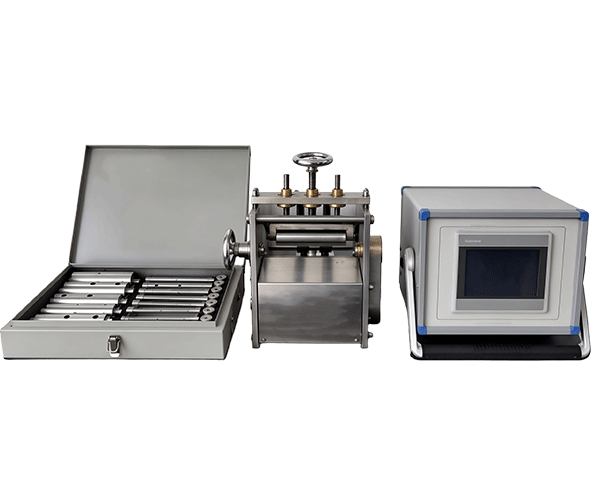
Our Low-Temperature Winding Testing Machine can be discussed as part of a customized testing solution. The final configuration should be selected according to the sample diameter, mandrel diameter, winding procedure, required conditioning temperature, specimen preparation, and evaluation criteria. Depending on the customer's requirements, the winding fixture may need to be used together with a suitable low-temperature chamber. We confirm these details before finalizing the equipment specification rather than assuming that one configuration is appropriate for every cable.
| Item | Description |
|---|
| Product name | Low-Temperature Winding Testing Machine |
| Product category | Wire and cable low-temperature mechanical testing equipment |
| Primary purpose | Evaluate cable or insulated wire behavior during a specified winding operation at low temperature |
| Typical specimen | Suitable wires or cables defined by the selected test method |
| Key test factors | Conditioning temperature, conditioning time, specimen diameter, mandrel diameter, winding procedure, and visual evaluation |
| Configuration | Confirmed according to the customer's sample specifications and applicable test requirements |
| Typical production lead time | Approximately 30–60 days for customized testing equipment, depending on the final requirements |
| Supplier | Guangzhou Chuangge Automation Equipment Co., Ltd. |
The table provides a general product overview, not a complete technical specification. Exact temperature ranges, sample diameter ranges, mandrel sizes, winding speed, number of turns, and control functions must be confirmed for the equipment being quoted. We do not assign unverified numerical parameters to the machine because those values need to match the actual design and intended test procedure.
For buyers searching for a low-temperature winding testing machine for electric cables, a low-temperature cable winding tester, or a cable insulation cold bending testing device, the most useful starting point is to identify the test method and the physical requirements of the specimen. This allows us to discuss the appropriate equipment configuration and helps customers avoid purchasing a machine that does not fit their laboratory procedure.
2. Working Principle: How a Low-Temperature Winding Test Is Performed
The basic principle of low-temperature winding testing is to condition a specimen at a specified low temperature and then bend it around a mandrel according to a defined procedure. The laboratory examines the specimen after the winding operation to determine whether the insulation or sheath shows the type of damage described in the test method.
Although the principle sounds simple, a valid test requires careful control of several details. The specimen must be prepared correctly, the conditioning temperature must be appropriate, the sample must remain within the required temperature conditions during the relevant stages, and the winding operation must follow the specified procedure. A result obtained by bending a cable at an arbitrary temperature or around an unsuitable mandrel may not be comparable with a standardized test result.
Step 1: Identify and prepare the specimen
Before testing, the operator identifies the cable or wire specimen and checks its relevant dimensions. Depending on the applicable method, the specimen may need to be cut to a specified length and prepared without damaging its insulation or sheath. The operator should avoid creating scratches, sharp bends, or other defects during preparation because these can affect the observed result.
The sample's outside diameter is an important consideration. The diameter can influence the selection of the winding mandrel and the way the specimen sits on the fixture. A mandrel that is too large may not produce the intended bending strain, while one that is too small may impose a different mechanical condition from the one specified by the standard.
For this reason, we recommend that customers provide the sample diameter range, cable construction, and test method when requesting a quotation. If the laboratory tests several cable sizes, the equipment may require a suitable set of interchangeable mandrels or another arrangement that accommodates the required range. The exact fixture set should be confirmed in the technical specification.
Step 2: Condition the specimen at the required temperature
Once the specimen has been prepared, it is conditioned at the temperature specified by the applicable test method. This step allows the cable material to reach the required thermal condition before the mechanical test begins. Conditioning temperature and time should not be selected arbitrarily because both can influence the material's behavior.
A low-temperature test may use a dedicated chamber or another suitable cooling arrangement. The winding fixture itself may be placed inside the chamber, or the specimen may be conditioned separately and transferred according to the procedure. The correct arrangement depends on the standard and the equipment design. Some procedures impose limits on how the specimen is handled after removal from the cold environment, so the operator must follow the specified sequence.
Our equipment planning takes this practical point into account. If the customer already has a suitable low-temperature chamber, we can discuss whether the winding fixture is intended to work with that existing setup. If a complete testing solution is required, the chamber requirements and winding fixture should be reviewed together. Temperature range, internal space, specimen dimensions, and the required operating arrangement all affect compatibility.
Step 3: Wind the specimen around the specified mandrel
After conditioning, the specimen is wound around the mandrel in accordance with the applicable procedure. Depending on the test method, this may involve a defined number of turns, a specified mandrel diameter, or a particular winding arrangement. The operator must avoid introducing unintended tension or twisting that could affect the result.
The winding operation creates a controlled bending condition. As the specimen bends, the outer surface of the insulation or sheath experiences tensile strain, while other areas experience compression. At low temperatures, a material may be less flexible than it is at room temperature. If the material cannot withstand the specified deformation, cracks or splits may appear.
The winding fixture is therefore an important part of the test system. It should hold the specimen securely, allow the required winding arrangement, and support the procedure defined by the selected method. Depending on the design, the operation may be manual or use a mechanical winding arrangement. The appropriate option depends on the customer's requirements and should not be assumed from the product name alone.
Step 4: Inspect the specimen and record the result
After winding, the specimen is evaluated according to the applicable method. The inspection may involve checking the insulation or sheath for visible cracks, splits, or other specified defects. The laboratory should record the sample identification, conditioning conditions, mandrel details, winding procedure, and observations required by its test method.
It is important to distinguish a test observation from a broader product performance claim. A specimen that shows no visible cracks under a particular test condition has demonstrated a specific result under that procedure. This does not automatically prove that the cable is suitable for every low-temperature application or that it meets every other electrical, mechanical, or environmental requirement.
For manufacturers, the records can be useful when comparing different material formulations, checking production batches, or investigating a failure. If a cable develops cracks during testing, the engineering team may review the insulation compound, manufacturing conditions, sample preparation, and the selected test procedure. The machine provides a controlled testing arrangement, while the final interpretation depends on the applicable criteria and technical evidence.
| Test stage | Main activity | Purpose |
|---|
| Specimen preparation | Identify the cable, measure relevant dimensions, and prepare the sample | Ensure the specimen is suitable for the selected method |
| Temperature conditioning | Expose the specimen to the specified low-temperature conditions | Establish the required thermal condition before bending |
| Winding operation | Bend the specimen around the prescribed mandrel | Apply the defined mechanical deformation |
| Inspection | Examine the insulation or sheath for specified signs of damage | Determine whether the specimen meets the test's evaluation criteria |
| Reporting | Record conditions, sample details, and observations | Support traceability and technical review |
This workflow is a general explanation of low-temperature winding testing. The actual sequence, conditioning requirements, winding procedure, and acceptance criteria must be taken from the standard or test specification selected for the application.
3. Main Features and Technical Considerations When Selecting the Machine
When choosing a low-temperature winding testing machine, we encourage customers to focus on the relationship between the fixture, the sample, the temperature environment, and the test method. A machine can look straightforward but still require careful configuration to produce a useful and repeatable test. The following features explain the main considerations during equipment selection. Exact functions depend on the agreed model configuration.
Suitable mandrels and specimen fixtures
The mandrel is the cylindrical part around which the specimen is wound. Its diameter is directly related to the bending condition imposed on the sample. A laboratory that tests cables with different outside diameters may require more than one mandrel size, depending on the standard and specimen range.
We recommend listing the smallest and largest sample diameters, the required mandrel diameters, and the number of specimens or test variations the laboratory expects to handle. These details help determine whether interchangeable mandrels, additional guides, or customized holders are needed. If the customer has a reference drawing or an existing fixture design, it can also help clarify the requested arrangement.
Compatibility with low-temperature conditioning equipment
A winding test is only meaningful when the temperature conditions are suitable for the selected method. In many applications, a winding fixture is used together with a low-temperature chamber. The chamber must have sufficient usable space for the specimen and the required test arrangement, and its temperature range must cover the conditions specified by the method.
If the winding fixture is intended to operate inside a chamber, the available internal dimensions, door opening, cable access, and handling space should be considered. If the specimen is conditioned separately, the laboratory needs to confirm the allowed transfer and test timing. These details are especially important for customized equipment because a fixture that fits on a workbench may not fit comfortably inside an existing chamber.
Manual or mechanical winding operation
The required winding arrangement depends on the test procedure and the customer's workflow. A manual fixture can be appropriate when the method requires a simple, operator-controlled winding operation. A mechanical arrangement may be considered when the customer needs a particular motion or wants to organize the testing process differently.
Neither option should be considered universally better. The key question is whether the arrangement can reproduce the required procedure while allowing the operator to handle the specimen correctly. We therefore recommend confirming the winding motion, number of turns, operator access, and any speed requirements before finalizing the equipment design.
Clear and repeatable test procedures
Repeatability is an important part of laboratory work. If two operators prepare the same specimen differently or use different mandrels, their results may be difficult to compare. A suitable fixture and a written procedure help control these differences.
The laboratory should define how specimens are prepared, how the temperature is verified, how the winding operation is performed, and how defects are assessed. The equipment specification should support this procedure, but it cannot replace the test method itself. We encourage customers to discuss any special operating requirements before production so that the fixture design and documentation can reflect the intended use.
Customization for different cable products
Our company focuses on customized testing equipment, so we understand that a laboratory's needs may not fit a single standard arrangement. One customer may test small-diameter insulated wires, while another may need to evaluate larger cables or several specimen sizes. Some customers already own a temperature chamber, while others need to plan the test setup as a complete solution.
Customization may involve fixture dimensions, mandrel selection, mounting arrangements, compatibility with an existing chamber, or other features agreed in the technical proposal. Any proposed option should be checked against the applicable test method. We do not assume that every optional fixture or control function is included in the basic equipment configuration.
Comparison of equipment selection approaches
The following table compares general approaches to organizing low-temperature winding tests. It is an equipment-planning comparison, not a measured performance ranking of specific machines.
| Consideration | Basic winding fixture | Customized winding test solution |
|---|
| Specimen range | Suitable for its defined fixture and mandrel range | Can be planned around the customer's specified specimen sizes |
| Temperature setup | May require a separately selected low-temperature chamber | Can be reviewed alongside an existing or proposed chamber |
| Fixture arrangement | Uses the supplied mounting and winding arrangement | May include agreed customized fixtures or mandrels |
| Laboratory workflow | Depends on the operator's existing procedures | Can be planned around the customer's documented test process |
| Technical scope | Generally defined by the supplied configuration | Confirmed against agreed requirements and optional functions |
| Purchase planning | Requires verification of basic compatibility | Requires detailed review of samples, method, chamber, and accessories |
The right choice depends on the actual testing task. A basic fixture may be sufficient for a laboratory with a well-defined sample range and a compatible chamber. A customized solution may be more appropriate when the laboratory has unusual specimen dimensions, special mounting requirements, or a specific operating workflow.
4. Applicable Standards and Industrial Applications
Low-temperature winding testing is used to evaluate the mechanical behavior of suitable insulated wires and cables under specified cold conditions. However, the term “low-temperature test” covers several different methods. Bending or winding, elongation, impact, and material brittleness tests do not evaluate exactly the same property. Choosing the right method is therefore an important step in equipment purchasing.
IEC 60811-504: Low-temperature bending tests
IEC 60811-504:2012 is titled “Electric and optical fibre cables — Test methods for non-metallic materials — Part 504: Mechanical tests — Bending tests at low temperature for insulation and sheaths.” According to the International Electrotechnical Commission, this standard gives the procedure for low-temperature bending tests on extruded insulation and sheathing materials.
This standard is a relevant reference when a customer's requirement concerns low-temperature bending of cable insulation or sheaths. The laboratory must still verify the applicable edition, specimen requirements, test conditions, and complete procedure before selecting equipment. A product description alone does not establish that a particular winding fixture satisfies every clause of IEC 60811-504.
Related standards for other low-temperature tests
IEC 60811-505:2012 addresses elongation at low temperature for insulation and sheaths. IEC 60811-506:2012 addresses impact testing at low temperature for insulation and sheaths. These are related to low-temperature cable testing, but they involve different mechanical actions and evaluation procedures. A winding fixture should not be assumed to perform elongation or impact tests unless the required equipment and functions are separately included.
For customers testing winding wires used in electrical coils, it is also important to distinguish cable bending tests from the wider family of winding-wire test methods. IEC 60851 covers test methods for winding wires, including mechanical and electrical properties in separate parts. The appropriate standard depends on the product category and the property being evaluated. If the specimen is enamelled winding wire rather than an insulated cable, the test requirement should be reviewed carefully before choosing a low-temperature winding tester.
| Standard reference | Published scope or subject | Relevance when selecting equipment |
|---|
| IEC 60811-504:2012 | Low-temperature bending tests for cable insulation and sheaths | Relevant when the required method involves bending suitable insulation or sheath specimens at low temperature |
| IEC 60811-505:2012 | Elongation at low temperature for insulation and sheaths | Relevant to tensile or elongation testing; a winding fixture alone is not sufficient |
| IEC 60811-506:2012 | Impact testing at low temperature for insulation and sheaths | Relevant to low-temperature impact tests, which use a different mechanical action |
| IEC 60851 series | Test methods for winding wires, including general, mechanical, electrical, and thermal properties | Relevant when the product is winding wire and the requested property falls within the applicable part |
Sources for the table: the IEC Webstore entries for IEC 60811-504:2012, IEC 60811-505:2012, IEC 60811-506:2012, and IEC 60851-1:2021+AMD1:2025. These publisher pages identify the respective standards and their general subjects. Customers should consult the complete applicable standard for detailed test requirements.
Wire and cable manufacturing
Manufacturers can use a low-temperature winding tester as part of product development and internal quality control. Testing can help assess whether a cable's insulation or sheath remains intact after the specified low-temperature bending procedure. If a material formulation or manufacturing process changes, the laboratory may compare samples under the same controlled conditions to see whether the observed performance has changed.
For example, if one batch of insulation shows cracking while another does not, the result can prompt further investigation. The engineering team may review raw materials, processing conditions, specimen preparation, or the relevant acceptance criteria. A single result does not necessarily identify the root cause, but a consistent test procedure provides a useful starting point for troubleshooting.
Electrical equipment and component suppliers
Companies supplying insulated wires and cables for electrical equipment may need to demonstrate that their products meet specified mechanical requirements. A low-temperature winding test can be one part of a broader verification plan when the applicable product specification calls for it. Other evaluations may still be required for electrical insulation, conductor resistance, tensile properties, flame behavior, or environmental durability.
The selection of tests should follow the intended application and the customer's specification. Passing a low-temperature winding test does not automatically demonstrate electrical safety, long-term service life, or compliance with every requirement for the finished electrical product.
Automotive and transportation cable supply chains
Some wire and cable products are designed for vehicles or transportation systems that may experience cold operating or storage conditions. Where the relevant specification requires low-temperature bending, the laboratory needs to reproduce the specified test conditions using the correct sample and fixture arrangement.
Requirements vary by cable type, vehicle application, manufacturer specification, and market. We recommend confirming the actual test standard rather than assuming that all automotive cables use the same winding procedure or temperature range.
Research and quality inspection laboratories
Research laboratories may use low-temperature winding tests to compare material behavior or investigate changes in cable construction. Quality inspection teams may use the method to support incoming material checks, production verification, or customer-specific testing programs.
For these users, clear records are just as important as the physical test. A record should identify the specimen, applicable method, relevant dimensions, conditioning conditions, winding procedure, and observations. This makes the result easier to review and compare with other tests performed under the same method.
5. Manufacturing Process, Inspection, and Delivery from Guangzhou Chuangge
At Guangzhou Chuangge Automation Equipment Co., Ltd., we approach customized testing equipment by first understanding the customer's application. A low-temperature winding tester may appear to be a relatively simple mechanical fixture, but its usefulness depends on the relationship between the sample, mandrel, temperature conditioning arrangement, and required procedure. We therefore prefer to confirm these details before the equipment enters production.
Technical requirement review
During the initial discussion, we recommend confirming the following information: the product type, specimen diameter range, required mandrel diameters, number of winding turns, conditioning temperature, conditioning time, winding procedure, and inspection criteria. The customer should also identify the applicable standard and edition, where known.
If the equipment will be used with an existing low-temperature chamber, the chamber's internal dimensions, temperature capability, and available access should be provided. If the laboratory needs a broader testing arrangement, the required scope should be discussed together. These details help us assess the fixture design and avoid unnecessary changes after production has started.
Equipment design and fixture preparation
After the requirements are reviewed, the equipment configuration can be defined. The design may cover the winding fixture, mandrel set, sample guides, mounting arrangement, and compatibility with the customer's chamber. The final scope depends on the approved technical specification.
For customized orders, it is useful to confirm the drawings or technical details before manufacturing. If the customer has special requirements for the operating position, access, specimen handling, or documentation, those requirements should be included in the agreed scope. This reduces the chance of a mismatch between the equipment delivered and the laboratory's actual workflow.
Assembly and functional inspection
Once the equipment has been assembled, we carry out functional inspection and performance verification according to the agreed scope. The inspection plan depends on the actual design and may include checking the mechanical movement, fixture installation, mandrel fit, and other specified functions.
Where a low-temperature chamber is part of the agreed supply, its relevant functions and the integrated arrangement should be checked according to the confirmed requirements. Where the customer supplies the chamber separately, compatibility should be reviewed using the agreed interface and dimensional information. The precise inspection items need to reflect what has been ordered rather than a generic checklist.
We distinguish functional inspection from formal calibration or independent certification. A basic operational check does not automatically provide traceability to certified reference instruments, and it does not prove that a customer's cable complies with a particular product standard. If formal calibration, third-party verification, or specific acceptance documentation is required, the customer should raise this before placing the order so the scope can be discussed clearly.
Technical documentation and operating instructions
We provide technical documents and operating instructions as agreed for the order. These materials help the customer understand the equipment configuration and its intended operation. The exact document package, language, and format should be confirmed during technical discussions.
We also recommend that the customer prepare a laboratory procedure based on the applicable test standard. The procedure should define sample preparation, temperature conditioning, winding steps, inspection requirements, and reporting. This gives operators a consistent method to follow and helps the laboratory maintain traceable test records.
Production lead time and order planning
The typical production cycle for our customized testing equipment is approximately 30–60 days. This is an estimate for planning purposes, not a guaranteed delivery period for every order. The actual lead time depends on the confirmed configuration, design complexity, component availability, customization requirements, and timing of technical approval.
| Stage | What we do | What the customer should confirm |
|---|
| Inquiry | Review the application and initial equipment requirements | Product type, sample dimensions, and test objective |
| Technical confirmation | Discuss the fixture, mandrels, temperature arrangement, and applicable method | Standard and edition, conditioning conditions, and acceptance criteria |
| Specification approval | Confirm the equipment scope and agreed configuration | Included accessories, drawings where applicable, and documentation needs |
| Manufacturing | Build and assemble the agreed equipment | Review any requested technical changes promptly |
| Inspection | Perform functional inspection and performance verification within the agreed scope | Confirm any additional acceptance requirements agreed before production |
| Packing and shipment | Prepare protective packing and arrange the selected transport method | Destination, shipping preference, and delivery requirements |
This table describes our general order process. The specific schedule, inspection scope, and delivery milestones are confirmed for each project. We recommend allowing enough time for technical review before production, particularly when the apparatus must fit an existing low-temperature chamber or a customer-specific test procedure.
Payment, packing, and transport
Payment terms are negotiable according to the order requirements and are confirmed in the quotation or sales agreement. We recommend that customers review the payment schedule together with the technical specification, production lead time, and acceptance requirements before confirming the order.
Depending on the destination and delivery needs, equipment can be shipped by sea, air, or land. Protective materials and sturdy wooden cases can be used as appropriate to help protect the equipment during handling and transport. The final packing method depends on the size, construction, and shipping requirements of the ordered equipment.
For international shipments, customers should confirm the delivery address, unloading arrangements, customs responsibilities, and any import documentation requirements. If the fixture is intended to work with an existing chamber or laboratory setup, it is useful to review the installation space and handling requirements before shipment.
6. Why Choose Guangzhou Chuangge Automation Equipment Co., Ltd.?
Choosing a low-temperature winding testing machine is not just about buying a mechanical fixture. The equipment needs to suit the sample, the temperature environment, and the selected test procedure. A supplier should also be able to discuss customization, clarify what is included, and establish realistic expectations for inspection and delivery.
We focus on customized testing equipment
Guangzhou Chuangge Automation Equipment Co., Ltd. specializes in customized testing equipment for industrial applications. Our products serve a range of sectors, including construction materials and components, wires and cables, plastics and textiles, electrical plugs, sockets and switches, electronic products, and home appliances.
This broad testing-equipment focus means that we understand the importance of starting with the application and technical requirements. For a low-temperature winding tester, the essential questions include what type of wire or cable is being tested, what test method applies, what temperature conditions are required, and what fixture arrangement is needed.
Our management system certifications
Our company has obtained ISO 9001 quality management system certification, ISO 14001 environmental management system certification, and ISO 45001 occupational health and safety management system certification. These systems relate to our organizational approach to quality management, environmental management, and workplace health and safety.
These company-level certifications should be distinguished from the performance or conformity of an individual testing machine. They do not automatically establish that every model complies with every product testing standard. Customers who need to verify certificate details or scope can request the relevant documentation as part of their supplier evaluation.
Technical development and intellectual property
Our company has more than 20 patents, including invention patents, utility model patents, and software patents. This portfolio reflects our involvement in equipment development and technical improvement.
For a customized testing equipment project, development capability can be useful when the customer needs a fixture arrangement or equipment configuration tailored to a particular application. However, patent numbers alone are not a substitute for technical evaluation. We encourage customers to assess the proposed configuration, agreed functions, inspection plan, and documentation requirements before making a purchasing decision.
Clear communication before production
We believe a good equipment order begins with a clear technical discussion. Before production, the customer and supplier should agree on the model, specimen range, included fixtures, temperature-conditioning arrangement, required functions, documentation, payment terms, and delivery plan.
For buyers comparing low-temperature winding testing machine suppliers, this level of detail is particularly helpful. It makes quotations easier to compare and reduces the risk of assuming that an accessory, chamber, or test function is included when it is not listed in the confirmed scope.
Practical planning for international customers
We support order planning from technical inquiry through manufacturing, inspection, packing, and shipment. Our typical production cycle is approximately 30–60 days, depending on the final configuration. Shipping can be arranged by sea, air, or land, with suitable protective packing according to the equipment and destination.
Our goal is to help customers define a testing solution that matches their actual requirements. If the requested test method is clear and the technical details are available, it becomes easier to evaluate the necessary fixture, confirm compatibility, and agree on the scope before manufacturing begins.
7. Frequently Asked Questions About Low-Temperature Winding Testing Machines
Q1. What is a Low-Temperature Winding Testing Machine used for?
A Low-Temperature Winding Testing Machine is used to perform a specified winding or bending operation on suitable wire or cable specimens after low-temperature conditioning. The laboratory then evaluates the specimen according to the applicable method, which may include checking the insulation or sheath for cracks or other specified damage.
Q2. Which products can be tested with this equipment?
Potential applications include suitable insulated wires and cables whose test specifications require low-temperature winding or bending. The actual sample range depends on the equipment configuration, specimen dimensions, mandrel sizes, and applicable method. Please provide the product type and sample specifications before ordering so that suitability can be reviewed.
Q3. Does the machine include a low-temperature chamber?
The chamber arrangement depends on the confirmed order scope. A winding fixture may be designed to work with a compatible chamber supplied by the customer, or the project may require a more complete testing arrangement. Please confirm the required temperature range, chamber dimensions, and intended operating method during the quotation stage.
Q4. What temperature range can the machine achieve?
The available temperature range must be confirmed for the specific configuration, particularly where a low-temperature chamber is involved. We do not recommend choosing a temperature range based only on the product name. The required value should come from the applicable test standard or customer specification, and the proposed equipment must be checked against that requirement.
Q5. Which standards are relevant to low-temperature winding tests?
IEC 60811-504:2012 covers low-temperature bending tests for cable insulation and sheaths. IEC 60811-505:2012 covers elongation at low temperature, while IEC 60811-506:2012 covers low-temperature impact testing. These methods have different purposes. The correct standard depends on the product type and the test the laboratory needs to perform.
Q6. Does the machine automatically comply with IEC 60811-504?
No conformity claim should be made based on the product name alone. The equipment configuration, fixture dimensions, specimen arrangement, temperature conditions, and operating procedure need to be checked against the applicable requirements. Customers should provide the required standard and edition so that the technical scope can be reviewed before the order is confirmed.
Q7. How do I select the correct mandrel diameter?
The mandrel diameter should be determined by the applicable test method and specimen dimensions. The required size may depend on the cable's outside diameter and the procedure defined by the relevant standard. Please share the sample diameter range and test requirements so that the appropriate mandrel arrangement can be specified.
Q8. Can I use the machine for different cable diameters?
This depends on the fixture design and the mandrels included in the configuration. If you need to test several cable sizes, provide the minimum and maximum sample diameters and any required mandrel dimensions. A suitable interchangeable fixture arrangement may be considered where it fits the test method and equipment design.
Q9. What should be checked after winding?
The specimen should be inspected according to the applicable test procedure. Depending on the method, the laboratory may check the insulation or sheath for visible cracks, splits, or other defined defects. The acceptance criteria should come from the relevant standard or product specification rather than a general visual judgment.
Q10. How long does production take?
The typical production cycle for our customized testing equipment is approximately 30–60 days. The actual lead time depends on the final technical specification, customization, component availability, and order requirements. The confirmed production schedule should be recorded in the quotation or sales agreement.
Q11. What inspection is carried out before delivery?
Before delivery, the equipment undergoes functional inspection and performance verification according to the agreed scope. The exact inspection items depend on the configuration. If your project requires formal calibration, traceability documents, third-party verification, or additional acceptance records, please specify these requirements before placing the order.
Q12. Can the equipment be customized for our laboratory?
Customization is part of our business. The available options depend on the intended test, sample dimensions, mandrel requirements, chamber arrangement, and other agreed technical details. We recommend sharing the relevant standard, sample information, and existing laboratory setup so that the proposed configuration can be reviewed.
Q13. Does passing a low-temperature winding test prove that a cable is suitable for every cold environment?
No. A test result applies to the specimen and conditions evaluated under the selected method. Actual service performance can also depend on the cable construction, installation conditions, exposure duration, mechanical loads, and other environmental factors. Additional tests or application-specific assessments may be necessary.
Q14. What information should I provide when requesting a quotation?
Please provide the product type, sample diameter, required mandrel sizes, test standard and edition, conditioning temperature, conditioning time, winding procedure, and any specific inspection criteria. If the equipment will be used with an existing low-temperature chamber, provide its model and internal dimensions where available. Drawings, photographs, or the relevant test clauses are also useful.
Q15. How is the equipment packed and shipped?
We can arrange shipment by sea, air, or land according to the destination and order requirements. Protective materials and sturdy wooden cases can be used as appropriate. The shipping method, packing arrangement, and delivery details are confirmed before dispatch.
Conclusion: Find the Right Low-Temperature Winding Test Solution
A Low-Temperature Winding Testing Machine helps laboratories evaluate the behavior of suitable wires and cables during a specified winding operation at low temperature. When the test method is correctly selected and the equipment is configured to match the sample, the resulting observations can support product development, manufacturing quality control, and technical investigation.
At Guangzhou Chuangge Automation Equipment Co., Ltd., we specialize in customized testing equipment and work with customers to define the required test functions, fixture arrangement, temperature-conditioning setup, and delivery scope. Our company has ISO 9001, ISO 14001, and ISO 45001 management system certifications and a portfolio of more than 20 patents covering invention patents, utility model patents, and software patents.
If you are looking for a low-temperature winding testing machine for electric wires and cables, a cable low-temperature bending test fixture, or a customized low-temperature cable testing solution, we invite you to contact our team. Please share your test standard, specimen dimensions, required temperature conditions, and existing laboratory setup. With these details, we can discuss a configuration that is appropriate for your testing needs.
Contact Guangzhou Chuangge Automation Equipment Co., Ltd. to discuss your Low-Temperature Winding Testing Machine requirements and request a technical quotation.
Technical References
Technical note: The standards listed above are references for identifying relevant test methods. Their inclusion does not mean that every configuration of the Low-Temperature Winding Testing Machine complies with all listed standards. The applicable method, standard edition, equipment configuration, and acceptance criteria should be confirmed before ordering.


