Low-Temperature Tensile Testing Machine for Material Strength and Elongation Evaluation
1. Introduction: Why Low-Temperature Tensile Testing Matters
When a material is used in a cold environment, does it remain flexible? Can it withstand a pulling force without breaking too early? Does its elongation change significantly as the temperature drops? These are important questions for manufacturers working with wire and cable, rubber, plastics, electrical components, and other materials exposed to low temperatures. At Guangzhou Chuangge Automation Equipment Co., Ltd., we understand that knowing how a material performs in normal laboratory conditions is not always enough. In many applications, engineers also need to understand how it behaves when the temperature is lower than usual.
Our Low-Temperature Tensile Testing Machine for Material Strength and Elongation Evaluation is intended for testing applications that require tensile properties to be evaluated under defined low-temperature conditions. We focus on customized testing equipment and work with customers to establish the appropriate test configuration based on their material, specimen dimensions, testing procedure, and industry requirements. Instead of assuming that one machine suits every application, we first look at what the customer needs to measure and how the results will be used.
To understand why this equipment matters, it helps to look at two basic material properties: tensile strength and elongation. Tensile strength describes the stress a specimen withstands under tension, often reported as the maximum tensile stress reached during the test. Elongation describes how much the specimen extends as it is pulled. Elongation at break records the extension when the specimen breaks, while elongation at yield applies to materials and methods where a yield point can be identified.
These properties can change when temperature changes. Some polymers become less flexible in cold conditions. Certain rubber compounds may show different stress-strain behavior, while cable insulation and sheathing materials may need to meet specific low-temperature requirements. The size and direction of these changes depend on the material composition, specimen preparation, temperature, test speed, and other conditions. It is therefore important to test the material using a suitable method rather than relying on general assumptions.
For wire and cable manufacturers, low-temperature testing can help assess whether insulation and sheathing materials retain the required elongation under specified conditions. For plastic manufacturers, it can provide information about tensile behavior at low temperatures. For rubber product manufacturers, it may support material comparison and quality inspection when the selected method is suitable for the compound. Research laboratories can also use low-temperature tensile testing to investigate how formulation changes affect material performance.
At Guangzhou Chuangge Automation Equipment Co., Ltd., our work covers customized testing equipment for construction materials and components, wires and cables, plastics and textiles, electrical plugs, sockets and switches, electronic products, and household appliances. We understand that different industries have different sample sizes, operating procedures, documentation requirements, and acceptance criteria. These differences are why we place importance on technical communication before confirming an equipment design.
Our company has obtained ISO 9001 quality management system, ISO 14001 environmental management system, and ISO 45001 occupational health and safety management system certifications. Our intellectual property portfolio contains more than 20 patents, including invention patents, utility model patents, and software patents. These credentials reflect our approach to technical development and management. The performance and functions of an individual testing machine, however, must still be established through its own technical specification and agreed inspection requirements.
If you are searching for a low-temperature tensile testing machine, a low-temperature material strength tester, or customized tensile testing equipment for cold-condition evaluation, our aim is to help you identify a suitable solution based on the actual test procedure. We believe a useful testing machine should do more than apply a pulling force. It should support a clearly defined testing process, produce meaningful data, and fit the practical needs of the laboratory or production environment.
2. Working Principle: How a Low-Temperature Tensile Testing Machine Works
2.1 The relationship between low temperature and tensile testing
A tensile test measures how a specimen responds when a pulling force is applied. In a typical test, the specimen is held between two grips. The testing system applies a controlled movement or load, and a force-measuring system records the force acting on the sample. The extension of the specimen is measured directly or determined using the measurement arrangement specified by the test method.
When low-temperature conditions are required, the specimen must be brought to the specified temperature and maintained under the required conditions for the appropriate period. Depending on the application, this may involve a temperature-controlled chamber, a low-temperature conditioning system, or an integrated arrangement that allows tensile loading while the specimen remains in the controlled environment. The correct configuration depends on the applicable test method and the material being tested.
It is important to understand that cooling the specimen is not the same as simply cooling the room. The specimen must reach the required condition, and the test procedure may specify a conditioning period, temperature tolerance, transfer procedure, or maximum time between conditioning and testing. If a specimen warms up too much before the tensile test begins, its measured behavior may no longer represent the intended low-temperature condition.
For this reason, we discuss the entire testing sequence with our customers. We need to understand whether the specimen must remain in the low-temperature environment during the tensile test, how the grips should operate at the target temperature, and whether the test method specifies any particular handling requirements. These details help determine whether a separate conditioning step or an integrated low-temperature tensile arrangement is more appropriate.
2.2 What happens during a tensile test?
Once the specimen has been prepared and conditioned, the operator installs it in the grips according to the test procedure. The specimen should be aligned carefully so that the pulling force acts in the intended direction. Poor alignment can introduce bending or uneven stress, which may influence the result and make comparisons less reliable.
The testing machine then applies tension at the required speed or according to the specified control method. The load cell measures the applied force. An extension measurement system records the change in specimen length or the strain within a defined gauge length, depending on the method and equipment configuration. The test continues until the specified endpoint is reached, which may be a defined extension, a yield point, a maximum force, or specimen failure.
After the test, the recorded force and extension data can be used to determine relevant tensile properties. Tensile stress is generally calculated by dividing the force by the original cross-sectional area of the specimen. Engineering strain is commonly calculated by dividing the change in gauge length by the original gauge length. Elongation is often expressed as a percentage.
For example, if a specimen has an original gauge length of 50 mm and the measured gauge length at a defined endpoint becomes 65 mm, the extension is 15 mm. The engineering elongation is therefore 30%. This is a simple illustration of the calculation, not a specification or guaranteed result for any particular material or testing machine.
The actual calculation and reporting procedure must follow the relevant test method. Some methods define extension using crosshead movement, while others require an extensometer or another measurement arrangement. Crosshead displacement includes movement within the machine and grips, so it is not always equivalent to the extension of the specimen itself. This distinction becomes important when accurate strain or elongation data are required.
2.3 Typical low-temperature tensile testing workflow
| Step | Operation | Purpose |
|---|
| 1. Confirm the method | Identify the material, specimen type, target temperature, tensile procedure, and acceptance criteria. | Make sure the planned test matches the actual requirement. |
| 2. Prepare specimens | Cut, condition, identify, and measure specimens according to the applicable method. | Reduce differences caused by inconsistent specimen preparation. |
| 3. Condition at low temperature | Bring specimens to the specified thermal condition for the required period. | Establish the intended temperature before testing. |
| 4. Install the specimen | Fit the specimen into the grips and check alignment. | Apply the tensile force in the intended direction. |
| 5. Apply tensile loading | Run the test using the agreed speed or control method. | Record the specimen's response to tension. |
| 6. Record and evaluate | Review force, extension, failure behavior, and other required results. | Support material comparison and quality decisions. |
This table describes a general workflow. It does not mean that every low-temperature tensile testing machine automatically performs all six stages. Some laboratories prepare and condition specimens separately, while others require an integrated system. The final configuration must be based on the method, specimen characteristics, and level of automation required by the customer.
2.4 Why test conditions need careful control
Temperature is only one of several factors that can affect tensile test results. Specimen dimensions, gripping pressure, alignment, test speed, gauge length, and measurement method can also influence the data. If these conditions vary from one test to another, it may be difficult to determine whether a difference comes from the material itself or from the testing procedure.
Temperature recovery is another practical concern. Opening a chamber, transferring specimens, or installing samples can affect the thermal condition. For some procedures, the specimen must be tested quickly after removal from the conditioning environment. For others, the specimen may need to remain in the controlled chamber throughout the tensile test. We recommend confirming these requirements before selecting the equipment layout.
By defining the testing conditions at the beginning, customers can reduce avoidable variation and create more useful records. This is especially important when comparing material batches, evaluating a new formulation, or investigating a failure that occurred during cold-weather service.
3. Main Features, Technical Advantages, and Relevant Testing Standards
3.1 Controlled low-temperature testing conditions
The main purpose of a low-temperature tensile testing machine is to support tensile evaluation under the specified cold conditions. Depending on the design, this may require a low-temperature chamber, a cooling system, temperature sensors, control functions, and fixtures suitable for the specimen. The required temperature range and operating performance should be established from the customer's test method rather than selected without reference to the application.
When discussing a customized system, we ask the customer to identify the minimum required test temperature, the expected operating conditions, the sample dimensions, and whether the temperature must be maintained during the tensile loading stage. These details help determine the appropriate arrangement. We do not assume that a configuration suitable for one cable insulation test will automatically be suitable for every plastic or rubber tensile test.
Temperature stability and temperature uniformity should also be considered separately. Stability describes how well the temperature at a defined measurement point remains near the setpoint over time. Uniformity describes differences between locations within the working area under specified conditions. Both may matter, particularly if specimens are placed at different positions or tested in batches.
If temperature performance is important to the acceptance of the equipment, the required verification method and acceptance limits should be stated in the technical agreement. This gives both parties a clear basis for inspection. Actual temperature ranges, uniformity values, and control tolerances must be confirmed in the final equipment specification.
3.2 Tensile force and elongation measurement
Force measurement is central to tensile testing. The selected load cell should suit the expected force range and the properties being measured. If the load cell is much larger than necessary for a very small force, the resolution may not be ideal for the intended task. If it is too small, the system may not be suitable for the expected maximum force.
Elongation measurement also requires careful planning. For some tests, crosshead movement may be sufficient for a specified purpose. For others, a dedicated extensometer or another direct strain measurement arrangement may be required. The correct choice depends on the specimen, expected elongation, test speed, measurement range, and applicable standard.
At low temperatures, grips and measurement accessories must be suitable for the intended operating environment. The specimen should remain securely held without unnecessary damage, slipping, or stress concentration near the grip. Where the test method specifies a particular grip type or specimen geometry, those requirements should guide the configuration.
We recommend confirming the required force range, expected elongation, specimen dimensions, and measurement accuracy before the equipment is designed. These values should be stated in the agreed technical documents rather than assumed from a general product description.
3.3 Data recording and operator convenience
Clear data presentation helps operators understand what happened during a test. Depending on the agreed configuration, a system may display force, displacement, temperature, test status, or other relevant information. Automated recording and export functions may also be considered where laboratory procedures require electronic records.
However, data logging should be defined carefully. A record of the chamber temperature is not necessarily the same as a record of the specimen temperature, and a force-displacement curve is not always equivalent to a fully validated stress-strain curve. The reporting functions should match the actual measurement system and the requirements of the test procedure.
For laboratories that conduct repeated tests, ease of use can make a real difference. Clear parameter settings, practical sample access, straightforward specimen identification, and understandable operating instructions can help reduce routine mistakes. We consider these factors during customization because the operator's daily workflow is part of the overall equipment requirement.
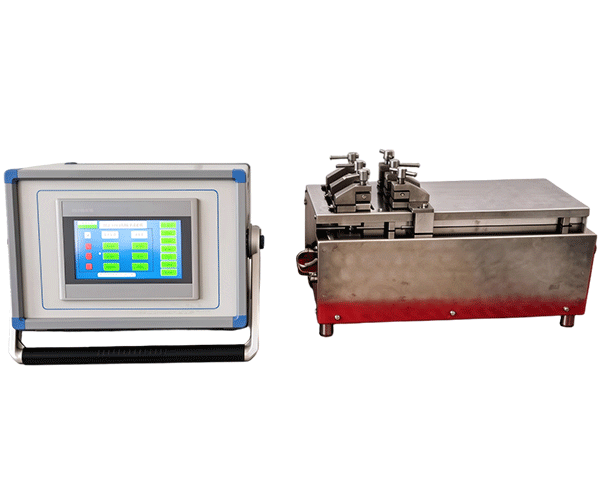
3.4 Relevant standards and their application
Standards help define how a tensile test should be carried out and how results should be interpreted. Yet not every tensile testing standard covers low-temperature testing, and not every low-temperature test measures tensile strength and elongation in the same way. Buyers should identify the exact material category and test objective before selecting a standard.
For example, IEC 60811-505 addresses elongation tests at low temperature for extruded insulation and sheaths used in electric and optical fibre cables. It is directly relevant to certain cable-material applications, but its scope should not be treated as a universal method for every polymer. ISO 37:2024 covers tensile stress-strain properties of vulcanized and thermoplastic rubber. ASTM D638-22 covers tensile properties of plastics under defined conditions, but it is not, by itself, a universal low-temperature tensile test method.
| Standard reference | Scope or purpose | Potential relevance to equipment planning | Key limitation |
|---|
| IEC 60811-505:2012 | Elongation at low temperature for extruded cable insulation and sheaths. | Relevant to specified low-temperature elongation tests on cable materials. | Must be read with the applicable general and related cable test requirements. |
| ISO 37:2024 | Tensile stress-strain properties of vulcanized and thermoplastic rubber. | Useful for defining tensile properties such as tensile strength and elongation at break for rubber. | Does not automatically establish the requirements for every low-temperature test. |
| ASTM D638-22 | Tensile properties of unreinforced and reinforced plastics under defined conditions. | May inform plastic specimen preparation and tensile evaluation where applicable. | It is not a universal low-temperature method; relevant temperature and material requirements must be checked. |
Official reference sources:
These standards are reference points for identifying suitable test methods. They do not establish that our machine has been certified against them, and they should not be used interchangeably. The relevant edition, amendments, material category, test clause, fixtures, temperature requirements, and acceptance criteria should be confirmed before an order is placed.
3.5 Comparing material properties and test approaches
Low-temperature tensile testing is often used alongside other methods, but the tests answer different questions. Tensile strength and elongation describe behavior under tension. Impact testing examines a material's response to a sudden loading event, while hardness testing measures resistance to indentation under a specified method. A material can perform well in one test and poorly in another, so test selection should reflect the real application.
| Test method or property | What it measures | Typical result | Question it helps answer |
|---|
| Tensile strength | Stress corresponding to the defined tensile strength result, commonly the maximum tensile stress. | Stress value, often in MPa. | How much tensile stress can the material withstand under the specified conditions? |
| Elongation at break | Extension at specimen failure relative to the defined original gauge length. | Percentage elongation. | How much does the specimen extend before breaking? |
| Low-temperature elongation | Elongation under a specified low-temperature procedure. | Method-specific elongation result or pass/fail outcome. | Does the material meet the required low-temperature elongation criterion? |
| Impact resistance | Response to a sudden impact under a defined method. | Method-specific impact result. | How does the material respond to rapid loading? |
| Hardness | Resistance to indentation using a defined indenter and procedure. | Scale-specific hardness value. | How resistant is the surface to indentation under the test conditions? |
The table compares general test objectives, not performance values for a specific material or machine. Test results can only be compared meaningfully when the specimen preparation, test conditions, measurement procedures, and reporting rules are appropriate for the comparison being made.
3.6 How we determine the right configuration
We begin by reviewing the intended test procedure. If the customer provides a standard number and edition, we ask which clause applies to the material and whether any additional product specification modifies the method. If the test is based on an internal procedure, we review the required conditions and output with the customer.
We then examine specimen dimensions, force requirements, expected elongation, low-temperature conditions, and the number of samples that must be tested. The customer may also need automated data recording, special grips, a defined test speed, or a particular arrangement for maintaining the specimen at low temperature. These requirements should be included in the design discussion before the final specification is confirmed.
Our approach is practical: establish what must be measured, identify how it must be measured, and then determine which equipment functions are needed. This helps reduce the risk of selecting a machine that can pull a specimen but cannot meet the complete testing procedure.
4. Industry Applications of Low-Temperature Tensile Testing
4.1 Wire and cable manufacturing
Wire and cable manufacturers are among the potential users of low-temperature testing equipment. Cable insulation and sheathing materials may be exposed to cold conditions during storage, transportation, installation, or service. Their behavior at low temperatures can affect handling, flexibility, and resistance to cracking or damage, depending on the material and application.
For certain cable-material tests, the required evaluation may focus on elongation at low temperature rather than a complete tensile stress-strain curve. IEC 60811-505 specifically addresses low-temperature elongation testing for extruded insulation and sheaths. The applicable cable standard or product specification should determine the specimen preparation, conditioning, and test procedure.
When a cable manufacturer contacts us, we first ask whether the requirement concerns insulation, sheathing, another non-metallic component, or the complete cable assembly. We also clarify whether the customer needs a defined low-temperature elongation test or a tensile test performed under low-temperature conditions. These are related but not necessarily identical requirements.
We then review the specimen geometry, required conditioning method, measurement needs, and applicable acceptance criteria. This information helps us determine whether the proposed equipment configuration is suitable for the actual cable testing task.
4.2 Plastic materials and polymer products
Plastic materials are used in electrical housings, connectors, industrial components, building products, and many consumer goods. Their mechanical behavior depends on polymer type, additives, processing conditions, moisture, temperature, and other factors. A formulation that performs well at room temperature may behave differently under cold conditions.
A low-temperature tensile testing machine can help engineers compare the tensile properties of suitable plastic specimens under defined conditions. For example, a manufacturer may want to compare two material grades, investigate the effect of a formulation change, or examine whether a batch retains the required elongation at a specified temperature.
For a meaningful comparison, the specimens should be prepared consistently and tested using the same appropriate method. The testing speed, specimen dimensions, temperature conditioning, and strain measurement arrangement should be controlled as required. Otherwise, observed differences may reflect variations in the test procedure rather than differences in the material itself.
We recommend confirming whether the customer needs tensile strength, yield properties, elongation at break, or a combination of these results. The required measurement range and accessories can then be discussed as part of the equipment specification.
4.3 Rubber compounds and flexible components
Rubber is used in seals, gaskets, protective covers, cable materials, flexible connectors, and other products where deformation and recovery matter. At lower temperatures, a rubber compound may show changes in flexibility and tensile behavior. The extent of these changes depends on the compound and the conditions of the test.
ISO 37:2024 provides a method for measuring tensile stress-strain properties of vulcanized and thermoplastic rubber, including tensile strength and elongation at break. However, the applicable low-temperature procedure must be established separately where required. A standard for general tensile properties should not automatically be treated as proof that a test is suitable at every temperature.
For rubber applications, we ask customers to identify the compound type, specimen shape, required temperature, expected force range, and property to be measured. If the test involves low-temperature conditioning followed by a tensile test, the timing and specimen handling requirements also need to be clear.
With this information, we can assess the equipment functions needed and discuss whether the intended application requires a low-temperature chamber, specialized grips, direct elongation measurement, or other features.
4.4 Electrical components, connectors, and household appliances
Electrical components may include polymer parts that need to maintain their mechanical properties in cold environments. Connectors, cable accessories, housings, and other parts can be affected by temperature changes, especially when they are expected to remain flexible or maintain a secure fit.
A low-temperature tensile test may be suitable for evaluating a material used in these products, but it does not automatically replace a complete electrical safety test. Electrical insulation resistance, dielectric strength, temperature rise, impact resistance, and product-level safety checks involve different procedures and may require separate instruments.
We recommend identifying the component or material being tested and separating the mechanical testing requirement from any electrical performance requirement. If the project includes testing a complete electrical assembly, the customer should clarify whether the specimen is unpowered during the tensile test and whether any additional safety controls are required.
4.5 Textiles, coated materials, and flexible composites
Some textiles, coated fabrics, and flexible composite materials may need to retain strength or flexibility in cold environments. The tensile behavior of these materials can depend on fiber orientation, weave structure, coating composition, bonding layers, and sample direction. Results may differ substantially if specimens are cut in different directions or prepared inconsistently.
Before selecting a test method, we recommend defining the property of interest. A tensile test can investigate force and extension under tension, but it does not automatically measure coating adhesion, tear resistance, or impact performance. If several properties matter, the testing plan may need more than one method.
For customized equipment, the specimen width, thickness, grip design, and required force range are especially important. Flexible materials may require grips that reduce slippage or avoid damaging the specimen near the clamping area. The correct arrangement should be based on the test method and material characteristics.
4.6 Construction materials and industrial components
Construction products and industrial components may contain polymer seals, plastic fittings, rubber parts, or other materials that encounter cold conditions. Depending on the application, manufacturers may need to check whether these materials retain sufficient tensile performance at a specified temperature.
Low-temperature tensile testing can provide useful data for suitable specimens, but it should not be confused with structural testing of a complete component or building assembly. A small material specimen cannot represent every load path, joint, geometry, or environmental factor present in a finished product.
We work with customers to identify whether the intended test concerns a raw material, a processed specimen, or a finished component. This distinction helps establish realistic equipment requirements and ensures that the test results are interpreted within the proper scope.
4.7 Research laboratories and quality inspection departments
Research laboratories may use low-temperature tensile testing to investigate new formulations, compare material grades, or understand changes caused by processing. Quality inspection departments may use the same type of test to verify that selected material properties remain within defined acceptance limits.
The two environments may have different priorities. A research laboratory may need flexible test settings and detailed data recording, while a production laboratory may focus on repeatable procedures, straightforward operation, and consistent sample throughput. We consider these differences when discussing customized equipment.
We also encourage customers to involve the operators who will use the machine. They can help identify practical needs such as specimen loading, grip changes, data export, cleaning, and routine inspection. These details are often easier to address during design than after the equipment has arrived.
5. Equipment Customization, Manufacturing, Quality Control, and Delivery
5.1 Defining the technical requirements
At Guangzhou Chuangge Automation Equipment Co., Ltd., we treat customized testing equipment as an engineering project that begins with a clear understanding of the customer's requirements. For a Low-Temperature Tensile Testing Machine, the first step is to establish what material will be tested, what properties must be measured, and which conditions the test must reproduce.
We normally need information about the specimen material, specimen dimensions, target temperature, conditioning duration, tensile force range, expected elongation, test speed, and applicable standard or internal procedure. We also need to know whether the specimen must remain inside the low-temperature environment during the tensile test or can be transferred to the testing position according to the specified method.
Some customers already have a detailed test procedure. Others know the problem they need to solve but have not yet finalized every technical detail. In either case, we can review the information available and identify the questions that need to be answered before the equipment configuration is confirmed.
For example, a customer may specify a low target temperature but not indicate the specimen dimensions or required load capacity. Another may provide a standard number without identifying the applicable clause. These details can affect the chamber design, grips, load cell, measurement arrangement, and overall configuration. Clarifying them early helps avoid unnecessary changes later.
5.2 Mechanical, thermal, and control-system integration
A customized low-temperature tensile testing system may combine a loading frame, force measurement, grips, a low-temperature conditioning or chamber arrangement, temperature sensors, control components, and a user interface. The exact design depends on the intended test and the functions agreed with the customer.
The mechanical system must apply the required tensile force while maintaining suitable specimen alignment. The gripping arrangement should hold the specimen securely without introducing avoidable damage. The load cell and extension measurement system must suit the expected range and the relevant measurement requirements.
The thermal system must be appropriate for the agreed temperature conditions. The design discussion should cover the required cooling method, working space, specimen arrangement, access for loading, and temperature monitoring. Where the specimen must remain at low temperature throughout the tensile test, the relationship between the chamber and the loading mechanism becomes particularly important.
The control system should allow operators to set and monitor the parameters required by the test. Depending on the agreed configuration, this may include temperature, tensile speed, force, extension, test status, or data recording. We confirm the actual functions in the technical specification rather than assuming that every system includes the same software or automation features.
5.3 Assembly and inspection
During manufacturing, the relevant mechanical, thermal, and electrical components are assembled according to the agreed design. The process may include frame assembly, installation of the loading mechanism, fitting of the grips, integration of the cooling and temperature-control system, wiring, and configuration of the operating interface.
Before delivery, each unit undergoes functional inspection and performance verification according to the agreed project requirements. The inspection scope depends on the equipment configuration and the acceptance criteria established with the customer. Checks may cover the operation of the loading system, control interface, temperature functions, safety features, and other agreed items.
Where temperature performance, force measurement, or elongation measurement has specific acceptance limits, the verification method should be defined before the inspection begins. The customer and supplier should agree on the test conditions, instruments or methods used, and the records to be provided. This creates a more useful basis for acceptance than a general statement that the equipment has been tested.
Functional inspection and performance verification should not be confused with formal calibration or independent third-party certification. Those services may require separate procedures, qualified providers, and additional documentation. If a laboratory requires traceable calibration or a third-party report, we recommend including that requirement in the initial technical discussion.
5.4 Documentation and operator preparation
Technical documents and operating instructions are provided as agreed. Depending on the order, the documentation package may include equipment information, operating guidance, maintenance recommendations, and relevant inspection records. The exact documents should be listed in the order or technical agreement so that the expected deliverables are clear.
Operators should be familiar with specimen preparation, temperature conditioning, grip installation, test parameter selection, data recording, and the safe handling of cold specimens. They should also understand the limits of the equipment and know which steps belong to the test method rather than the machine itself.
For laboratories working under formal quality procedures, we recommend maintaining records of specimen identification, test conditions, equipment settings, maintenance, and relevant calibration or verification activities. These records help explain differences between test runs and support internal reviews when results do not match expectations.
5.5 Production cycle and commercial arrangements
Our typical production cycle for customized testing equipment is approximately 30 to 60 days. The actual lead time depends on the equipment specification, design complexity, component availability, and customization requirements. A project involving a specialized low-temperature system or unusual specimen fixtures may require additional technical coordination. We confirm the expected schedule after the scope and order details have been reviewed.
Payment terms are negotiable according to the order requirements and agreed commercial arrangement. Before placing an order, customers should confirm the payment schedule, quotation validity, delivery terms, and the scope of any additional services. Keeping these items in writing helps prevent misunderstandings during the project.
5.6 Packaging and transportation
We can arrange shipment by sea, air, or land according to the destination, required schedule, and logistics conditions. The equipment is protected using suitable packing materials, with sturdy wooden cases used where appropriate to reduce the risk of damage during handling and transportation.
The packaging method depends on the machine's size, weight, construction, and shipping route. For international shipments, customers should confirm the destination, delivery terms, import requirements, unloading arrangements, and any special handling needs before dispatch. These details can affect the shipping plan and the preparation required at the receiving site.
| Project item | Typical arrangement | Details to confirm before ordering |
|---|
| Production cycle | Approximately 30–60 days. | Final schedule after technical specifications and order details are confirmed. |
| Payment terms | Negotiable according to order requirements. | Payment schedule, currency, and commercial conditions. |
| Transportation | Sea, air, or land shipment. | Destination, delivery terms, and freight arrangements. |
| Packaging | Protective materials and sturdy wooden cases where appropriate. | Machine dimensions, weight, lifting needs, and destination requirements. |
| Pre-delivery inspection | Functional inspection and agreed performance verification. | Inspection items, acceptance criteria, and required records. |
| Documentation | Technical documents and operating instructions as agreed. | Required manuals, drawings, reports, language, and file formats. |
6. Why Choose Guangzhou Chuangge Automation Equipment Co., Ltd.?
6.1 Customized solutions based on actual testing needs
We focus on customized testing equipment, and we believe that a useful solution begins with a clear understanding of the application. A low-temperature tensile test for cable insulation may require a different configuration from a tensile test for rubber or plastic specimens. The sample dimensions, force range, temperature conditions, grips, and measurement method all influence the design.
We therefore encourage customers to share the relevant standard, specimen drawings, test procedure, and expected output before the final specification is confirmed. Where the information is incomplete, we discuss the remaining technical questions rather than making assumptions that may affect the result.
Customization should solve a real problem. Additional functions are only useful when they support the test procedure, improve the laboratory workflow, or meet a documented requirement. Our aim is to help customers identify the functions they need and establish a realistic equipment configuration.
6.2 Attention to standards and technical details
Testing standards are not simply labels to include in a product description. They can specify specimen geometry, conditioning, temperature, test speed, measurement methods, and reporting requirements. A machine that provides the basic loading function may still require suitable fixtures, temperature control, or measurement accessories to carry out the intended procedure.
We pay attention to the relationship between the standard and the material being tested. IEC 60811-505, for example, addresses low-temperature elongation tests on specified cable insulation and sheathing materials. ISO 37:2024 addresses tensile stress-strain properties of rubber, while ASTM D638-22 addresses tensile properties of plastics under defined conditions. Each reference has its own scope, and the correct method must be selected for the actual application.
When discussing a project, we prefer to establish the exact method and relevant edition before confirming the equipment specification. This helps both parties understand which functions are essential and which performance values need to be verified during inspection.
6.3 Management systems and technical development
Guangzhou Chuangge Automation Equipment Co., Ltd. has obtained ISO 9001 quality management system, ISO 14001 environmental management system, and ISO 45001 occupational health and safety management system certifications. These certifications relate to management systems and support the way we organize our business processes and responsibilities.
Our intellectual property portfolio includes more than 20 patents, including invention patents, utility model patents, and software patents. This reflects our ongoing technical development and interest in practical testing solutions. At the same time, the performance of a particular low-temperature tensile testing machine must be confirmed through its own design, technical specification, and agreed verification process.
6.4 Clear communication from quotation to delivery
Industrial equipment purchasing involves several connected decisions: technical performance, price, delivery schedule, inspection, documentation, and transportation. If the scope is unclear, the buyer may expect functions that are not included in the quotation, or the supplier may not have enough information to design the intended solution.
We encourage customers to define the requirements as early as possible. If the target temperature, force range, specimen size, or test procedure changes during the project, the effect on design, cost, and delivery should be reviewed before proceeding. Written confirmation gives both parties a reliable reference.
We also recommend discussing acceptance criteria before production is completed. For example, if the customer requires specific temperature verification or a particular measurement record, those requirements should be included in the agreed inspection scope. Clear expectations make the handover more straightforward.
6.5 A practical approach to long-term equipment use
A testing machine becomes part of the laboratory's daily work after delivery. Its usefulness depends not only on the initial specification but also on how easily operators can prepare samples, run tests, record results, and carry out routine maintenance.
We consider these practical issues during customization. Sample loading, grip changes, operating instructions, cleaning access, and data handling may all affect the user's experience. We also encourage laboratories to establish suitable procedures for equipment checks and maintenance according to the manufacturer's guidance and their own quality requirements.
Our goal is to provide a testing solution that fits the customer's intended application, with functions and documentation defined clearly. We do not assume that one configuration is right for every material, industry, or laboratory.
7. Frequently Asked Questions About Low-Temperature Tensile Testing Machines
Q1. What is a low-temperature tensile testing machine used for?
A low-temperature tensile testing machine is used to evaluate how suitable specimens respond to tensile loading under defined low-temperature conditions. Depending on the method, the results may include tensile strength, elongation at break, yield properties, or other specified measurements. The actual capabilities depend on the equipment configuration and the test procedure.
Q2. What is the difference between tensile strength and elongation?
Tensile strength describes the tensile stress associated with a defined strength result, commonly the maximum tensile stress reached during a test. Elongation describes the extension of the specimen relative to a defined original length. Elongation at break is the extension measured when the specimen breaks. Both properties can be useful, but they describe different aspects of material behavior.
Q3. Why test tensile properties at low temperatures?
Some materials change their mechanical behavior as temperature decreases. A low-temperature tensile test helps manufacturers evaluate the properties required by a particular application under specified conditions. It may support material selection, product development, incoming inspection, or quality control. The results should be interpreted within the scope of the test method and should not be treated as a complete prediction of service life.
Q4. Can one machine test plastics, rubber, and cable insulation?
A suitably configured system may support more than one material category, but the test procedures may differ. Plastics, rubber, and cable insulation can require different specimen shapes, gripping arrangements, conditioning procedures, and measurement methods. We recommend listing all intended applications before confirming the design so that the required functions can be evaluated together.
Q5. Does IEC 60811-505 apply to all low-temperature tensile tests?
No. IEC 60811-505 addresses low-temperature elongation testing for extruded insulation and sheaths used in electric and optical fibre cables. It should not automatically be applied to unrelated plastics, rubber products, or complete components. The applicable product specification and test procedure should determine which standard is appropriate.
Q6. Does ISO 37:2024 cover low-temperature tensile testing of rubber?
ISO 37:2024 specifies methods for determining tensile stress-strain properties of vulcanized and thermoplastic rubber. It covers properties such as tensile strength and elongation at break. However, the applicable procedure for a particular low-temperature test must be confirmed separately. The existence of a general rubber tensile standard does not mean that every temperature condition is covered by the same method.
Q7. Can the machine measure elongation automatically?
That depends on the agreed measurement configuration. Some systems may use a dedicated extensometer or another extension measurement arrangement, while others may use crosshead displacement for a specified purpose. These approaches are not always equivalent. If accurate specimen strain or elongation measurement is required, the measurement method and performance requirements should be included in the technical specification.
Q8. What information is needed for a quotation?
Please provide the material type, specimen dimensions, required temperature conditions, expected tensile force, expected elongation, test speed, applicable standard, and desired test results. Drawings, photographs, or an internal test procedure are also helpful. If some details are not yet available, we can start with the information you have and identify the remaining questions during technical discussion.
Q9. How long is the production cycle?
Our typical production cycle is approximately 30 to 60 days, depending on the specifications and customization requirements. The actual schedule is confirmed after the technical configuration, component requirements, and order details have been reviewed. Projects involving specialized thermal arrangements or custom fixtures may require additional coordination.
Q10. What checks are completed before delivery?
Each unit undergoes functional inspection and performance verification according to the agreed project requirements. The inspection items depend on the machine configuration and acceptance criteria. If you require defined temperature verification, force measurement checks, additional reports, formal calibration, or third-party verification, please discuss these needs before the order is confirmed.
Q11. Is calibration included with every machine?
Formal calibration is not automatically included in every order. Functional inspection and performance verification are different from calibration performed under a defined procedure with appropriate traceability and documentation. If your laboratory requires a calibration certificate or third-party report, the required scope and arrangements should be confirmed in advance.
Q12. Can the machine be used for product certification?
The machine may be one part of a larger product testing process, but purchasing a tester does not automatically certify a product or laboratory. Certification depends on the applicable requirements, testing evidence, certification scheme, and responsible organization. Customers should confirm the requirements for their target market and intended certification process before selecting equipment.
Q13. Can you customize the grips or specimen fixtures?
We can review special grips and specimen fixtures as part of a customized project. To assess the requirement, we need the specimen material, dimensions, expected force, and applicable test procedure. Any special fixture should be evaluated for compatibility with the loading system and the intended low-temperature environment before the design is finalized.
Q14. How should I compare results from different materials?
For a meaningful comparison, the materials should be tested using an appropriate and consistent procedure. Specimen preparation, temperature conditioning, test speed, gauge length, grip arrangement, and measurement method can influence the result. If different standards or specimen types are used, the results may not be directly comparable. Record the conditions clearly and interpret the data according to the selected method.
Q15. How can I start a customized equipment project?
Begin by telling us which material you need to test and what you want to learn from the test. Share the applicable standard or internal procedure if available, along with the specimen dimensions, required temperature, force range, and desired output. We can then review the application, clarify the remaining technical details, and discuss the proposed configuration, production schedule, inspection scope, and delivery arrangements.
Conclusion: Choose Equipment Based on the Test, Not Just the Name
Low-temperature tensile testing helps manufacturers understand how materials respond to pulling forces when tested under defined cold conditions. By evaluating tensile strength, elongation, and other relevant properties, engineers can compare materials, investigate formulation changes, and support quality control for applications where low-temperature behavior matters.
For a Low-Temperature Tensile Testing Machine for Material Strength and Elongation Evaluation, the most important step is to define the intended test clearly. Material type, specimen dimensions, temperature conditions, force range, elongation measurement, test speed, and applicable standards all affect the equipment configuration. A machine should be selected according to the full testing procedure rather than a product name or a single headline specification.
At Guangzhou Chuangge Automation Equipment Co., Ltd., we specialize in customized testing equipment and work with customers to understand their testing objectives. Our management system certifications, technical development experience, and agreed pre-delivery inspection process support our approach to equipment manufacturing. We also recognize the importance of distinguishing functional inspection from formal calibration and product certification.
If you are looking for a low-temperature tensile testing machine, a low-temperature material strength tester, or customized tensile testing equipment for wire and cable, plastics, rubber, or other suitable materials, we invite you to contact our team. Share your test procedure, material information, and required conditions, and we can discuss a practical configuration that fits your laboratory or production quality control needs.
Contact Guangzhou Chuangge Automation Equipment Co., Ltd. to discuss your low-temperature tensile testing requirements, equipment customization, technical documentation, and delivery schedule.


