Low-Temperature Impact Testing Machine for Material Impact Resistance
1. Product Overview: Why Low-Temperature Impact Testing Matters
When materials are used in cold environments, their performance can change in ways that are not easy to predict by looking at them. Some plastics become harder and less flexible. Certain rubber materials may lose their ability to bend without cracking. Cable insulation and protective sheaths may also respond differently to an impact when the surrounding temperature drops. A material that works well at room temperature does not necessarily behave the same way in a cold environment.
At Guangzhou Chuangge Automation Equipment Co., Ltd., we understand why manufacturers need to examine these changes before a material or finished product enters regular use. Our Low-Temperature Impact Testing Machine for Material Impact Resistance is intended to support testing projects that evaluate how suitable specimens respond to impact under defined low-temperature conditions. It can be considered for material research, production quality control, product development, and laboratory testing, subject to the selected test method and equipment configuration.
The basic idea is easy to understand. We prepare a specimen, bring it to the required low temperature, allow it to remain under the specified conditions, and apply an impact according to the relevant test procedure. The specimen is then examined to determine whether it has cracked, broken, or shown another defined form of failure. The results help engineers compare materials and understand how temperature affects their behavior.
However, low-temperature impact testing is not simply a matter of putting a sample into a cold chamber and hitting it. The test result can be affected by the specimen's dimensions, conditioning time, actual temperature, impact speed, striking arrangement, and evaluation method. If these details are not controlled, two tests may produce different results even when the material itself has not changed.
That is why we approach the Low-Temperature Impact Testing Machine as part of a complete testing process rather than an isolated piece of equipment. Before confirming a configuration, we need to understand what the customer wants to measure, which material is being tested, and whether a specific industry standard or internal test procedure applies.
For example, a cable manufacturer may need to evaluate the low-temperature impact resistance of an extruded insulation or sheath. A plastics manufacturer may want to investigate the temperature at which a polymer specimen becomes brittle under specified impact conditions. A rubber producer may need to determine the low-temperature brittleness of a compound. Although these applications sound similar, their specimen requirements and test methods may be different.
We specialize in customized testing equipment for industrial and laboratory applications. Our work covers areas including construction materials and components, wires and cables, plastics and textiles, electrical plugs, sockets and switches, electronic products, and household appliances. This range of applications has taught us an important lesson: the best equipment choice starts with a clear test objective, not simply with a product name.
When customers search for a Low-Temperature Impact Testing Machine, they may also be looking for a low-temperature impact tester for cable insulation, a material brittleness testing machine, a plastics impact testing system, or equipment for evaluating low-temperature material performance. These phrases can describe related testing needs, but they do not always refer to the same test method. We therefore recommend confirming the actual procedure before selecting the equipment.
2. Working Principle: From Low-Temperature Conditioning to Impact Evaluation
The working principle of a low-temperature impact test is straightforward, but each stage needs to be handled carefully. The machine and its accessories must support the conditions required by the selected method. Depending on the application, the system may include a low-temperature conditioning unit, temperature monitoring components, specimen fixtures, an impact mechanism, and supporting accessories. The exact configuration must be confirmed against the intended test procedure.
Step 1: Prepare the Specimen Correctly
Before testing begins, the operator prepares the specimen according to the relevant method. This may involve cutting a sample to specified dimensions, checking its surface, marking its identification, and measuring its initial condition. Some procedures also require the specimen to be conditioned before testing or prepared in a particular orientation.
Specimen preparation is more important than it may appear. Consider two plastic samples cut from the same product. If one sample is thicker, has a damaged edge, or is positioned differently in the fixture, it may respond differently when struck. A result that appears to show a material difference could actually be caused by inconsistent preparation.
For wire and cable testing, the specimen type is especially important. A procedure designed for extruded insulation or sheathing may define how the material is sampled and how the specimen is positioned. A separate plastics or rubber test may use another specimen shape and striking arrangement. We encourage customers to identify the material and provide the required method before the equipment configuration is finalized.
Step 2: Bring the Specimen to the Required Temperature
The specimen is conditioned at the temperature specified by the test method. A suitable low-temperature system must be able to reach the required conditions and maintain them for the relevant period. Depending on the design, temperature control may involve a controller, temperature sensor, display, and cooling arrangement.
There are two important points here. First, the temperature displayed by the controller should not automatically be assumed to represent the exact temperature of every specimen. The position of the sensor, the arrangement of the samples, and the conditions inside the test area can all matter. Second, reaching the target temperature does not always mean the specimen is ready to test immediately. The specified conditioning period must also be followed.
For some materials, a short period in a cold environment may not be enough to bring the entire specimen to the intended condition. The relevant procedure determines the required preparation and conditioning requirements. We do not recommend choosing a conditioning time based only on convenience, because it may affect the comparability of the results.
Step 3: Position the Specimen in the Impact Fixture
Once the specimen has been conditioned, it is positioned in the appropriate fixture for testing. The fixture holds the sample in the arrangement specified by the method and helps ensure that the impact is applied at the correct location. The sample's position, support points, and orientation may affect the way it responds to the strike.
Different tests may use different impact arrangements. A low-temperature impact test for cable insulation and sheaths is not automatically the same as a test for the brittleness temperature of plastics and elastomers. Fixture geometry, specimen dimensions, and the impact mechanism must be appropriate for the selected method.
We therefore recommend checking whether the intended test requires a particular clamp, support, striker, or sample holder. If the customer has an existing test procedure, providing it during the quotation stage can help us identify the relevant equipment requirements.
Step 4: Apply the Defined Impact
The impact mechanism delivers a strike under the conditions specified by the test method. Depending on the method, important factors may include the striker's shape, impact energy or related mechanical conditions, impact speed, and the specimen's support arrangement. These factors determine how the force is transferred to the material.
Impact testing differs from slowly pressing or bending a specimen. During an impact, the load is applied over a short period. The material has less time to respond than it would during a gradual loading process. This is one reason why a material can behave differently under impact than under a slow tensile or compression test.
For low-temperature testing, the temperature and impact conditions need to be considered together. Some materials become more brittle as the temperature falls, but the test result also depends on the specific procedure and the material's structure. The purpose of the test is to observe behavior under defined conditions, not to assume that every material follows the same pattern.
Step 5: Examine and Record the Result
After impact, the operator evaluates the specimen according to the relevant procedure. The result may involve identifying whether a specimen has fractured, cracked, or met another defined failure criterion. Some methods evaluate multiple specimens to estimate a brittleness temperature or the proportion of specimens that fail under particular conditions.
For reliable comparisons, the test record should include the specimen identification, conditioning temperature, conditioning time, impact conditions, and the observation or measurement required by the method. Where a method defines a particular acceptance criterion, the operator should use that criterion instead of relying on a general visual impression.
Our goal is to help customers identify an equipment arrangement that supports these steps. The final configuration should be based on the actual test procedure and the customer's needs. We do not assume that one machine automatically covers every low-temperature impact, plastic brittleness, rubber brittleness, or cable testing method.
3. Main Features and Technical Advantages of a Low-Temperature Impact Testing Machine
For manufacturers and laboratories, the value of a low-temperature impact testing system lies in its ability to support a defined and repeatable test procedure. A useful system should provide suitable temperature conditioning, an appropriate impact arrangement, practical operation, and clear instructions. Since different applications require different conditions, the specific features and technical parameters must be agreed before production.
Low-Temperature Conditioning for Material Testing
Temperature conditioning is one of the main parts of the testing process. The equipment needs to reach the temperature required by the selected method and support the prescribed conditioning procedure. Depending on the intended application, the customer may need to consider the operating temperature range, temperature control, temperature stability, specimen capacity, and the time required to reach the target condition.
These parameters should be evaluated separately. A machine's lowest achievable temperature does not by itself demonstrate temperature uniformity or stability. Similarly, a system with a large sample capacity may need additional consideration when the test requires consistent conditions around all specimens.
We recommend defining the actual test temperatures before discussing the cooling system. This makes it easier to determine whether the proposed equipment is suitable and whether additional temperature monitoring or other accessories are needed. We do not publish a universal temperature range for every customized configuration because the final limits depend on the agreed design.
An Impact Mechanism Matched to the Test Method
The impact mechanism must work with the specified specimen and fixture. Striker shape, impact arrangement, support geometry, and the required mechanical conditions all contribute to the validity of the test. A mechanism intended for one method may not be suitable for another method simply because both tests involve striking a sample at low temperature.
When discussing a low-temperature impact tester, we need to know whether the customer is testing cable insulation, cable sheaths, plastics, rubber, or another material. We also need to confirm the test standard, specimen dimensions, and expected result. These details help determine the required fixture and impact arrangement.
Temperature Monitoring and Operating Control
Clear temperature monitoring helps operators understand the conditioning environment before testing. Depending on the agreed configuration, the equipment may include digital temperature control and display functions. The control system should be suitable for the required test conditions and should be operated according to the supplied instructions.
Customers should also consider how temperature is verified. A displayed value, a sensor reading, and an independently verified temperature are not necessarily the same thing. If the laboratory requires documented calibration, traceability, or a specific verification procedure, those requirements should be discussed before the order is confirmed.
Practical Specimen Handling
Specimens may be small, flexible, or difficult to handle after low-temperature conditioning. The fixture and workflow should allow the operator to position the sample correctly while following the method's timing and handling requirements. Where a procedure limits the time between removing a specimen from the conditioning environment and applying the impact, that timing must be considered in the operating process.
Clear specimen identification is also useful when several samples are tested in sequence. Labels, test records, and a defined sample arrangement can help reduce mix-ups and make results easier to trace. These are simple measures, but they can save considerable time when a laboratory needs to review a batch or investigate a quality issue.
Support for Repeatable Testing and Quality Control
Repeatability means that repeated tests under the same defined conditions produce results that are sufficiently consistent for the intended purpose. It is affected by the equipment, specimen preparation, temperature conditioning, operator technique, and measurement method. No machine can remove every source of variation, but a suitable configuration and clear procedure can help control important factors.
For example, a cable manufacturer may use low-temperature impact testing to compare material batches or investigate changes in an insulation compound. If the specimen dimensions, conditioning time, impact arrangement, and evaluation criteria remain consistent, the results become more useful for identifying meaningful changes.
We encourage customers to document the test procedure and train operators before routine use. If several operators share the equipment, a consistent workflow helps make their results easier to compare. It also gives quality teams a clearer basis for reviewing unusual findings.
Customized Configuration for Different Applications
Our company specializes in customized testing equipment, so we discuss the actual requirements rather than assuming every customer needs the same design. Depending on the project, customization may involve the specimen fixture, sample arrangement, operating controls, temperature requirements, or supporting accessories. Every proposed change must be reviewed for technical feasibility and compatibility with the selected test method.
For a laboratory that tests several material types, the first question is whether those tests share the same basic method or require different fixtures and equipment. In some cases, a configurable system may be practical. In others, separate testing arrangements may be more suitable. We help customers examine these options based on their testing workload and technical requirements.
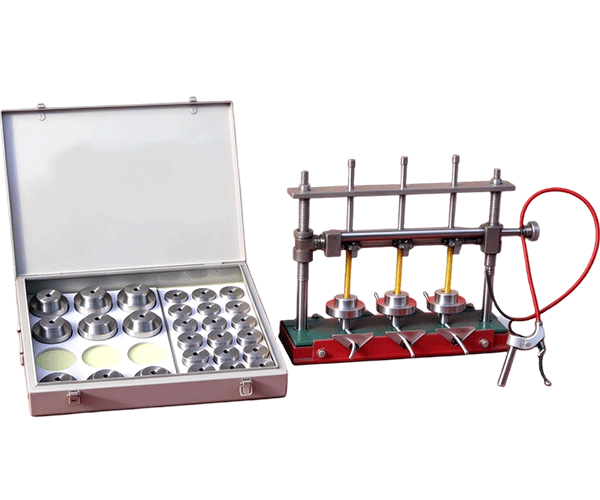
Comparison of Common Low-Temperature Impact Test Methods
The term “low-temperature impact testing” can refer to several different procedures. The table below compares three recognized references relevant to cable materials, rubber, plastics, and elastomers. It is intended to help customers identify a starting point for equipment selection, not to replace the complete standard documents.
| Standard reference | Material or application | Main testing objective | Key selection consideration |
|---|
| IEC 60811-506:2012 | Extruded cable insulation and sheaths | Low-temperature impact testing of cable insulation and sheathing materials | Confirm the cable material, specimen preparation, conditioning conditions, impact arrangement, and evaluation procedure. |
| ISO 812:2017 | Vulcanized or thermoplastic rubber | Determination of low-temperature brittleness under specified impact conditions | Confirm the required procedure and whether the objective is a brittleness temperature, a 50% failure temperature, or testing at a specified temperature. |
| ASTM D746-24 | Plastics and elastomers within the method's scope | Determination of brittleness temperature under specified impact conditions | Review specimen and fixture requirements and verify that the method is suitable for the material and intended application. |
Sources: International Electrotechnical Commission, IEC 60811-506:2012; International Organization for Standardization, ISO 812:2017; ASTM International, ASTM D746-24. The standard descriptions above summarize their scope and are not a substitute for the full standards.
These methods are related, but they are not interchangeable. IEC 60811-506 specifically addresses low-temperature impact testing of extruded cable insulation and sheaths. ISO 812 focuses on low-temperature brittleness in rubber materials, while ASTM D746 addresses brittleness temperature in plastics and elastomers under its defined conditions. A tester must be selected according to the method that applies to the customer's product and testing objective.
4. Application Industries: Where Low-Temperature Impact Testing Is Useful
Low-temperature impact testing can support a range of material development and quality inspection activities. The main purpose is to understand how a specimen behaves when it is exposed to a defined cold condition and then subjected to an impact. The practical value depends on the material and the test method, so we recommend treating each application separately during equipment selection.
Wire and Cable Manufacturing
Wire and cable products often use polymer-based insulation and sheathing materials to provide electrical separation and physical protection. Depending on where the cable will be installed, the material may need to withstand cold conditions during storage, transport, installation, or service. A material's behavior under low-temperature impact can therefore be an important part of a broader quality assessment.
For cable manufacturers, low-temperature impact testing may help identify whether a relevant insulation or sheath specimen shows brittle failure under the specified conditions. The results can support raw material comparison, process monitoring, product development, and investigation of quality problems. The test should be used alongside other required evaluations rather than treated as a complete assessment of cable performance.
When we discuss a cable-testing application, we ask which cable material is involved, whether the specimen is insulation or sheathing, and which standard or customer specification applies. We also need to understand the specimen dimensions, target conditioning temperature, required impact arrangement, and evaluation criteria. This information helps us determine whether the proposed equipment configuration is appropriate.
Plastic Raw Materials and Molded Parts
Plastic components can respond differently to impact as temperature changes. Some grades retain useful flexibility at low temperatures, while others become more prone to cracking under specific conditions. The result depends on factors such as polymer type, formulation, additives, processing history, specimen geometry, and test conditions.
A low-temperature impact testing machine can support material comparison when the selected method is appropriate for the plastic being evaluated. Manufacturers may use the results to investigate a change in raw material, compare different formulations, or study the effect of production conditions. The test is most useful when the same preparation and evaluation procedures are applied consistently.
Not every plastic impact test is a low-temperature brittleness test. A conventional impact strength test, a low-temperature brittleness test, and a heat-related material test may measure different properties. If the customer needs to measure impact energy under a particular geometry, the equipment requirements may differ from those for determining brittleness temperature. We recommend defining the required result before choosing the machine.
Rubber and Elastomer Products
Rubber and elastomer materials are used in seals, protective parts, flexible components, and many other applications. Their behavior at low temperatures can depend on the material formulation and the way the specimen is deformed. In some cases, a test is needed to determine whether a rubber specimen becomes brittle under specified impact conditions.
ISO 812:2017 is a relevant reference for determining low-temperature brittleness in vulcanized or thermoplastic rubber. It describes procedures for determining brittleness temperature, a temperature associated with 50% specimen failure, or behavior at a specified temperature. The appropriate procedure depends on the purpose of the evaluation and the applicable product specification.
We advise rubber manufacturers to confirm whether ISO 812 or another method is required before selecting equipment. The material type, specimen geometry, number of specimens, temperature requirements, and failure criteria should all be reviewed. A test result can help compare materials, but it does not automatically define the lowest safe operating temperature of a finished component.
Electrical Accessories and Electronic Components
Electrical accessories and electronic products may contain plastic housings, insulating supports, cable entry parts, connectors, and other non-metallic components. In applications where products may be exposed to cold weather, material brittleness can be relevant to product development and quality evaluation.
Low-temperature impact testing can provide information about a suitable specimen's response to impact under defined conditions. It does not, by itself, demonstrate the electrical safety or full performance of a finished electrical product. Insulation resistance, dielectric strength, temperature rise, flame behavior, and other properties require their own relevant test methods where applicable.
When customers are developing a test plan for an electrical accessory, we recommend separating material-level tests from finished-product evaluations. This helps the laboratory understand what each result can demonstrate and prevents one test from being used as evidence for a property it was not designed to measure.
Construction Materials and Industrial Products
Some construction components and industrial products include polymeric or rubber parts that may encounter low temperatures during storage or use. Examples can include protective covers, seals, flexible elements, and selected insulating components. The relevance of low-temperature impact testing depends on the material's role and the performance requirement defined for the product.
For these applications, we first need to identify the exact material and the expected failure mode. A material that must remain flexible may need a different evaluation from a rigid plastic part that must resist a specified impact. If the relevant product standard defines a specific test, that method should guide the equipment configuration.
Research, Development, and Quality Inspection Laboratories
Research and quality laboratories often use impact testing to compare materials, investigate unexpected failures, or evaluate a new formulation. A laboratory may test several material grades at different temperatures to understand how their behavior changes. It may also use a fixed temperature to compare production batches against an internal specification.
For useful comparisons, the laboratory needs a clear record of specimen preparation, conditioning temperature, conditioning time, impact conditions, and evaluation criteria. If a test series changes more than one variable at a time, it can become difficult to determine what caused the result. A well-defined test plan makes the information easier to interpret and use.
5. Equipment Customization, Manufacturing, and Quality Control
At Guangzhou Chuangge Automation Equipment Co., Ltd., we develop and customize testing equipment for industrial and laboratory users. We understand that the equipment must fit the intended test procedure, specimen type, and operating environment. For this reason, we treat the technical discussion before production as an important part of the project rather than a formality.
Requirement Review and Technical Communication
Our first step is to understand the customer's testing objective. We review the material type, specimen shape, test method, required temperature conditions, impact arrangement, and result evaluation procedure. If the customer needs to follow a specific standard, we ask for the standard number and applicable edition wherever possible.
We also discuss how the equipment will be used in daily work. A laboratory testing a small number of specimens may have different needs from a production quality department that performs routine checks. Available space, operator access, specimen throughput, power supply, and documentation requirements can all affect the equipment design.
If the customer has an existing test procedure, technical drawing, or product specification, providing it early helps reduce uncertainty. We can then review the main requirements and identify any missing details that must be confirmed before the configuration is finalized.
Configuration and Component Planning
Once the requirements are understood, the equipment configuration can be planned. Depending on the application, this may involve the low-temperature conditioning arrangement, temperature control, specimen fixtures, impact mechanism, supporting accessories, and operating interface. The exact combination depends on the test method and agreed project scope.
For example, cable insulation testing may require a specimen arrangement defined by IEC 60811-506, while a rubber brittleness test may need a setup that follows ISO 812. Although both tests involve low temperatures and impact, their specimen preparation and evaluation procedures are not necessarily the same.
We therefore avoid promising that a single standard configuration automatically meets every possible low-temperature impact requirement. The equipment proposal should identify the intended application and the functions included in the agreed design. Where a requirement is unclear, we recommend resolving it before production rather than relying on assumptions.
Assembly and Functional Inspection
During manufacture, the equipment is assembled according to the approved configuration. Before delivery, each unit undergoes functional inspection and performance verification as agreed for the project. These checks are intended to confirm that the equipment's agreed functions operate as expected.
Functional inspection and performance verification should not be confused with formal calibration or third-party certification. If a customer requires calibration certificates, traceability records, independent verification, or a particular acceptance test, these requirements need to be discussed separately and confirmed in the project scope.
For laboratories using the equipment in formal quality acceptance, we also recommend establishing a suitable verification and maintenance plan. The plan should follow the equipment instructions, the laboratory's quality procedures, and any relevant requirements in the applicable test method.
Documentation and Operator Preparation
Technical documents and operating instructions are provided as agreed. Clear instructions help operators understand the equipment, follow the operating sequence, and avoid unnecessary variation between tests. They should also make it clear which settings are adjustable and which conditions are determined by the selected test method.
Before routine testing starts, we recommend that the laboratory review the instructions, confirm the applicable standard, and train operators in specimen preparation and handling. Particular attention should be paid to timing when specimens must be moved from a low-temperature environment to the impact position within a defined period.
Good documentation is useful when a laboratory needs to investigate an unusual result. If the operator can trace the specimen, test temperature, conditioning time, impact conditions, and observed failure, the team has a stronger basis for deciding whether the result reflects a material issue, a procedural variation, or a possible equipment problem.
Company Background and Technical Capabilities
Guangzhou Chuangge Automation Equipment Co., Ltd. specializes in customized testing equipment and understands the importance of relevant test standards. Our products serve industries that include construction materials and components, wires and cables, plastics and textiles, electrical plugs, sockets and switches, electronic products, and home appliances.
We follow the corporate philosophy of ensuring survival through high technology and driving development through high quality. Our company has obtained ISO 9001 quality management, ISO 14001 environmental management, and ISO 45001 occupational health and safety management system certifications. Our intellectual property portfolio includes more than 20 patents, including invention patents, utility model patents, and software patents.
These certifications describe our management systems, while our patent portfolio reflects our intellectual property activity. They should not be interpreted as automatic product-specific certification for every testing machine. The suitability of a particular Low-Temperature Impact Testing Machine depends on its design, configuration, verification evidence, and intended test procedure.
Factors That Can Affect Low-Temperature Impact Results
Even when the equipment is suitable, test results can vary if specimen preparation or operating conditions are inconsistent. The following table summarizes several practical factors that laboratories should consider when setting up a low-temperature impact test.
| Test factor | Possible effect on results | Practical control measure |
|---|
| Specimen dimensions and preparation | Different thicknesses, surface defects, or sample orientations may affect failure behavior. | Prepare specimens according to the applicable method and record their identification. |
| Conditioning temperature | A difference in specimen temperature can change the response to impact. | Follow the prescribed temperature conditions and confirm how temperature is monitored. |
| Conditioning time | Insufficient or inconsistent conditioning may affect the specimen's actual state during testing. | Use the conditioning period specified by the relevant procedure. |
| Impact arrangement | Striker shape, support geometry, and specimen position can influence how the impact is transferred. | Use the fixture and impact arrangement required by the selected method. |
| Time between conditioning and impact | Uncontrolled warming may change the specimen's temperature before it is struck. | Follow the method's handling and timing requirements. |
| Failure evaluation | Different interpretations of cracks or fractures can make results difficult to compare. | Apply the specified evaluation criteria and document the observations. |
Sources: IEC 60811-506:2012, IEC official standard page; ISO 812:2017, ISO official standard page; ASTM D746-24, ASTM standard information. This table is a practical summary of general testing considerations. The full applicable standard takes priority for specific specimen, conditioning, impact, and evaluation requirements.
6. Why Choose Guangzhou Chuangge for a Low-Temperature Impact Testing Machine?
When purchasing industrial testing equipment, the lowest quoted price is not always the most useful basis for a decision. The equipment needs to support the intended test, the configuration needs to be clearly defined, and the supplier needs to understand the technical requirements. We approach each project with these practical considerations in mind.
We Start With the Test, Not Just the Machine Name
A customer may ask for a low-temperature impact tester, but that name alone does not tell us which material is being tested or what result is required. We want to understand whether the application concerns cable insulation, cable sheathing, plastic brittleness, rubber brittleness, or another material. We then review the test method and the conditions that the equipment must support.
This approach helps customers avoid choosing equipment that can perform a general impact operation but lacks a required fixture or does not match the intended standard. It also makes the quotation process more practical because the proposed configuration is based on the actual testing task.
We Understand the Importance of Standards
Testing standards provide the detailed procedures needed to obtain meaningful and comparable results. They can define specimen geometry, conditioning, impact arrangements, and evaluation criteria. We encourage customers to identify the required standard before the equipment is ordered and to check that the selected method applies to the material and product in question.
Where a customer needs to meet a specific requirement, we review that requirement during technical communication. We also encourage customers to confirm the applicable edition directly with the standards organization or through their own quality department. A machine's general description should never be treated as proof that it meets every clause of a particular standard.
Customization for Real Laboratory Needs
We understand that customers may have different specimen sizes, test volumes, and operating environments. A customized configuration may be appropriate where a particular fixture, control function, sample arrangement, or accessory is needed. We review these requests according to technical feasibility and the selected test procedure.
Before the order is confirmed, we recommend recording the main requirements in a technical specification. This can include the material, test standard, target temperature, specimen dimensions, impact arrangement, required observations, control functions, and documentation. A clear specification gives both the customer and the manufacturer a shared reference for production and pre-delivery checks.
Defined Production and Delivery Arrangements
Our typical production cycle for customized testing equipment is approximately 30 to 60 days, depending on the equipment specifications and customization requirements. The final schedule should be confirmed after the technical scope has been reviewed. Special fixtures, non-standard functions, or additional documentation may affect the delivery plan.
Before shipment, each unit undergoes functional inspection and performance verification as agreed. We provide technical documents and operating instructions according to the project requirements. This helps customers prepare for equipment receipt, operator training, and integration into their laboratory workflow.
Payment terms are negotiable according to order requirements. Shipment can be arranged by sea, air, or land, depending on the destination, equipment dimensions, schedule, and customer preference. Protective materials and sturdy wooden cases can be used as appropriate to help protect the equipment during transportation.
| Project item | Typical arrangement | Details to confirm |
|---|
| Production cycle | Approximately 30–60 days | Final lead time after configuration approval |
| Pre-delivery checks | Functional inspection and performance verification | Agreed functions and project acceptance requirements |
| Technical documents | Provided as agreed | Required document list, language, and format |
| Payment terms | Negotiable according to the order | Payment schedule and contractual conditions |
| Transportation | Sea, air, or land | Destination, delivery terms, schedule, and shipping documents |
| Packaging | Protective materials and wooden cases as appropriate | Equipment size, protection needs, and handling requirements |
Source: Guangzhou Chuangge Automation Equipment Co., Ltd.'s supplied company and product information. These are typical planning arrangements rather than guaranteed terms for every order. The quotation and contract should specify the actual production schedule, inspection scope, payment terms, packaging, and delivery conditions.
7. Frequently Asked Questions About Low-Temperature Impact Testing
Q1: What is a Low-Temperature Impact Testing Machine used for?
A Low-Temperature Impact Testing Machine is used to evaluate the response of suitable material specimens to impact under defined low-temperature conditions. Depending on the selected method, the result may indicate whether a specimen fractures, cracks, or meets a specified failure criterion. The equipment can support material comparison, product development, laboratory research, and quality control.
Q2: Which materials can be tested?
Potential applications include suitable cable insulation and sheathing materials, plastics, rubber, elastomers, and other materials covered by an appropriate test method. The actual range depends on the equipment configuration, specimen requirements, and testing procedure. Before selecting the machine, customers should confirm the material type and the property they want to evaluate.
Q3: Can this machine test wire and cable insulation?
It may be suitable for low-temperature impact testing of relevant cable insulation and sheaths when the configuration supports the required procedure. IEC 60811-506:2012 is an important reference for this application. The customer should confirm the applicable cable specification, specimen preparation, conditioning requirements, impact arrangement, and evaluation procedure before ordering.
Q4: Is low-temperature impact testing the same as a standard impact strength test?
Not necessarily. Different impact methods may use different specimen shapes, fixtures, loading arrangements, and result calculations. A low-temperature brittleness test evaluates failure behavior under specified cold conditions, while other impact tests may measure impact energy or another mechanical property. The correct machine depends on the required test method and result.
Q5: What is the difference between low-temperature impact testing and low-temperature brittleness testing?
The terms can overlap, but they should be interpreted according to the relevant standard. A low-temperature impact test may evaluate the response of cable insulation or sheaths under specified conditions. A brittleness test may determine the temperature at which a defined proportion of specimens fail. ISO 812 and ASTM D746 describe brittleness-related methods, while IEC 60811-506 covers low-temperature impact testing of extruded cable insulation and sheaths.
Q6: Does the test result tell us the lowest temperature at which a product can be used?
Not by itself. A test result applies to the specimen and conditions defined by the method. Actual product performance can also depend on design, installation, mechanical stress, temperature cycling, aging, moisture, and other environmental factors. ISO 812 and ASTM D746 both caution that brittleness test temperatures do not necessarily represent the lowest service temperature of a material or product.
Q7: Which technical information should I provide when requesting a quotation?
Please provide the material type, specimen dimensions, test objective, applicable standard or internal procedure, required conditioning temperature, impact arrangement, and evaluation criteria. It is also useful to describe the expected testing frequency, number of specimens, laboratory environment, preferred control functions, and documentation needs. If some details are not yet known, we can begin with the available information and identify what needs to be clarified.
Q8: Can the equipment be customized for a specific test standard?
We can review customization requirements according to the intended standard and the technical feasibility of the project. This may involve specimen fixtures, the conditioning arrangement, control functions, or accessories. However, a claim that equipment complies with a specific standard must be supported by the actual design and verification evidence. The applicable standard and edition should be identified before the final configuration is confirmed.
Q9: What quality checks are carried out before delivery?
Each unit undergoes functional inspection and performance verification as agreed for the project. Technical documents and operating instructions are provided according to the order requirements. If the customer needs formal calibration, traceability records, third-party verification, or additional acceptance testing, those items should be discussed separately and included in the agreed project scope where feasible.
Q10: How long does production usually take?
The typical production cycle for our customized testing equipment is approximately 30 to 60 days. The actual lead time depends on the equipment specifications, customization requirements, component needs, and project approval process. We recommend confirming the schedule in the quotation or contract after the technical configuration has been agreed.
Q11: How is the equipment packaged and shipped?
We can arrange shipment by sea, air, or land depending on the destination and delivery requirements. Protective materials and sturdy wooden cases can be used as appropriate to reduce the risk of damage during handling and transport. The packaging and shipping plan should be confirmed according to the equipment dimensions, weight, sensitive components, and destination requirements.
Q12: What should a laboratory do before starting routine tests?
The laboratory should review the equipment instructions and the relevant test standard, prepare specimens consistently, and establish a clear procedure for conditioning, handling, impact testing, and result evaluation. Operators should understand the required timing and how the result must be recorded. If the results will be used for formal product acceptance, the laboratory should also follow its internal quality procedures and any additional requirements specified by the customer or applicable standard.
Request a Low-Temperature Impact Testing Solution for Your Application
Choosing the right Low-Temperature Impact Testing Machine for Material Impact Resistance starts with identifying the material and the test procedure. Temperature conditioning, specimen preparation, impact arrangement, and failure evaluation all influence the usefulness of the final result. A machine should therefore be selected according to the testing objective rather than a general product description alone.
At Guangzhou Chuangge Automation Equipment Co., Ltd., we provide customized testing equipment for industrial and laboratory applications. We work with customers to review their technical requirements, discuss a suitable equipment configuration, and confirm the agreed inspection and documentation arrangements before delivery. Our aim is to provide practical testing solutions that fit the customer's actual workflow.
If you are looking for a low-temperature impact tester for cable insulation, a plastics brittleness testing machine, or equipment for low-temperature impact evaluation of rubber and other suitable materials, please share your test standard, specimen information, and key technical requirements with us. We can then discuss the configuration, customization scope, production schedule, and delivery arrangements for your project.
Contact Guangzhou Chuangge Automation Equipment Co., Ltd. to discuss your low-temperature impact testing requirements.


