What Is a Single Burning Item (SBI) Test and Why Is It Important?
1. What Is a Single Burning Item (SBI) Test?
A Single Burning Item (SBI) test is a standardized fire test used to evaluate the reaction-to-fire performance of construction products. It is commonly associated with EN 13823 and is designed to assess how a building product behaves when exposed to a controlled fire source.
The Single Burning Item (SBI) test is particularly important for construction materials used in walls, ceilings, insulation systems, and other building applications. It helps laboratories and manufacturers understand how a product contributes to fire development, heat release, and smoke production.
Unlike Fire Resistance Testing, which evaluates how long a building component can maintain specified functions under fire exposure, the SBI Test focuses on the reaction-to-fire characteristics of a product. It examines how the tested material responds when exposed to a defined burning item in a controlled test environment.
During an SBI test, the specimen is mounted in a specific configuration, generally forming a corner arrangement. A controlled burner is positioned near the bottom of the specimen to simulate a localized fire exposure. The test equipment measures important parameters such as heat release and smoke production while the specimen is exposed to the burner.
The results help determine the reaction-to-fire performance of construction products according to the applicable evaluation and classification requirements.
At Guangzhou Chuangge Automation Equipment Co., Ltd., we focus on customized testing equipment for building materials and industrial applications. Our testing equipment solutions are designed around specific laboratory requirements, test procedures, specimen configurations, and measurement needs.
2. Why Is the Single Burning Item (SBI) Test Important?
Fire safety is a major consideration in building design and construction. When a fire starts, the reaction of construction materials can influence how quickly the fire develops and how much heat and smoke are produced.
The Single Burning Item (SBI) test provides a standardized way to evaluate these characteristics. It gives manufacturers, laboratories, and construction professionals useful information about the fire behavior of building products.
2.1 Evaluating Reaction-to-Fire Performance
Different construction products react differently when exposed to fire. Some materials may ignite quickly, release heat rapidly, or produce significant quantities of smoke. Other materials may show different combustion behavior under the same test conditions.
The SBI test evaluates several aspects of this behavior under a controlled exposure. It provides measurable information that can be used to compare the reaction-to-fire performance of tested products when the test conditions and specimen configurations are comparable.
2.2 Supporting Building Material Classification
The results of the Single Burning Item Test can contribute to the reaction-to-fire classification of construction products under the applicable classification framework.
In European construction product assessment, EN 13823 SBI test results are used together with other required test results and classification rules under EN 13501-1.
The SBI test is therefore an important part of the assessment process for many construction products. However, an SBI result alone does not automatically establish every aspect of a product's fire classification. The applicable classification requirements must be considered as a whole.
2.3 Understanding Heat Release
Heat release is one of the key factors evaluated during an SBI test.
When a material burns, it releases heat into the surrounding environment. The amount and rate of heat release can influence fire growth and the development of a fire within a building.
The SBI test measures heat release-related parameters, helping laboratories assess how the tested product contributes to fire development under the specified test conditions.
2.4 Evaluating Smoke Production
Smoke can reduce visibility and make evacuation more difficult during a fire. Its production is therefore an important consideration in building fire safety.
The Single Burning Item test measures smoke-related parameters during the test. These measurements help characterize the smoke production behavior of the tested construction product.
2.5 Supporting Product Development and Quality Control
For construction material manufacturers, SBI testing can provide useful feedback during product development.
Manufacturers may use test results to compare material formulations, review product structures, and evaluate changes in manufacturing processes. Testing can also support quality control and technical documentation.
For laboratories, a suitable SBI Test Apparatus provides a controlled testing environment for collecting data and evaluating product performance according to the applicable procedures.
3. How Does the Single Burning Item Test Work?
The Single Burning Item test uses a defined specimen arrangement and a controlled burner to evaluate the reaction-to-fire behavior of construction products.
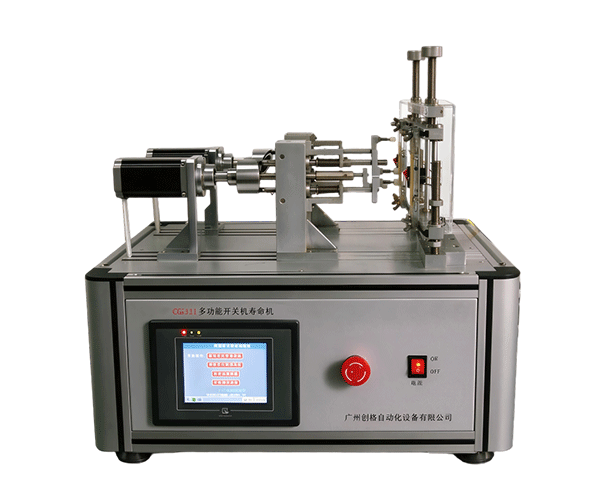
The test is conducted in a dedicated SBI testing system, which generally includes a test frame, burner, exhaust collection system, measurement instruments, and data acquisition equipment.
3.1 Specimen Configuration
One of the distinctive features of the SBI test is its specimen arrangement.
The test specimens are mounted vertically to form an internal corner. This arrangement represents a typical corner configuration in a building and allows the test to evaluate how the product behaves when exposed to a localized fire source.
Specimen dimensions, mounting details, joints, backing materials, and other construction features must follow the applicable test requirements.
Correct specimen preparation is essential because differences in installation or construction may influence flame spread, heat release, and smoke production.
3.2 Burner Exposure
The SBI test uses a controlled burner positioned near the bottom of the specimen arrangement.
The burner acts as the defined ignition source and exposes the specimen to a controlled fire. The test equipment operates according to the prescribed conditions of the applicable standard.
As the specimen is exposed to the burner, the material may ignite, release heat, produce smoke, or show flame spread along its surface.
The test system collects the required data throughout the exposure period.
Heat release measurement is a central part of the SBI test.
The test system uses an exhaust measurement arrangement to evaluate the heat released by the burning specimen. The recorded data is processed to determine relevant performance parameters.
These measurements help identify the rate and total amount of heat released during the test period.
3.4 Smoke Measurement
Smoke produced during the SBI test is carried through the exhaust collection system.
The test equipment measures relevant smoke-related parameters using the specified measurement arrangement. The resulting data is used to evaluate smoke production behavior.
The combination of heat release and smoke measurements provides a more complete understanding of the specimen's reaction to fire.
3.5 Data Recording and Evaluation
During the test, the SBI testing system records relevant measurements and observations.
The data is then processed according to the applicable test and evaluation procedures. Parameters such as FIGRA, THR, SMOGRA, and total smoke production may be used in the assessment.
The final interpretation depends on the applicable classification rules and any additional test results required for the product.
4. Key Parameters Measured in an SBI Test
Understanding the main SBI test parameters is important for laboratories, manufacturers, and users of SBI Testing Equipment.
Several measurements are commonly associated with EN 13823 testing.
4.1 FIGRA: Fire Growth Rate Index
FIGRA stands for Fire Growth Rate Index.
It is a parameter used to characterize the rate of fire growth based on heat release information obtained during the SBI test.
The FIGRA value helps describe how quickly the fire development associated with the tested specimen increases under the specified test conditions.
A lower FIGRA value generally indicates a lower measured fire growth rate in the context of the test. However, the interpretation of FIGRA must follow the applicable classification rules rather than being treated as an independent overall safety rating.
For laboratories, accurate heat release measurement and reliable data processing are essential for determining FIGRA.
4.2 THR: Total Heat Release
THR stands for Total Heat Release.
It represents the accumulated heat released over a defined period during the SBI test.
THR provides information about the total heat contribution of the tested specimen within the specified evaluation period. In EN 13823 testing, the evaluation includes a defined time window, commonly expressed as THR over the first 600 seconds of burner exposure.
This parameter helps laboratories assess the overall heat release behavior of the product during the test.
4.3 SMOGRA: Smoke Growth Rate Index
SMOGRA stands for Smoke Growth Rate Index.
It is used to characterize the rate at which smoke production increases during the SBI test.
Smoke growth is important because a rapidly increasing amount of smoke may affect visibility and evacuation conditions during a fire.
The SMOGRA value is calculated from the measured smoke production data according to the relevant evaluation procedure.
4.4 TSP: Total Smoke Production
TSP stands for Total Smoke Production.
It describes the accumulated smoke production over a defined period.
In SBI testing, TSP over a specified evaluation period, commonly TSP over the first 600 seconds, is an important smoke-related measurement.
Together, SMOGRA and TSP provide information about both the rate and accumulated amount of smoke produced during the test.
4.5 Lateral Flame Spread
Lateral flame spread is another important observation in the SBI test.
It relates to the spread of flames across the specimen surface beyond the initial burner exposure area.
The extent and timing of flame spread can contribute to the evaluation of reaction-to-fire behavior under the applicable test and classification procedures.
4.6 Flaming Droplets and Particles
Some construction products may produce flaming droplets or particles when exposed to fire.
The behavior of these droplets or particles is relevant because they may contribute to fire spread beyond the original burning area.
Where required, the test observations are recorded and evaluated according to the applicable classification criteria.
5. What Equipment Is Used for SBI Testing?
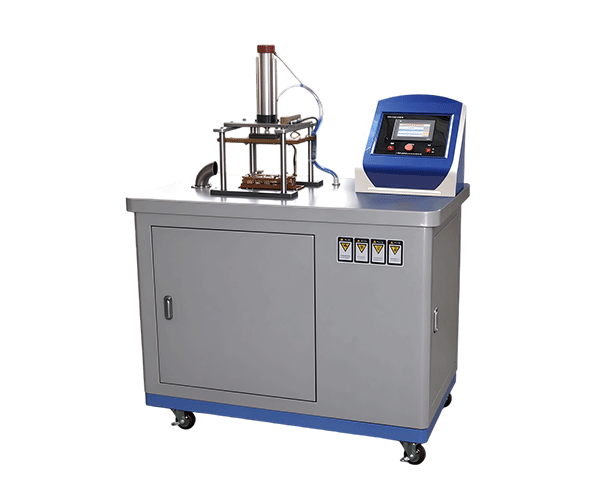
A Single Burning Item test requires a dedicated testing system designed to provide controlled burner exposure and collect the necessary measurement data.
A typical SBI Test Apparatus includes several main components.
5.1 SBI Test Frame
The test frame supports the specimen in the required corner configuration.
It must accommodate the specified specimen arrangement and provide a stable mounting structure throughout the test.
The frame design should allow correct specimen installation and provide the required space for the burner and measurement arrangements.
5.2 Burner System
The burner provides the controlled ignition source for the test.
Its configuration and operating conditions must meet the applicable standard requirements. The burner should be installed in the correct position relative to the specimen.
The burner system is one of the key components affecting the consistency of the SBI test.
5.3 Exhaust Collection System
The exhaust collection system gathers the combustion products generated during testing.
It is used to collect the gases and smoke required for measurement and analysis.
The exhaust arrangement needs to be suitable for the test configuration and measurement requirements.
5.4 Heat Release Measurement System
The heat release measurement system collects the data required to evaluate heat release-related parameters.
It works with the exhaust measurement arrangement to determine the heat release behavior of the specimen.
Reliable measurement and data processing are important for obtaining meaningful FIGRA and THR results.
5.5 Smoke Measurement System
The smoke measurement system evaluates smoke production during the test.
It provides the data used to calculate smoke-related parameters such as SMOGRA and TSP.
The measurement arrangement must be suitable for the applicable test procedure.
5.6 Data Acquisition and Control System
The data acquisition system records measurements from the different parts of the SBI testing equipment.
Depending on the configuration, it may collect burner-related information, heat release data, smoke measurements, and other test parameters.
A suitable control and recording system helps operators monitor the test process and review the collected data.
6. Single Burning Item Test Procedure: Step by Step
The SBI test procedure requires careful preparation and consistent operation. A typical workflow includes the following stages.
Step 1: Confirm the Applicable Standard
Before testing, the laboratory should confirm that EN 13823 is the correct test method for the construction product.
The laboratory should also review the applicable product requirements and classification rules.
This step helps ensure that the test specimen, equipment, and evaluation criteria are appropriate.
Step 2: Prepare the Specimens
The specimens must be prepared according to the specified dimensions and construction requirements.
The laboratory should check material composition, thickness, joints, mounting details, and any required backing or supporting materials.
Preparation should be consistent with the product configuration being evaluated.
Step 3: Install the Specimens
The specimens are mounted in the SBI test frame to form the required corner arrangement.
The installation must follow the test procedure. The laboratory should check that the specimens are correctly positioned and secured before the test begins.
Step 4: Inspect the SBI Testing Equipment
Before burner operation, the laboratory should check the burner system, exhaust collection system, measurement instruments, and data acquisition equipment.
The required calibration and operational checks should be completed according to laboratory procedures and the applicable standard.
Step 5: Start the Burner
The controlled burner is operated according to the prescribed test conditions.
The specimen is exposed to the defined fire source, and the testing system begins collecting the required measurement data.
Step 6: Monitor Heat Release and Smoke Production
Throughout the test, the SBI testing equipment records heat release and smoke-related information.
Operators should also observe the specimen's behavior, including flame spread and any relevant physical changes.
Step 7: Process and Evaluate the Results
After the test, the recorded data is processed according to the applicable procedures.
The laboratory evaluates parameters such as FIGRA, THR, SMOGRA, and TSP, together with other required observations.
The test report should document the specimen, test conditions, measurement results, and relevant observations.
7. Which Construction Products Need SBI Testing?
The Single Burning Item test is relevant to many construction products that require reaction-to-fire assessment.
The exact applicability depends on product type, intended use, regulatory requirements, and the relevant classification framework.
7.1 Wall and Ceiling Products
Wall and ceiling products may require SBI testing to evaluate their reaction-to-fire performance.
Examples can include certain wall panels, decorative boards, ceiling panels, and interior lining products.
The test helps assess heat release, smoke production, and other relevant fire behavior under the specified conditions.
7.2 Thermal Insulation Products
Some thermal insulation products are assessed using SBI testing as part of their reaction-to-fire evaluation.
Their behavior can vary depending on material composition, density, surface treatment, facing materials, and installation configuration.
The correct specimen preparation and mounting arrangement are important when evaluating these products.
7.3 Composite Building Panels
Composite panels may contain several material layers with different thermal and combustion properties.
SBI testing can help evaluate the reaction-to-fire performance of the complete product configuration.
The tested specimen should represent the construction arrangement required by the applicable test method.
7.4 Interior Building Materials
Interior construction products may also require reaction-to-fire assessment depending on their intended application.
SBI testing can provide useful information about heat release and smoke production, helping manufacturers and laboratories evaluate product behavior.
Not every construction product is automatically required to undergo an SBI test. The applicable testing route should be confirmed according to the relevant product requirements and regulatory framework.
8. SBI Testing and EN 13501-1 Fire Classification
EN 13823 defines the Single Burning Item test method, while EN 13501-1 provides the reaction-to-fire classification framework for construction products and building elements.
The results of the SBI test can contribute to the classification process.
Depending on the product and classification route, other test results may also be required. For example, reaction-to-fire classification may involve additional tests for ignitability or other fire behavior characteristics.
The classification system considers different performance aspects, including heat release, smoke production, and flaming droplets or particles where applicable.
It is important to understand that the SBI test result is not the same as a complete product classification. Laboratories and manufacturers should review the applicable classification rules and ensure that all required test evidence is available.
A correct interpretation of the results helps avoid confusion between individual SBI measurements and the final reaction-to-fire classification.
9. How to Choose the Right SBI Testing Equipment
Selecting suitable SBI testing equipment requires attention to the complete testing process rather than only the burner or test frame.
First, confirm the applicable test standard and product requirements. The equipment should be configured to support the relevant test procedure.
Second, review the specimen dimensions and mounting requirements. The test frame must accommodate the required corner arrangement and specimen configuration.
Third, evaluate the burner system. Its design and operating conditions must be suitable for the specified test method.
Fourth, check the exhaust collection and measurement systems. Heat release and smoke measurement are essential for obtaining the data required by the SBI test.
Fifth, consider the data acquisition and control system. The laboratory should identify the measurement channels, recording functions, and data processing requirements.
Finally, review laboratory installation conditions, including available space, ventilation, exhaust arrangements, utilities, operator access, and safety provisions.
At Guangzhou Chuangge Automation Equipment Co., Ltd., we provide customized testing equipment solutions for different industrial and building-material applications. We work with customers to understand their testing objectives, specimen requirements, and laboratory conditions before confirming an equipment configuration.
10. Common Mistakes to Avoid in SBI Testing
Several common mistakes can affect the quality and interpretation of SBI test results.
One mistake is using an incorrect specimen configuration. Since the SBI test relies on a defined corner arrangement, specimen dimensions and installation details must be carefully checked.
Another mistake is overlooking the exhaust measurement system. Reliable heat release and smoke data depend on a suitable and properly maintained measurement arrangement.
Incorrect burner positioning or operating conditions may also affect the test process. The burner should be installed and operated according to the applicable procedure.
Laboratories should also avoid interpreting FIGRA, THR, SMOGRA, or TSP values in isolation. These parameters have specific meanings and must be evaluated according to the relevant standard and classification rules.
Finally, test reports should include sufficient information about the specimen, installation, test conditions, and measurements. Clear documentation supports accurate review and comparison.
11. Frequently Asked Questions About the Single Burning Item Test
Q1: What does SBI stand for in fire testing?
SBI stands for Single Burning Item. The SBI test evaluates the reaction-to-fire performance of construction products when exposed to a controlled burner under the EN 13823 test method.
Q2: What is the purpose of the EN 13823 SBI test?
EN 13823 provides a standardized method for evaluating the reaction-to-fire behavior of construction products. It measures parameters related to heat release and smoke production and includes relevant observations of specimen behavior.
Q3: What is the difference between SBI testing and Fire Resistance Testing?
SBI testing evaluates how a construction product reacts to fire, including heat release and smoke production. Fire resistance testing evaluates how a building component maintains specified functions, such as load-bearing capacity, integrity, and insulation, during fire exposure.
FIGRA is the Fire Growth Rate Index, which characterizes the rate of fire growth based on heat release data. THR is Total Heat Release, which represents accumulated heat release over a defined evaluation period.
Q5: What do SMOGRA and TSP mean?
SMOGRA is the Smoke Growth Rate Index, used to characterize the rate of smoke production. TSP is Total Smoke Production, representing accumulated smoke production over a defined period.
Q6: Does an SBI test alone determine the final fire classification?
Not necessarily. SBI results are used within the applicable reaction-to-fire classification framework. Additional test results and classification requirements may apply depending on the product type and intended use.
Q7: Can SBI testing equipment be customized?
Equipment configuration can be discussed according to specimen requirements, laboratory conditions, measurement needs, and the applicable test procedure. The final configuration should be confirmed against the required standard.
The Single Burning Item (SBI) test is an important method for evaluating the reaction-to-fire performance of construction products. Through controlled burner exposure, heat release measurement, smoke analysis, and specimen observation, the SBI test provides useful information about how building materials behave during fire exposure.
Parameters such as FIGRA, THR, SMOGRA, and TSP help laboratories understand different aspects of fire growth and smoke production. When interpreted according to the applicable standards and classification rules, these results can support product evaluation and reaction-to-fire classification.
For manufacturers and testing laboratories, selecting suitable SBI testing equipment is essential. A properly configured SBI test apparatus should support the required specimen arrangement, burner operation, exhaust collection, measurement, and data acquisition.
Guangzhou Chuangge Automation Equipment Co., Ltd. provides customized testing equipment solutions for building materials and industrial applications. We focus on understanding each customer's testing requirements and laboratory conditions to help develop suitable equipment configurations for their applications. If you are planning an SBI testing project, contact our team to discuss your specimen requirements and testing equipment needs.


Comment
(0)