How Are Fire Resistance Ratings Determined for Building Components?
1. Understanding Fire Resistance Ratings
Fire resistance ratings are an important part of building fire safety. They indicate how long a building component can maintain specified functions when exposed to fire under standardized test conditions. These ratings help architects, engineers, contractors, manufacturers, and building inspectors understand how different construction elements may perform during a fire.
Fire resistance ratings are generally expressed in units of time, such as 30 minutes, 60 minutes, 90 minutes, or 120 minutes. However, a fire resistance rating does not simply mean that a component will remain completely unaffected by fire for that period. Instead, it represents the time during which the tested specimen satisfies the relevant performance criteria defined by the applicable test standard.
The exact meaning of a fire resistance rating depends on the type of building component and the testing method. A load-bearing wall, for example, may need to demonstrate its ability to maintain structural capacity under fire exposure. A non-loadbearing partition may be evaluated mainly for integrity and insulation. A fire door assembly may have its own specific test requirements, including the way the door, frame, seals, and supporting construction are installed.
For manufacturers and testing laboratories, understanding how fire resistance ratings are determined is essential. It helps ensure that the correct testing equipment, specimen dimensions, installation methods, and measurement systems are selected before a test begins.
At Guangzhou Chuangge Automation Equipment Co., Ltd., we focus on customized testing equipment for industrial and building-material applications. A properly configured fire resistance Test Furnace provides a controlled environment for evaluating the fire performance of building components and collecting the data required during testing.
2. What Do Fire Resistance Ratings Measure?
Fire resistance ratings are determined by evaluating one or more performance criteria. The criteria depend on the component's intended function and the requirements of the relevant standard.
Three commonly used performance criteria are load-bearing capacity, integrity, and insulation.
2.1 Load-Bearing Capacity
Load-bearing capacity refers to a building component's ability to continue supporting an applied load during fire exposure without exceeding the failure conditions specified by the test method.
This criterion is particularly important for structural elements such as load-bearing walls, columns, beams, and floors. During a Fire Resistance Test, the specimen may be subjected to a predetermined mechanical load while the furnace temperature increases according to the required heating conditions.
The test system monitors relevant structural behavior, which may include deformation, deflection, or other measurements specified by the applicable procedure.
If the specimen can no longer maintain the required load-bearing function, it may reach the failure condition for this criterion. The time recorded at that point contributes to the assessment of its fire resistance performance.
2.2 Integrity
Integrity describes a building component's ability to prevent flames and hot gases from passing through to the unexposed side under the conditions defined by the test standard.
This criterion is important for walls, partitions, floors, doors, and other separating elements designed to restrict the spread of fire between different areas of a building.
During Fire Resistance Testing, the unexposed side of the specimen is observed and assessed using the specified procedures. Depending on the test method, evaluation may involve observations of sustained flaming, openings, cracks, or the passage of hot gases.
The purpose is to determine whether the tested building component continues to act as a barrier against fire penetration.
2.3 Insulation
Insulation refers to the ability of a building component to limit temperature increases on its unexposed surface during fire exposure.
Even when flames do not pass through a wall or floor, heat transfer can still create dangerous conditions on the opposite side. Excessive temperature increases may ignite nearby materials or create risks for occupants and emergency personnel.
During testing, temperature sensors are positioned at specified locations on the unexposed surface. The measured temperatures are compared with the limits and evaluation procedures established by the applicable standard.
A specimen that maintains the required temperature performance for the specified period can satisfy the insulation criterion.
Not every fire resistance test evaluates all three criteria. The applicable criteria must be identified according to the component's function and the test standard.
3. How Fire Resistance Testing Is Conducted
Fire resistance ratings are not assigned simply by exposing a material to an open flame. They are determined through controlled testing procedures that specify the furnace conditions, specimen preparation, measurement arrangements, and evaluation requirements.
A typical fire resistance test involves several important stages.
3.1 Selecting the Applicable Test Standard
Before testing begins, the laboratory must identify the standard that applies to the building component.
Different standards cover different construction products and test arrangements. General fire resistance test methods establish requirements for furnace exposure, temperature measurement, pressure conditions, and performance evaluation. Separate standards may provide more specific procedures for walls, floors, structural elements, doors, and other assemblies.
For example, EN 1363-1 provides general requirements for fire resistance testing. Other standards in the relevant EN 1364 and EN 1365 series address particular types of building elements. Fire door and closure assemblies may require a different testing approach.
The selection of the test standard is important because it determines how the specimen should be prepared, how the furnace should operate, which measurements are required, and how the results should be evaluated.
A fire resistance rating obtained under one test method should not automatically be treated as equivalent to a rating obtained under another method. Test conditions, specimen configurations, and classification rules may differ.
3.2 Preparing the Test Specimen
Specimen preparation has a direct influence on fire resistance testing results.
The laboratory needs to confirm the specimen's dimensions, materials, construction details, joints, fixings, surface treatments, and supporting arrangements. These details should reflect the configuration required by the test method.
For a wall assembly, preparation may involve the installation of panels, insulation layers, framing members, joints, and connections. For a floor assembly, the specimen may include structural layers and supporting components. A fire door assembly may require the correct door leaf, frame, hardware, seals, and mounting arrangement.
The specimen must be installed correctly in the test opening. Poor installation, unsuitable support, or incorrect joint treatment may affect the test outcome.
Before the furnace is operated, the laboratory should check the specimen dimensions, installation quality, sensor positions, and other relevant test conditions.
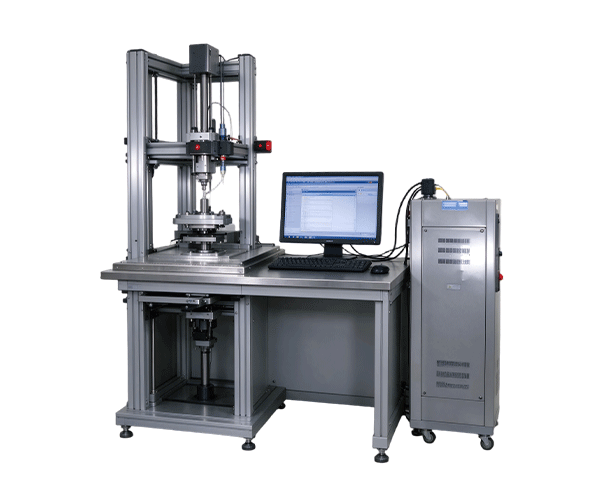
The fire resistance test furnace is the main equipment used to expose a building component to controlled high-temperature conditions.
The furnace configuration depends on the type and size of the specimen. Different testing applications may require different furnace arrangements, support structures, mounting frames, and measurement systems.
During installation, the specimen must be positioned and secured according to the applicable test procedure. The arrangement should ensure that the required surfaces are exposed to the furnace environment while the unexposed side remains available for observation and measurement.
A suitable fire resistance test furnace should be configured around the intended testing application. Specimen dimensions, furnace opening size, heating requirements, temperature measurement, and laboratory conditions all need to be considered.
3.4 Applying the Required Heating Conditions
Once the specimen is installed and the test system has been checked, the furnace begins heating according to the specified temperature-time conditions.
Many standard fire resistance tests use a prescribed heating curve. This provides a controlled reference for the temperature development inside the furnace.
The furnace temperature is monitored using the measurement arrangement required by the relevant standard. The control system may adjust the heating process to maintain the required conditions within the permitted tolerances.
It is important to distinguish between furnace temperature and the temperature of the specimen. The furnace temperature represents the heating environment, while measurements on the specimen and its unexposed surface help evaluate the component's response to fire exposure.
Stable and properly monitored furnace conditions are essential for meaningful fire resistance testing results.
3.5 Monitoring Performance During the Test
During fire exposure, the laboratory collects temperature data and monitors the specimen's behavior.
Depending on the test method, the measurement system may include furnace thermocouples, unexposed-surface temperature sensors, displacement measurement devices, pressure measurement equipment, and other instruments.
For load-bearing specimens, mechanical behavior may also be monitored under the specified loading conditions.
The operator records relevant observations and test data throughout the procedure. Any signs of failure must be evaluated according to the criteria established by the applicable standard.
This stage is particularly important because the final fire resistance rating depends on the time at which the specimen reaches the relevant failure condition, not simply the total time that the furnace remains heated.
4. The Role of a Fire Resistance Test Furnace
A fire resistance test furnace provides the controlled heating environment needed to evaluate building components under standardized conditions.
The furnace is not simply a high-temperature chamber. It is part of an integrated testing system that may include heating equipment, temperature monitoring, control software, specimen support structures, measurement instruments, and safety arrangements.
4.1 Heating System
The heating system is responsible for producing the required furnace conditions.
Its configuration should be suitable for the intended test application, furnace dimensions, specimen type, and applicable testing procedure. Heating capacity and distribution are important considerations because the test environment needs to meet the requirements of the selected standard.
4.2 Temperature Measurement and Control
Temperature measurement is essential for determining whether the furnace follows the required heating conditions.
The arrangement and number of temperature sensors depend on the applicable test method. Measurement points must be selected and installed according to the standard rather than placed arbitrarily.
A suitable control system helps the operator monitor furnace conditions and adjust the heating process when necessary. Accurate records also support the review and evaluation of test data.
4.3 Specimen Support and Installation Structure
The specimen support structure must accommodate the type of building component being tested.
Walls, floors, doors, and structural elements can differ significantly in size, weight, geometry, and installation requirements. The support arrangement must therefore be designed or selected according to the intended application.
Correct specimen installation helps ensure that the test reflects the required construction configuration.
4.4 Data Acquisition and Test Records
Data acquisition systems help collect and organize information during fire resistance testing.
Depending on the equipment configuration, the system may record furnace temperatures, surface temperatures, pressure readings, displacement measurements, and other test parameters.
Clear and complete test records make it easier for laboratory personnel to review the test process, identify relevant events, and prepare reports.
The required measurement channels and recording functions should be confirmed during equipment planning.
5. What Factors Affect Fire Resistance Ratings?
Several factors can influence the fire resistance ratings determined through laboratory testing. These factors are related not only to the material itself but also to the complete construction assembly and the testing conditions.
5.1 Material Composition
Different materials react differently when exposed to high temperatures.
Concrete, steel, timber, insulation products, gypsum-based boards, and composite materials have different thermal and mechanical properties. Some materials may lose strength as their temperature increases, while others may shrink, crack, deform, or release combustible gases.
The combination of materials within an assembly can also influence its overall fire performance.
For this reason, fire resistance ratings should be determined using the actual specimen configuration required by the test method rather than relying only on the properties of individual materials.
5.2 Specimen Dimensions and Construction
The dimensions and construction details of a specimen can affect heat transfer, structural behavior, and the development of openings or cracks during testing.
Thickness, density, joints, connections, reinforcement, fixing methods, and supporting structures may all influence the test result.
Even small differences in installation details can become important when they affect the way a building component behaves under fire exposure.
5.3 Furnace Temperature Conditions
The heating conditions inside the fire resistance test furnace are a major part of the test procedure.
If the furnace does not follow the required temperature-time conditions within the permitted tolerances, the validity and interpretation of the test may be affected.
Temperature sensor placement, furnace operation, calibration, and control performance should therefore be checked as part of laboratory quality management.
5.4 Installation and Boundary Conditions
A building component does not perform independently of its supporting structure.
The way a specimen is mounted, restrained, loaded, or connected can influence its deformation and failure behavior. For example, the support arrangement of a wall specimen may affect how it responds to thermal expansion and mechanical stress.
The test installation should follow the applicable standard and accurately document the specimen arrangement.
5.5 Moisture and Initial Specimen Condition
Moisture content and specimen conditioning can influence the thermal response of some construction materials.
The initial condition of the specimen, including storage, conditioning, and preparation, should be managed according to the relevant test procedure.
If the standard specifies conditioning requirements, these should be followed before testing begins.
5.6 Measurement Accuracy and Operator Procedures
The reliability of fire resistance ratings depends on the quality of the measurement system and the consistency of the testing procedure.
Incorrect sensor installation, damaged measurement channels, incomplete records, or inconsistent operating procedures can affect data quality.
Routine equipment inspection, suitable calibration practices, operator training, and documented test procedures help reduce avoidable measurement and operational problems.
After the test is completed, the laboratory reviews the recorded data and identifies when the specimen reaches the applicable failure criteria.
For a load-bearing element, the evaluation may consider whether the specimen maintains its required structural capacity. For a separating element, integrity and insulation may be the main criteria.
The result is interpreted according to the classification system and reporting requirements of the relevant standard or regulatory framework.
For example, a component may be reported as meeting a specified fire resistance period for particular performance criteria. The classification should make clear which functions have been demonstrated and under what test conditions.
A time value alone may not provide enough information. The report should identify the tested specimen, its construction, the test method, the relevant performance criteria, and the observed results.
It is also important to understand the difference between a test result and a general product approval. A laboratory test applies to a specific specimen configuration. Whether the result can be extended to other sizes, materials, installations, or product variations depends on the applicable rules for direct or extended application.
Manufacturers should therefore avoid assuming that a rating achieved by one configuration automatically applies to every version of the same product.
7. Common Applications of Fire Resistance Testing
Fire resistance testing is used across many areas of the construction industry. It supports product development, quality evaluation, technical verification, and the assessment of building component performance.
7.1 Walls and Partitions
Fire resistance testing of walls and partitions helps evaluate their ability to maintain the required separating function during fire exposure.
Depending on their intended use, these components may be assessed for integrity and insulation, while load-bearing wall systems may also require evaluation of structural capacity.
7.2 Floors and Ceilings
Floor and ceiling assemblies can play an important role in restricting fire spread between building levels.
Testing may evaluate structural behavior, integrity, and insulation under the conditions specified by the applicable method.
7.3 Doors and Fire Closures
Fire doors and related closure assemblies are tested as complete systems. Their performance may depend on the door leaf, frame, seals, hardware, installation details, and supporting construction.
The correct test arrangement is essential because the rating relates to the tested assembly and its defined configuration.
7.4 Structural Components
Beams, columns, and other load-bearing components may require fire resistance testing to evaluate their ability to maintain structural function under elevated temperatures.
Mechanical loading and deformation measurements may be important parts of these tests.
7.5 Building Material Manufacturers and Testing Laboratories
Manufacturers use fire resistance testing to evaluate product designs and verify whether construction assemblies meet specified performance requirements.
Independent and in-house laboratories use suitable Fire Resistance Testing Equipment to conduct controlled tests and generate technical data for evaluation.
8. How to Choose the Right Fire Resistance Testing Equipment
Selecting suitable fire resistance testing equipment requires more than comparing furnace dimensions or heating capacity. The equipment must match the actual test application and the relevant standard.
First, identify the building components that need to be tested. Wall, floor, door, and structural component testing may require different furnace configurations and specimen support arrangements.
Second, confirm the specimen dimensions and weight. The furnace opening, mounting frame, and support structure should accommodate the intended specimens.
Third, review the heating and temperature control requirements. The heating system and measurement arrangement should be suitable for the specified test method.
Fourth, consider the required measurement and data acquisition functions. The laboratory should identify which temperature, pressure, displacement, or other measurement channels are needed.
Fifth, evaluate laboratory installation conditions. Furnace placement, ventilation, exhaust arrangements, utilities, operator access, and safety provisions should be considered before equipment installation.
Finally, discuss customization and after-sales support with the equipment manufacturer. A clear technical specification helps reduce misunderstandings during design, production, installation, and commissioning.
At Guangzhou Chuangge Automation Equipment Co., Ltd., we provide customized testing equipment solutions for different industrial and building-material testing requirements. Our approach is to understand the customer's testing objectives, specimen requirements, and laboratory conditions before confirming the equipment configuration.
9. Why Proper Equipment Configuration Matters
Reliable fire resistance ratings depend on a combination of correct test methods, suitable equipment, properly prepared specimens, and consistent operating procedures.
A fire resistance test furnace should be selected according to the actual application rather than based on a general description alone. The furnace structure, heating arrangement, temperature measurement, specimen installation, and data acquisition system should work together to support the required test procedure.
For laboratories planning to introduce new fire resistance testing capabilities, early technical communication is particularly valuable. Confirming specimen dimensions, test standards, performance criteria, measurement requirements, and installation conditions can help establish a practical equipment specification.
For manufacturers, a properly planned testing system can support product development and quality evaluation. It also helps create a more consistent process for collecting and reviewing fire performance data.
The final fire resistance rating must always be determined and reported according to the applicable testing and classification requirements. Equipment configuration supports the testing process, but it does not independently guarantee a particular rating.
10. Frequently Asked Questions About Fire Resistance Ratings
Q1: What does a 60-minute fire resistance rating mean?
A 60-minute fire resistance rating generally means that the tested building component satisfied the specified performance criteria for 60 minutes under the conditions of the relevant test method. It does not mean that the component will remain completely unchanged or provide unlimited protection after that period.
Q2: Are fire resistance ratings the same as reaction-to-fire classifications?
No. Fire resistance testing evaluates how a building component maintains specified functions during fire exposure. Reaction-to-fire testing evaluates how a material or product contributes to fire development, such as ignition, flame spread, heat release, or smoke production. They address different aspects of fire performance.
Q3: Which building components require fire resistance testing?
Depending on local building regulations and project requirements, testing may apply to walls, floors, ceilings, doors, structural elements, and other building assemblies. The required test method depends on the component's function and intended application.
Q4: Why is a fire resistance test furnace necessary?
A fire resistance test furnace provides controlled heating conditions for evaluating building components under a specified test procedure. It works with temperature measurement, specimen support, and other testing systems to help laboratories collect the data needed for performance evaluation.
Q5: Can one fire resistance rating apply to different product sizes?
Not automatically. The applicability of a test result to different dimensions or configurations depends on the relevant standard and its direct or extended application rules. Manufacturers should verify the permitted scope before applying a rating to other product variations.
Q6: What information is needed before purchasing a fire resistance test furnace?
Important information includes the applicable test standards, specimen types, maximum specimen dimensions, loading requirements, heating conditions, measurement channels, laboratory space, and installation conditions. Providing these details helps the manufacturer recommend a suitable equipment configuration.
Fire resistance ratings are determined through standardized testing that evaluates how building components perform under controlled fire exposure. Load-bearing capacity, integrity, and insulation are important performance criteria, although the exact requirements depend on the component and applicable test method.
The accuracy and usefulness of fire resistance testing depend on proper specimen preparation, suitable furnace conditions, reliable measurement systems, and consistent testing procedures. A correctly configured fire resistance test furnace provides the controlled environment needed to conduct these evaluations and record relevant test data.
For building material manufacturers and testing laboratories, choosing suitable fire resistance testing equipment is an important step toward establishing a practical and reliable testing process. Guangzhou Chuangge Automation Equipment Co., Ltd. provides customized testing equipment solutions based on different application requirements, helping customers plan equipment configurations that match their specimens, testing procedures, and laboratory conditions.


Comment
(0)