How Does the Flooring Radiant Panel Test Work Under EN ISO 9239-1?
1. Introduction to the Flooring Radiant Panel Test
Floor coverings are used in homes, offices, hotels, shopping centres, hospitals, schools, and many other buildings. Common products include carpets, textile floor coverings, and certain resilient flooring materials. Besides appearance, durability, and comfort, their reaction to fire is an important factor when evaluating building product safety.
The Flooring Radiant Panel Test is a laboratory method used to evaluate the fire behaviour of applicable floor covering products under controlled radiant heat exposure. It helps determine how a flame spreads across a flooring specimen and identifies the critical radiant flux at the point where flame spread stops under the specified test conditions. Smoke production is also measured as part of the test procedure.
EN ISO 9239-1 is a commonly used standard for determining the reaction to fire of floor coverings using a radiant heat source. The method provides a defined testing arrangement so that flooring materials can be evaluated under consistent conditions.
A Flooring Radiant Panel Test Apparatus is designed to create the required thermal exposure, hold the test specimen in position, provide the ignition source, and support observation and measurement during testing. The resulting data can help flooring manufacturers, laboratories, and quality inspection departments understand and compare the fire behaviour of different products.
This article explains how the Flooring Radiant Panel Test works under EN ISO 9239-1, including its principle, equipment components, specimen preparation, testing procedure, critical radiant flux, smoke measurement, and practical equipment selection considerations.
2. What Is EN ISO 9239-1?
EN ISO 9239-1 is a test method for evaluating the reaction to fire of floor coverings. It uses a radiant heat source to expose a horizontally mounted flooring specimen to a defined heat flux environment.
During the test, the specimen is exposed to radiant heat and an ignition source under controlled conditions. The flame may spread along the surface of the flooring material. The distance travelled by the flame is observed, and the radiant heat flux corresponding to the position where flame spread stops is determined.
This measurement is known as critical radiant flux. It is an important indicator used to evaluate the fire behaviour of floor coverings under the specified test conditions.
The method also includes the measurement of smoke production during the test. This provides additional information about the smoke generated by the tested material.
It is important to understand that EN ISO 9239-1 is a reaction-to-fire test method, not a Fire Resistance Test. It does not measure how long a floor assembly can maintain its structural function during a fully developed fire. Instead, it evaluates specific aspects of a floor covering's response to controlled ignition and radiant heating.
The applicability of the standard depends on the product category, intended use, and relevant regulatory or technical requirements. Laboratories should always check the current edition of the standard and confirm that the selected method is appropriate for the flooring product being tested.
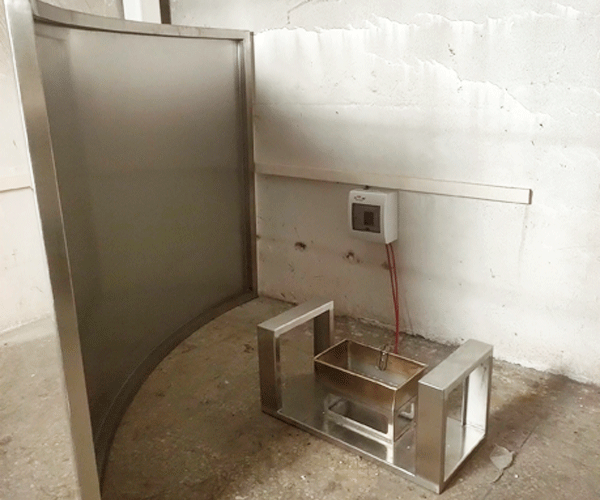
3. Working Principle of the Flooring Radiant Panel Test
The Flooring Radiant Panel Test works by exposing a flooring specimen to a controlled radiant heat environment. The test arrangement creates a heat flux gradient along the specimen, meaning that different positions receive different levels of radiant heat.
The specimen is installed horizontally in the test frame according to the required configuration. A radiant panel is positioned above the specimen at the specified angle. The panel produces radiant heat that is distributed along the exposed surface.
A pilot flame is applied at the designated end of the specimen following the test procedure. If the material ignites, the flame may travel along the flooring surface as the specimen continues to receive radiant heat.
During this process, the operator observes and records the flame front. The position where flame spread stops is used to determine the corresponding critical radiant flux.
The Flooring Radiant Panel Test therefore evaluates the relationship between radiant heat exposure and flame propagation. It does not simply record whether a material can be ignited. It provides information about how far the flame spreads under a defined thermal environment.
The test also collects smoke-related data through the specified measurement arrangement. Together, the flame spread observations, critical radiant flux result, and smoke information provide a more complete picture of the tested flooring material's reaction-to-fire behaviour.
A Flooring Radiant Panel Test Apparatus consists of several coordinated systems. Each component has a specific function in establishing the test conditions and collecting the required information.
4.1 Radiant Heat Panel
The radiant heat panel is the main heating component. It provides the thermal radiation required to expose the flooring specimen.
Its position and operating conditions are important because the radiant heat distribution directly influences flame propagation. The heating system must be capable of establishing the conditions required by the applicable test method.
During equipment selection, laboratories should check the radiant panel structure, heating control, stability, maintenance requirements, and arrangements for verifying the heat flux distribution.
4.2 Specimen Holder and Support Frame
The specimen holder supports the flooring sample in the required horizontal position. It helps maintain the correct relationship between the specimen and the radiant heat source.
The mounting structure should be stable and suitable for the specimen dimensions and construction specified by the test method.
Correct installation matters. A specimen that is positioned incorrectly may receive a different level of radiant heat, which can influence the flame spread behaviour and the resulting data.
4.3 Pilot Burner
The pilot burner provides the ignition source required by the test procedure. It is positioned according to the specified arrangement and used to initiate ignition at the designated area of the specimen.
The burner system should provide stable and repeatable operation. Gas supply, ignition control, flame stability, and safety protection should be checked before testing.
4.4 Test Chamber and Enclosure
The test chamber provides the controlled environment for the radiant panel test. It supports the required arrangement of the radiant panel, specimen holder, and ignition system.
The enclosure also helps manage the flow of combustion products toward the exhaust system. Its dimensions and internal configuration should be consistent with the applicable test method.
4.5 Exhaust and Smoke Measurement System
When flooring materials burn, they may generate smoke and other combustion products. The exhaust system removes these products from the testing area and supports the required smoke measurement arrangement.
The smoke measurement system records information about smoke production during the test. The exact measurement configuration and data processing should follow the relevant standard and equipment design.
Smoke production data should not be confused with smoke toxicity results. Measuring the amount of smoke generated does not, by itself, identify the toxicity of the combustion gases.
4.6 Control and Data Acquisition System
The control system manages the operation of the equipment, while the data acquisition system records relevant testing information.
Depending on the configuration, recorded information may include test duration, temperature, flame spread observations, smoke-related measurements, and other required parameters.
A clear software interface helps operators monitor the test and organize results. It can also support data review and comparison between different flooring specimens.
5. Specimen Preparation Before the Flooring Radiant Panel Test
Specimen preparation is an important part of the Flooring Radiant Panel Test. Even a well-designed test apparatus cannot compensate for incorrect sample preparation.
First, the flooring product should be identified, including its material composition, thickness, surface structure, backing, and construction. These details help determine the appropriate specimen preparation procedure.
The sample is then cut to the dimensions required by the applicable standard. Its edges should be prepared carefully so that the specimen can be installed correctly in the holder.
Conditioning requirements should also be followed. Flooring materials may absorb moisture or respond to changes in temperature and humidity. Conditioning helps establish consistent sample conditions before testing.
For products with multiple layers, the specimen should represent the construction of the flooring product being evaluated. The backing, underlay, adhesive, or other components should be included or prepared as required by the test method.
The laboratory should also record relevant sample information, such as product identification, batch details, thickness, backing type, and conditioning history.
Proper specimen preparation helps reduce unnecessary variation and makes the Flooring Radiant Panel Test results more meaningful.
6. Step-by-Step Flooring Radiant Panel Test Procedure
The exact operating procedure must follow the current edition of EN ISO 9239-1 and the equipment manufacturer's instructions. The following stages provide a general overview of the test workflow.
Step 1: Inspect the Equipment
Before testing, the operator checks the radiant panel, gas supply, pilot burner, specimen holder, exhaust system, and measurement instruments.
The laboratory should confirm that the equipment is in suitable operating condition and that the required calibration or verification checks have been completed.
Step 2: Prepare and Install the Specimen
The prepared flooring sample is installed in the specimen holder according to the prescribed orientation and mounting arrangement.
The operator checks that the specimen is properly supported and that its position relative to the radiant panel matches the test requirements.
Step 3: Establish the Required Radiant Heat Conditions
The radiant panel is operated to establish the specified thermal conditions. The heat flux distribution should be verified according to the applicable procedure.
This stage is important because the Flooring Radiant Panel Test relies on a defined relationship between specimen position and radiant heat exposure.
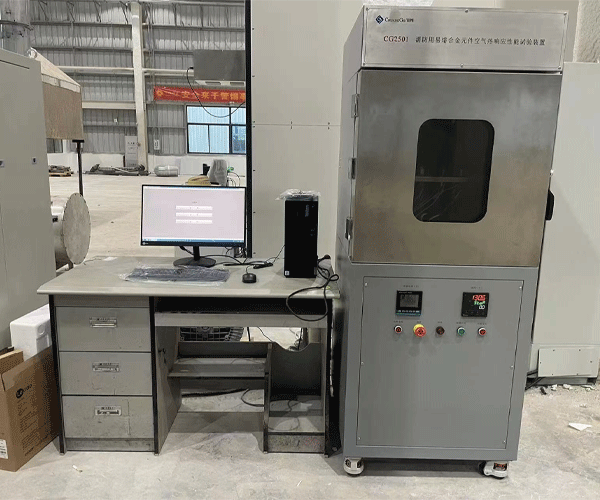
Step 4: Check the Ignition System
The pilot burner and gas supply are checked before ignition. The operator confirms that the ignition system can operate as required and that relevant safety arrangements are in place.
Step 5: Apply the Ignition Source
The specimen is exposed to the prescribed ignition procedure. The operator observes whether ignition occurs and monitors the development of flame spread.
Step 6: Observe Flame Propagation
If the specimen ignites, the flame front is observed as it travels along the flooring surface.
The operator records the relevant flame spread information at the specified intervals or according to the data collection requirements of the test method.
Step 7: Measure Smoke Production
The smoke measurement system collects the required smoke-related data during the test. The recorded values are handled according to the applicable calculation and reporting procedures.
Step 8: Determine and Review the Results
After the test, the flame spread observations and measurement data are reviewed. The critical radiant flux is determined using the method specified in the standard.
The laboratory then prepares the test record or report, including the relevant specimen information, test conditions, observations, and results.
7. Understanding Critical Radiant Flux
Critical radiant flux is one of the most important results of the Flooring Radiant Panel Test.
In simple terms, it represents the radiant heat flux at the position where the flame ceases to spread under the specified test conditions. It is determined by relating the observed flame spread distance to the calibrated radiant heat flux distribution along the specimen.
This value helps laboratories compare the fire behaviour of different flooring products tested using the same method.
A higher critical radiant flux generally indicates that a greater level of radiant heat exposure was present at the flame extinction position. However, results should always be interpreted according to the standard's evaluation requirements and the applicable classification or regulatory framework.
Critical radiant flux should not be treated as a universal prediction of how a flooring product will behave in every real fire. Actual fire development depends on many factors, including the ignition source, room geometry, ventilation, installation, surrounding materials, and fire conditions.
For manufacturers, critical radiant flux data can be useful during material development. Different fibre types, polymer formulations, backing structures, fillers, and flame-retardant treatments may influence the measured result.
8. Smoke Measurement in the Flooring Radiant Panel Test
Smoke is another important aspect of flooring fire behaviour. When a floor covering is exposed to heat and flame, its material composition and construction can influence the amount of smoke produced.
The Flooring Radiant Panel Test includes a smoke measurement arrangement so that smoke production can be evaluated during the test.
The measurement system collects information from the exhaust stream using the specified optical or other measurement components. The recorded data are processed according to the applicable test procedure.
Smoke results can help manufacturers compare different flooring formulations and identify changes in smoke production during product development.
However, smoke production and smoke toxicity are separate issues. A smoke measurement result does not automatically indicate the concentration of toxic substances or the health risk associated with the combustion products. Additional chemical analysis or other relevant testing methods may be needed for those purposes.
When selecting a Flooring Radiant Panel Test Apparatus, laboratories should confirm which smoke measurement functions are included and how the system processes and reports the relevant data.
9. What Flooring Materials Can Be Evaluated?
The Flooring Radiant Panel Test is intended for floor covering products within the scope of the applicable test method.
Typical examples may include:
Carpets: Woven, tufted, and other textile carpet products may be evaluated when their construction and specimen preparation are suitable for the method.
Textile floor coverings: These products may contain different fibres, pile structures, backing materials, and surface treatments. Such differences can influence ignition and flame spread.
Resilient floor coverings: Certain resilient flooring products may be evaluated according to the applicable product requirements and test scope.
Composite flooring materials: Some products contain several layers, such as a decorative surface, functional core, backing, or cushioning layer. The complete specimen arrangement should follow the test method.
Other applicable floor covering products: Laboratories may test additional products where the standard and specimen configuration permit.
Not every floor covering product is automatically subject to the same testing requirements. Product classification, intended application, market regulations, and relevant technical specifications should be considered before selecting a test method.
10. Factors That Can Influence Flooring Radiant Panel Test Results
Several factors may influence the results of a Flooring Radiant Panel Test.
Material composition: Different fibres, polymers, fillers, and additives can affect ignition, flame spread, and smoke production.
Product thickness: Thickness may influence how heat is absorbed and transferred through the flooring specimen.
Backing structure: Backing materials and underlays can change the combustion behaviour of the complete flooring construction.
Surface treatment: Coatings, decorative layers, and flame-retardant treatments may affect the response of the exposed surface.
Specimen conditioning: Moisture content and conditioning conditions can influence material behaviour during testing.
Radiant heat distribution: An incorrect or unstable heat flux distribution can affect the flame spread observations and critical radiant flux determination.
Specimen installation: Incorrect positioning, orientation, or mounting may change the test exposure conditions.
Equipment maintenance: Burner condition, exhaust performance, measurement instrument condition, and calibration status can all affect testing consistency.
For reliable results, laboratories should control these factors as far as required by the test method and maintain clear operating records.
11. How to Select a Flooring Radiant Panel Test Apparatus
Selecting a Flooring Radiant Panel Test Apparatus requires a clear understanding of the laboratory's testing requirements.
First, confirm that the equipment is designed for the required EN ISO 9239-1 test procedure. The supplier should explain the applicable test scope, equipment configuration, and measurement functions.
Second, review the radiant heating system. Ask how the equipment establishes and verifies the required heat flux distribution and what maintenance procedures are recommended.
Third, check the specimen holder and mounting arrangement. The system should support the specimen dimensions and installation conditions required for the intended flooring products.
Fourth, evaluate the ignition and gas supply systems. Stable operation and suitable safety protection are essential for laboratory use.
Fifth, review the smoke measurement and data acquisition functions. Confirm which parameters are recorded, how results are processed, and what reports or data files can be generated.
Finally, consider installation, calibration, operator training, technical documentation, spare parts, and after-sales support. These factors are important for maintaining the equipment throughout its service life.
A suitable Flooring Radiant Panel Test Apparatus should match the laboratory's actual testing scope rather than simply offer a long list of general functions.
12. Customized Flooring Fire Testing Equipment
Different laboratories have different requirements. Some focus on carpet and textile floor coverings, while others need to evaluate resilient flooring or composite products.
The equipment configuration should therefore be discussed according to the intended test method, sample dimensions, required measurements, laboratory layout, and operating conditions.
Guangzhou Chuangge Automation Equipment Co., Ltd. specializes in the development and manufacture of customized testing equipment for industrial and laboratory applications. Its business covers testing solutions for building materials, wires and cables, plastics, textiles, electrical products, and household appliances.
For a Flooring Radiant Panel Test project, customers should provide details about the flooring materials, applicable standard, specimen construction, measurement requirements, and intended laboratory use. These details help determine the appropriate equipment configuration.
Before placing an order, laboratories should confirm the test scope, included accessories, measurement functions, calibration arrangements, installation requirements, and technical documentation. Clear communication during the design stage helps ensure that the equipment matches the intended application.
13. Frequently Asked Questions
Q1: What does the Flooring Radiant Panel Test measure?
The test evaluates the reaction-to-fire behaviour of applicable floor coverings under controlled radiant heat exposure. Important results include flame spread behaviour and critical radiant flux. Smoke production is also measured according to the test procedure.
Q2: Which standard is used for the Flooring Radiant Panel Test?
EN ISO 9239-1 is a commonly used standard for evaluating the reaction to fire of floor coverings using a radiant heat source. Laboratories should confirm the current edition and its applicability to the product.
Q3: What is critical radiant flux in flooring fire testing?
Critical radiant flux is the radiant heat flux at the position where flame spread stops under the specified test conditions. It is an important indicator in the evaluation of floor covering fire behaviour.
Q4: Can the Flooring Radiant Panel Test evaluate carpets?
Yes. Applicable carpet and textile floor covering products can be tested when their specimen construction and preparation are suitable for the standard.
Q5: Does the test measure smoke toxicity?
No. Smoke Production Measurement does not automatically determine smoke toxicity. Additional testing is required when the objective is to identify toxic substances in combustion products.
Q6: Why is specimen preparation important?
Specimen dimensions, conditioning, backing materials, and mounting position can influence the test conditions. Following the standard's preparation requirements helps improve consistency and comparability.
Q7: What should I check before purchasing a Flooring Radiant Panel Test Apparatus?
Confirm the applicable standard, radiant heat system, specimen mounting structure, ignition system, smoke measurement functions, data acquisition, safety arrangements, calibration support, and after-sales service.
The Flooring Radiant Panel Test under EN ISO 9239-1 provides a controlled method for evaluating the reaction-to-fire behaviour of applicable Floor Covering Materials. By exposing a specimen to a defined radiant heat environment and observing flame propagation, the test helps determine critical radiant flux and collect smoke-related information.
A Flooring Radiant Panel Test Apparatus brings together the radiant heat source, specimen holder, pilot burner, test chamber, exhaust system, and measurement components needed for the procedure.
For flooring manufacturers, the test can support material development, product comparison, and quality evaluation. For laboratories, reliable results depend on suitable equipment, correct specimen preparation, controlled test conditions, and proper maintenance.
When selecting Flooring Fire Testing Equipment, users should confirm the applicable test method and define their measurement requirements before choosing a system. A properly configured Flooring Radiant Panel Test Apparatus can provide useful and repeatable information for assessing the fire behaviour of flooring products.


Comment
(0)