Fire safety is an essential consideration in modern construction. Building walls, floors, doors, partitions, and structural elements are expected to perform specific functions when exposed to fire. Their ability to resist high temperatures, maintain structural stability, and prevent the spread of flames or hot gases can have a direct impact on building safety.
A Fire Resistance Test Furnace is specialized testing equipment designed to expose building components to controlled high-temperature conditions. It allows laboratories and manufacturers to evaluate how construction elements perform during fire exposure and collect data for further analysis.
Unlike simple material heating equipment, a Fire Resistance Test Furnace is generally designed around specific fire resistance test methods. Its configuration may include a furnace chamber, heating system, temperature control unit, specimen support structure, measurement sensors, data acquisition system, and safety protection devices.
The furnace creates the thermal environment required by the selected test procedure. During testing, the specimen is installed in a designated position and exposed to a controlled heating process. Temperature changes, structural behavior, deformation, integrity, and insulation performance may be evaluated according to the applicable standard.
For manufacturers, Fire Resistance Testing provides useful information for product development and quality management. For testing laboratories, a suitable Fire Resistance Test Furnace supports standardized test procedures and helps establish a reliable testing workflow.
This article explains the key features, working principles, applications, and selection considerations of a Fire Resistance Test Furnace.
1. What Is a Fire Resistance Test Furnace?
A Fire Resistance Test Furnace is a testing system used to evaluate the fire resistance performance of building components under specified heating conditions.
The equipment is commonly used for testing construction elements such as:
Fire-resistant walls and partitions.
Concrete and composite floor systems.
Fire doors and closure assemblies.
Structural beams and columns.
Building panels and prefabricated elements.
Other construction assemblies requiring fire resistance evaluation.
The purpose of a Fire Resistance Test Furnace is not simply to heat a material to a particular temperature. It is designed to provide a controlled testing environment in which a complete specimen can be evaluated according to defined procedures.
Depending on the specimen type, the test may assess several performance characteristics.
Load-bearing capacity: This evaluates whether a structural component can continue supporting the specified load during fire exposure.
Integrity: This concerns the ability of a building element to prevent flames and hot gases from passing through to the unexposed side.
Thermal insulation: This evaluates whether the temperature rise on the unexposed side remains within the limits specified by the applicable test method.
These performance criteria are relevant to different types of building components. Not every test requires all three criteria. The selected test standard and specimen application determine the actual evaluation requirements.
A Fire Resistance Test Furnace must therefore be configured according to the intended test applications rather than treated as a general-purpose heating chamber.
2. Key Features of a Fire Resistance Test Furnace
The design of a Fire Resistance Test Furnace involves several functional systems. Each system contributes to the heating process, specimen installation, measurement, operation, or safety of the equipment.
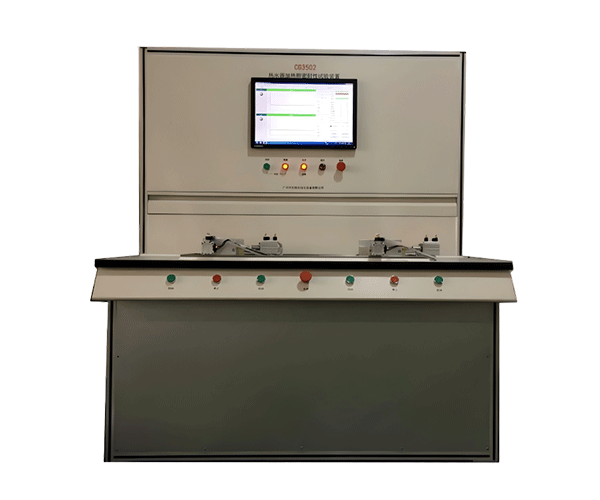
2.1 High-Temperature Furnace Chamber
The furnace chamber provides the enclosed space where the specimen is exposed to heat. Its dimensions and opening arrangement should match the intended specimen size and test orientation.
The chamber structure is designed to withstand repeated high-temperature operation. Suitable refractory and insulation materials are used to help maintain the required thermal environment.
The internal configuration may vary according to the application. A vertical furnace is commonly used for wall and partition specimens, while a horizontal arrangement may be required for floor or roof assemblies.
The usable chamber dimensions are an important consideration when selecting a Fire Resistance Test Furnace. Laboratories should confirm the maximum specimen size, installation clearance, support structure, and accessibility before purchasing equipment.
2.2 Heating System
The heating system supplies the energy required to create the specified furnace conditions. Depending on the equipment design, the system may use suitable fuel-based or electrical heating technology.
The heating capacity must match the furnace size and the requirements of the selected test method. The system should also support stable operation throughout the test.
The arrangement of heating components can affect temperature distribution inside the chamber. Therefore, furnace design should consider the specimen position, chamber geometry, airflow, and measurement locations.
A properly designed heating system helps the Fire Resistance Test Furnace follow the required heating program and maintain suitable operating conditions.
2.3 Temperature Control System
Temperature control is one of the most important functions of a Fire Resistance Test Furnace.
During a fire resistance test, the furnace temperature must follow the heating conditions specified by the applicable standard. The control system monitors temperature signals and adjusts the heating output as required.
A typical temperature control system may include:
Temperature sensors.
Signal transmission components.
Programmable controllers.
Heating output adjustment.
Real-time temperature display.
Alarm and operating status functions.
The control system should allow operators to monitor the furnace throughout the test. Any temperature deviation should be visible so that the test team can review the operating condition.
Temperature control accuracy and system response should be evaluated according to the actual test requirements and equipment specification.
2.4 Temperature Measurement and Data Acquisition
A Fire Resistance Test Furnace requires a suitable measurement system to collect information during testing.
Temperature sensors may be installed at specified locations inside the furnace and on the specimen, depending on the test method. Their positions and number should follow the applicable standard.
The data acquisition system collects measurement signals and records changes over time. It may provide real-time displays, historical curves, data storage, and export functions.
Recorded information can help laboratories review furnace conditions and evaluate the thermal response of the specimen.
Measurement reliability depends on several factors, including sensor suitability, installation position, connection quality, calibration or verification status, and data acquisition settings.
For this reason, the measurement system should be considered an essential part of the complete Fire Resistance Test Furnace rather than an optional accessory.
2.5 Specimen Support Structure
The specimen support structure holds the building component in the required test position. It must be suitable for the specimen's dimensions, weight, orientation, and mounting arrangement.
For vertical wall testing, the support system must accommodate the specimen opening and provide the required installation conditions. For horizontal testing, the support arrangement may need to carry the specimen's weight and match the intended boundary conditions.
Some structural fire resistance tests also require mechanical loading. In these cases, additional loading equipment may be integrated into the test system.
The support structure should be designed according to the test application. Incorrect mounting or unsuitable restraint conditions may influence the specimen's behavior and affect result interpretation.
2.6 Safety Protection and Exhaust System
High-temperature testing requires appropriate safety arrangements. A Fire Resistance Test Furnace should be designed with protective structures and operating procedures suitable for its working environment.
Depending on the furnace configuration, the safety design may include thermal insulation, protective covers, emergency shutdown functions, alarms, electrical protection, and suitable exhaust arrangements.
The exhaust system helps manage combustion products and hot gases where required by the furnace design. Its configuration should be considered together with laboratory ventilation and installation conditions.
Operators should receive appropriate training and follow documented operating procedures. Safety protection should be reviewed during equipment installation, commissioning, and routine maintenance.
3. Working Principles of a Fire Resistance Test Furnace
The working principle of a Fire Resistance Test Furnace is based on exposing a prepared specimen to controlled heating conditions and monitoring its response over time.
Although equipment configurations vary, the general testing process can be divided into several stages.
Step 1: Specimen Preparation
The first step is to prepare the building component according to the selected test method.
The specimen may be a wall, floor, door, partition, beam, column, or another construction assembly. Its dimensions, materials, joints, fixing details, and other relevant characteristics should be documented.
Specimen preparation is important because the test result applies to the tested configuration. Changes in material composition, thickness, installation method, or connection details may influence performance.
Step 2: Specimen Installation
The prepared specimen is installed in the designated opening or support structure of the Fire Resistance Test Furnace.
The installation arrangement depends on the specimen type and test standard. The laboratory should confirm that the specimen is mounted in the correct orientation and that the required support and sealing conditions are followed.
Where mechanical loading is required, the loading system is prepared and checked before the test begins.
Step 3: Sensor Installation and System Inspection
Temperature sensors and other measurement devices are installed at the positions required by the test procedure.
Before heating, operators should check the sensor connections, data acquisition channels, control system, furnace condition, and safety functions.
The equipment should be inspected to confirm that the main systems are ready for operation.
Step 4: Controlled Heating
After the required checks are completed, the Fire Resistance Test Furnace begins the heating process.
The heating system supplies energy to the furnace chamber. Temperature sensors continuously collect information, and the control system adjusts the heating output to follow the specified heating program.
The furnace temperature-time relationship is a key part of the test procedure. The required conditions must be determined by the applicable standard rather than selected arbitrarily.
Step 5: Monitoring and Data Recording
During the test, the data acquisition system records the required temperature measurements and other relevant information.
Depending on the application, the laboratory may also observe deformation, cracking, joint opening, flame penetration, structural movement, or other specimen behavior.
For load-bearing elements, the mechanical loading system may operate throughout the test according to the specified procedure.
Step 6: Test Evaluation and Reporting
After the test reaches the specified termination condition, the recorded data and observations are reviewed.
The laboratory evaluates the specimen according to the relevant performance criteria and test standard. The final report should identify the specimen configuration, test conditions, measurements, observations, and relevant equipment information.
A Fire Resistance Test Furnace provides the controlled environment for testing, but the final assessment must follow the applicable method and reporting requirements.
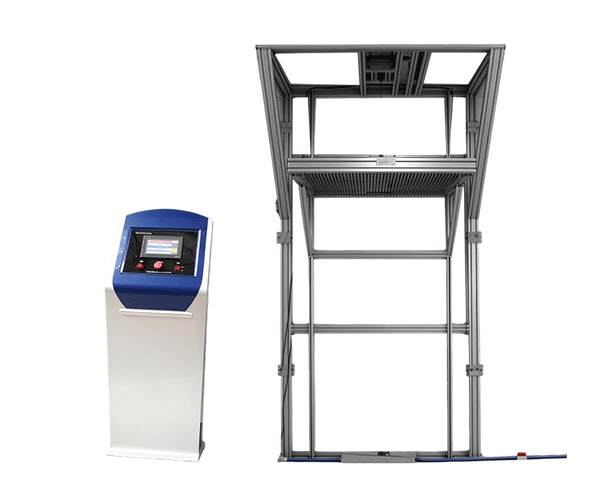
4. Applications of Fire Resistance Test Furnaces
A Fire Resistance Test Furnace can be used for different types of building component testing. The required configuration depends on the specimen category and intended evaluation.
4.1 Wall and Partition Testing
Wall and partition assemblies are common specimens in fire resistance testing. They may include masonry walls, concrete panels, lightweight partitions, insulated wall systems, and prefabricated construction elements.
The Fire Resistance Test Furnace exposes the specimen to controlled heating while the laboratory evaluates the required performance criteria.
Testing may focus on integrity, insulation, and, where applicable, load-bearing behavior. Joint construction, panel thickness, fixing methods, and supporting frames can all influence the result.
4.2 Floor and Roof Assembly Testing
Floor and roof systems play an important role in building compartmentation and structural safety.
Specimens may include concrete slabs, composite floor systems, structural panels, ceiling assemblies, and roof construction elements.
A suitable Fire Resistance Test Furnace for these applications may require a horizontal test arrangement and a support structure designed for the specimen's dimensions and weight.
Where required, the test may include mechanical loading to evaluate structural performance during fire exposure.
4.3 Fire Door Testing
Fire doors are designed to help limit the spread of fire and hot gases between building areas.
A fire door specimen may include the door leaf, frame, hinges, locks, seals, glazing, and other installation accessories. The complete assembly should be prepared according to the selected test method.
A Fire Resistance Test Furnace used for door testing must accommodate the specimen dimensions and installation arrangement. The laboratory evaluates relevant performance criteria, including integrity and, where required, insulation.
4.4 Structural Element Testing
Structural elements such as beams and columns may be tested to understand their performance under high-temperature exposure.
These applications can require specialized specimen supports and mechanical loading systems. The equipment must be suitable for the required specimen geometry and test arrangement.
The laboratory may monitor temperature, deformation, displacement, and load behavior throughout the test.
4.5 Building Material and Construction Product Development
Manufacturers can use fire resistance testing during product development to evaluate construction assemblies and identify potential weaknesses.
Test results may help engineers review material combinations, thickness, joint details, fixing methods, and structural design.
A Fire Resistance Test Furnace can therefore support research, development, quality management, and product evaluation when configured for the relevant test method.
5. Standards Related to Fire Resistance Testing
Fire resistance tests must follow a suitable test standard. Different standards address general test conditions or specific categories of building components.
The following standards are commonly encountered in fire resistance testing:
EN 1363-1: Provides general requirements for fire resistance testing, including general test principles and furnace conditions.
EN 1364 Series: Covers fire resistance testing of non-loadbearing elements. The relevant part depends on the specimen category.
EN 1365 Series: Covers fire resistance testing of loadbearing elements, including relevant structural building components.
EN 1634 Series: Addresses fire resistance and related testing of door and shutter assemblies and other relevant closure systems.
The correct standard should be selected according to the product type, intended application, and market requirements. Laboratories should confirm the current edition and the specific part that applies to their test specimens.
A Fire Resistance Test Furnace should be designed around the actual requirements of the selected test method. General equipment capability alone does not demonstrate compliance with every standard.
6. Factors to Consider When Choosing a Fire Resistance Test Furnace
Selecting a suitable Fire Resistance Test Furnace requires more than comparing chamber size or heating capacity. Laboratories should review the complete testing application before confirming equipment specifications.
Specimen Type and Size
The first consideration is the type of building component to be tested. Wall, floor, door, and structural element testing may require different furnace orientations and support arrangements.
The maximum specimen dimensions should be confirmed before equipment design. The laboratory should also consider future testing requirements.
Applicable Test Standards
Different standards may specify different heating conditions, specimen installation methods, measurement positions, and loading arrangements.
The selected Fire Resistance Test Furnace should support the requirements of the intended test methods.
Heating and Temperature Control
The heating system should provide suitable capacity and support the required temperature-time conditions.
Laboratories should evaluate temperature monitoring, control functions, measurement channels, and the ability to record test data.
Support and Loading Requirements
The specimen support structure must match the test configuration. If mechanical loading is required, the laboratory should confirm the loading range, arrangement, control method, and measurement requirements.
Data Acquisition and Software
A suitable data acquisition system should record the measurements required by the test procedure.
Useful functions may include real-time monitoring, historical curves, data storage, alarm displays, and data export.
Safety and Maintenance
High-temperature testing equipment should include appropriate safety arrangements and allow practical inspection and maintenance.
Laboratories should consider the equipment installation area, ventilation, exhaust requirements, electrical connections, operator access, and routine servicing.
Different laboratories have different testing priorities. Some focus on wall and partition assemblies, while others require equipment for floors, doors, structural elements, or several specimen categories.
A customized Fire Resistance Test Furnace can be designed around the laboratory's actual test requirements.
Customization may involve:
Furnace chamber dimensions and opening configuration.
Vertical or horizontal specimen arrangements.
Heating system configuration.
Temperature measurement and control systems.
Specimen support frames and mounting structures.
Mechanical loading equipment where required.
Data acquisition and operating software.
Safety protection and exhaust arrangements.
Before manufacturing begins, the equipment supplier should review the test standards, specimen dimensions, installation details, and laboratory conditions with the customer.
A detailed technical specification helps clarify the equipment configuration and reduces the possibility of mismatches between the testing application and the final system.
Customization should focus on supporting the required test methods and operating conditions. Additional functions should be selected according to actual laboratory needs rather than added without a clear purpose.
8. Maintenance and Operation of Fire Resistance Test Furnaces
Regular maintenance helps keep a Fire Resistance Test Furnace in suitable operating condition.
Repeated heating and cooling cycles may affect furnace insulation, chamber surfaces, heating components, sensors, electrical connections, and control systems.
A practical maintenance plan should include the following activities:
Furnace chamber inspection: Check the internal lining, insulation, and visible structural parts for damage.
Heating system inspection: Review the condition and operation of heating components and related connections.
Sensor checks: Inspect temperature sensors, wiring, measurement channels, and verification records.
Control system inspection: Confirm that the operating interface, temperature control, alarms, and data recording functions work correctly.
Exhaust system inspection: Check the relevant ventilation and exhaust arrangements.
Operating records: Maintain records of equipment use, maintenance, faults, and corrective actions.
Operators should follow the equipment manufacturer's instructions and laboratory procedures. Regular training can help ensure that the Fire Resistance Test Furnace is used safely and consistently.
9. About Guangzhou Chuangge Automation Equipment Co., Ltd.
Guangzhou Chuangge Automation Equipment Co., Ltd. specializes in customized testing equipment for construction materials, building components, wires and cables, plastics, textiles, electrical products, and other industrial applications.
The company integrates equipment research and development, manufacturing, and technical services. Its quality management systems include ISO 9001, ISO 14001, and ISO 45001 certifications, and it has developed more than 20 patents covering invention, utility model, and software technologies.
For projects involving a Fire Resistance Test Furnace, equipment configuration should be determined according to the customer's specimen type, testing standard, laboratory conditions, and required functions.
The technical review may cover furnace dimensions, specimen orientation, heating arrangements, temperature measurement, data acquisition, support structures, and safety requirements.
Through customized equipment development and manufacturing, Guangzhou Chuangge Automation Equipment Co., Ltd. works to provide testing solutions that match practical laboratory and industrial requirements.
10. Frequently Asked Questions
What is the main purpose of a Fire Resistance Test Furnace?
A Fire Resistance Test Furnace provides controlled heating conditions for evaluating the fire resistance performance of building components. It helps laboratories assess relevant characteristics such as load-bearing capacity, integrity, and thermal insulation according to the applicable test method.
Which products can be tested in a fire resistance test furnace?
Depending on the furnace configuration, specimens may include walls, partitions, floors, roofs, doors, beams, columns, and other construction assemblies.
How does a Fire Resistance Test Furnace control temperature?
Temperature sensors monitor the furnace conditions. The control system processes the measurement signals and adjusts the heating output to follow the required heating program.
What is the difference between a vertical and horizontal fire resistance test furnace?
A vertical furnace is generally configured for vertical specimens such as walls and partitions. A Horizontal Furnace is generally used for horizontal specimens such as floors and certain roof assemblies. The actual configuration depends on the applicable test method.
Which standards are relevant to fire resistance testing?
Commonly encountered standards include EN 1363-1 and relevant parts of the EN 1364, EN 1365, and EN 1634 series. The correct standard depends on the specimen type and intended application.
Can a Fire Resistance Test Furnace be customized?
Yes. Equipment may be customized according to specimen dimensions, test standards, furnace orientation, heating requirements, measurement systems, support arrangements, and laboratory conditions.
Why is data acquisition important?
Data acquisition records temperature measurements and other relevant test information. It helps laboratories monitor the test process, review operating conditions, and prepare technical reports.
Conclusion
A Fire Resistance Test Furnace is an important part of building component fire testing. It provides the controlled heating environment required to evaluate how walls, floors, doors, structural elements, and other construction assemblies perform under fire exposure.
Its key features include a high-temperature furnace chamber, heating system, temperature control, measurement sensors, data acquisition, specimen support, and safety protection. These systems work together to support the testing process and collect information for performance evaluation.
When choosing a Fire Resistance Test Furnace, laboratories should consider specimen type, dimensions, applicable standards, heating requirements, measurement functions, support arrangements, and safety conditions. Regular maintenance and consistent operating procedures are also important for reliable testing.
For manufacturers and laboratories seeking customized testing equipment, a clear understanding of the intended application is the starting point. A properly configured Fire Resistance Test Furnace can provide a practical foundation for product development, quality evaluation, and building component fire resistance testing.


Comment
(0)