


For manufacturers of instantaneous water heaters, product testing is not just a final inspection step. It is part of the work that helps engineers understand how a heater performs, identify problems during development, and check whether production units meet the required specifications. A test result is only useful when the test conditions are clear, the measurements are reliable, and the process can be repeated when necessary.
At Guangzhou Chuangge Automation Equipment Co., Ltd., we specialize in customized testing equipment for industrial and consumer products. Our Performance Testing Device for Instantaneous Water Heaters is intended for projects that require a structured way to evaluate water heater performance under defined conditions. Depending on the approved configuration, the equipment can be developed around water temperature, flow rate, electrical input, operating time, or other parameters required by the customer's test procedure.
We understand that different water heater designs need different test arrangements. An electric instantaneous water heater heats water as it passes through the unit, while other models may use different heating methods and control systems. Rated power, water flow, inlet temperature, outlet temperature, pressure, and control behavior can all affect the test plan. That is why we discuss the application before confirming the equipment design.
Our aim is straightforward: to help customers build a practical and repeatable testing process. We focus on the actual test objective, the required measurements, the operating sequence, and the acceptance criteria. Rather than promising functions that may not be necessary, we work with customers to define which functions should be included and how the completed equipment will be checked before delivery.
1. What Is a Performance Testing Device for Instantaneous Water Heaters?
An instantaneous water heater, sometimes called a tankless or on-demand water heater, heats water while it flows through the appliance instead of storing a large volume of hot water in a tank. Its performance depends on several factors working together, including the heating element or heat source, the water flow, the inlet water temperature, the control system, and the electrical or fuel input.
A Performance Testing Device for Instantaneous Water Heaters is a testing system designed to help evaluate selected performance characteristics of these products. The exact scope depends on the water heater type and the customer's requirements. For an electric water heater, the system may need to monitor water temperature, flow rate, electrical voltage, current, and power. Other projects may require pressure monitoring, timed operating sequences, or additional sensors.
When these measurements are collected under defined conditions, engineers can better understand how the heater behaves. For example, they can compare inlet and outlet water temperatures at a specified flow rate, observe whether the outlet temperature remains within a target range, or compare electrical input with the measured heating performance. The selected measurements must match the intended test method and the capabilities of the instruments used.
We do not treat every water heater testing project as an identical machine. A compact single-point heater may have different test requirements from a multifunctional electric instantaneous water heater. A product intended for household use may also be evaluated under a different procedure from equipment designed for a specialized commercial application. We therefore establish the product category and test objective before recommending a configuration.
What Can the Equipment Help Evaluate?
Depending on the agreed design, an instantaneous Water Heater Performance Testing System may support the following activities:
Water temperature measurement: monitoring inlet and outlet water temperatures to understand the temperature change across the heater.
Flow-rate measurement: measuring the amount of water passing through the test specimen over a defined period.
Electrical parameter monitoring: measuring voltage, current, power, or other electrical values when suitable instruments are included.
Operating-condition control: helping establish specified flow, temperature, or timing conditions, where the system includes the necessary control functions.
Performance comparison: comparing results from different samples, operating conditions, or development stages using a consistent test procedure.
Data recording: collecting and organizing selected test data when a suitable data-acquisition or recording function is included.
These are possible functions rather than a claim that every standard configuration includes all of them. If a project requires automatic water-flow regulation, a particular temperature-control range, electrical power measurement, or computer-based reporting, we confirm those requirements during the technical review.
Why Manufacturers Need a Dedicated Testing System
In a basic manual test, an operator may record readings from separate instruments and enter the results into a worksheet. This can be sufficient for a simple check, but it becomes harder to manage when many samples must be tested under the same conditions. Differences in timing, flow adjustment, instrument placement, or operator technique can make results difficult to compare.
A dedicated Water Heater Performance Testing Device can help organize the test process. Depending on its design, it may bring together selected sensors, control components, measurement instruments, and data collection functions in one setup. This can make the procedure easier to follow and reduce unnecessary manual steps.
The value does not come from automation alone. A well-planned test system also makes it easier to define the starting conditions, record the actual operating parameters, and identify why a result differs from an earlier test. For product engineers and quality teams, that information can be more useful than a single pass-or-fail result without supporting data.
2. Working Principle and Typical Test Process
The working principle of a water heater performance testing device depends on the selected test method and equipment configuration. In a typical test arrangement, the water heater is connected to a controlled water supply and the required electrical supply. Sensors and measurement instruments are positioned to collect the parameters specified in the test plan. The operator then starts the test sequence, establishes the required operating conditions, and records the relevant readings.
For a customized system with automatic functions, some of these steps may be controlled through a controller or software interface. For a simpler configuration, the operator may adjust the flow or start measurements manually. The final method should reflect the customer's testing procedure rather than assuming that every project requires a fully automated system.
Step 1: Confirm the Specimen and Test Objective
We begin by identifying the water heater being tested. Important information includes whether the product is electric or uses another heat source, its rated input, the intended application, its water connections, and any special control functions. We also ask what the test needs to establish.
For example, a development team may want to compare the outlet water temperature at several flow rates. A production quality team may need to confirm that selected operating parameters fall within an agreed range. A laboratory may need to follow a published performance measurement method. These tasks can require different sensors, control functions, data records, and acceptance criteria.
Before the design is finalized, we recommend documenting the test objective in plain language. If the customer has an established procedure, the relevant document or test clauses should be provided. If the procedure is still under development, the expected result and the conditions under which it should be measured should be discussed first.
Step 2: Establish the Water Supply Conditions
Water flow and inlet temperature can strongly affect the observed performance of an instantaneous water heater. A change in inlet temperature changes how much additional heating is needed to reach a given outlet temperature. A change in flow rate changes the amount of water passing through the heater and may change the temperature rise that can be achieved at a given heat input.
For this reason, a meaningful test needs to define the water supply conditions. Depending on the test method, the setup may require flow measurement, temperature measurement, pressure monitoring, flow adjustment, or other water-side components. The required flow range and pressure conditions should be confirmed from the product specifications and applicable procedure.
It is also important to consider the practical water circuit. The inlet connection, outlet routing, drainage arrangement, and possible leakage points should be reviewed before installation. If the test involves hot water, the system layout must allow safe handling and protect operators from accidental contact with hot surfaces or discharged water.
Step 3: Connect Electrical and Measurement Equipment
For electric instantaneous water heaters, the electrical supply and measurement arrangement need particular attention. The rated voltage, frequency, phase arrangement, expected current, and power requirements should be confirmed before the test setup is designed. The selected electrical instruments must have suitable measurement ranges for the expected operating conditions.
Depending on the test objective, the system may use temperature sensors, flow meters, pressure sensors, electrical meters, or a data-acquisition unit. Each instrument serves a different purpose. A temperature sensor does not replace a flow meter, and an electrical power meter does not by itself establish the amount of useful heat transferred to the water.
We recommend documenting the location and identification of each sensor. The test procedure should state where the inlet and outlet temperatures are measured, how flow is measured, and which electrical values are recorded. If the project requires calculated results, the equations and input measurements should be identified so that the results can be checked and reproduced.
Step 4: Run the Test Under Defined Conditions
After the connections and safety checks are completed, the operator follows the agreed procedure. This may include starting the water flow, energizing the heater, waiting for the specified operating condition, and collecting measurements over a defined period. Some tests may require multiple flow settings or repeated operating sequences.
For reliable comparisons, the conditions need to be consistent. If one sample is tested with colder inlet water or a different flow rate, its outlet temperature may differ even if the heater itself has not changed. Recording the actual conditions helps explain such differences and prevents misleading comparisons.
Where the system includes automatic control, the sequence should specify how the test starts and stops, which parameters can be adjusted, and what happens if an abnormal condition occurs. An automatic sequence should not be assumed to provide every safety function. Protective devices, emergency stopping, and fault response must be defined according to the equipment design and the applicable safety requirements.
Step 5: Record and Review the Results
After the test, the recorded values are reviewed against the agreed requirements. The report may include the sample identification, test date, operator, inlet water temperature, outlet water temperature, flow rate, electrical input, test duration, and any other parameters specified by the procedure.
If the result differs from expectations, the first step should be to review the test conditions and measurement setup. The operator may need to check sensor placement, flow stability, instrument status, supply conditions, or the test specimen itself. Repeating the test under controlled conditions can help distinguish a genuine product difference from a measurement or setup problem.
This process provides a practical framework for performance testing. The final method must still follow the applicable product standard, customer specification, or laboratory procedure. Our customized equipment is designed around the agreed scope; it does not replace the need for a properly defined test method.
3. Key Features and Customization Options
When we develop a customized water heater testing device, we focus on the functions the customer actually needs. Some projects require only a straightforward measurement arrangement. Others need coordinated water-flow control, temperature monitoring, electrical measurement, and automatic data recording. Defining the scope early helps avoid both missing functions and unnecessary complexity.
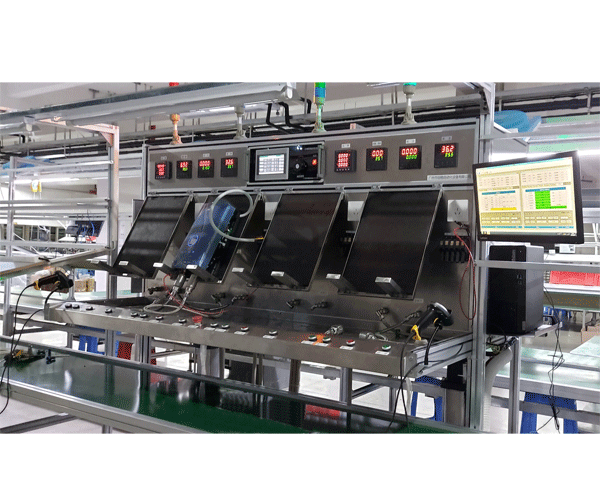
Temperature and Flow Measurement
Temperature and flow rate are central parameters in many instantaneous water heater performance tests. Measuring inlet and outlet temperatures helps show the temperature rise across the appliance. Flow-rate measurement indicates how much water passes through the unit during the test.
The appropriate sensors depend on the expected range, required resolution, installation arrangement, and test method. Sensor response time can also matter when the test involves changing flow or temperature conditions. The measuring points should be selected carefully because readings taken at different locations may not be directly comparable.
If a project requires a specific measurement accuracy, that requirement should be stated before equipment selection. The instrument model, range, calibration status, and installation method may all influence the result. We therefore recommend agreeing on the measurement requirements rather than choosing sensors based on price or appearance alone.
Electrical Parameter Measurement
For electric water heaters, electrical input is often an important part of performance evaluation. Depending on the test, the customer may need to measure voltage, current, active power, or energy consumption. These values can help engineers understand how the heater operates under the specified conditions.
Electrical measurement requirements should be matched to the heater's rated input and supply arrangement. If the test involves changing power levels or electronic control, the instrument's measurement capability should be suitable for the expected signal. A basic meter may not provide all the information required by a more detailed performance test.
We clarify whether electrical meters are included in the customized equipment or supplied separately by the customer. This distinction should appear in the technical proposal, along with the required ranges and any communication or recording functions.
Control and Automated Test Sequences
Some customers want to reduce repetitive manual operations by using a controller to coordinate test steps. Depending on the design, a system may support selected control sequences, timed operations, or automatic data collection. The exact features need to be confirmed for each project.
Before programming a sequence, we recommend defining its logic in a clear order: what starts the test, which conditions must be met, what measurements are collected, how long each stage lasts, and what stops the test. The response to sensor failure, unexpected readings, loss of water supply, or power interruption should also be considered where relevant.
Automation is most useful when it follows a well-defined procedure. If the test method is unclear, adding software will not solve the underlying problem. A clear sequence and a documented operating method should come first.
Data Acquisition and Reporting
Online performance testing often involves collecting readings during operation rather than recording only one final value. A data-acquisition system can gather measurements from compatible instruments and organize them for later review. Depending on the selected configuration, data may be displayed on a screen, saved to a computer, or exported in an agreed format.
Customers should decide what information the report needs to contain. In addition to measured values, useful records may include the sample number, test date, test conditions, operator, instrument identification, and relevant notes. If the data will be used for quality analysis, a consistent record format makes it easier to compare samples and identify changes over time.
Data storage, report generation, network communication, and integration with factory software are separate requirements. We recommend listing each required function clearly instead of assuming that the phrase “online testing” automatically includes every digital feature.
Equipment Layout and Maintenance
A testing system must fit the space in which it will operate. The design review should consider the available floor area, access to water and electrical supplies, cable routing, drainage, operator position, and maintenance clearance. These details affect daily use and should be considered before the equipment is manufactured.
We also recommend clear identification of valves, sensors, electrical connections, and control functions. Good labeling helps operators follow the procedure and helps maintenance personnel locate the correct component when an issue arises. Where consumable or replaceable components are used, the maintenance instructions should explain how to inspect and replace them safely.
| Customization Area | Information to Confirm | Purpose |
|---|---|---|
| Water circuit | Flow range, inlet conditions, pressure requirements, inlet and outlet connections | Helps establish suitable water supply and measurement arrangements |
| Temperature measurement | Measurement points, expected range, required accuracy, sensor type | Supports consistent monitoring of water temperature changes |
| Electrical measurement | Voltage, current, power, energy, supply phase, and frequency | Defines the electrical measurement functions and instrument requirements |
| Control sequence | Start conditions, test duration, operating stages, stop conditions, fault response | Establishes a clear and repeatable operating process |
| Data management | Required records, display, storage, export format, and software interface | Supports traceable test records and result review |
| Mechanical layout | Installation space, access, drainage, cable routing, and maintenance clearance | Helps the equipment fit the intended laboratory or production area |
| Acceptance and documentation | Inspection checklist, verification method, drawings, instructions, and acceptance criteria | Clarifies delivery expectations and how the finished equipment will be checked |
Table 1 source and basis: This table is a project-planning checklist prepared for customized testing equipment. It is not a published performance specification for a particular model. The final configuration and values must be agreed in the technical proposal.
4. Applicable Standards and Performance Evaluation
Standards help manufacturers and laboratories establish consistent test methods. However, the correct standard depends on the type of water heater and the characteristic being evaluated. A performance measurement standard does not necessarily cover electrical safety, and a safety standard does not automatically define every energy-efficiency measurement.
For household electric instantaneous water heaters, IEC 63159-1:2021, Household electric instantaneous water heaters — Methods for measuring the performance — Part 1: General aspects, specifies terms, definitions, and measurement methods for assessing energy efficiency within its stated scope. The IEC publication describes its application to household and similar electric instantaneous water heaters that meet specified load-pattern and water-temperature conditions. It also states that the document does not address appliance safety requirements. See the IEC publication information.
IEC 63159-2-1:2021 addresses performance measurement methods for multifunctional electric instantaneous water heaters with rated power above 2 kW within the standard's scope. It is intended to be used with IEC 63159-1:2021. A manufacturer developing a test system for a multifunctional appliance should therefore check whether the product falls within the stated scope and which measurement requirements apply. See IEC 63159-2-1.
For safety, IEC 60335-2-35 addresses particular requirements for instantaneous water heaters and is used together with the relevant general safety standard. The IEC's 2026 pre-release publication describes the scope for electric instantaneous water heaters for household and similar purposes, including appliances that heat water below boiling temperature, subject to the stated voltage and application limits. Because the applicable edition and adoption status can vary by market and project, customers should verify the required edition and relevant national requirements before using it as a compliance reference. See the IEC publication page.
These references illustrate why we ask customers to identify the test purpose before equipment design. If the objective is energy-efficiency evaluation, the measurement method may require particular operating conditions and calculations. If the objective is safety verification, the test plan may include different checks and safety provisions. If the equipment is intended for a certification laboratory, the laboratory's procedure and acceptance requirements also need to be considered.
| Standard Reference | Published Scope | Potential Use in Test Planning | Important Note |
|---|---|---|---|
| IEC 63159-1:2021 | General performance measurement methods for household electric instantaneous water heaters within its scope | May help define energy-efficiency measurement conditions and methods | Does not address appliance safety requirements |
| IEC 63159-2-1:2021 | Performance measurement methods for multifunctional electric instantaneous water heaters with rated power above 2 kW within its scope | May guide testing arrangements for applicable multifunctional products | Used together with IEC 63159-1:2021 |
| IEC 60335-2-35 | Particular safety requirements for instantaneous water heaters within its scope | May inform safety-related test planning for applicable appliances | Check the applicable edition and use with the relevant general safety requirements |
Table 2 sources: Official IEC publication information for IEC 63159-1:2021, IEC 63159-2-1:2021, and IEC 60335-2-35:2026 pre-release. Confirm the official text, edition, adoption status, and applicability before preparing a formal compliance test.
Turning Standard Requirements into Practical Equipment Functions
When a customer provides a standard or test procedure, we first identify the measurements and operating conditions relevant to the project. We then determine which sensors, instruments, water-side components, electrical connections, control functions, and records are needed. If a requirement is unclear, it should be resolved before the technical scope is approved.
For instance, a test that measures inlet and outlet temperatures at a specified flow rate needs a suitable way to establish and measure those conditions. If electrical input is also required, compatible electrical measurement equipment must be included or supplied separately. If results must be recorded over time, the data acquisition method should be specified as well.
We also recommend separating equipment functions from compliance conclusions. A testing device can help carry out a defined test, but its existence alone does not prove that a water heater complies with a standard. The test method, measuring instruments, calibration or verification status, specimen preparation, operating conditions, and acceptance criteria all matter. Formal certification decisions remain the responsibility of the relevant organization under the applicable rules.
5. Industry Applications, Manufacturing, and Quality Control
Water Heater Manufacturers
For water heater manufacturers, a performance testing device can support product development, production inspection, and investigations into unexpected product behavior. During development, engineers may compare design changes or evaluate the relationship between flow rate and outlet temperature. During production, quality teams may use a defined test procedure to check selected parameters on finished products.
The actual test plan should match the manufacturer's quality requirements. A development test may involve several operating conditions and detailed data collection, while a production check may use a smaller set of acceptance parameters. In either case, consistency is important. A repeatable setup makes it easier to compare samples and identify whether a change in results deserves further investigation.
Electrical Appliance and Component Manufacturers
Instantaneous water heaters combine electrical components, heating elements, sensors, controls, and water-carrying parts. Their performance may depend on how these elements work together. Testing equipment can help engineers evaluate the complete appliance under defined conditions rather than relying only on separate component checks.
For projects involving electronic controls or variable operating modes, the test plan should explain which mode is selected and how the operating conditions are established. If a heater adjusts its power according to flow or temperature, the recorded results should include enough information to explain how the unit behaved during the test. The test system should not assume that every model operates in the same way.
Testing Laboratories and Quality Inspection Organizations
Laboratories and inspection organizations may need clearly defined test conditions, consistent measurement points, and records that can be reviewed later. For these users, the equipment specification should distinguish between integrated functions and external instruments. It should also identify any calibration, verification, or documentation requirements that form part of the laboratory's procedure.
When the equipment is intended for formal assessment, the customer should confirm the required test method and acceptance criteria with the responsible laboratory or certification body. This step helps avoid a situation in which the equipment can perform a general measurement but cannot support a specific required procedure.
Our Manufacturing Process
At Guangzhou Chuangge Automation Equipment Co., Ltd., we start a customized testing project by reviewing the customer's requirements. We clarify the specimen, test objective, operating conditions, required measurements, control sequence, and intended working environment. Where important information is missing, we identify the open questions before finalizing the design.
After the technical scope is agreed, we develop the equipment configuration around the required functions. This may involve selecting suitable sensors and measurement instruments, planning the water circuit, defining electrical connections, and arranging the control and data collection functions. The specific design depends on the project, so we do not assume that every water heater testing device needs the same components.
During assembly, we pay attention to component installation, wiring, connection identification, sensor placement, and consistency with the approved design documents. The equipment layout should allow operators to understand the test process and maintenance personnel to identify relevant components. Where the system contains water and electrical circuits in the same installation, the design review should give particular attention to their separation, protection, and safe operation.
Before delivery, each unit undergoes functional inspection and performance verification according to the agreed scope. The inspection plan may cover control operation, sensor signals, data display, switching functions, and other included features. The exact verification items should match the actual equipment and the acceptance requirements agreed with the customer.
We provide operating instructions and technical documentation as agreed. Depending on the project, the documentation may include equipment descriptions, wiring diagrams, operating steps, maintenance guidance, and inspection records. Any special report format or customer acceptance procedure should be identified before production so that it can be considered in the delivery plan.
6. Why Choose Guangzhou Chuangge Automation Equipment Co., Ltd.?
Choosing customized testing equipment is not just about comparing a few product names. Buyers need to know whether the supplier understands the test objective, can clarify the technical requirements, and can explain how the delivered equipment will be verified. At Guangzhou Chuangge Automation Equipment Co., Ltd., we focus on those practical points throughout the project.
Customization Based on the Actual Test
We specialize in customized testing equipment and have experience working with different testing and certification applications. Our products serve sectors including construction materials and components, wires and cables, plastics and textiles, electrical plugs, sockets and switches, electronic products, and household appliances.
For an Instantaneous Water Heater Performance Testing device, we begin by discussing the water heater type, electrical ratings, water supply conditions, measurement requirements, and test method. This helps us establish which functions are essential and which items should be supplied separately. A written technical specification provides a clear basis for design, production, inspection, and delivery.
Quality Management and Technical Development
Our company follows the philosophy of ensuring survival through high technology and driving development through high quality. We have obtained ISO 9001 quality management system, ISO 14001 environmental management system, and ISO 45001 occupational health and safety management system certifications. These certifications relate to management systems; they should not be interpreted as automatic certification of each individual testing device or as proof that a particular test procedure meets every applicable standard.
We also hold a portfolio of more than 20 patents, including invention patents, utility model patents, and software patents. This reflects our work in equipment design and development. The relevance of any specific patent depends on its scope and the actual design, so we focus on explaining the functions and technical arrangements included in each proposal.
Clear Communication and Documented Acceptance
We encourage customers to confirm the equipment scope in writing before production. This includes the intended test procedure, measurement parameters, instrument requirements, control functions, data records, safety provisions, and acceptance checklist. If the customer requires a particular interface, report format, or external connection, that requirement should also be documented.
Clear documentation helps both sides manage changes. If the test method changes or additional functions are requested after the project has started, we can review the effect on design, component selection, schedule, and cost. This is more practical than leaving important technical decisions until the equipment is nearly complete.
Production Lead Time, Payment, and Transportation
Our typical production cycle for customized testing equipment is approximately 30 to 60 days, depending on the complexity of the configuration and the customization requirements. This is a general planning range rather than a guaranteed lead time for every order. The confirmed schedule depends on technical approval, component availability, manufacturing, inspection, and any agreed acceptance activities.
Payment terms are negotiable according to order requirements and should be confirmed in the quotation or contract. We can arrange sea, air, or land transportation depending on the destination, equipment dimensions, delivery schedule, and customer preference. We use protective materials and sturdy wooden cases as appropriate to help protect the equipment during handling and transit.
For international shipments, we recommend confirming the delivery destination, unloading arrangements, site access, and any special packaging or documentation requirements before dispatch. This helps make the logistics plan more realistic and reduces the chance of problems when the equipment arrives.
7. Frequently Asked Questions
Q1. What is a Performance Testing Device for Instantaneous Water Heaters used for?
It is used to evaluate selected performance characteristics of instantaneous water heaters under defined conditions. Depending on the configuration, it may measure water temperature, flow rate, electrical input, pressure, operating time, or other parameters required by the test method. The final functions depend on the product being tested and the agreed technical specification.
Q2. Can the equipment be customized for our water heater model?
Yes. We specialize in customized testing equipment and can review a configuration based on your product and test requirements. Please provide the heater type, rated power, supply voltage, water flow requirements, inlet and outlet connection details, required measurements, and applicable test procedure. Drawings, a technical datasheet, or a description of the existing laboratory setup can also help us assess the project.
Q3. Can the system measure inlet and outlet water temperatures?
Temperature measurement can be included when required by the project. The sensor type, measurement range, accuracy, installation position, and recording method should be confirmed in the technical proposal. If the test requires a particular measurement uncertainty or calibration status, those requirements should be stated before the instruments are selected.
Q4. Can the equipment automatically control water flow?
Automatic flow control depends on the configuration and can be discussed during customization. The project should specify the required flow range, adjustment method, stability requirements, and control sequence. A flow meter alone measures flow; it does not necessarily control it. The proposal should clearly identify whether the system includes a control valve, pump, controller, or other components required for automatic adjustment.
Q5. Does the device measure electrical power and energy consumption?
These functions can be considered if they are part of the required test scope. The suitable instrument depends on the water heater's electrical ratings, supply arrangement, expected current, and measurement requirements. Please specify whether you need voltage, current, active power, energy consumption, or additional electrical parameters, and confirm whether the instruments should be integrated into the equipment or supplied separately.
Q6. Which standards are relevant to instantaneous water heater testing?
For applicable household electric instantaneous water heaters, IEC 63159-1:2021 provides general performance measurement methods, while IEC 63159-2-1:2021 addresses multifunctional electric instantaneous water heaters within its stated scope. IEC 60335-2-35 addresses particular safety requirements for instantaneous water heaters. The correct standard and edition depend on the product, market, and test objective. Customers should verify the applicable requirements with the responsible laboratory or certification body.
Q7. Can the device automatically collect and export test data?
Data collection and export functions depend on the selected configuration. If you need online monitoring, historical data storage, automatic report generation, or a connection to factory software, please specify the required functions and output format. We can review these needs during the design stage. The final proposal should state which functions are included and which software or instruments must be provided separately.
Q8. How long does manufacturing take?
The typical production cycle is around 30 to 60 days for customized testing equipment. The actual lead time depends on the equipment configuration, technical approval, component availability, and agreed inspection requirements. We confirm the project schedule after reviewing the technical scope and order details.
Q9. What inspection is completed before delivery?
Each unit undergoes functional inspection and performance verification according to the agreed project scope. The exact checklist depends on the equipment configuration and may cover included control functions, measurement signals, data display, and other specified features. Operating instructions and technical documentation are supplied as agreed. Any special acceptance tests or report requirements should be confirmed before production.
Q10. Can the equipment be used for product certification?
It may support testing activities used in a certification process if the configuration is suitable for the applicable test method. However, purchasing a testing device does not automatically establish product compliance or guarantee certification. The responsible laboratory or certification body should confirm the required equipment capabilities, measurement traceability, test procedure, and acceptance criteria.
Q11. What information should we provide to receive an accurate quotation?
Please provide the water heater model or product category, rated power, supply voltage and frequency, expected water flow, inlet water conditions, required temperature measurements, electrical measurement requirements, and applicable test standard or procedure. Also tell us whether you need automatic control, continuous data recording, report export, or a special interface. The more clearly the test objective is described, the easier it is to define a suitable configuration.
Q12. How is the equipment packaged and shipped?
We can arrange sea, air, or land transportation according to the destination and shipment requirements. Protective materials and sturdy wooden cases are used as appropriate for the equipment and transport method. Packaging, shipping arrangements, and any special documentation are confirmed according to the order details.
Conclusion: A Customized Water Heater Testing Solution Built Around Your Requirements
A reliable Performance Testing Device for Instantaneous Water Heaters begins with a clear understanding of the product and the test method. Water temperature, flow rate, electrical input, pressure, control behavior, and data recording may all be relevant, but the required combination depends on the application. Selecting functions without defining the test objective can lead to unnecessary costs or a system that cannot perform the required procedure.
At Guangzhou Chuangge Automation Equipment Co., Ltd., we work with customers to clarify the test requirements, define the equipment configuration, and establish practical inspection and acceptance criteria. Our customized testing equipment experience, management system certifications, and technical development background support this approach. The final equipment functions and verified performance are documented according to the agreed project scope.
If you are looking for instantaneous water heater performance testing equipment, a customized water heater testing device, or an online product performance testing system, contact us with your product specifications and test requirements. We can review the application, discuss suitable measurement and control options, and prepare a technical proposal based on your intended workflow. With clear requirements from the start, the design, manufacturing, verification, and delivery stages can be managed more effectively.
