


When we develop electrical enclosures, outdoor lighting products, household appliances, or electronic components, one question often comes up: can the product withstand direct water jets without allowing harmful water ingress? A housing may look solid and well assembled, but its actual protection performance depends on more than its appearance. Seals, joints, cable entries, connectors, covers, and assembly quality can all influence the result. This is why a controlled water jet test is an important part of product development and quality verification.
At Guangzhou Chuangge Automation Equipment Co., Ltd., we specialize in customized testing equipment for industrial manufacturers, laboratories, and quality inspection organizations. Our IPX5/IPX6 Water Jet Test Equipment For Electrical Enclosure Waterproof Performance Testing is designed to support controlled water jet exposure for products that require IPX5 or IPX6 testing. The system can be planned around the customer's sample dimensions, test procedure, operating method, and laboratory conditions.
IPX5 and IPX6 are related water protection ratings, but they are not interchangeable. IPX5 evaluates protection against water jets, while IPX6 evaluates protection against more powerful water jets. The two tests use different nozzle sizes and water flow rates under the commonly referenced IEC 60529 test method. Choosing the correct equipment means understanding the rating required for the product and confirming how the test must be performed.
We do not believe that every customer needs the same machine configuration. A small electrical connector, a household appliance housing, and a large outdoor control cabinet have different testing needs. The working area, sample support, water delivery capacity, nozzle arrangement, and water collection method should be selected according to the actual application. Our goal is to help customers obtain a practical testing solution that matches their requirements rather than paying for functions they do not need.
1. What Is IPX5/IPX6 Water Jet Test Equipment?
IPX5/IPX6 water jet test equipment is used to expose a test sample to controlled streams of water and evaluate its protection against water ingress under specified conditions. It is commonly considered for electrical enclosures, electronic products, outdoor lighting equipment, selected household appliances, connectors, control boxes, and other products for which the relevant standard calls for IPX5 or IPX6 testing.
The basic idea is easy to understand. A water supply system delivers water to a test nozzle. The nozzle directs the water toward the sample from the required distance and direction. During the test, the operator follows the prescribed exposure procedure, including the required flow rate, duration, and movement around the sample. After the test, the product is inspected according to the relevant standard or product-specific acceptance criteria.
A complete IPX5/IPX6 water jet test system may include a water tank, pump, pipework, water jet nozzle, flow adjustment or monitoring components, sample support, and operating controls. Depending on the agreed design, it may also include a rotating platform, a test chamber, drainage and water recovery arrangements, a nozzle support, or additional safety features.
These components are not necessarily included in every configuration. Some applications use a handheld nozzle arrangement, while others require a chamber-based system for repeated laboratory testing. A large electrical enclosure may need an open test area and flexible access, whereas a smaller product may be tested inside a compact chamber. We confirm the intended setup before finalizing the machine design.
What does IPX5/IPX6 mean?
The IP code describes degrees of protection provided by an enclosure. Under IEC 60529, the code identifies protection against access to hazardous parts, the entry of solid foreign objects, and the harmful effects of water ingress. In IPX5 and IPX6, the letter X indicates that the solid-particle protection digit is not specified in that designation. It does not mean the product has passed a dust-protection test.
The number after X identifies the water test category. IPX5 concerns water jets, while IPX6 concerns powerful water jets. Other ratings cover different conditions, such as dripping water, splashing, or immersion. A water jet test machine designed for IPX5 and IPX6 should therefore not be assumed to perform every other IP test unless those functions are separately specified.
For product manufacturers, this distinction helps avoid a common purchasing mistake. A supplier may describe a system as waterproof testing equipment, but the important question is whether its actual nozzle, water delivery capacity, sample arrangement, and test procedure match the required rating. We recommend confirming the applicable standard and test method before selecting a model.
2. How IPX5 and IPX6 Water Jet Tests Work
The working principle of an IPX5/IPX6 water jet testing system is based on controlled water delivery. Before testing, the operator checks the water supply, selects the required nozzle, confirms the flow setting, and prepares the sample. The water jet is then directed toward the product in accordance with the prescribed procedure. The sample may need to be exposed from different directions so that relevant surfaces and joints are evaluated.
For repeatable results, it is important to control more than the pump. Nozzle dimensions, water flow, distance from the nozzle to the enclosure, exposure time, and the path followed by the operator can all affect the test. If a rotating platform or nozzle holder is used, its movement and positioning also need to suit the procedure.
IPX5: Protection against water jets
IPX5 testing evaluates whether water projected through the specified nozzle against the enclosure from any direction has harmful effects, as defined by the applicable standard. Under commonly referenced IEC 60529 conditions, the IPX5 nozzle has an internal diameter of 6.3 mm, and the nominal water flow rate is 12.5 litres per minute, typically with a tolerance of ±5%.
The water jet is applied according to the test procedure, with attention to the required distance and exposure duration. Commonly referenced arrangements use a nozzle-to-enclosure distance of approximately 2.5 to 3 metres and a minimum exposure duration based on the surface area being tested, with a minimum of 3 minutes. The exact setup must be checked against the applicable edition of the standard and the product's test requirements.
IPX5 is relevant when the product needs to be assessed against water jets but is not necessarily required to withstand the more powerful jet used for IPX6. Examples may include certain electrical enclosures, lighting housings, connectors, and appliances, depending on their intended use and the applicable product standard.
IPX6: Protection against powerful water jets
IPX6 evaluates protection against more powerful water jets. Under commonly referenced IEC 60529 conditions, the nozzle has an internal diameter of 12.5 mm, and the nominal water flow rate is 100 litres per minute, typically with a tolerance of ±5%. The water delivery system must therefore be designed to provide the required flow while maintaining suitable test conditions.
The greater flow rate has practical consequences for equipment selection. The pump, pipes, tank, water return arrangement, and drainage capacity may need to be sized differently from an IPX5-only system. The test area must also be planned to manage the volume of water safely and prevent uncontrolled splashing from affecting surrounding equipment or the working environment.
For products intended to withstand powerful water jets, the IPX6 test can provide useful information about enclosure protection under the specified conditions. However, passing IPX6 does not automatically establish resistance to immersion, hot water, detergents, steam, or every real-world water exposure. Those conditions require separate evaluation when relevant.
IPX5 and IPX6 comparison
| Comparison item | IPX5 | IPX6 |
|---|---|---|
| Test objective | Evaluate protection against water jets | Evaluate protection against more powerful water jets |
| Commonly referenced nozzle internal diameter | 6.3 mm | 12.5 mm |
| Commonly referenced nominal water flow | 12.5 L/min | 100 L/min |
| Typical flow tolerance in published IEC 60529-based equipment specifications | ±5% | ±5% |
| Commonly referenced nozzle distance | Approximately 2.5–3 m | Approximately 2.5–3 m |
| Equipment planning focus | Correct nozzle, flow control, sample coverage, and drainage | Higher water delivery capacity, correct nozzle, sample coverage, and water management |
Source for Table 1: IEC 60529, “Degrees of protection provided by enclosures (IP Code),” International Electrotechnical Commission. See the official standard page at IEC Webstore – IEC 60529. The numerical values are commonly referenced IEC 60529-based equipment specifications, including the published descriptions from IEC Equipment and Labotech International. Confirm the required values against the applicable standard edition and product-specific test procedure before formal testing.
When customers ask us to supply combined IPX5/IPX6 water jet test equipment, we pay particular attention to whether the system can support both required flow conditions. The larger IPX6 flow rate is not simply a software setting: the water supply system must be capable of delivering it. This is why we discuss the water source, pump capacity, test area, and drainage conditions before recommending a configuration.
3. Main Features and Customization Options
A useful water jet testing system needs to provide stable water delivery, practical sample positioning, and convenient operation. The exact equipment arrangement depends on whether the customer needs a handheld nozzle system, an open test station, or a chamber-based machine. We consider the following areas during technical discussions.
Water jet nozzle system
The nozzle determines how the water stream is formed. For the commonly referenced IPX5/IPX6 procedures, the nozzle internal diameters differ: 6.3 mm for IPX5 and 12.5 mm for IPX6. The selected nozzle must match the required test method, and the connection arrangement should allow the operator to use it safely and correctly.
Depending on the agreed design, a system may use interchangeable nozzles or separate nozzle assemblies. The choice depends on the customer's workflow, test frequency, and maintenance preferences. The nozzle material and construction should also be suitable for repeated contact with water and routine cleaning.
We recommend that customers confirm the nozzle configuration in writing. A machine described as an IPX5/IPX6 tester should clearly identify which nozzles and operating arrangements are included. This helps avoid confusion between equipment intended for IPX5 only and equipment configured to support both ratings.
Water supply and pump capacity
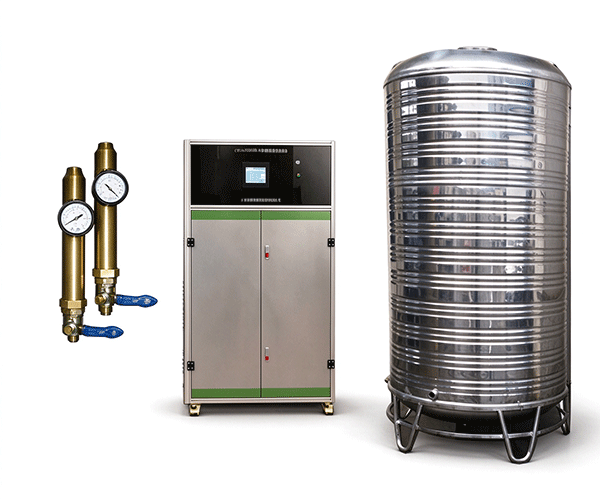
The water supply system is central to the performance of an IPX5/IPX6 Test Apparatus. It may include a storage tank, pump, pipes, valves, flow monitoring components, and a water return or drainage arrangement. The selected configuration should provide the water delivery needed for the required test conditions.
IPX6 requires a much higher nominal flow rate than IPX5 under commonly referenced IEC 60529 conditions. Therefore, a system that can supply IPX5 flow is not automatically suitable for IPX6. Pump selection, pipe diameter, tank capacity, and the arrangement of the water circuit need to be considered together.
Water quality also deserves attention. Particles or debris can affect the nozzle and interfere with consistent operation. Depending on the local water supply and equipment design, filtration or a suitable water management arrangement may be considered. Maintenance access should be included in the design so operators can inspect the system and clean components when necessary.
Flow adjustment and monitoring
To perform a controlled water jet test, the operator needs a way to establish and check the required water delivery. Depending on the configuration, this may involve a flow meter, control valve, pressure gauge, or another suitable monitoring arrangement. The appropriate choice depends on the agreed technical scope and the test procedure.
Flow rate and pressure are related, but they are not the same measurement. The pressure shown on a gauge does not by itself prove that the required flow rate has been achieved. For this reason, we encourage customers to identify which parameters must be monitored and recorded during testing, then select the appropriate instrumentation for that purpose.
Sample platform and positioning
The test sample must be positioned so the required surfaces can be exposed to the water jet. A support platform can help hold the product at a suitable height and orientation. For products with multiple sides or complex shapes, a rotating table or other positioning arrangement may make it easier to follow the test procedure.
The platform size and load capacity should match the customer's samples. A compact connector housing has different requirements from a heavy electrical cabinet or a large outdoor lighting assembly. We therefore ask for the maximum sample dimensions and weight before confirming the design.
Automatic rotation, adjustable height, special fixtures, and powered sample operation may be useful for some applications, but these should be treated as configuration options rather than assumed standard features. If the customer needs the product to remain powered during water exposure, the electrical interface and safety arrangements must be reviewed specifically for that application.
Test chamber, drainage, and water management
Some customers prefer a chamber-based IPX5/IPX6 water jet testing system because it helps contain spray and keeps the test area organized. Others may need an open arrangement for larger samples. The choice depends on sample dimensions, available floor space, the water volume involved, and how operators need to access the product.
Drainage is especially important for IPX6 testing because of the higher water flow. The installation should be able to handle the expected discharge without causing water to accumulate around electrical equipment or create a slipping hazard. Where water is collected and reused, the system must be designed to manage the return flow appropriately.
Control system and operator workflow
The control arrangement should match the test tasks that the customer needs to perform. Depending on the selected design, it may provide control of pump operation, water flow, timing, platform rotation, or other agreed functions. A touchscreen or programmable controller may be suitable for certain systems, while a simpler control arrangement may be sufficient for others.
Clear operating instructions are important when several technicians share the equipment. The operator should know how to select the required test, check the water supply, position the sample, carry out the exposure, and safely stop the system. We consider these practical steps during the equipment planning stage.
Configuration checklist
| Equipment area | Information to confirm | Reason for confirmation |
|---|---|---|
| Nozzle system | Required IP ratings, nozzle sizes, and changeover method | Ensures the system matches the specified water jet test method |
| Water delivery | Required flow rates, pump capacity, and water source | Helps establish whether the system can support the required test conditions |
| Sample support | Maximum dimensions, weight, and positioning requirements | Helps select a suitable platform, fixture, or chamber |
| Water management | Drainage, collection, possible recirculation, and installation space | Helps manage the water volume and maintain a practical work area |
| Control and monitoring | Required controls, flow indication, timing, and records | Matches the operating method and documentation needs |
| Documentation | Operating instructions, technical documents, and agreed inspection records | Supports installation, operation, maintenance, and equipment acceptance |
Source for Table 2: This checklist is a practical equipment selection guide based on the functional requirements described in IEC 60529-based water jet testing equipment. Published configurations can be reviewed in the product information from CG Engineering and Labotech International. It is not a statement that every listed component is included in every Chuangge system.
4. Industries and Products That May Require IPX5/IPX6 Testing
IPX5/IPX6 water jet testing is relevant when a product's design, intended installation, or applicable product standard calls for protection against water jets. The test can support product development, design verification, quality control, and certain pre-compliance activities. Whether a particular product requires IPX5, IPX6, or another test depends on its intended use and the standards that apply to it.
Electrical enclosures and industrial control boxes
Electrical enclosures protect terminals, wiring, relays, controllers, and other internal components from their surroundings. Water can enter through door seals, cable glands, joints, ventilation structures, or poorly assembled interfaces. Water jet testing helps manufacturers evaluate the assembled enclosure under defined conditions.
For large enclosures, the equipment design needs to account for the full sample dimensions and the ability to direct water toward the relevant surfaces. If the product cannot be positioned within a compact chamber, an open test area or customized support arrangement may be more practical. The required working space should be confirmed before the equipment is built.
Outdoor lighting and electrical accessories
Outdoor lighting products, junction boxes, connectors, and selected electrical accessories may need to be evaluated for water jet resistance. Their design often includes seals, covers, cable entries, and other interfaces that can affect water protection. A test can help identify weak points during product development or after a design change.
However, not every outdoor product needs IPX5 or IPX6 testing. Some applications require different water exposure methods, and some product standards specify additional conditions. We recommend checking the actual rating requirement rather than selecting equipment solely because the product is used outdoors.
Household appliances and consumer electronics
Household appliances and electronic products may contain electrical components that need protection from water under specified use conditions. Depending on the product category, a water jet test may be one part of a broader verification plan. The test helps assess the enclosure's response to the defined water exposure, but it does not replace other electrical safety or functional tests.
When testing these products, sample preparation and post-test inspection should follow the relevant procedure. A manufacturer may need to check for water ingress, inspect internal components, or perform specified functional checks after exposure. The exact acceptance criteria depend on the applicable product standard and the manufacturer's requirements.
Automotive electrical components and related products
Selected automotive electrical components, connectors, lighting assemblies, and electronic housings may require water protection testing. Automotive standards and customer specifications can differ from the general IP code requirements, so the test plan should identify the exact method that applies.
Some automotive applications use additional standards or more demanding test conditions. IPX5/IPX6 equipment should not be assumed to cover those requirements automatically. If a customer needs a test method based on a vehicle-specific standard, we review that requirement separately and confirm whether the proposed system is suitable.
Research laboratories and quality inspection institutions
Research laboratories may use water jet testing to compare different enclosure designs, evaluate sealing changes, or investigate product failures. Quality inspection institutions may use suitable equipment as part of their testing services. In these environments, repeatability, documentation, and clear test procedures are particularly important.
For formal certification work, the laboratory should confirm its required equipment specifications, measurement traceability, calibration arrangements, and accreditation scope. Purchasing an IPX5/IPX6 testing machine does not by itself guarantee that the laboratory is accredited or that a tested product will pass certification.
Application comparison
| Product or industry | Possible testing objective | Key point to consider |
|---|---|---|
| Industrial electrical enclosures | Evaluate water protection at doors, joints, cable entries, and other interfaces | Sample size, mounting position, and access to all required surfaces |
| Outdoor lighting products | Assess enclosure performance under the specified water jet exposure | Mounting orientation and product-specific test requirements |
| Connectors and electrical accessories | Check the assembled sample or component under the required test method | Fixture design, sample orientation, and water coverage |
| Household appliances | Support product development or verification where a water jet test is applicable | Relevant product standard and post-test inspection procedure |
| Automotive electrical components | Evaluate water protection according to the applicable automotive test plan | Confirm whether general IP testing is sufficient or another standard applies |
| R&D and quality laboratories | Support repeatable testing and comparison of product designs | Documentation, verification, calibration, and laboratory procedures |
Source for Table 3: The examples are illustrative application categories based on the scope of IEC 60529 and published IPX5/IPX6 equipment descriptions. Reference information is available from the International Electrotechnical Commission and the product application description from CG Engineering. The table does not imply that every product in these categories requires IPX5/IPX6 testing.
5. Our Manufacturing, Inspection, and Delivery Process
At Guangzhou Chuangge Automation Equipment Co., Ltd., we specialize in customized testing equipment. Our process begins with the test requirement rather than with a fixed machine specification. This approach is important because a water jet test system must match the sample, water delivery conditions, test method, and working environment to be useful in daily production or laboratory work.
Step 1: Understand the product and test standard
We first discuss the product that the customer intends to test and the rating that needs to be evaluated. We ask whether the required test is IPX5, IPX6, or both, and whether IEC 60529 or a product-specific standard applies. If the customer has a test procedure, technical drawing, or certification requirement, these documents help define the project.
We also review the sample dimensions, weight, shape, and expected testing frequency. A machine for one product model can often be planned differently from a system intended to accommodate multiple product families. Identifying the largest sample and the most demanding water delivery requirement helps us assess the equipment configuration more accurately.
Step 2: Confirm the equipment design
After reviewing the application, we prepare a proposed configuration for the customer to check. The proposal may identify the nozzle arrangement, pump and water supply requirements, flow monitoring method, sample platform, test chamber or open working area, drainage, control functions, and optional features.
At this stage, we recommend making a clear distinction between standard functions and optional requirements. For example, automatic platform rotation, powered sample operation, customized fixtures, data logging, or particular calibration documents should be listed in the agreed technical scope if they are needed. Clear documentation helps prevent mismatched expectations later.
Step 3: Fabrication and assembly
Once the design is confirmed, manufacturing and assembly can begin. Depending on the selected system, the work may involve preparing the frame or chamber, assembling the water tank and pipework, installing the pump, fitting the nozzle system, integrating flow monitoring components, and setting up the sample support and control arrangement.
During assembly, we consider structural stability, component fit, accessibility, and ease of routine maintenance. A system that delivers water but is difficult to set up or clean may create unnecessary work for the operator. Practical access to valves, pipes, nozzles, and drainage components should therefore be considered during the design stage.
Step 4: Functional inspection and performance verification
Before delivery, each unit undergoes functional inspection and performance verification. The checks are based on the confirmed equipment configuration and the inspection items agreed with the customer. Depending on the system, this may include checking the operating controls, inspecting assembly quality, and verifying relevant functions of the water supply and sample-positioning arrangements.
If a customer requires specific measurement records, a calibration certificate, third-party verification, or a defined acceptance test, that requirement should be discussed before production. Functional inspection is not the same as independent laboratory accreditation, and a general inspection does not automatically mean that every possible test condition has been independently certified.
Step 5: Documentation and packing
Operating instructions and technical documentation are provided as agreed. These documents help the customer understand the setup, operating sequence, routine inspection, and maintenance requirements. If the equipment has specific installation needs, such as drainage capacity, water supply, floor space, or electrical connection requirements, these should be confirmed before shipment.
For transportation, we use suitable protective materials and can arrange sturdy wooden cases where appropriate. The packing method depends on the equipment's dimensions, weight, structure, and shipping route. The objective is to reduce the risk of impact, movement, and damage during loading and transportation.
Production cycle and commercial terms
The typical production cycle for our customized testing equipment is around 30–60 days, depending on the confirmed specifications and customization requirements. This is a planning estimate rather than a fixed lead time for every order. Systems requiring special fixtures, a larger test area, customized water management, or additional control functions may need a different schedule.
Payment terms are negotiable and should be confirmed in the quotation or contract. Shipping can be arranged by sea, air, or land, depending on the destination and delivery requirements. We recommend confirming the technical scope, inspection items, documentation, packing, shipping arrangements, and delivery schedule together before placing the order.
6. Why Choose Guangzhou Chuangge Automation Equipment Co., Ltd.?
Selecting water jet test equipment involves more than comparing a few technical figures. The machine needs to support the correct test method, fit the customer's samples, and work within the available laboratory or factory space. We focus on customized equipment solutions and clear technical communication so that customers can make decisions based on their actual requirements.
Customization based on real testing needs
We specialize in testing equipment customization for different industrial applications. Our products serve areas including construction materials and components, wires and cables, plastics and textiles, electrical plugs, sockets and switches, electronic products, and household appliances. Because these products have different shapes and testing requirements, we discuss each application before confirming a machine design.
For an IPX5/IPX6 Water Jet Test Equipment project, this means reviewing the required water flow, nozzle configuration, sample dimensions, positioning method, and water management arrangement. If a customer has limited installation space or needs to test a range of product sizes, these points can be considered during the design process.
A standards-focused approach
We recognize that a test apparatus must be aligned with the applicable standard and procedure. For IPX5/IPX6 testing, the relevant questions include which edition of IEC 60529 applies, what water delivery conditions are required, how the sample should be exposed, and what inspection criteria will be used after testing.
Standards and product-specific requirements can vary. A customer may need to meet a general IP rating, a market-specific requirement, or a separate industry standard. We encourage customers to confirm these details with their engineering team, laboratory, or certification organization before finalizing the equipment specification.
Quality and management systems
Guangzhou Chuangge Automation Equipment Co., Ltd. has obtained ISO 9001 quality management system certification, ISO 14001 environmental management system certification, and ISO 45001 occupational health and safety management system certification. These certifications reflect the company's management-system commitments in quality, environmental management, and occupational health and safety.
Our company also has more than 20 patents, including invention patents, utility model patents, and software patents. This intellectual property portfolio is part of our technical development work. For each customized project, we focus on identifying the required functions and documenting the agreed scope so that the customer can evaluate the proposed solution clearly.
Practical support from inquiry to delivery
Customized equipment projects often involve details that can be missed when the initial request is too brief. A sample may be larger or heavier than expected, the available drainage may be limited, or the customer may require particular test records. Discussing these points early helps reduce the risk of design changes after manufacturing begins.
When requesting a quotation, customers can provide product drawings, photographs, dimensions, sample weight, test standards, and any existing test procedure. If some details are not yet confirmed, we can identify them as points for technical discussion. This makes it easier to define the required configuration and plan the delivery schedule.
International shipping arrangements
We can arrange transportation by sea, air, or land according to the destination and customer requirements. Protective packing and sturdy wooden cases can be used where appropriate to reduce the risk of damage in transit. Before shipment, the packing details, delivery documents, and agreed inspection records should be confirmed.
For international buyers, it is also useful to plan the installation requirements in advance. The customer should confirm the available floor space, water supply, drainage, electrical connection, and any other site conditions needed for the selected system. These preparations help make equipment installation and commissioning more straightforward after delivery.
7. Frequently Asked Questions About IPX5/IPX6 Water Jet Test Equipment
Q1. What is IPX5/IPX6 water jet test equipment used for?
It is used to evaluate the protection of suitable enclosures and products against water jets under defined test conditions. Typical applications may include electrical enclosures, outdoor lighting products, connectors, selected household appliances, and electronic components. The correct test rating depends on the product's intended use and the applicable standard.
Q2. What is the main difference between IPX5 and IPX6?
IPX5 evaluates protection against water jets, while IPX6 evaluates protection against more powerful water jets. Under commonly referenced IEC 60529 conditions, IPX5 uses a 6.3 mm nozzle and a nominal flow of 12.5 L/min, whereas IPX6 uses a 12.5 mm nozzle and a nominal flow of 100 L/min. The full test procedure should be checked against the applicable standard edition.
Q3. Can one machine perform both IPX5 and IPX6 tests?
Yes, a system can be configured for both ratings if its nozzle arrangement, water delivery system, monitoring components, and sample setup meet the required test conditions. Customers should confirm that the proposed configuration supports both flow rates and includes the required nozzle arrangements before placing an order.
Q4. Does passing IPX6 mean a product is waterproof under every condition?
No. IPX6 relates to protection against a specified powerful water jet test. It does not automatically demonstrate resistance to immersion, steam, hot water, cleaning chemicals, or every real-world water exposure. Additional tests may be necessary if the product will encounter other conditions.
Q5. What information is needed to customize the equipment?
We recommend providing the required IP rating, applicable test standard, sample dimensions, maximum sample weight, expected testing frequency, and installation space. Details about the water source, drainage, preferred control functions, test records, and any special fixtures are also helpful. Product drawings and photographs can make the initial assessment more accurate.
Q6. Can the equipment test large electrical enclosures?
Potentially, yes. The system must be designed around the enclosure's dimensions, weight, and required exposure positions. A large enclosure may need an open test station, a larger working area, or a customized support arrangement. We recommend confirming the largest sample and available installation space before the design is finalized.
Q7. How long does production take?
The typical production cycle is approximately 30–60 days for customized testing equipment. The actual schedule depends on the configuration, additional functions, manufacturing requirements, and agreed inspection scope. The confirmed delivery schedule should be included in the quotation or contract.
Q8. Does the equipment include a calibration certificate?
Not automatically. Functional inspection and performance verification are carried out before delivery, while a calibration certificate or independent third-party report is a separate requirement. If your laboratory needs specific calibration documentation or traceability records, please state this when requesting a quotation so that the scope can be reviewed.
Q9. Can the water be reused during testing?
Water collection or recirculation may be considered for some equipment configurations. Whether reuse is suitable depends on the system design, water quality, filtration needs, and test requirements. The water circuit should be designed so that reuse does not interfere with the required test conditions. Please confirm this requirement during technical communication.
Q10. What site conditions should be prepared before installation?
The customer should confirm the available floor space, water supply, drainage capacity, electrical connection, and any other site requirements specified for the selected configuration. IPX6 testing involves a high water flow, so drainage and water management deserve particular attention. The final installation requirements should be checked against the equipment drawings and technical documents.
Q11. Can the sample remain powered during the test?
This depends on the product, the applicable test procedure, and the equipment configuration. If powered operation is required, the electrical connections, protective measures, and operating sequence must be reviewed specifically. Do not assume that an energized test function is included unless it is stated in the confirmed technical specification.
Q12. How should the equipment be maintained?
Routine maintenance should follow the operating instructions for the supplied system. General tasks may include checking the nozzle for blockage or damage, inspecting pipes and connections, cleaning filters where fitted, checking the pump and valves, and keeping the test area and drainage clear. The maintenance frequency depends on water quality, operating frequency, and the final equipment design.
Q13. Can the equipment be used for formal certification testing?
The equipment may support testing when it is configured for the required procedure and used correctly. However, purchasing the machine does not automatically certify a product or establish a laboratory's accreditation status. Customers conducting formal certification work should confirm the requirements of the relevant certification body and laboratory quality system.
Request a Customized IPX5/IPX6 Water Jet Testing Solution
If you are looking for IPX5/IPX6 Water Jet Test Equipment For Electrical Enclosure Waterproof Performance Testing, we welcome the opportunity to discuss your project. At Guangzhou Chuangge Automation Equipment Co., Ltd., we focus on understanding the test requirement first and then selecting an equipment configuration that matches the sample, water delivery conditions, working space, and agreed technical scope.
To help us evaluate your application, please share the product type, sample dimensions and weight, required IP rating, applicable test standard, and expected testing frequency. Drawings, photographs, and existing test procedures are also useful. We can then discuss the nozzle arrangement, water supply capacity, flow monitoring, sample support, drainage, control functions, inspection requirements, and delivery schedule.
Our aim is to provide practical testing equipment that supports consistent test operations and fits your manufacturing or laboratory workflow. Contact Guangzhou Chuangge Automation Equipment Co., Ltd. to discuss a customized IPX5/IPX6 water jet test system for your electrical enclosures, electronic products, or other suitable applications.
