Project Overview
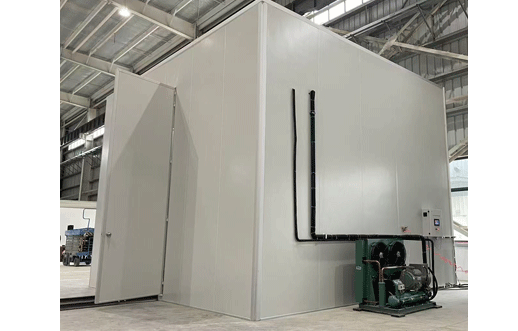
Guangzhou Chuangge Automation Equipment Co., Ltd. developed a customized large-scale window and door Thermal Insulation Performance testing system for the Guangdong Institute of Product Quality Supervision and Inspection. This project focuses on evaluating the thermal insulation performance of large windows and doors, providing a specialized testing solution for building component inspection and performance assessment.
Windows and doors play an important role in building energy efficiency. Their thermal insulation performance affects indoor temperature stability, heating and cooling requirements, and overall building energy consumption. For inspection institutions and testing laboratories, a dedicated testing system helps create controlled test conditions and supports the evaluation of different window and door designs.
1. Project Requirements and Testing Objectives
Large windows and doors present specific challenges during thermal performance testing. Compared with smaller building components, they require a larger testing space and a suitable fixture or mounting arrangement. The system must also accommodate the specimen dimensions while supporting the temperature and environmental conditions required by the selected test method.
For this project, the main objective was to provide a customized testing system for large-scale window and door specimens. The equipment configuration needs to account for specimen size, installation method, temperature control, measurement arrangements, and the applicable testing standards.
By developing equipment around the customer's application requirements, Chuangge aims to help inspection institutions conduct thermal insulation performance assessments in a more controlled and repeatable testing environment.
2. Customized Equipment Design
A large-scale window and door thermal insulation testing system typically requires a dedicated test chamber or environmental arrangement, specimen mounting structure, temperature control components, and measurement instrumentation.
The mounting structure must accommodate the window or door specimen securely while allowing the relevant test conditions to be established. The chamber configuration and insulation design should also be considered to help reduce unwanted heat transfer through areas outside the intended test specimen.
Depending on the agreed technical requirements, the system design may incorporate temperature sensors, data acquisition equipment, control panels, and monitoring functions. The exact configuration should be confirmed according to the customer's specimen range, test procedures, laboratory layout, and required measurement parameters.
For customized projects, these details are important because the dimensions and construction of large windows and doors can vary considerably. A system designed around the intended specimens can make installation, testing, and subsequent equipment operation more practical.
3. Thermal Insulation Performance Testing
Thermal insulation performance testing evaluates how effectively a window or door limits heat transfer under specified conditions. The results can help manufacturers, laboratories, and inspection organizations understand the thermal performance of different product structures.
Depending on the selected test method, relevant parameters may include temperatures on both sides of the specimen, environmental conditions, heat flow, and the thermal transmittance value, commonly expressed as the U-value.
A reliable test arrangement needs to consider the measurement locations, sensor accuracy, stabilization period, specimen installation, and potential heat losses around the test opening. These factors can affect the interpretation and repeatability of results.
The testing procedure and calculation method should follow the applicable standard and the laboratory's established operating procedures. The equipment itself supports the testing process, while the validity of the final results depends on the complete measurement arrangement and correct execution of the test.
4. Applications in Building Materials and Energy Efficiency
Large-scale Window and Door Thermal Insulation Testing Equipment can serve several application areas, including:
Quality inspection of windows and doors
Thermal performance evaluation of building components
Research and development of energy-efficient building products
Comparative testing of different frame, glazing, and sealing designs
Performance verification during product development
Laboratory testing for building materials manufacturers
For window and door manufacturers, thermal performance data can support product design improvements and help identify areas where heat transfer may be reduced. For testing institutions, specialized equipment provides a dedicated platform for evaluating specimens according to defined test procedures.
The system's suitability for a particular test depends on its configured specimen dimensions, measurement capability, environmental control range, and compliance with the applicable testing method.
5. Why Choose Customized Testing Equipment?
Standard testing equipment may not accommodate every specimen size or laboratory requirement. Customization allows the equipment structure, chamber dimensions, mounting arrangements, and control functions to be planned around the intended application.
For large-scale window and door testing, early clarification of technical requirements is especially important. Customers should specify the maximum specimen dimensions, the required temperature conditions, the applicable standard, the desired measurement parameters, and the available installation space.
These details help define the equipment scope and acceptance criteria before manufacturing begins. They also provide a clearer basis for installation, commissioning, operator training, and future maintenance.
Guangzhou Chuangge Automation Equipment Co., Ltd. focuses on customized testing equipment and has experience serving multiple industrial sectors, including construction materials and components, wires and cables, plastics and textiles, electrical accessories, electronic products, and home appliances.
6. Chuangge's Expertise in Testing Equipment Customization
Guangzhou Chuangge Automation Equipment Co., Ltd. follows the philosophy of ensuring business development through technology and quality. The company has obtained ISO 9001 quality management, ISO 14001 environmental management, and ISO 45001 occupational health and safety management system certifications. Its intellectual property portfolio includes more than 20 patents, covering invention patents, utility model patents, and software patents.
The company's customized equipment approach focuses on understanding the customer's testing objectives and relevant technical standards before determining the appropriate system configuration.
The large-scale window and door thermal insulation performance testing system project for the Guangdong Institute of Product Quality Supervision and Inspection illustrates the importance of application-specific design in building component testing. By considering specimen size, thermal conditions, measurement requirements, and laboratory workflow, Chuangge works to provide testing equipment tailored to the intended application.
Specific system capabilities, measurement accuracy, test ranges, and standards compliance should be confirmed against the project's technical documentation and acceptance requirements.


Comment
(0)